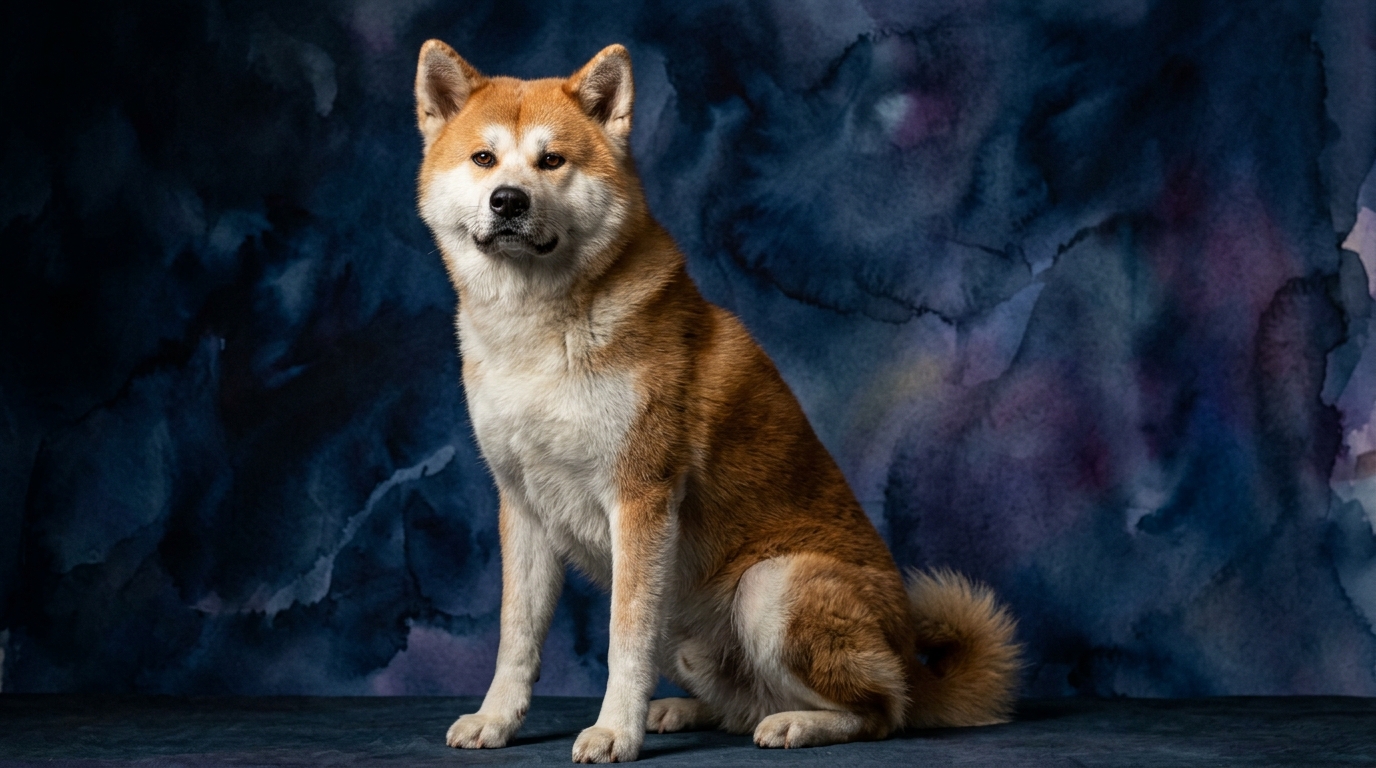

Side-by-Side IQ Profile: Akita and Rat Terrier
The Cosmic Pet Pet IQ Lab employs a five-dimensional framework to assess canine cognition, providing a nuanced view beyond simplistic intelligence rankings. For the Akita, a Working breed, we observe a Problem Solving score of 3 out of 5, indicating a capacity to navigate novel situations and figure out solutions, though often at their own deliberate pace. Their Training Speed is rated 2 out of 5, suggesting a slower acquisition of new commands and a need for consistent, patient repetition. Social Intelligence for the Akita stands at 3 out of 5, meaning they can interpret human and canine cues effectively, but often choose to interact on their own terms, exhibiting a dignified reserve. An outstanding Instinctive Drive of 5 out of 5 highlights their powerful natural inclinations for guarding, protecting, and independent decision-making, deeply rooted in their heritage. Finally, their Memory is strong at 4 out of 5, allowing them to retain complex information, routines, and experiences over extended periods.
In contrast, the Rat Terrier, a lively Terrier breed, presents a slightly different cognitive fingerprint. Their Problem Solving ability is also 3 out of 5, suggesting a similar aptitude for figuring things out, often with a terrier's characteristic tenacity and curiosity. The Rat Terrier shines in Training Speed with a score of 3 out of 5, indicating they generally pick up new commands at an average pace, responding well to engaging and varied training methods. Their Social Intelligence matches the Akita's at 3 out of 5, signifying a good understanding of social cues, though typically expressed with more overt enthusiasm and engagement. The Rat Terrier's Instinctive Drive is 3 out of 5, reflecting a moderate prey drive and a spirited inclination for exploration and digging, less intensely focused on guarding than the Akita. Their Memory is rated 3 out of 5, allowing them to recall learned behaviors and experiences reasonably well, though perhaps not with the same depth of retention as their Akita counterpart.
Where the Akita Wins Cognitively
The Akita's cognitive strengths distinctly emerge in areas demanding deep-seated purpose and sustained recall. Their Instinctive Drive, rated a perfect 5 out of 5, is a significant cognitive advantage, translating into an unwavering focus on tasks aligned with their natural guarding and protective instincts. This isn't merely a physical drive but a deeply ingrained cognitive framework that guides their decision-making in situations requiring vigilance and independent action. An Akita will often assess a situation and act based on its inherent understanding of its role, a cognitive process that speaks to a powerful internal compass.
Furthermore, the Akita's superior Memory, scoring 4 out of 5, gives them an edge in retaining complex information and long-term routines. This means an Akita is likely to remember specific boundaries, intricate command sequences learned months ago, or the precise details of past social interactions. This robust memory contributes to their consistent behavior and their ability to operate effectively within established structures, making them reliable in environments where consistency and long-term recall are paramount. They internalize lessons and experiences, building a comprehensive mental map of their world and their place within it.
Where the Rat Terrier Wins Cognitively
The Rat Terrier's cognitive prowess shines most brightly in its adaptability and responsiveness during learning, primarily due to its higher Training Speed. Scoring 3 out of 5 in this dimension, the Rat Terrier demonstrates a quicker uptake of new commands and concepts compared to the Akita. This isn't just about speed; it reflects a mental agility and a willingness to engage in varied learning scenarios. Their enthusiasm for interaction often translates into more receptive training sessions, allowing them to master new skills and behaviors with fewer repetitions.
While their Problem Solving ability is on par with the Akita at 3 out of 5, the Rat Terrier often applies this skill with a more immediate, hands-on approach, driven by curiosity and an eagerness to explore. This means they might more readily experiment with different solutions to puzzles or challenges, often displaying a spirited persistence until a solution is found. Their cognitive strengths lean towards versatile learning and active engagement, making them highly receptive to owners who enjoy frequent, dynamic training and mental enrichment activities.
Which is Easier to Train and Why
When it comes to ease of training, the Rat Terrier generally presents a more straightforward experience than the Akita, largely due to their differing Training Speed scores. The Rat Terrier's 3 out of 5 in Training Speed means they typically learn new commands at an average pace, often eager to please and responsive to positive reinforcement. Their inherent curiosity and moderate instinctive drive make them more amenable to varied training exercises and less likely to become bored or stubborn during sessions. They are often quick to form associations between commands and actions, making the training process feel more collaborative and rewarding for both dog and owner.
The Akita, with a Training Speed of 2 out of 5, requires a significantly more patient and consistent approach. Their independent nature and strong instinctive drive mean they often weigh commands against their own perceived utility or interest, rather than simply complying out of a desire to please. Training an Akita demands a deep understanding of their motivations, a firm but fair hand, and an unwavering commitment to repetition. While they are certainly capable of learning, their cognitive process for acquiring new behaviors is more deliberate and less inclined towards rapid, enthusiastic compliance, often appearing as stubbornness to an inexperienced owner. Behavioral differences like the Akita's inherent guarding instincts can also make certain aspects of socialization training more challenging without early, consistent intervention.
Which Suits Active Owners vs. Relaxed Owners
For owners seeking a highly active and engaged companion, the Rat Terrier often proves to be an excellent match. Their moderate Instinctive Drive (3/5) translates into a need for regular mental and physical stimulation, but in a versatile and manageable way. They thrive on activities like agility, earth dog trials, puzzle toys, and consistent walks or runs, making them ideal for owners who enjoy an active lifestyle and want a dog to participate enthusiastically. Their problem-solving abilities, coupled with their eagerness to learn, mean they benefit greatly from owners who can provide novel challenges and varied routines, preventing boredom and channeling their energy constructively.
The Akita, with its exceptionally high Instinctive Drive (5/5) and strong memory, is better suited for owners who appreciate a dog with a profound sense of purpose and a more structured, consistent environment. While they need regular exercise, their mental stimulation often revolves around guarding, observing, and maintaining order within their perceived territory, rather than constant high-energy play. Relaxed owners might find the Akita's intense drive challenging if not properly understood and managed, as their independence and protective instincts require confident leadership and a clear routine. Owners who prefer a dog with a calm, watchful presence indoors but are prepared to meet their profound need for structure and occasional, purposeful activity will find the Akita rewarding.
The Verdict
Choose the Akita if you value a dog with profound memory, a strong sense of purpose, and an unwavering protective instinct, and are prepared for a consistent, patient training journey.
Opt for the Rat Terrier if you desire a responsive, mentally agile companion that learns quickly, thrives on varied activities, and brings spirited enthusiasm to an active lifestyle.
🧠 Find Your Pet's IQ Score
Our Pet IQ Lab assessment covers 25+ tests across 5 cognitive dimensions — personalized to your breed.
Take the Full IQ Test →Frequently Asked Questions
Do Akitas learn tricks easily?
Akitas can learn tricks, but their Training Speed of 2/5 indicates it will take more time and consistent repetition than many other breeds. They often need to understand the 'why' behind a command and may not perform simply for treats, requiring a patient and motivating approach.
Are Rat Terriers good at puzzle toys?
Yes, Rat Terriers, with a Problem Solving score of 3/5 and an eager temperament, are generally very good at puzzle toys. Their curiosity and tenacity make them enjoy figuring out how to get treats or rewards from challenging mental games.
How does social intelligence differ between these breeds?
Both breeds score 3/5 in Social Intelligence, meaning they can read cues well. The Akita typically expresses this with a reserved dignity, often choosing selective interactions, while the Rat Terrier usually applies its social understanding with more overt enthusiasm and a desire for engagement.