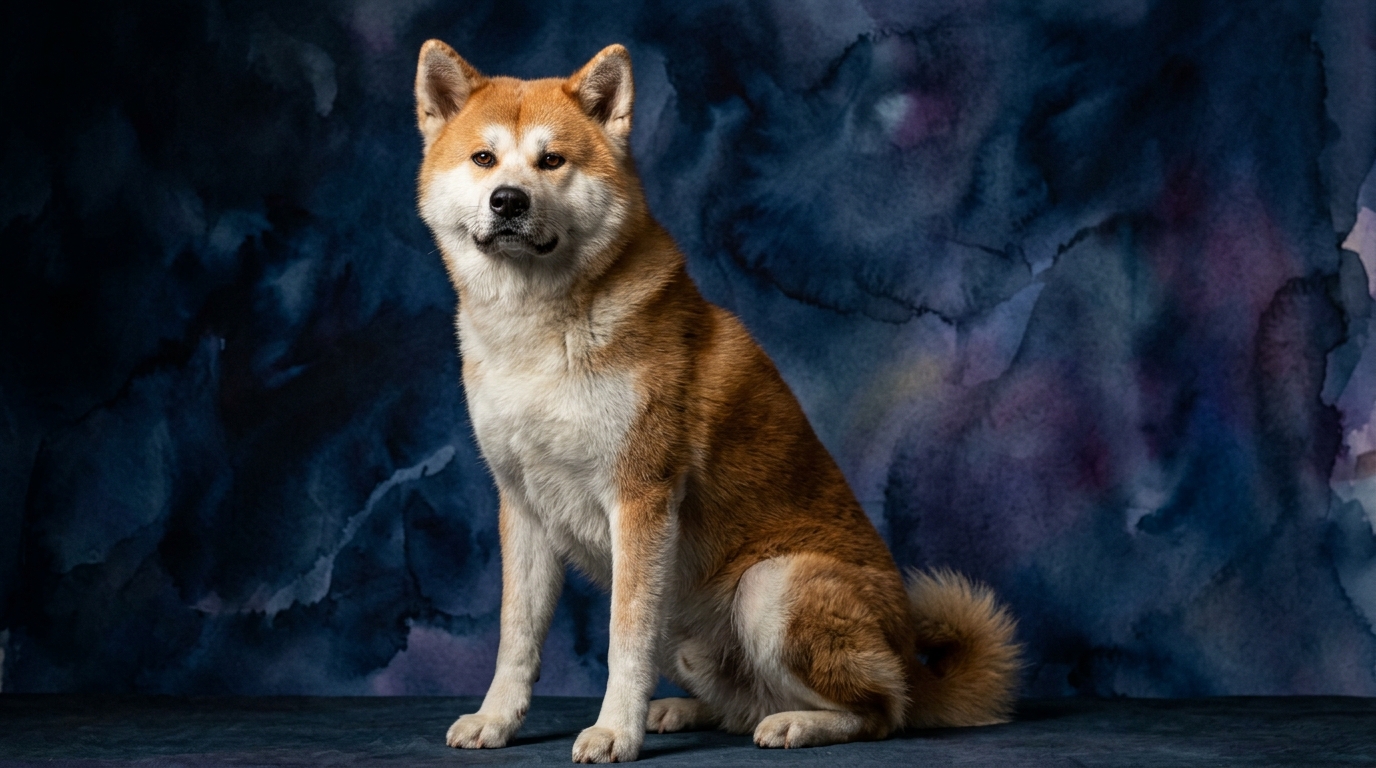

Side-by-Side Cognitive Profile: Akita vs. Skye Terrier
The Cosmic Pet's Pet IQ Lab assesses canine cognitive function across five key dimensions, providing a granular view of each breed's mental makeup. For the Akita, a venerable working breed, their profile reveals a problem-solving capacity of 3/5, indicating an ability to independently navigate challenges, though often on their own terms. Their training speed registers at 2/5, suggesting a discerning learner who requires consistent, patient guidance. Social intelligence is rated 3/5, reflecting a nuanced understanding of their immediate social circle, coupled with a reserved demeanor towards outsiders. A dominant characteristic is their instinctive drive, scoring an exceptional 5/5, highlighting deeply ingrained protective and prey-oriented behaviors. Finally, their memory is robust at 4/5, enabling them to retain experiences and lessons with impressive clarity.
In contrast, the Skye Terrier, a breed from the Terrier group, presents a different cognitive blueprint. Their problem-solving ability is also 3/5, demonstrating a persistent, goal-oriented approach, particularly when pursuing a perceived objective. They show a moderate training speed of 3/5, indicating a steady learning curve, though their independent terrier spirit can occasionally introduce challenges. Social intelligence aligns with the Akita at 3/5, signifying strong bonds with their family while maintaining a discerning attitude towards strangers. Their instinctive drive is rated 3/5, a characteristic terrier tenacity for digging and chasing, present but more tempered than some other working breeds. The Skye Terrier's memory is 3/5, allowing them to recall routines and commands adequately, though perhaps not with the Akita's depth for complex, long-term retention.
Where the Akita Wins Cognitively
The Akita undeniably demonstrates cognitive strengths rooted in their heritage as guardians and hunters, particularly in the dimensions of instinctive drive and memory. Their commanding instinctive drive, scoring a perfect 5/5, isn't merely a physical impulse; it's a deeply embedded cognitive framework for vigilance and self-sufficiency. This means an Akita is constantly processing environmental cues for potential threats or opportunities, making independent decisions based on inherent protective and predatory programming. This mental architecture allows them to excel in roles demanding unwavering focus and decisive action, acting as a formidable deterrent or a patient hunter without constant human instruction. Furthermore, the Akita's superior memory, rated at 4/5, allows for profound learning and retention of experiences. This isn't just about remembering commands; it encompasses recalling specific individuals, past interactions, and the precise layout of their territory. This cognitive advantage means that once an Akita learns a boundary, a routine, or the appropriate response to a situation, that information is deeply ingrained, contributing to their consistent behavior and reliability within their established parameters, albeit after a slower initial learning phase.
Where the Skye Terrier Wins Cognitively
While the Akita's powerful instincts are a defining trait, the Skye Terrier offers distinct cognitive advantages that make them a more approachable companion for many households, particularly in terms of training speed and the manageability of their instinctive drives. The Skye Terrier's training speed, rated at 3/5, outpaces the Akita's 2/5. This indicates a generally more receptive and engaged learner who, while possessing terrier independence, is often more willing to collaborate during training sessions. They tend to pick up new commands and routines with less repetition and perceived resistance, making the initial stages of obedience training a more straightforward and rewarding experience for their human counterparts. This isn't to say they are always eager-to-please, but their mental processing is often more amenable to structured learning environments. Furthermore, the Skye Terrier's instinctive drive, at 3/5, represents a significant cognitive advantage for typical pet ownership. While they retain the tenacious spirit of their terrier lineage, their drive for digging, chasing, and independent action is less overwhelming than the Akita's intense 5/5. This means their innate behaviors are generally easier to redirect or manage, allowing for a more balanced cognitive focus on companionship and structured activities rather than being constantly driven by primal urges. This makes them less prone to independent decision-making based purely on instinct, which can be a relief for owners seeking a more integrated family member.
Which is Easier to Train and Why
When evaluating ease of training, the Skye Terrier generally presents a less challenging path for most owners compared to the Akita, a difference deeply rooted in their distinct cognitive approaches to cooperation. The Skye Terrier's training speed of 3/5, coupled with their inherent desire for companionship, means they are typically more amenable to engaging in structured learning. While they possess the characteristic terrier "what's in it for me?" attitude, their stubbornness often manifests as persistence rather than outright defiance. They are generally responsive to positive reinforcement and clear, consistent communication, finding value in the interaction itself. In contrast, the Akita's training speed of 2/5 reflects a highly independent and discerning mind. An Akita doesn't just learn; they evaluate. Commands are processed through a filter of perceived necessity, utility, and the Akita's own agenda. Their strong social intelligence (3/5) is often reserved for their immediate family, and their high instinctive drive (5/5) means they might prioritize an environmental stimulus over a human command. Real behavioral differences include the Akita's tendency to question directives or simply ignore them if they don't see the point, requiring an exceptional level of patience, consistent motivation, and a deep understanding of their independent nature. The Skye Terrier, while still a terrier, often seeks to understand and participate, making the training journey feel more like a partnership from the outset, rather than a negotiation of wills.
Cognitive Fit: Active vs. Relaxed Owners
The cognitive profiles of the Akita and Skye Terrier naturally align them with different lifestyles, particularly regarding the owner's activity level and approach to engagement. The Akita, with its profound instinctive drive (5/5) and robust memory (4/5), thrives with active owners who are prepared to provide not just physical exercise, but significant mental engagement and purpose. This isn't merely about daily walks; it's about channeling their innate guarding and hunting instincts through structured activities, advanced obedience, or even canine sports that require problem-solving and focus. An Akita needs an owner who embraces their independent thought and strong will, offering consistent leadership and clear boundaries to prevent their potent instincts from manifesting in undesirable ways. A relaxed owner, one who prefers minimal structured activity or mental stimulation, would likely find themselves overwhelmed by the Akita's need for purpose and potential for independent decision-making. Conversely, the Skye Terrier, with its moderate instinctive drive (3/5) and balanced cognitive scores, is a better fit for owners who appreciate regular engagement but aren't seeking an intensely demanding canine partner. They enjoy daily walks, playtime in the yard, and interactive toys, but their cognitive needs are generally met without the rigorous "work" an Akita often requires. They are content to be cherished companions, enjoying comfortable indoor living alongside their outdoor excursions. While they still possess terrier tenacity, a relaxed owner who offers consistent companionship and moderate daily activity will find the Skye Terrier a delightful and manageable presence, not needing to constantly channel a powerful, deeply ingrained drive.
The Verdict
Choose the Akita if you are an experienced owner seeking a supremely loyal, independent, and protective companion, prepared to invest deeply in consistent leadership, structured training, and meaningful mental engagement to channel their profound instinctive drives.
Opt for the Skye Terrier if you desire a steadfast, charmingly tenacious companion who thrives on close family bonds and moderate activity, offering a spirited yet more adaptable presence for a dedicated owner appreciating their distinct terrier character.
🧠 Find Your Pet's IQ Score
Our Pet IQ Lab assessment covers 25+ tests across 5 cognitive dimensions — personalized to your breed.
Take the Full IQ Test →Frequently Asked Questions
Are Akitas truly difficult to train due to their independence?
Akitas aren't inherently "difficult" but require a specific training approach. Their independence means they need a patient, consistent owner who can motivate them and clearly demonstrate the value of commands, rather than expecting blind obedience.
Do Skye Terriers bark excessively given their terrier nature?
Skye Terriers can be vocal, especially when alerting to strangers or perceived threats, as is common with many terriers. However, consistent training and early socialization can help manage their barking tendencies, ensuring they are not excessive.
How do Akita's guarding instincts manifest in a home environment?
Akita guarding instincts manifest as a strong territorial awareness and protectiveness of their family and property. They may be reserved with strangers, watchful of their surroundings, and quick to alert to perceived threats, requiring careful socialization and management.