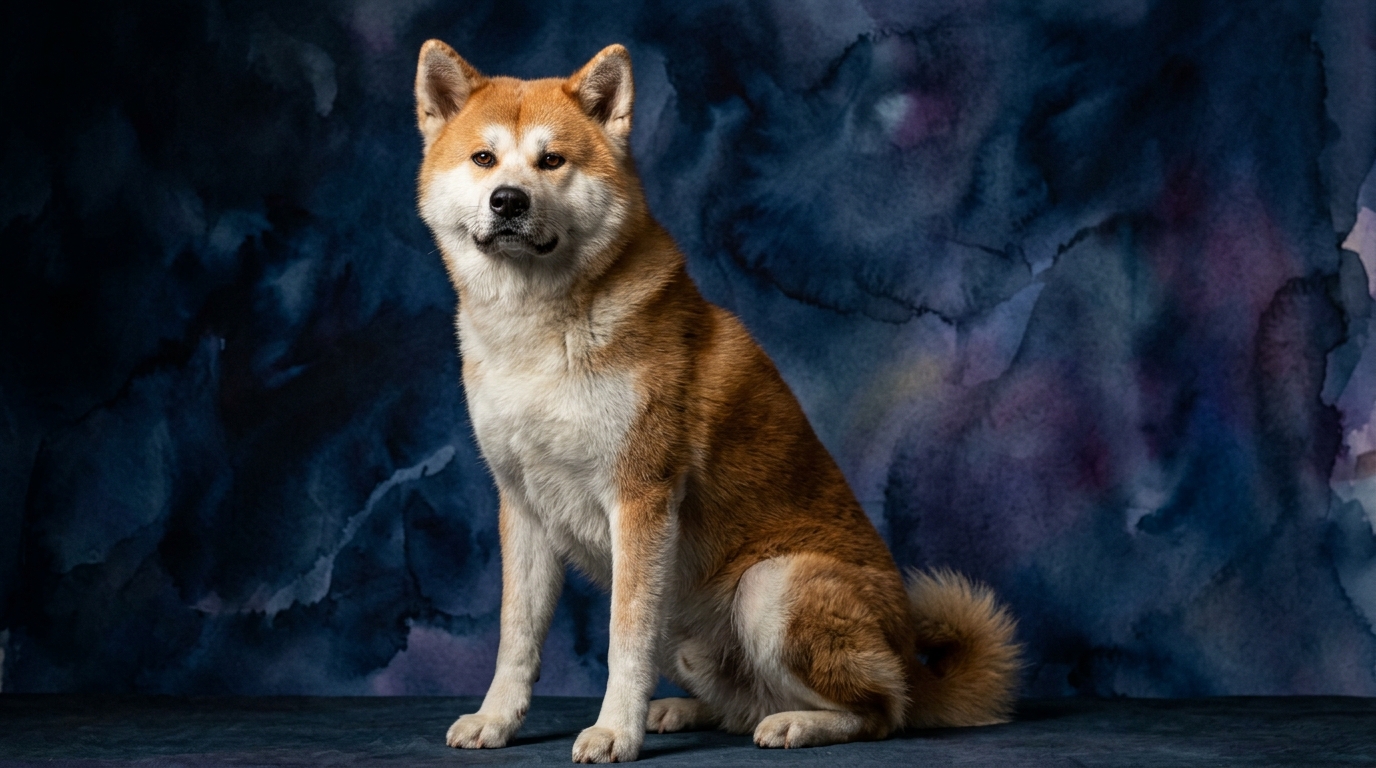

Side-by-Side Cognitive Profile
To truly understand the Akita and Sussex Spaniel, The Cosmic Pet Pet IQ Lab delves into five core cognitive dimensions for each breed, offering a nuanced view of their mental makeup. The Akita, a Working breed ranked #54 by Coren, presents a distinct set of intellectual traits. Their capacity for problem-solving, rated 3/5, indicates they can navigate moderate complexities, often employing a deliberate, analytical approach rather than impulsive action. With a training speed of 2/5, Akitas require significant patience and consistent methods; their intrinsic independence means they often weigh the value of a command against their own inclinations before compliance, rather than offering immediate obedience. A social intelligence score of 3/5 suggests they are perceptive of human dynamics and capable of profound loyalty, yet they typically reserve their deepest connections for a select few, exhibiting a discerning social nature. Their instinctive drive, a formidable 5/5, underpins their historical role as guardians and hunters, manifesting as intense vigilance, territorial awareness, and a powerful protective instinct. Rated 4/5 for memory, Akitas retain experiences and learned behaviors with remarkable tenacity, recalling past events, training cues, and interactions, which shapes their future responses.
The Sussex Spaniel, a Sporting breed ranked #62 by Coren, offers a different cognitive blueprint. Their problem-solving ability, also 3/5, often manifests as a methodical and persistent approach, particularly in tasks involving scent discrimination or navigating varied terrain, reflecting their gundog heritage. A training speed of 3/5 indicates they are generally responsive and willing learners, making them moderately quick to grasp new commands, though their spaniel exuberance can sometimes require focused direction. Their social intelligence, 3/5, highlights their amiable nature and responsiveness to human companionship, thriving on interaction and often attuned to the emotional climate of their family unit. With an instinctive drive of 3/5, Sussex Spaniels possess a moderate desire for scent work and retrieving, a characteristic trait of their sporting classification, without the intense territoriality of some working breeds. Their memory, rated 3/5, allows them to capably recall routines, learned commands, and familiar individuals, contributing to their adaptability within a structured environment.
Where the Akita's Cognition Excels
The Akita's cognitive strengths distinctly shine in areas demanding profound independence and robust memory. Their instinctive drive, rated a powerful 5/5, is not just a physical attribute but a deeply ingrained cognitive framework for vigilance and protection. This translates into an acute awareness of their environment and an innate capacity to assess potential threats, making them discerning guardians. Coupled with a 4/5 memory score, Akitas not only absorb complex information about their surroundings and past interactions but also retain it with striking accuracy. This allows them to learn from every experience, building a rich internal database of what is safe and what is not. While they may not always rush to obey, their strong memory ensures that once a lesson or boundary is understood, it is deeply etched, guiding their future behaviors with thoughtful, albeit independent, deliberation. This combination of powerful instinct and tenacious memory makes them formidable in roles requiring unwavering loyalty and self-assured decision-making.
Where the Sussex Spaniel's Cognition Shines
The Sussex Spaniel’s cognitive advantages emerge in their cooperative spirit and practical application of their problem-solving skills, particularly in collaborative tasks. While sharing a 3/5 problem-solving score with the Akita, the Sussex Spaniel often channels this into persistent, focused engagement, especially when their natural scenting abilities are involved. Their training speed, at 3/5, surpasses the Akita’s, indicating a greater eagerness to engage with human instruction and a more direct route to command acquisition. This responsiveness is a key cognitive win, making them more adaptable to varied training exercises and handler cues. Their social intelligence, also 3/5, fosters a strong desire to please and work alongside their human companions, translating into a more pliable and agreeable cognitive profile for shared activities, which is a significant asset in a family pet. Their moderate instinctive drive means they are less likely to be overwhelmed by internal impulses, allowing for more consistent focus on external cues.
Training Dynamics: Akita vs. Sussex Spaniel
When it comes to ease of training, the Sussex Spaniel generally presents a more straightforward path. The Akita's training speed is rated 2/5, reflecting their independent nature and propensity to evaluate commands rather than immediately comply. Their formidable instinctive drive (5/5), while valuable for guarding, means they possess a strong will and a deep-seated self-reliance that requires patient, consistent, and highly engaging methods to channel effectively. An Akita learns, but often on its own terms, and requires an owner who understands how to motivate rather than simply command. Without proper motivation and clear, fair leadership, their independence can be perceived as stubbornness, making consistent obedience a long-term project. They may understand a command but choose not to execute it if they don't see the immediate benefit or if their instincts suggest otherwise.
In contrast, the Sussex Spaniel, with a training speed of 3/5, typically shows a greater willingness to work collaboratively. Their moderate instinctive drive (3/5) allows them to remain more focused on the handler without being overwhelmingly swayed by their own impulses. They respond well to positive reinforcement and consistency, often eager to please and relatively quicker to integrate new commands into their repertoire, making the training process feel more fluid and less like a negotiation. While they can exhibit a charming spaniel stubbornness, it is generally less pronounced than the Akita's deep-rooted independence, making them more pliable and generally a more forgiving breed for those new to advanced dog training techniques.
Matching Breeds to Lifestyles: Active vs. Relaxed Owners
Defining 'active' and 'relaxed' ownership reveals distinct fits for these breeds. The Akita is better suited for owners who are 'active' in a mental and managerial sense, rather than purely physical. They require an owner who actively engages their independent mind, provides consistent structure, and understands how to manage a dog with a powerful instinctive drive and strong protective instincts. While they enjoy regular exercise, their primary need is for mental engagement and clear leadership from an owner prepared for a discerning, self-reliant companion. Their deep memory means they thrive on consistent routines and clear boundaries, which an active, engaged owner can provide. They are not a dog for passive ownership; their cognitive makeup demands an owner who is present and directive, consistently reinforcing their role and expectations within the household.
Conversely, the Sussex Spaniel is an excellent match for owners who appreciate a more 'relaxed' yet still engaged lifestyle. They thrive on companionship and enjoy moderate daily activity, such as leisurely walks, scent games, or garden exploration. Their cooperative nature means they are generally content to be involved in family life without demanding intense mental or physical challenges, making them suitable for owners seeking a good-natured, adaptable companion who enjoys a comfortable routine. While they benefit from mental stimulation through training and play, their needs are less intense than the Akita's. Their higher social intelligence rating, in practice, translates to a dog that is more often seeking interaction and inclusion, making them a natural fit for a family environment where their good-natured presence is appreciated without constant cognitive challenges.
The Verdict
If you seek a discerning, protective companion with a profound memory and are prepared to engage with an independent mind, the Akita offers a deeply rewarding, though challenging, partnership.
Opt for the Sussex Spaniel if you desire a cooperative, good-natured dog that enjoys collaborative activities and responds readily to guidance, making for a cheerful and devoted family member.
🧠 Find Your Pet's IQ Score
Our Pet IQ Lab assessment covers 25+ tests across 5 cognitive dimensions — personalized to your breed.
Take the Full IQ Test →Frequently Asked Questions
Is an Akita's independence a sign of low intelligence?
Not at all; the Akita's independence reflects a distinct cognitive style, where they often assess situations and make decisions rather than blindly following commands. This strong self-reliance is a hallmark of their working breed heritage and a testament to their analytical problem-solving.
Do Sussex Spaniels have strong hunting instincts?
Yes, Sussex Spaniels possess a moderate instinctive drive for scent work and flushing, rooted in their sporting purpose. While not as intense or territorial as some other gundogs, they enjoy activities that engage their natural tracking and retrieving abilities, making them enthusiastic participants in scent games.
Which breed is better for a first-time dog owner?
The Sussex Spaniel is generally a more suitable choice for first-time dog owners due to their more cooperative nature and higher training speed, which makes them more amenable to learning. Akitas require an owner experienced in handling strong-willed, independent breeds who can provide consistent, firm, and patient leadership.