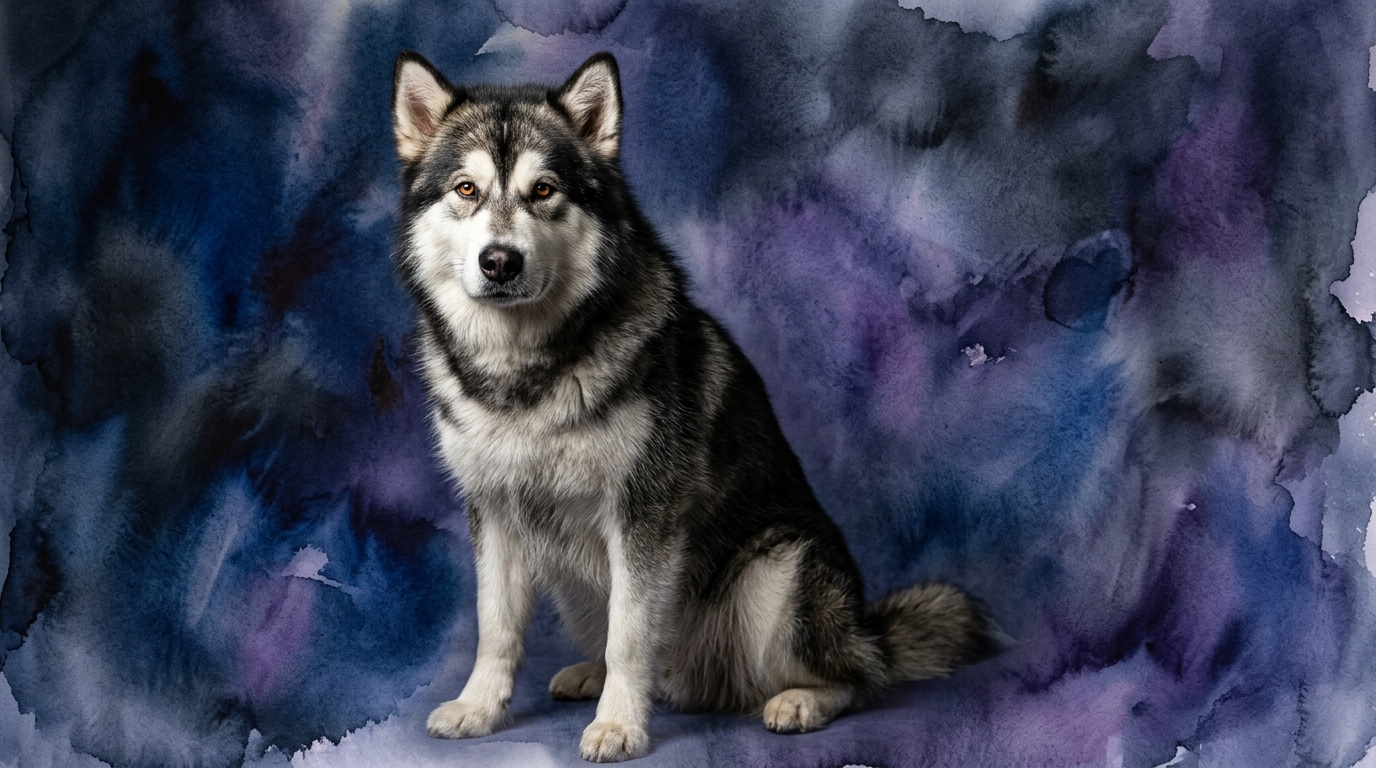
Side-by-Side IQ Profile: Alaskan Malamute
The Cosmic Pet Pet IQ Lab's assessment of the Alaskan Malamute reveals a cognitive makeup geared for endurance and independent survival. Their Problem Solving is rated 4/5, indicating strong practical intelligence, particularly for overcoming physical obstacles and navigating complex environments, a trait honed by their working heritage. Training Speed scores 2/5, reflecting a deliberate learning pace; Malamutes understand commands but often require significant repetition and strong motivation due to their independent nature. Social Intelligence stands at 3/5, meaning they grasp pack dynamics and form deep bonds, yet maintain a self-assured presence rather than constant deference. Their Instinctive Drive is a powerful 5/5, manifesting as an intense, innate urge for pulling, tracking, and digging, which defines much of their behavior. Finally, Memory is 4/5, allowing them to consistently recall learned behaviors, routes, and past experiences with reliability.
For the Alaskan Malamute, their intelligence profile paints a picture of a resourceful, self-reliant canine whose cognitive strengths are deeply intertwined with their ancestral role as a sled dog. Their problem-solving isn't about abstract puzzles but about practical application in challenging real-world scenarios, such as figuring out how to access a food source or navigate treacherous terrain. The lower training speed doesn't imply a lack of capacity, but rather a strong internal compass; they process information and decide on a course of action that aligns with their own perceived needs, which often requires a trainer to be exceptionally patient and consistent. Their strong memory ensures that once a behavior or route is ingrained, it tends to stay, making them dependable in established routines. The overwhelming instinctive drive is a core cognitive component, fueling their actions with immense purpose and making them formidable in tasks that leverage these natural urges, but also demanding careful management in a domestic setting. This blend of attributes makes the Malamute a thinking dog, but one whose thought processes are often directed by ancient instincts and a powerful sense of self-preservation.
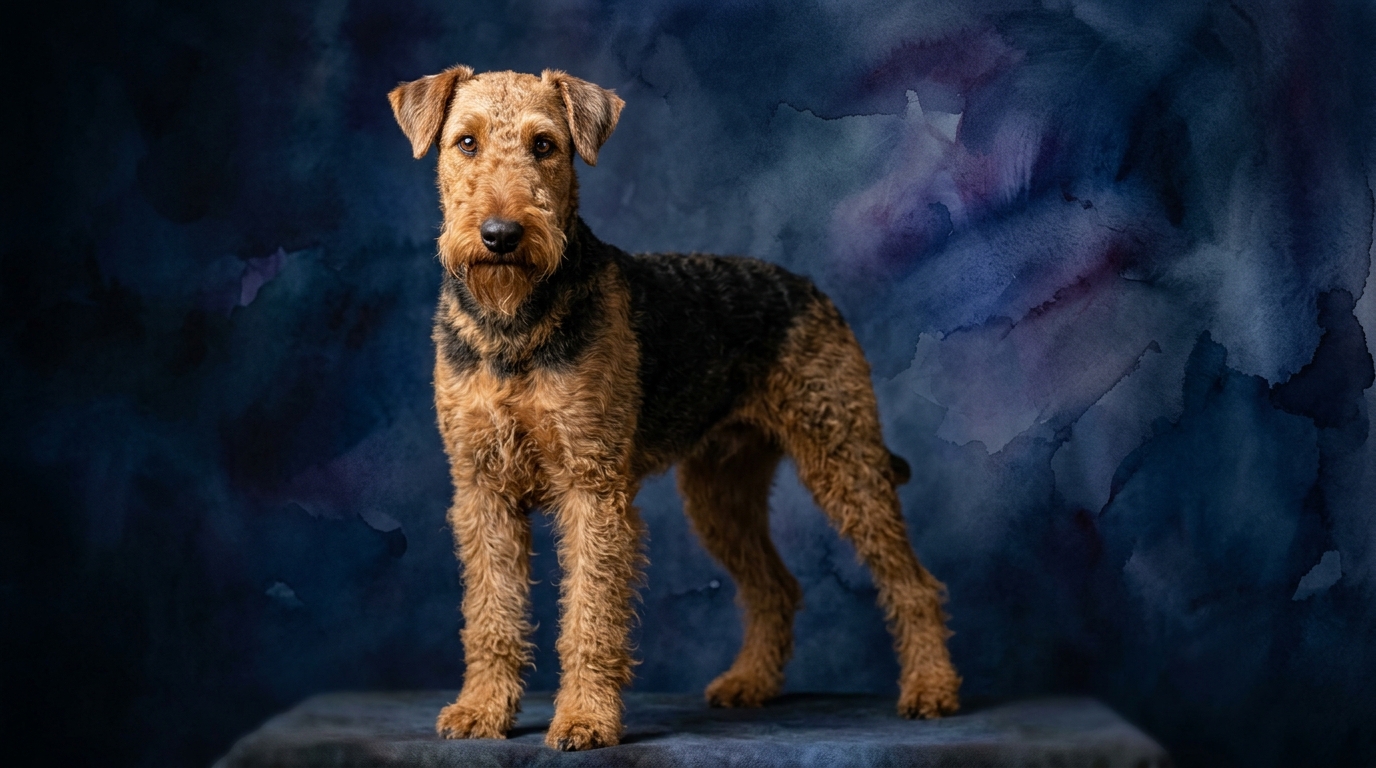
Side-by-Side IQ Profile: Airedale Terrier
The Airedale Terrier's IQ profile from The Cosmic Pet Pet IQ Lab highlights a quick-witted and tenacious mind. Their Problem Solving is also 4/5, but this manifests as cunning and strategic thinking, often applied to outsmarting challenges or engaging with interactive toys. Training Speed is a commendable 4/5, indicating a rapid ability to grasp new commands and routines, making them generally responsive and eager to learn. Social Intelligence is 3/5, on par with the Malamute, showing an awareness of their human family and social cues, but with their characteristic terrier boldness. Their Instinctive Drive is rated 3/5, acknowledging their terrier instincts for hunting and chasing, which are present but typically more manageable than the Malamute's intense drives. Memory, like the Malamute, is 4/5, demonstrating a solid capacity to retain learned information and experiences.
The Airedale Terrier's intelligence profile reveals a dog that is both mentally agile and persistent. Their problem-solving skills, while scoring the same as the Malamute, are often expressed in a more interactive and strategic manner, showcasing a cleverness in manipulating objects or devising ways to achieve a goal that requires mental engagement rather than sheer physical power. The higher training speed is a significant differentiator, indicating a dog that is typically more receptive to instruction and finds satisfaction in mastering new tasks quickly. This makes them excellent candidates for advanced obedience or dog sports where rapid learning is an asset. Their social intelligence, while moderate, is coupled with a confident and sometimes assertive personality, meaning they are aware of their place within the family but are not easily intimidated. The instinctive drive, though lower than the Malamute's, is still a notable aspect of their cognition, requiring outlets for their natural urges to chase and investigate. Their robust memory ensures that once they learn something, it's retained effectively, making their training durable and consistent. Overall, the Airedale's cognitive makeup points to a versatile and mentally sharp companion, capable of engaging in a wide range of activities.
Where Alaskan Malamute Wins Cognitively
The Alaskan Malamute's cognitive strengths truly shine in scenarios demanding independent thought, robust physical endurance, and the application of deep-seated instinctive drives. Their exceptional 5/5 instinctive drive is a profound cognitive advantage when tasks require sustained, purposeful effort, such as pulling heavy loads or navigating complex, scent-rich environments. This drive isn't just brute force; it's a cognitive commitment to a task, allowing them to focus intensely on a goal over extended periods, making them unparalleled in endurance-based work. This manifests as an innate understanding of how to pace themselves and maintain focus during prolonged exertion, a unique cognitive strength for their historical purpose. Furthermore, their problem-solving (4/5) often manifests as ingenious resourcefulness in practical, environmental challenges, like finding the weakest point in a fence or devising a way to reach a hidden treat that requires overcoming physical barriers. This isn't about abstract logic, but a very concrete, survival-oriented intelligence that enables them to adapt and overcome physical barriers with remarkable determination, often by trial and error driven by a strong internal motivation. Their memory (4/5) supports this by allowing them to recall successful past strategies for similar situations, building a repertoire of effective solutions for their specific needs, particularly in navigating familiar territories or remembering routines related to their valued resources, making them incredibly reliable in their established domain.
Where Airedale Terrier Wins Cognitively
The Airedale Terrier's cognitive prowess particularly excels in areas requiring quick mental processing, adaptability in learning, and a keen, tactical approach to problem-solving that is often more interactive. Their standout 4/5 training speed demonstrates a superior capacity for rapidly grasping new concepts, commands, and routines. This cognitive agility means they can process information from their environment and human handlers more quickly, allowing for faster acquisition of complex sequences and a more fluid response to varied instructions. This swift learning curve makes them highly suitable for dog sports, advanced obedience, and activities that demand a diverse skillset and rapid adjustments, where they can quickly learn and execute multiple cues. Their problem-solving (4/5), while matching the Malamute's score, typically manifests as a more strategic and adaptable intelligence, often involving clever manipulation of objects or outsmarting 'prey' in a game of wits. They possess a persistent, inquisitive mind that enjoys the mental challenge of figuring things out, often with a mischievous flair, rather than relying solely on brute force or endurance. This cognitive strength, combined with their strong memory (4/5), allows them to recall intricate sequences and apply learned strategies effectively in dynamic situations, making them excellent companions for owners who enjoy engaging in mental games and advanced, varied training challenges.
Which is Easier to Train and Why
When it comes to ease of training, the Airedale Terrier holds a distinct advantage over the Alaskan Malamute. The Airedale's Training Speed score of 4/5 indicates a natural inclination to learn quickly and respond readily to instruction. They are generally more eager to please and find satisfaction in mastering new tasks, making them receptive to various training methods and capable of quickly associating commands with desired actions. This translates to a more straightforward training experience, where lessons often stick after fewer repetitions, and they are more likely to offer behaviors proactively, making them highly rewarding for owners who enjoy seeing rapid progress. In contrast, the Alaskan Malamute's Training Speed of 2/5 reflects a breed that learns at a much more deliberate pace. Their independent nature and strong internal motivations mean they often need to be convinced that complying with a command is in their best interest, rather than simply accepting it. While they are certainly capable of learning, their powerful instinctive drive (5/5) and self-reliant problem-solving can sometimes make them less inclined to defer immediately to human direction. Training a Malamute requires immense patience, consistency, and a deep understanding of their motivations, often necessitating creative approaches to keep them engaged and ensure compliance, as they are prone to 'selective hearing' if not properly motivated. Their training is more about building a strong, respectful partnership than simply teaching commands.
Which Suits Active Owners vs. Relaxed Owners
The choice between these two breeds depends significantly on an owner's lifestyle and their capacity to meet a dog's cognitive and physical needs. The Alaskan Malamute, with its powerful 5/5 instinctive drive and a preference for independent problem-solving, is unequivocally suited for highly active owners. They thrive when given a 'job' that channels their innate urges for pulling, exploring, and enduring, requiring substantial daily physical exertion. Owners who enjoy long hikes, skijoring, dog packing, or engaging in other physically demanding outdoor activities will find a Malamute a willing and capable partner, appreciating their stamina and resourcefulness. Their cognitive needs are met through challenges that engage their physical prowess and independent decision-making, rather than constant obedience drills, as they prefer to think for themselves. Conversely, the Airedale Terrier, with its quicker training speed (4/5) and moderate instinctive drive (3/5), offers more versatility but still requires an active, engaged owner. While they are not as intensely driven by endurance tasks as Malamutes, Airedales need consistent mental stimulation and physical exercise to prevent boredom and destructive behaviors. They excel with owners who enjoy varied activities like agility, obedience, trick training, or long, interactive walks that engage both mind and body. Neither breed is suitable for truly relaxed, sedentary owners, as both require significant investment in exercise and mental engagement to prevent frustration and behavioral issues. However, the Airedale's adaptability in training and less overwhelming instinctive drives make them a slightly more manageable choice for an active family seeking a versatile companion, while the Malamute demands an owner deeply committed to harnessing their unique, intense drives and providing extensive physical outlets.
The Verdict
Select the Alaskan Malamute if you are an experienced, highly active individual or family deeply committed to providing consistent outlets for their powerful instinctive drives and independent problem-solving through activities like endurance sports or extensive outdoor adventures, appreciating a dog that thinks for itself.
Opt for the Airedale Terrier if you seek a quick-witted, versatile companion for active pursuits like dog sports or varied training, appreciating a dog that learns rapidly and enjoys engaging in interactive mental challenges with a confident, spirited approach.
🧠 Find Your Pet's IQ Score
Our Pet IQ Lab assessment covers 25+ tests across 5 cognitive dimensions — personalized to your breed.
Take the Full IQ Test →Frequently Asked Questions
Are Alaskan Malamutes difficult to train?
Alaskan Malamutes are not inherently difficult to train, but they learn at a deliberate pace (2/5 training speed) and possess a strong independent streak. Successful training requires immense patience, consistent positive reinforcement, and understanding their motivations, as they often weigh commands against their own perceived interests and prefer to be partners rather than subordinates.
Do Airedale Terriers need a lot of mental stimulation?
Yes, Airedale Terriers require significant mental stimulation to thrive. Their high problem-solving ability (4/5) and quick training speed (4/5) mean they enjoy learning and engaging in activities like puzzle toys, obedience training, and dog sports to keep their active minds occupied and prevent boredom-related behaviors.
How do their social intelligence scores compare?
Both breeds share a moderate social intelligence score of 3/5. This means both the Alaskan Malamute and the Airedale Terrier are capable of forming strong bonds and understanding family dynamics, but their independent natures mean they might not always seek constant human approval or direction, preferring a more self-assured presence within the family unit.