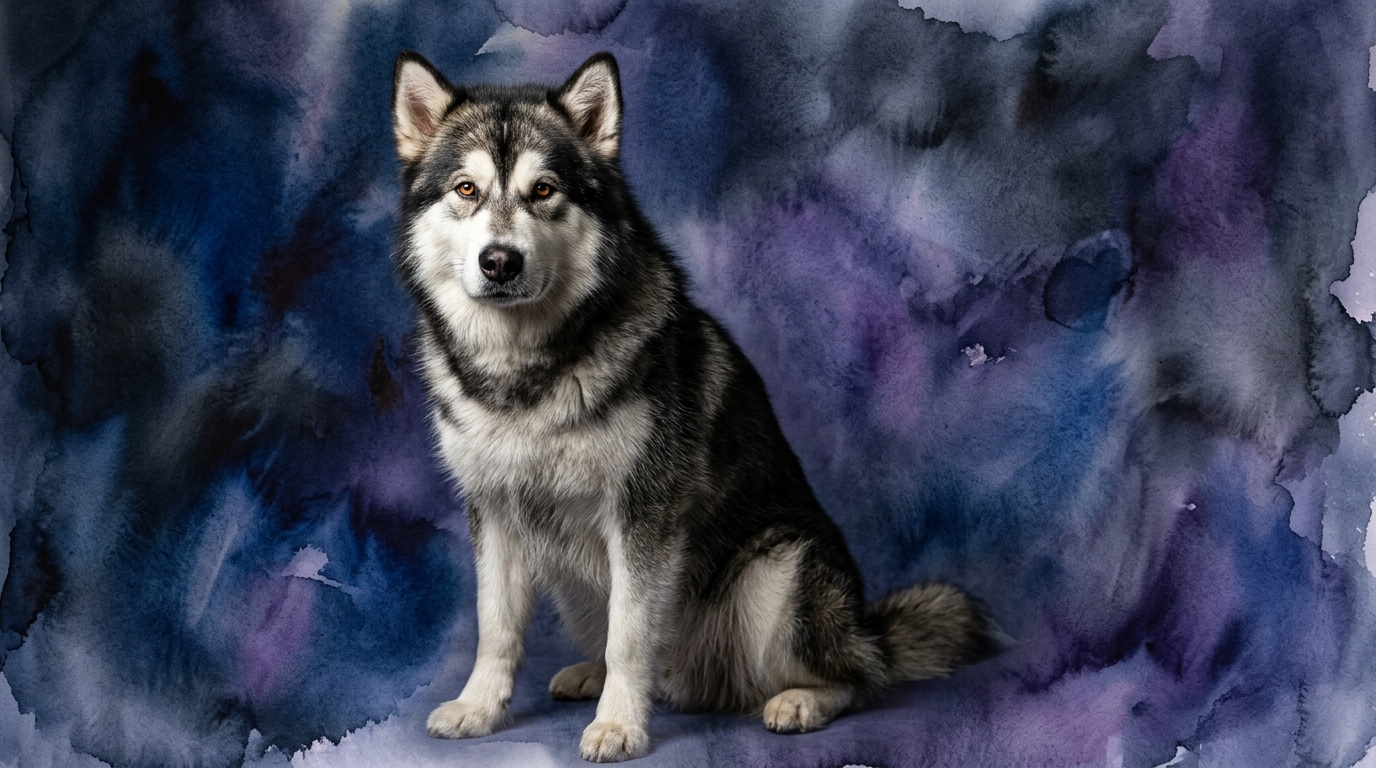
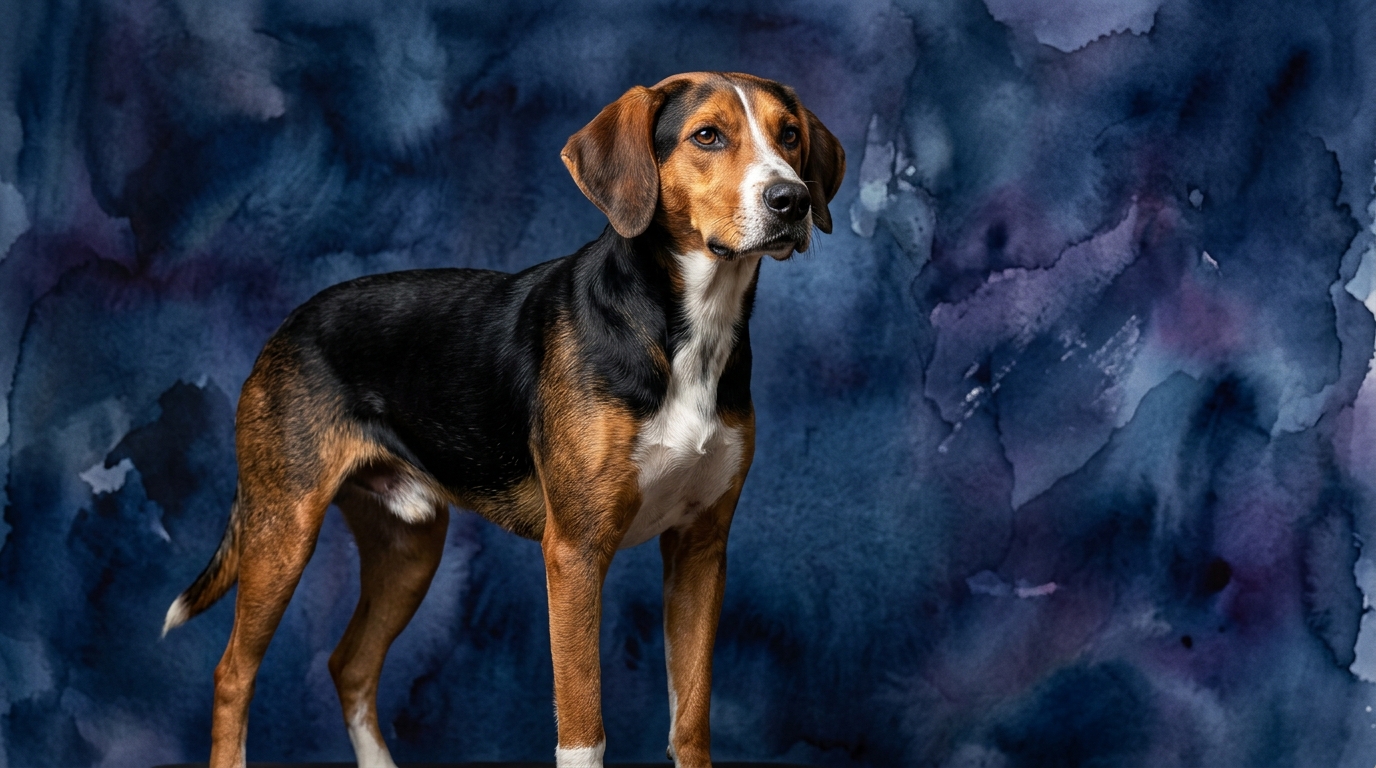
Side-by-Side IQ Profile: Malamute vs. Foxhound
The Cosmic Pet Pet IQ Lab employs a five-dimensional framework to assess canine intelligence, offering a nuanced view beyond simple obedience. For the Alaskan Malamute, a Working breed, we observe a Coren rank of #50, placing them in the average working intelligence category. Their problem Solving is rated 4/5, indicating a strong capacity for independent thought and resourceful solutions. Training Speed is 2/5, reflecting their independent nature and preference for self-directed action over rote commands. Social Intelligence stands at 3/5, as they understand pack dynamics and human intentions but often prioritize their own agenda. Their Instinctive Drive is a powerful 5/5, encompassing strong urges to pull, dig, and chase. Finally, their Memory is solid at 4/5, allowing them to recall complex routes and experiences.
In contrast, the American Foxhound, a Hound breed, is not Coren-ranked, suggesting their cognitive strengths lie outside traditional obedience metrics. Their problem Solving is 3/5, primarily focused on deciphering scent trails and navigating terrain based on olfactory cues. Training Speed is 3/5, indicating a moderate ability to learn commands, though often overshadowed by their primary instinct. Social Intelligence is 3/5; they are generally amiable and cooperative within a pack, but their focus is less on human-centric manipulation and more on group harmony. Their Instinctive Drive is 3/5, highly specialized around scenting and chasing prey. Their Memory is also 3/5, sufficient for remembering trails and basic routines, but perhaps less expansive than the Malamute's.
Where the Alaskan Malamute Wins Cognitively
The Alaskan Malamute demonstrates superior cognitive prowess in areas requiring independent thought and complex spatial reasoning. Their 4/5 problem-solving ability extends beyond simple tasks; they are adept at figuring out how to open latches, navigate intricate obstacles, or even 'outsmart' their owners to achieve a desired outcome, such as accessing a forbidden treat. This resourcefulness stems from centuries of needing to make decisions autonomously in challenging Arctic environments, where human direction might be delayed or impossible. They learn from experience and apply those lessons to new, similar situations with remarkable ingenuity.
Furthermore, the Malamute's 4/5 memory allows them to retain detailed information about their environment, including safe paths, potential dangers, and the location of resources. This long-term recall is crucial for a breed designed to traverse vast, often featureless, landscapes and return home reliably. While their 5/5 instinctive drive is a double-edged sword for owners, it represents a cognitive 'win' in terms of the sheer power and breadth of their innate behaviors – a deeply ingrained set of programs for survival and function that are incredibly robust.
Where the American Foxhound Wins Cognitively
The American Foxhound's cognitive strengths are hyper-specialized, giving them a distinct advantage in tasks requiring olfactory discernment and sustained focus on a singular sensory input. Their 3/5 problem-solving, while lower than the Malamute's overall, is exceptionally efficient when applied to scent puzzles. They excel at discriminating between faint and confusing odors, following complex, broken trails, and maintaining a relentless pursuit of a scent, even over long distances and varied terrain. This specialized intelligence is a testament to their breeding as scent hounds, where every cognitive resource is channeled into their primary function.
Their 3/5 training speed, while moderate, also reflects a relative 'win' in terms of focus compared to the Malamute's strong independence. When a Foxhound is engaged in a scent-based task, their concentration is unwavering, making them highly effective in their specific domain. While their social intelligence is rated similarly at 3/5, the Foxhound's cooperative nature within a hunting pack translates to a generally more agreeable disposition in group settings, where they are less inclined to challenge authority or manipulate situations compared to the more independent Malamute.
Which is Easier to Train and Why?
Between these two breeds, the American Foxhound is generally considered easier to train, primarily due to their slightly higher training speed (3/5 vs. Malamute's 2/5) and a fundamental difference in their approach to commands. American Foxhounds, while prone to distraction by compelling scents, are typically more eager to please their human companions once their focus is secured. They respond well to positive reinforcement and consistent methods, even if their hound instincts mean they might occasionally 'tune out' when a strong scent is present.
The Alaskan Malamute, conversely, presents a greater challenge in training. Their 2/5 training speed is a direct result of their profound independence and strong will. Malamutes are not inherently driven by a desire to please; instead, they constantly evaluate whether a command serves their own interests or makes logical sense to them. This often manifests as stubbornness or a perceived 'selective hearing.' Training a Malamute requires immense patience, creativity, and a deep understanding of their motivations, often turning every session into a negotiation rather than a simple instruction. Their high problem-solving skills mean they are often trying to find loopholes or alternative solutions rather than simply complying.
Which Suits Active Owners vs. Relaxed Owners?
Neither the Alaskan Malamute nor the American Foxhound is suited for truly relaxed or sedentary owners; both require significant exercise and mental stimulation, albeit with different focuses. The Alaskan Malamute, with their powerful 5/5 instinctive drive and high energy, demands an exceptionally active owner. They thrive on activities that engage their pulling instinct, such as sledding, skijoring, or vigorous hiking. Their 4/5 problem-solving also necessitates mental challenges to prevent boredom, which can lead to destructive behaviors like digging and chewing. An owner who cannot commit to several hours of physical and mental engagement daily will find a Malamute overwhelming.
The American Foxhound also requires an active lifestyle, but their needs are centered around endurance and scent work. Owners must be prepared for long walks, runs, or hikes where the Foxhound can indulge their powerful scenting instinct. While they might be content to relax indoors after adequate exercise, their vocal nature and potential for baying when bored or detecting a scent mean they are not a quiet, low-maintenance companion. A relaxed owner will struggle with the Foxhound's persistent desire to follow a trail and their potential for wandering if not securely contained or supervised.
The Verdict
Choose the Alaskan Malamute if you are an experienced, highly active owner who relishes a strong, independent, and clever companion, prepared for extensive, creative training and dedicated to channeling their powerful physical and mental drives.
Choose the American Foxhound if you are an active, patient owner who enjoys long outdoor adventures, appreciates a dog with an unwavering focus on scent work, and seeks a generally amiable companion thriving on consistent exercise and nose-based mental stimulation.
🧠 Find Your Pet's IQ Score
Our Pet IQ Lab assessment covers 25+ tests across 5 cognitive dimensions — personalized to your breed.
Take the Full IQ Test →Frequently Asked Questions
Are Alaskan Malamutes truly difficult to train?
Yes, their 2/5 training speed and highly independent nature mean they often evaluate commands based on their own perceived benefit. They require an owner who understands their strong will and can employ consistent, engaging, and highly motivating training methods.
Do American Foxhounds make good family pets?
American Foxhounds can be good family pets, especially for active families, as they are generally amiable and tolerant. However, their strong scent drive means they require secure containment and consistent exercise to prevent wandering, and their baying can be a consideration for neighbors.
Which breed requires more exercise?
Both breeds require substantial exercise, but their needs differ. The Alaskan Malamute needs intense physical exertion that engages their pulling and working drives, combined with mental challenges. The American Foxhound needs extensive endurance exercise, primarily focused on allowing them to use their nose and follow scents over long distances.