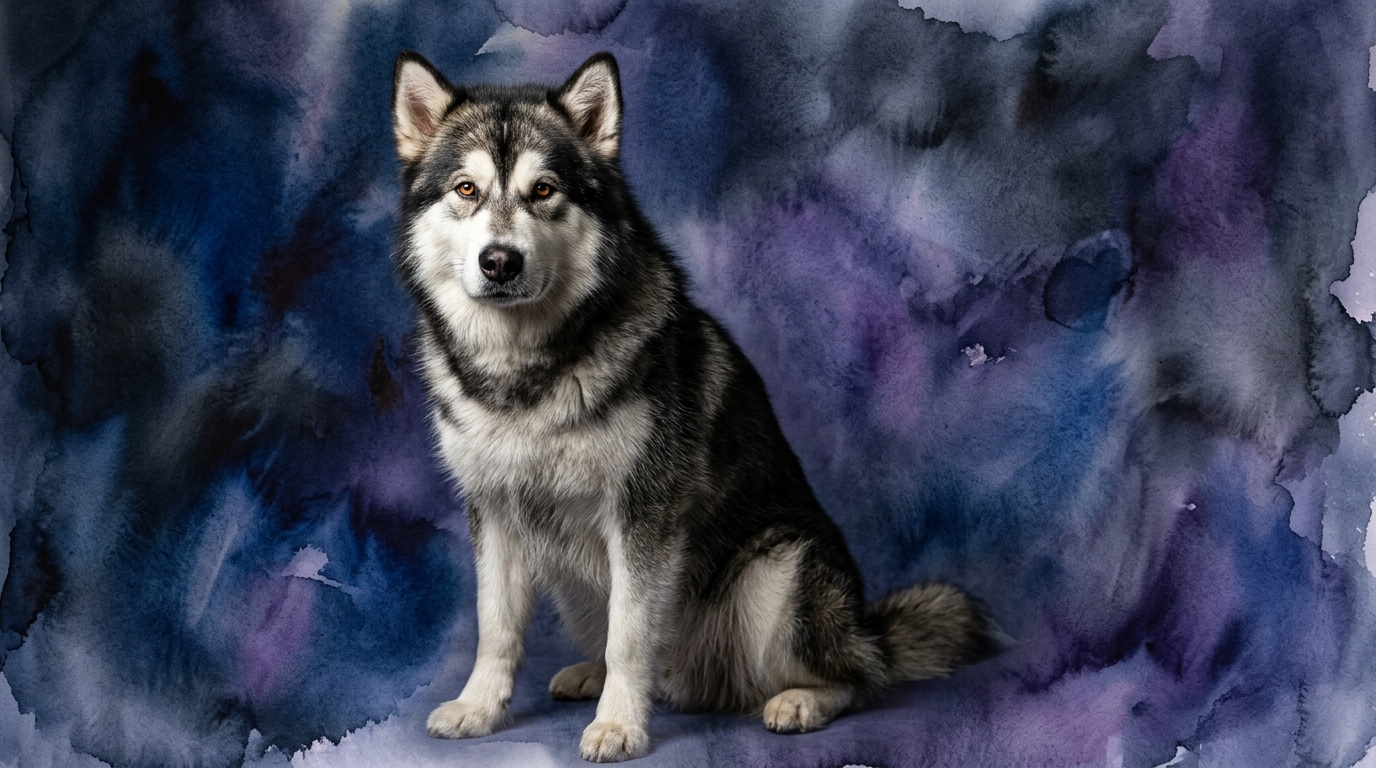
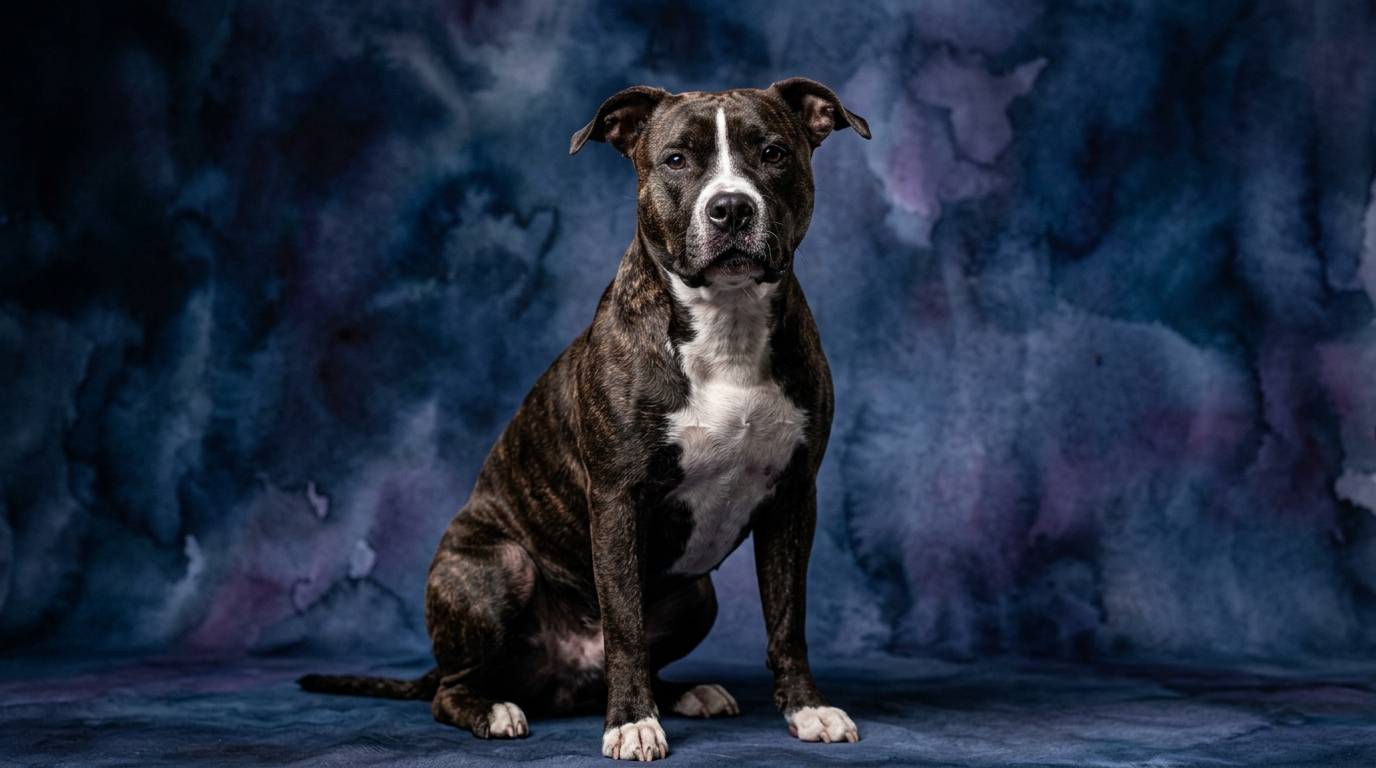
Side-by-Side IQ Profile: Malamute vs. AmStaff
The Cosmic Pet Pet IQ Lab offers a nuanced perspective on canine intelligence, breaking it down into five key dimensions. For the Alaskan Malamute, a Working dog with a Coren rank of #50, these dimensions paint a picture of an independent, driven intellect. Its Problem Solving is rated 4/5, indicating a strong capacity for independent thought in complex environments. Training Speed scores lower at 2/5, reflecting a will of its own. Social Intelligence sits at 3/5, suggesting a moderate understanding of social cues, while its Instinctive Drive is a powerful 5/5, showcasing a profound inner motivation. Memory is solid at 4/5, crucial for recalling routes and experiences.
In contrast, the American Staffordshire Terrier, a Terrier with a Coren rank of #48, presents a different cognitive profile. Its Problem Solving is rated 3/5, demonstrating practical intellect focused on immediate tasks. Training Speed is 3/5, indicating a reasonable willingness to learn and please. Social Intelligence matches the Malamute at 3/5, highlighting its people-oriented nature. Instinctive Drive is 3/5, a moderate level that allows for adaptability, and Memory is also 4/5, signifying a good capacity for retaining learned behaviors and associations. These scores reveal two distinct cognitive blueprints, each tailored to different historical roles and temperaments.
Where the Alaskan Malamute Wins Cognitively
The Alaskan Malamute truly shines in areas demanding independent thought and sustained purpose. Its 4/5 Problem Solving rating is a testament to its ability to independently assess and navigate complex environmental challenges. Historically, these dogs were expected to find optimal paths through snow, overcome natural obstacles, and make critical decisions during long hauls, often without direct human instruction. This isn't about solving puzzles for treats; it's about survival and efficiency in harsh conditions, showcasing a robust, practical intelligence geared towards self-reliance.
Furthermore, the Malamute's exceptional 5/5 Instinctive Drive sets it apart. This isn't just physical stamina; it's a deep cognitive motivation for sustained, purposeful work. This breed possesses an innate drive to pull, to explore, and to endure, which translates into a mental fortitude that allows them to maintain focus on a task for extended periods, pushing through fatigue and environmental adversities. This profound inner engine makes them relentless in pursuit of a goal they deem worthy, a truly unique cognitive strength. Their 4/5 Memory also supports this, allowing them to recall complex routes, routines, and environmental details, crucial for their historical working functions and contributing to their independent decision-making.
Where the American Staffordshire Terrier Wins Cognitively
The American Staffordshire Terrier's cognitive strengths lean towards responsiveness and social engagement. Its 3/5 Training Speed, while not top-tier, indicates a more compliant and eager-to-please nature compared to the Malamute. This willingness to engage with human instruction and adapt to new commands makes them more amenable to structured learning environments, allowing for a smoother training process and more consistent retention of learned behaviors. They often demonstrate a keen interest in understanding what their human wants, making them cooperative learners.
With a 3/5 for Social Intelligence, the AmStaff demonstrates a strong affinity for human interaction and a capability to read social cues, often making them highly attuned companions. They are generally responsive to human emotions and intentions, which facilitates a strong bond and allows for effective communication within a family unit. This social acumen, combined with their 4/5 Memory, means they are excellent at associating specific actions with outcomes and remembering interactions, fostering a reliable and predictable partnership. Their moderate 3/5 Instinctive Drive, compared to the Malamute's intense 5/5, also means they are generally more adaptable to varied living situations and less singularly driven by an overwhelming primal purpose, allowing for greater cognitive flexibility in diverse environments.
Which is Easier to Train and Why?
When it comes to ease of training, the American Staffordshire Terrier generally holds an advantage over the Alaskan Malamute. The AmStaff's 3/5 Training Speed reflects a dog that is typically more eager to please its human and more receptive to instruction. They respond well to positive reinforcement and clear, consistent communication, often picking up new commands at a reasonable pace. Their moderate instinctive drive means they are less likely to be distracted by independent impulses and more inclined to focus on the task at hand when engaged with their trainer, making them consistent learners.
The Alaskan Malamute, with its 2/5 Training Speed, presents a more significant training challenge. Their high independence and powerful instinctive drive for self-directed work mean they are not inherently motivated to simply follow human commands. Malamutes often evaluate whether a task aligns with their own perceived purpose or if their independent agenda is more pressing. Training requires immense patience, creativity, and a deep understanding of their motivations. They learn effectively, particularly when tasks are framed as purposeful or collaborative, but they will often do so on their own terms and at their own pace, requiring a dedicated and experienced handler.
Which Suits Active Owners vs. Relaxed Owners?
Neither the Alaskan Malamute nor the American Staffordshire Terrier is a suitable choice for a truly relaxed or sedentary owner; both breeds demand significant engagement. However, their specific needs cater to different types of active lifestyles. The Alaskan Malamute, with its profound 5/5 Instinctive Drive and 4/5 Problem Solving, requires owners who are not only physically active but also deeply committed to providing extensive mental stimulation that taps into these unique cognitive strengths. This means engaging them in activities like sledding, skijoring, long-distance hiking, complex scent work, or independent exploration that allows them to utilize their decision-making skills. An owner who cannot meet these intrinsic needs will likely encounter a bored, potentially destructive, and certainly unfulfilled Malamute.
The American Staffordshire Terrier, while also requiring an active owner, thrives on a different kind of engagement. Their 3/5 Instinctive Drive and 3/5 Social Intelligence mean they need consistent daily exercise to manage their energy, but equally important is the interactive and social component. They benefit greatly from consistent training, structured play, and ample social interaction with their human family. While they need physical outlets, their cognitive needs are more centered on partnership and participation in family life. An AmStaff can adapt to a slightly less extreme outdoor lifestyle than a Malamute, provided their social and training needs are consistently met, making them potentially more suitable for an active owner who prefers structured activities and companionship over independent, endurance-based endeavors.
The Verdict: When to Choose Each Breed
The Verdict
Choose an Alaskan Malamute if you are an experienced, active owner who relishes a partnership with an independent, intelligent problem-solver, valuing a dog with profound instinctive drive for purposeful work, and are committed to providing extensive, challenging mental and physical outlets.
Choose an American Staffordshire Terrier if you are an active owner seeking a responsive, socially intelligent companion eager to learn and participate in family life, who can provide consistent training, structured activity, and ample social interaction to channel their moderate drives and people-oriented nature.
🧠 Find Your Pet's IQ Score
Our Pet IQ Lab assessment covers 25+ tests across 5 cognitive dimensions — personalized to your breed.
Take the Full IQ Test →Frequently Asked Questions
Are Alaskan Malamutes difficult to train?
Alaskan Malamutes present a training challenge due to their strong independence and high instinctive drive, often prioritizing their own judgment over human commands. They learn at a slower pace (2/5 Training Speed) and require consistent, patient, and purpose-driven training methods to engage their unique cognitive strengths effectively.
Which breed is better for first-time dog owners?
Neither breed is ideal for a truly first-time dog owner without significant prior research and commitment, as both require dedicated training and management. However, the American Staffordshire Terrier's higher training speed (3/5) and desire to please generally make them a more manageable option for those willing to learn and commit to consistent guidance.
Do American Staffordshire Terriers have a high prey drive?
American Staffordshire Terriers possess a moderate instinctive drive, rated at 3/5 by The Cosmic Pet Pet IQ Lab. While not as intense or sustained as the Alaskan Malamute's 5/5, this means they may show interest in chasing small animals, requiring secure leashes and proper training to manage this natural inclination.