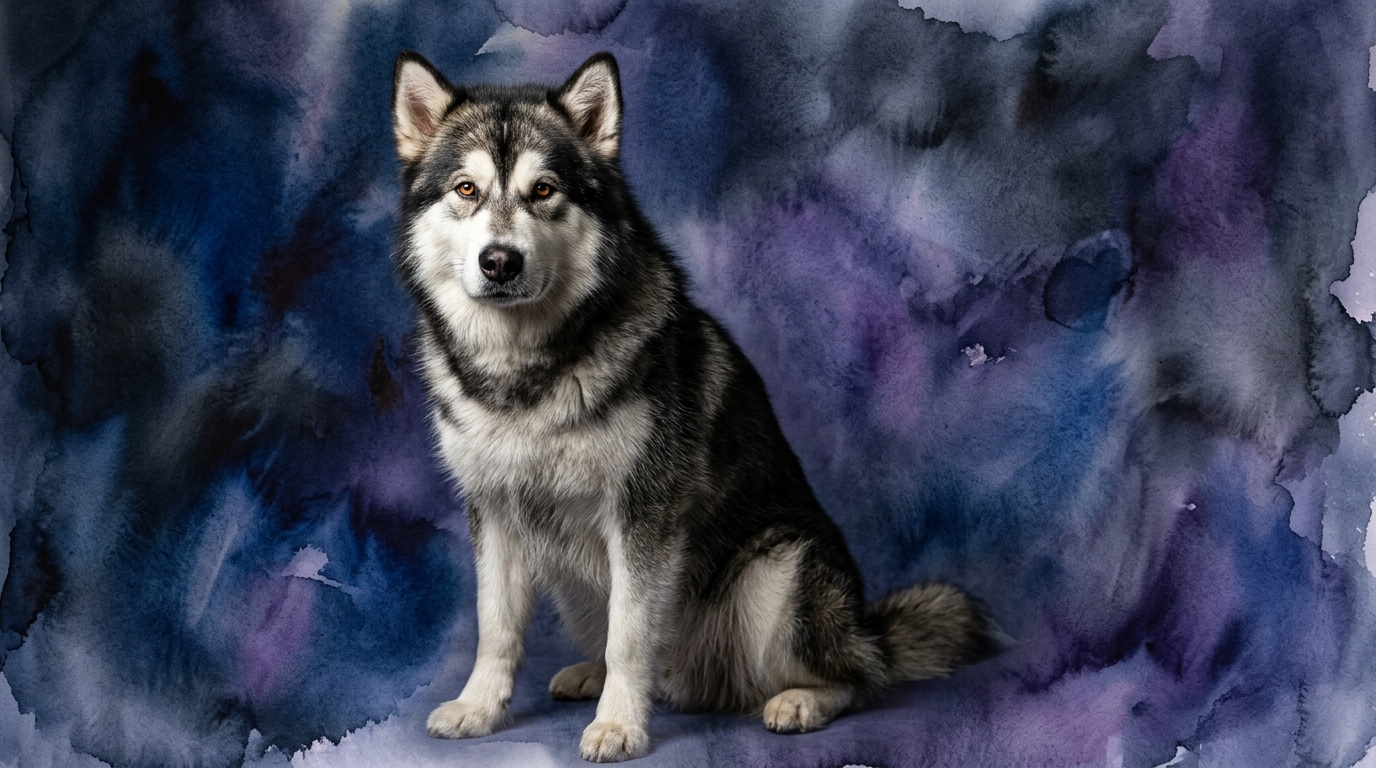
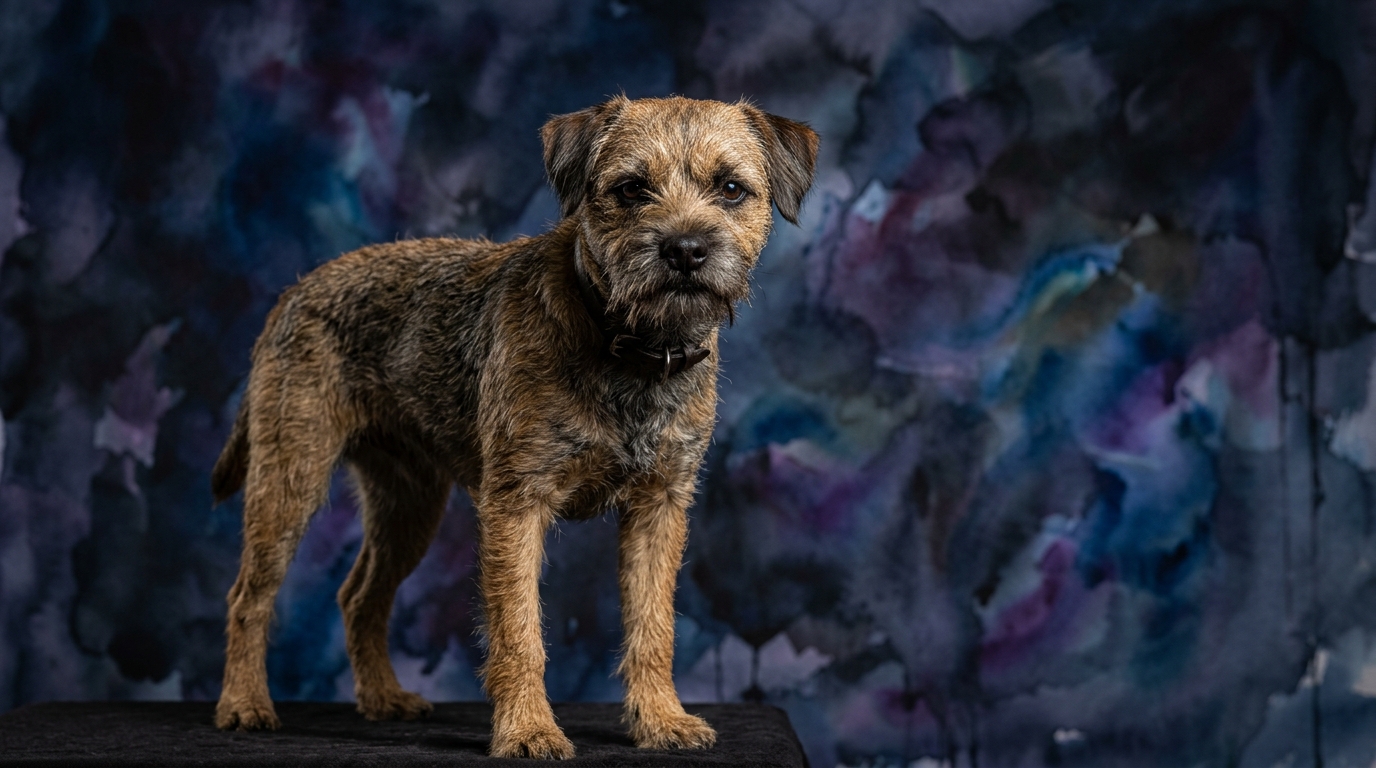
Side-by-Side IQ Profile: Alaskan Malamute vs. Border Terrier
The Cosmic Pet Pet IQ Lab evaluates canine intelligence across five key dimensions, providing a nuanced view beyond simple obedience rankings. For the Alaskan Malamute, a Working breed with a Coren rank of #50, its profile highlights a problem-solving ability of 4/5, a training speed of 2/5, social intelligence at 3/5, an exceptional instinctive drive of 5/5, and a memory score of 4/5. This paints a picture of a robust, purpose-driven thinker whose learning pace is deliberate, yet deeply rooted in instinct and retention.
In contrast, the Border Terrier, a Terrier breed ranking #30 on Coren's scale, presents a different cognitive blueprint. Its problem-solving ability matches the Malamute at 4/5, but its training speed is significantly higher at 4/5. Social intelligence is also 3/5, aligning with the Malamute, while its instinctive drive is a moderate 3/5. Finally, its memory score is 4/5, identical to the Malamute. This profile suggests a quicker, more adaptable learner with a strong capacity for independent thought, albeit with different motivational drivers.
Where the Alaskan Malamute Wins Cognitively
The Alaskan Malamute's preeminence shines brightest in its instinctive drive, scoring a perfect 5/5. This deeply ingrained instinct for purpose-driven work translates into an unparalleled ability to execute demanding, repetitive tasks, such as pulling sleds over vast distances, where consistent effort and endurance are paramount. Their cognitive strength lies in their unwavering commitment to a perceived mission, often requiring minimal external motivation once the task is understood.
Furthermore, while sharing a 4/5 score in problem-solving with the Border Terrier, the Malamute's application of this skill is often geared towards navigating complex environmental challenges or overcoming physical obstacles inherent in their working heritage. Their substantial memory (4/5) also supports this, enabling them to recall intricate routes or past experiences, crucial for survival and success in their traditional roles. This combination of high drive, robust memory, and practical problem-solving makes them exceptionally adept at self-directed, endurance-based activities.
Where the Border Terrier Wins Cognitively
The Border Terrier's cognitive advantage is most evident in its training speed, achieving a solid 4/5. This rapid assimilation of new commands and routines makes them highly responsive to instruction, enabling them to master a wide array of obedience tasks and learn intricate sequences with relative ease. Their quicker uptake means fewer repetitions are needed for a concept to solidify, making them particularly rewarding for owners who enjoy teaching complex tricks or participating in dog sports requiring precise execution.
While their problem-solving score is also 4/5, the Border Terrier often applies this intelligence with a keen observational capacity and a willingness to experiment, characteristic of their terrier heritage. This manifests as cleverness in finding solutions to household puzzles or strategizing to obtain a desired object. Their moderate instinctive drive (3/5), while lower than the Malamute's, is still sufficient to fuel their curiosity and engagement in learning, without overshadowing their responsiveness to human direction.
Which Is Easier to Train and Why?
Based on The Cosmic Pet IQ Lab data, the Border Terrier is definitively easier to train, primarily due to its 4/5 training speed compared to the Alaskan Malamute's 2/5. This difference is not merely quantitative; it reflects fundamental behavioral tendencies. Border Terriers typically exhibit a greater eagerness to please and a quicker comprehension of what is expected, making them more amenable to formal obedience training and faster at associating commands with actions.
The Alaskan Malamute's lower training speed often stems from its independent nature and strong will, characteristics vital for a dog expected to make decisions in challenging environments without constant human input. While they are certainly capable of learning, their learning process is often more deliberate, requiring patience, consistency, and a deep understanding of their motivations. They may question commands or prioritize their own instincts over immediate compliance, which can be perceived as stubbornness but is, in fact, a hallmark of their self-reliant cognitive style. Training a Malamute is more about forming a partnership and understanding their intrinsic drives, whereas training a Border Terrier often involves capitalizing on their responsiveness and desire for interaction.
Which Suits Active Owners vs. Relaxed Owners?
For active owners, both breeds can be suitable, but they cater to different types of activity. The Alaskan Malamute, with its 5/5 instinctive drive and 4/5 problem-solving, thrives with owners who can provide consistent, challenging physical outlets that tap into their working heritage. Activities like hiking, skijoring, carting, or long-distance walks are ideal, demanding endurance and mental engagement. These dogs require an owner who understands their need for purpose and can dedicate significant time to their exercise and enrichment, embracing their independent spirit.
The Border Terrier, with its 3/5 instinctive drive and 4/5 training speed, is also an excellent companion for active owners, particularly those interested in varied activities like agility, earthdog trials, or long walks and runs. Their quicker training speed means they can learn the nuances of dog sports more readily, and their moderate drive makes them enthusiastic but not overwhelming. For more relaxed owners, the Border Terrier could be a better fit than the Malamute, provided they still receive regular mental and physical stimulation to prevent boredom, which could lead to unwanted behaviors. A Malamute, even for active owners, demands a very specific and substantial commitment to its inherent working needs, making it less suited for a generally 'relaxed' lifestyle.
The Verdict: When to Choose Each Breed
The Verdict
Choose an Alaskan Malamute if you are an experienced, highly active individual or family committed to providing extensive, purpose-driven exercise and appreciate a strong-willed, independent thinker. You must be prepared for a deliberate training journey and value a dog with profound instinctive drives.
Opt for a Border Terrier if you seek a responsive, adaptable companion for a variety of activities, from dog sports to adventurous walks, and value a quicker learner who is generally eager to please. They are a good fit for active owners who also appreciate a dog that can settle down indoors, provided their needs for mental and physical engagement are consistently met.
🧠 Find Your Pet's IQ Score
Our Pet IQ Lab assessment covers 25+ tests across 5 cognitive dimensions — personalized to your breed.
Take the Full IQ Test →Frequently Asked Questions
Do Alaskan Malamutes and Border Terriers have similar problem-solving abilities?
Yes, both breeds score 4/5 in problem-solving according to The Cosmic Pet Pet IQ Lab. However, the application of this skill often differs; Malamutes tend to solve challenges related to endurance and navigation, while Border Terriers might excel at more intricate, observational puzzles.
Which breed has a stronger instinctive drive, the Alaskan Malamute or the Border Terrier?
The Alaskan Malamute possesses a significantly stronger instinctive drive, scoring 5/5, compared to the Border Terrier's 3/5. This indicates the Malamute is profoundly motivated by deep-seated natural urges for work and purpose, while the Border Terrier's drive is more moderate.
Is memory a distinguishing factor between these two breeds?
Memory is not a distinguishing factor between these two breeds, as both the Alaskan Malamute and the Border Terrier score 4/5 in this cognitive dimension. This suggests both breeds possess robust long-term and short-term recall abilities, which is beneficial for learning and adapting.