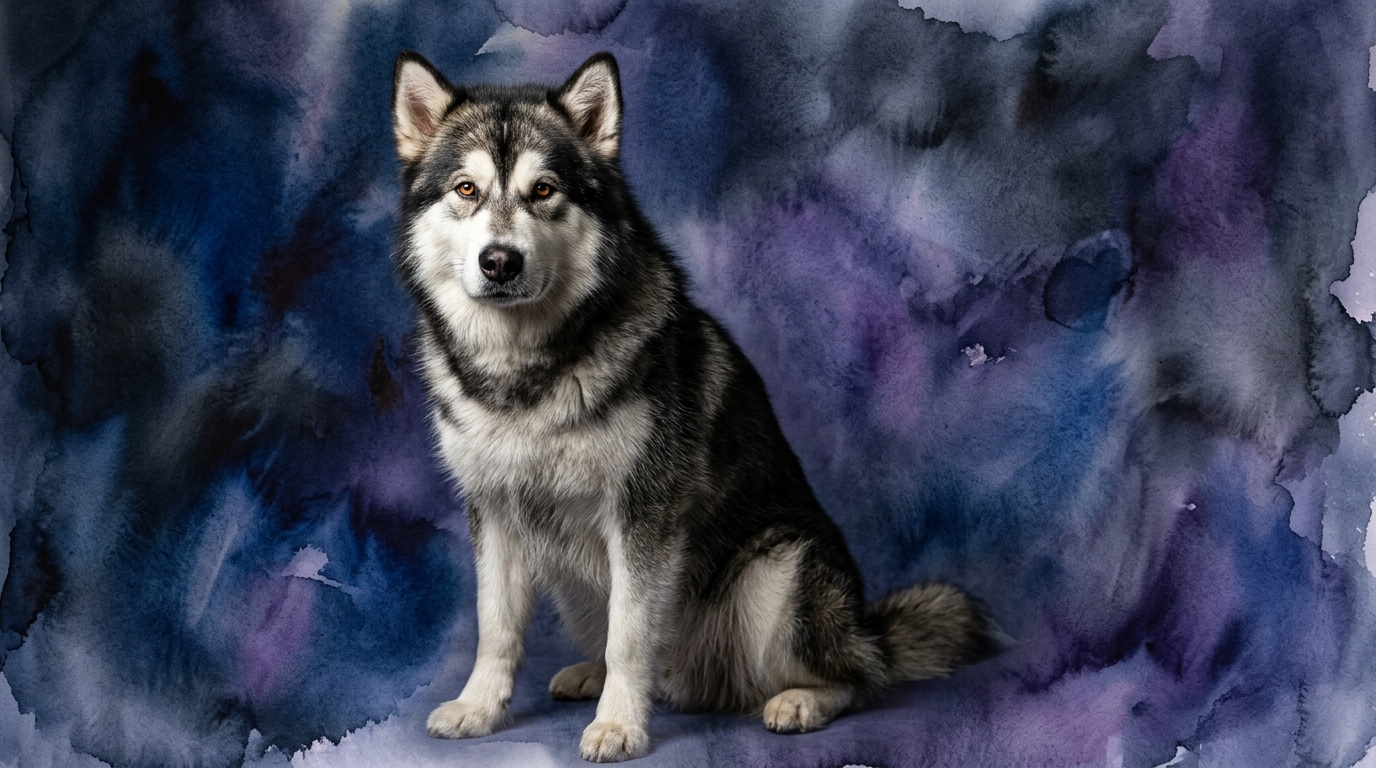
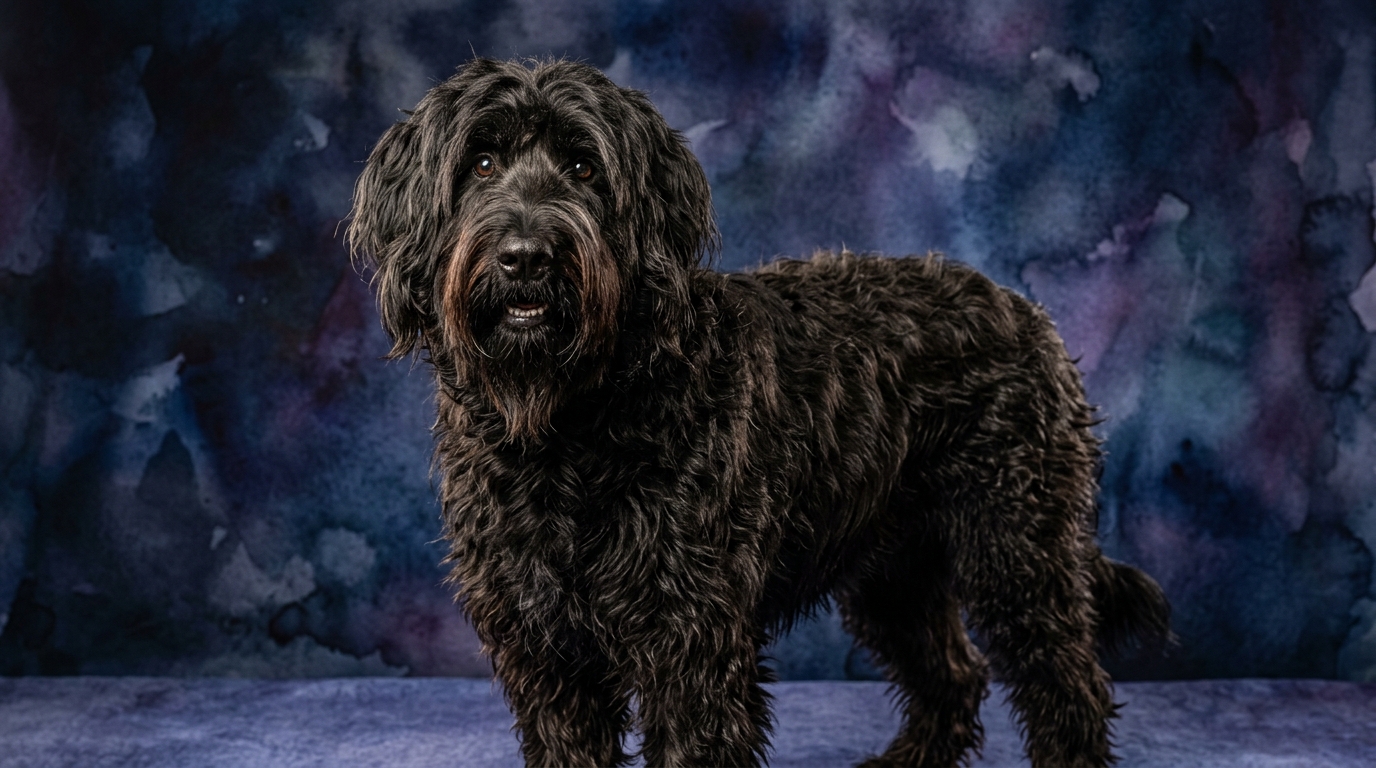
Side-by-Side IQ Profile: Alaskan Malamute vs. Briard
The Cosmic Pet Pet IQ Lab provides a nuanced framework for understanding canine cognition, breaking down intelligence into five key dimensions. For the Alaskan Malamute, a powerful Working breed, its profile shows a Problem Solving score of 4/5, indicative of a breed capable of independent thought and finding solutions in complex environments, often related to survival or task completion. Its Training Speed, however, is 2/5, suggesting a strong-willed nature that requires patience and consistent, highly motivating methods. Social Intelligence stands at 3/5, reflecting its pack-oriented nature and ability to understand social hierarchies, but not necessarily a strong desire to constantly please. An Instinctive Drive of 5/5 highlights its profound urge for physical tasks like pulling and endurance, a core part of its heritage. Finally, its Memory is 4/5, enabling it to retain complex sequences of actions and routines over time.
In contrast, the Briard, a Herding breed, presents a different cognitive blueprint, placing higher at Coren rank #30 compared to the Malamute's #50. The Briard also boasts a Problem Solving score of 4/5, demonstrating its capacity for strategic thinking, particularly relevant in dynamic herding situations where quick decisions are paramount. Its Training Speed is notably higher at 4/5, indicating a more eager-to-please and responsive temperament, making it generally quicker to grasp new commands and routines. Like the Malamute, its Social Intelligence is 3/5, showing an understanding of its family unit and a protective instinct, but not an overly effusive or universally friendly demeanor. The Briard's Instinctive Drive is 3/5, encompassing its herding and guarding tendencies, which are present but typically more manageable than the Malamute's intense drive. Its Memory, matching the Malamute, is 4/5, allowing it to remember intricate command sequences and past experiences effectively.
Where the Alaskan Malamute Wins Cognitively
The Alaskan Malamute distinguishes itself with its exceptional instinctive drive and its practical, resilient problem-solving abilities. With an Instinctive Drive of 5/5, this breed possesses an unparalleled internal motivation for sustained physical effort and purpose-driven tasks. This isn't merely about energy; it's a deep-seated cognitive predisposition to engage in activities like pulling, endurance running, or navigating challenging terrain. Their problem-solving at 4/5 is often geared towards independent decision-making in adverse conditions, such as finding a path through snow or strategizing how to conserve energy during a long haul. This cognitive strength allows them to assess situations and act autonomously, which was crucial for their survival and work in harsh environments. Their robust memory (4/5) further supports this by allowing them to learn and recall multi-stage tasks, making them highly effective in their historical roles once trained, despite their independent nature during the training process itself.
Where the Briard Wins Cognitively
The Briard's cognitive strengths primarily lie in its superior training speed and its adaptive problem-solving within dynamic, collaborative contexts. With a Training Speed of 4/5, the Briard typically learns new commands and complex routines more rapidly than the Malamute, making them highly receptive to obedience work, agility, and other dog sports. This responsiveness stems from a cognitive desire to engage with and please their handler, a hallmark of many herding breeds. Their Problem Solving score of 4/5 is often manifested in their ability to quickly analyze and react to changing situations, such as managing a flock of sheep or assessing potential threats, requiring both quick thinking and a willingness to follow direction. The Briard's higher Coren rank (30 vs. 50) generally reflects this greater receptiveness to formal instruction and their capacity to consistently execute learned behaviors, making them a strong contender for roles requiring precision and cooperation.
Which is Easier to Train and Why
Based on their IQ profiles, the Briard is generally easier to train than the Alaskan Malamute, primarily due to its significantly higher Training Speed. The Briard's 4/5 score indicates a breed that is typically more eager to please and quicker to form associations between commands and actions. They tend to be more handler-focused, deriving satisfaction from working cooperatively with their human companions. This responsiveness means fewer repetitions are often needed to instill new behaviors, and they are more likely to perform consistently, even with distractions. Their instinctive drive (3/5) is also more readily channeled into structured training exercises, as it's often directed towards specific tasks like herding rather than broad, self-directed endurance.
Conversely, the Alaskan Malamute's Training Speed of 2/5 points to a more independent and strong-willed temperament. They are not inherently driven to please in the same way a Briard might be; instead, they are motivated by their own purposes, often aligning with their profound instinctive drive (5/5). Training a Malamute requires immense patience, creativity, and high-value rewards to capture and maintain their attention. Their independent problem-solving skills, while impressive, can sometimes translate into a dog that prefers to figure things out on its own rather than simply obeying a command. This doesn't mean they are untrainable, but it does mean that training sessions must be engaging, fair, and consistent, with handlers understanding that a Malamute will often weigh the benefit of compliance against its own desires.
Which Suits Active Owners vs. Relaxed Owners
For owners seeking a companion for highly active, structured outdoor adventures and who appreciate an independent spirit, the Alaskan Malamute is a strong match. Its 5/5 Instinctive Drive for sustained physical activity means it thrives on long hikes, pulling sports, or endurance activities. These dogs require owners who are committed to providing daily, robust exercise that challenges both their bodies and their minds. Their strong problem-solving skills and memory mean they benefit from engaging tasks that allow them to think and work, rather than just passively exercising. A Malamute is not suited for relaxed owners who prefer minimal activity, as their pent-up energy and drive can lead to destructive behaviors if not properly channeled. They need a partner who can meet their substantial physical and mental demands.
The Briard, while also an active breed, suits owners who enjoy a different kind of engagement. Their 4/5 Training Speed and 4/5 Problem Solving make them excellent candidates for dog sports like agility, obedience, and rally, where working closely with a handler is key. They still require significant daily exercise to be content, but their activity often involves more interaction and less independent, long-distance endurance than the Malamute. They are better suited for active owners who enjoy training, mental stimulation through puzzles or sports, and desire a more handler-focused companion, potentially with a protective instinct derived from their herding background. While not for truly 'relaxed' owners, they are generally more adaptable to varied active lifestyles than the Malamute, provided their mental and physical needs are consistently met.
The Verdict
Choose the Alaskan Malamute if you are a highly active owner seeking an independent, robust companion for endurance activities, appreciating a dog with strong self-reliance and a profound working drive.
Opt for the Briard if you are an active owner who enjoys engaging in dog sports, advanced obedience, and desires a more responsive, handler-focused partner with strong problem-solving skills for dynamic tasks.
🧠 Find Your Pet's IQ Score
Our Pet IQ Lab assessment covers 25+ tests across 5 cognitive dimensions — personalized to your breed.
Take the Full IQ Test →Frequently Asked Questions
Are Alaskan Malamutes good for first-time dog owners?
Alaskan Malamutes are generally not recommended for first-time dog owners due to their independent nature, strong will (Training Speed 2/5), and high physical demands. They require experienced handling, consistent training, and significant commitment to exercise and mental stimulation to thrive.
Do Briards require a lot of grooming?
Yes, Briards require regular grooming due to their long, shaggy double coat. Daily brushing is often necessary to prevent mats and tangles, and periodic trimming may be needed to keep their coat manageable and healthy.
Which breed is better with children?
Both breeds can be good with children when properly socialized and trained, but their approaches differ. The Briard, with its protective herding instincts, can be a devoted guardian, while the Malamute, with its pack mentality, can be tolerant and playful. Supervision is always essential with any dog and children.