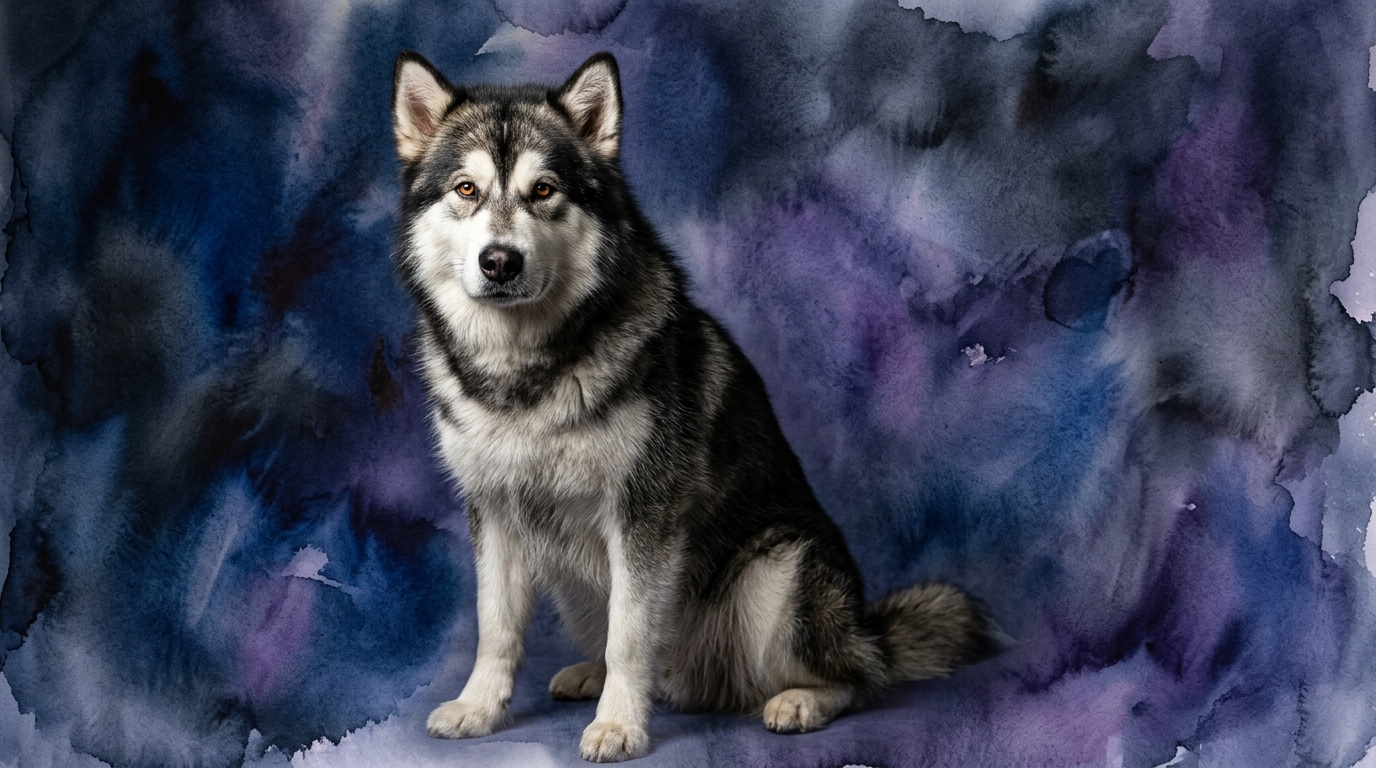
Side-by-Side IQ Profile: Alaskan Malamute
The Alaskan Malamute, ranked #50 on Coren's scale for working and obedience intelligence, presents a cognitive profile shaped by its arduous history.
Problem Solving (4/5): This breed displays strong independent problem-solving, adept at resourcefulness and navigating complex environments, a trait honed by its freighting history in challenging Arctic conditions.
Training Speed (2/5): Their training speed is notably deliberate, requiring consistent, patient, and highly motivating methods due to their independent streak and focus on self-preservation over immediate human-centric compliance.
Social Intelligence (3/5): Malamutes possess moderate social intelligence, forming strong family bonds and understanding pack dynamics, yet their interactions often retain an element of self-interest and group cohesion rather than individual handler deference.
Instinctive Drive (5/5): This breed excels with an exceptionally powerful innate drive for pulling, exploring, and enduring, deeply ingrained instincts that guide their actions and reflect their original purpose as sled dogs.
Memory (4/5): Their robust memory enables effective retention of learned experiences, navigation patterns, and routines, contributing significantly to their overall independence and reliable functioning in their environment.
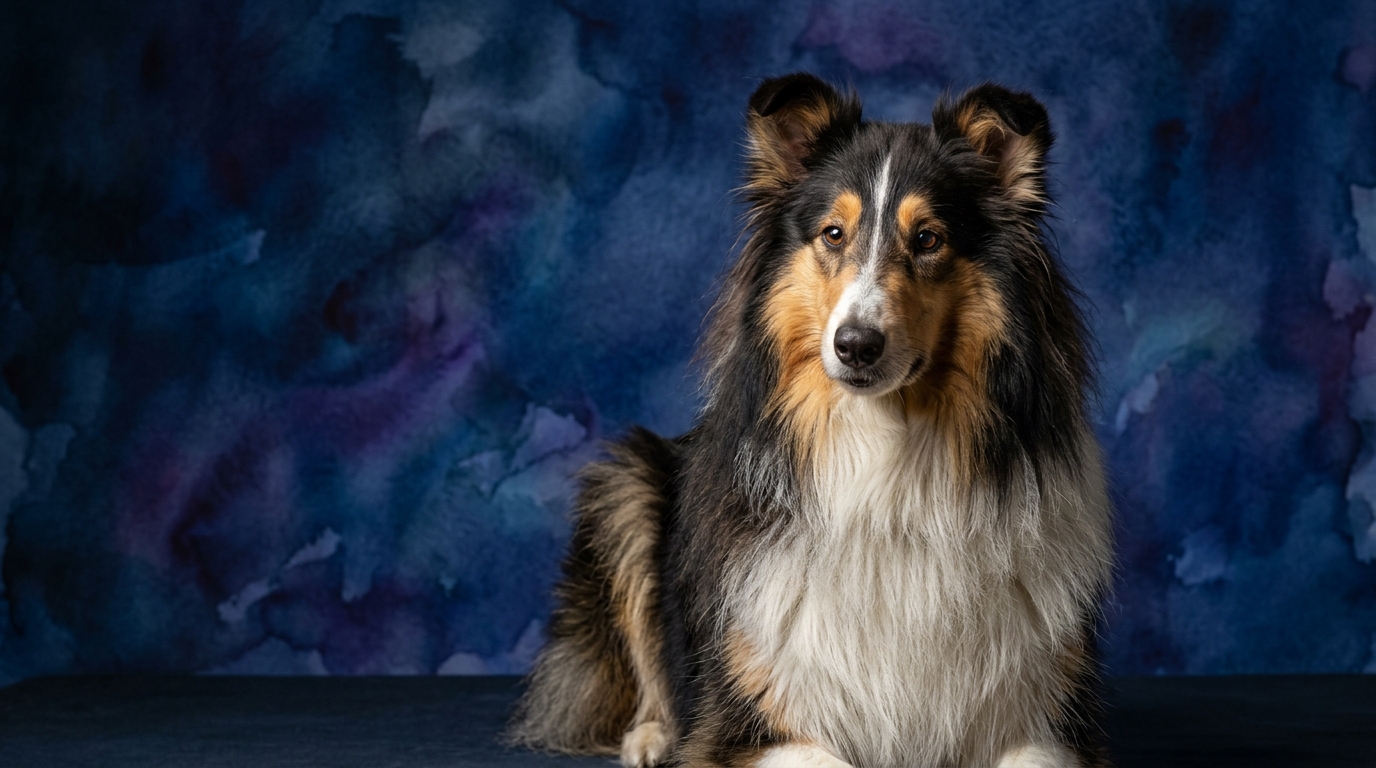
Side-by-Side IQ Profile: Collie (Rough)
The Collie (Rough), holding a significant #16 rank on Coren's scale, showcases a cognitive design optimized for intricate partnership and rapid learning.
Problem Solving (4/5): The Collie (Rough) shows strong problem-solving, often manifesting in intricate herding tasks requiring quick assessments of livestock movement and strategic positioning to manage the flock effectively.
Training Speed (4/5): In contrast, the Collie boasts rapid training speed, signifying an eagerness to learn and responsiveness to instruction, typically picking up new commands with ease due to a desire to collaborate.
Social Intelligence (3/5): Collies exhibit moderate social intelligence, forming deep connections and understanding social dynamics, with an ability to read human emotions that facilitates close working partnerships.
Instinctive Drive (3/5): While possessing a strong herding instinct, the Collie's drive is more modulated than the Malamute's, channeled into specific tasks allowing for greater handler control and precision rather than raw power.
Memory (5/5): The Collie stands out with exceptional memory, recalling complex sequences, multiple commands, and intricate routines with remarkable accuracy, crucial for detailed herding work and obedience.
Where the Alaskan Malamute Wins Cognitively
The Alaskan Malamute's cognitive strengths are deeply rooted in its independent, resilient heritage, particularly its 5/5 instinctive drive for pulling, exploring, and enduring harsh conditions. This isn't just physical stamina, but a profound mental commitment to tasks, allowing them to maintain focus on distant objectives and push through discomfort.
Coupled with a 4/5 problem-solving ability, this drive enables Malamutes to make critical, self-sufficient decisions in challenging environments like treacherous snowscapes, applying their robust 4/5 memory to recall complex routes and past experiences for effective navigation and resourcefulness.
Where the Collie (Rough) Wins Cognitively
The Collie (Rough) shines in areas demanding rapid information assimilation and precise execution, reflecting its history as a sophisticated herding partner. Its exceptional 5/5 memory is a cornerstone, allowing effortless recall of extensive command repertoires, intricate livestock patterns, and subtle handler cues, fostering an almost telepathic working relationship.
Complementing this memory is a rapid 4/5 training speed, indicating the Collie's eagerness to learn and quick grasp of new concepts, making them highly receptive to complex training. Their 4/5 problem-solving skill, combined with memory and trainability, allows them to apply learned strategies to dynamic herding scenarios, demonstrating adaptive intelligence within structured frameworks.
Training Dynamics: Alaskan Malamute vs. Collie (Rough)
The Collie (Rough) offers a more straightforward training path for most owners, with its 4/5 training speed signifying a natural inclination to absorb commands quickly and a strong desire to cooperate. Collies thrive on positive reinforcement and clear communication, showing an intrinsic motivation to please and perform, making the learning process a collaborative and rewarding experience.
The Alaskan Malamute, with its 2/5 training speed, presents a different dynamic. Their powerful 5/5 instinctive drive means they are often motivated by their own inherent desires—exploring, pulling, or adventuring—rather than solely by human directives. Training requires immense patience, creativity, and understanding their independent nature, often by aligning tasks with their working heritage to capture engagement, as they might question commands if not compelling.
Matching Breeds to Lifestyles: Active vs. Relaxed Owners
The Alaskan Malamute suits truly active, experienced owners who consistently provide extensive physical exertion and mental engagement that taps into their profound working drive. These dogs demand regular, challenging activities like long hikes, sledding, or weight pulling, as a 'relaxed' lifestyle will likely lead to destructive behaviors from boredom and unspent energy.
The Collie (Rough), while needing regular activity and mental stimulation, aligns well with owners enjoying structured, interactive activities, prioritizing companionship and shared tasks. They excel in dog sports like agility or obedience, providing physical and mental engagement, making them adaptable to owners who appreciate daily walks, training sessions, and ample indoor family time, rather than extreme endurance challenges.
The Verdict
Choose an Alaskan Malamute if you are an experienced, active owner dedicated to providing consistent, strenuous physical and mental challenges that satisfy its profound independent working drives.
Opt for a Collie (Rough) if you seek a highly trainable, devoted companion for structured activities and enjoy a close partnership built on rapid learning and shared tasks.
🧠 Find Your Pet's IQ Score
Our Pet IQ Lab assessment covers 25+ tests across 5 cognitive dimensions — personalized to your breed.
Take the Full IQ Test →Frequently Asked Questions
Do Alaskan Malamutes and Collie (Rough) dogs require similar amounts of exercise?
No, their exercise needs differ significantly. Alaskan Malamutes typically require much more strenuous and endurance-based physical activity, often needing several hours of intense work daily. Rough Collies need regular exercise, including walks and structured play, but their energy is usually more manageable and less focused on raw endurance.
Which breed is better for first-time dog owners?
The Collie (Rough) is generally a more suitable choice for first-time dog owners due to its higher trainability, eagerness to please, and less demanding independent nature. Alaskan Malamutes require an experienced owner who understands their strong will, high energy, and specific training needs.
How do their social needs compare?
Both breeds are social and thrive on family interaction. Collies often seek closer, more constant companionship and are typically more outwardly affectionate and sensitive to their family's moods. Malamutes bond strongly with their pack but often retain a degree of independence, valuing their role within the family while also being content with self-directed exploration.