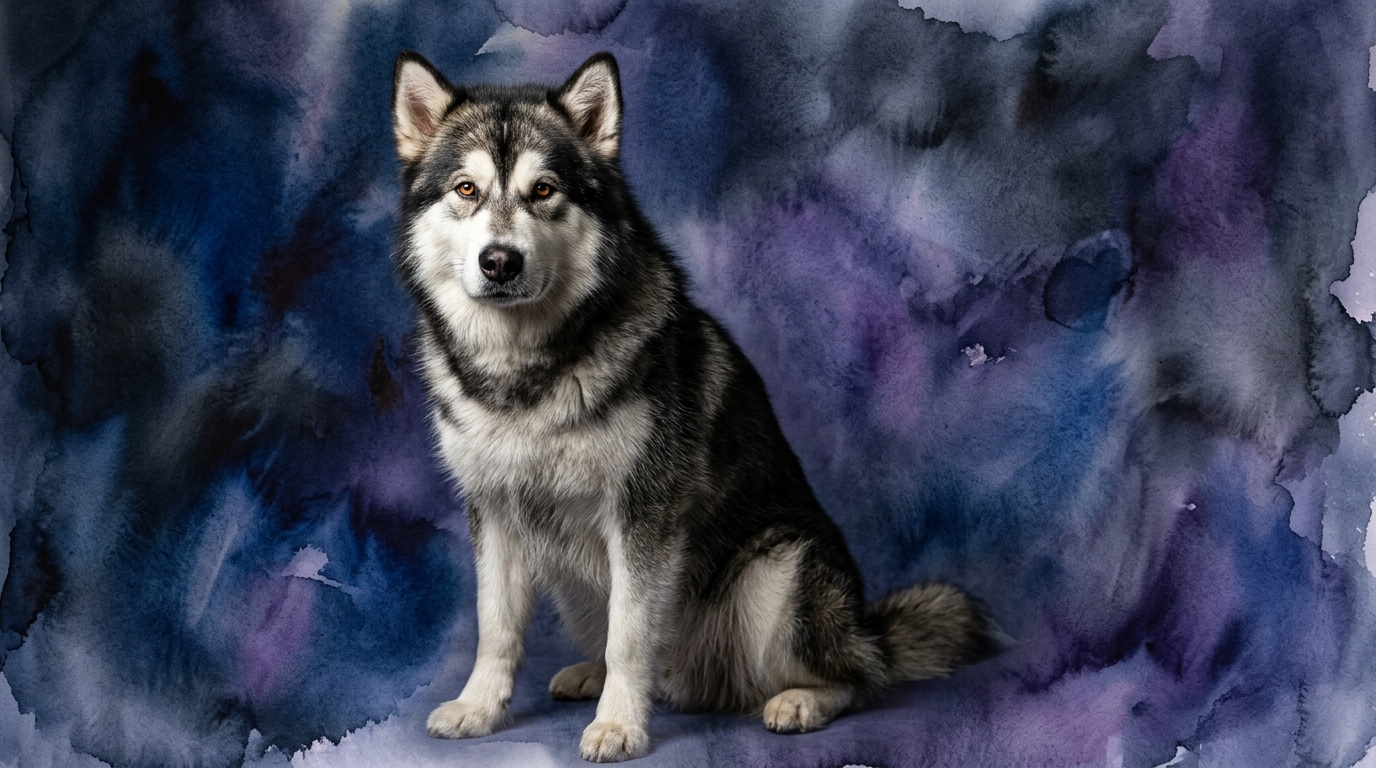

Side-by-Side IQ Profile: Alaskan Malamute vs. French Bulldog
The Cosmic Pet Pet IQ Lab assesses canine intelligence across five key dimensions, offering a nuanced look at each breed’s cognitive landscape. For the Alaskan Malamute, their profile reflects a heritage of independent, physically demanding work, while the French Bulldog’s scores highlight their strengths in social engagement and domestic adaptability.
The Alaskan Malamute, a Working breed, demonstrates a Problem Solving score of 4/5. These dogs exhibit a strong capacity for independent thought, often devising their own solutions to environmental obstacles, particularly those related to resource acquisition or navigation in varied terrain. Their heritage as working sled dogs in challenging Arctic environments has honed an ingenuity for overcoming physical barriers and logistical puzzles, such as finding a way around an obstruction on a trail or digging under a fence. They don't wait for human instruction but actively strategize. Their Training Speed is 2/5; while capable of learning complex tasks, Malamutes often approach training with a distinct willfulness and a "what's in it for me?" attitude. They require consistent, patient, and highly engaging methods, as rote repetition may quickly lead to boredom or outright refusal. Their independent nature means they prefer to figure things out on their own terms, making them slower to adopt conventional obedience commands without strong motivation. Social Intelligence for the Malamute is 3/5; they understand pack dynamics and human cues, but their social interactions are often driven by their own agenda and a clear sense of hierarchy, rather than an inherent eagerness to please. They can be discerning and reserved with strangers, preferring to observe before engaging, and often form strong, but independent, bonds within their chosen family unit. Their loyalty is profound, but it's not expressed through constant solicitousness. Their Instinctive Drive is a commanding 5/5; this drive is exceptionally high, deeply rooted in their sled dog ancestry. This manifests as a powerful, almost insatiable urge to pull, dig, and roam vast distances, often with a strong prey drive. They are highly motivated by tasks that tap into these deep-seated urges, making them energetic and persistent in pursuing their goals, whether it's exploring a new scent trail or tunneling under a barrier. Finally, their Memory is 4/5; Malamutes possess a robust memory, particularly for routes, past experiences, and the effectiveness of certain behaviors in achieving desired outcomes. They recall both positive and negative associations with remarkable tenacity, meaning a single negative encounter can create a long-lasting aversion, while a successful strategy for getting a treat will be remembered and repeated. Their ability to remember complex sequences of actions or specific locations is noteworthy.
The French Bulldog, a Non-Sporting breed, presents a different cognitive profile. Their Problem Solving score is 3/5; French Bulldogs demonstrate a moderate ability to navigate their immediate environment and figure out simple puzzles, often leveraging their strong social connections to achieve goals rather than relying purely on independent strategizing. They might quickly learn to push open a cabinet door to access treats or manipulate their owner with a well-timed gaze to get what they want. Their problem-solving is often context-dependent and driven by comfort or affection. Training Speed for the French Bulldog is 3/5; these dogs learn at a steady, consistent pace, responding well to positive reinforcement, clear directives, and engaging, short training sessions. Their inherent desire for companionship and attention often translates into a willingness to participate actively in learning new commands and tricks, though their relatively short attention spans mean lessons need to be kept fun and brief to maintain their focus. Their Social Intelligence is an outstanding 5/5; French Bulldogs excel in social cognition, keenly attuned to human emotions, intentions, and subtle social cues. They thrive on interaction and are exceptionally adept at forming strong, reciprocal bonds, often using their charming personalities to influence their human companions. This makes them highly empathetic and responsive to their family's moods, often seeking to comfort or engage. Their Instinctive Drive is 2/5; their instinctive drives are relatively low compared to working breeds. While they enjoy play and short bursts of activity, they generally lack the intense, persistent urge to hunt, herd, or pull. Their motivation is more centered around comfort, companionship, and food, preferring cozy indoor activities and social lounging over strenuous, instinct-driven tasks. Lastly, their Memory is 3/5; French Bulldogs have a solid memory for routines, familiar people, and the locations of comfort items or preferred resting spots. They remember commands and associations, particularly those linked to positive experiences or daily rituals, allowing them to anticipate events and learn household rules. While not as focused on complex spatial recall as a Malamute, their memory serves their social and comfort-seeking needs effectively.
Where the Alaskan Malamute Wins Cognitively
The Alaskan Malamute's cognitive superiority shines in areas demanding independent action, robust physical endurance, and sustained mental effort in challenging environments. Their Problem Solving (4/5) is specifically geared towards navigating complex, real-world obstacles, such as finding the most efficient path through deep snow or figuring out how to bypass a fallen log on a trail. This isn't about solving a simple puzzle feeder quickly, but about persistent, strategic thinking and adaptation in dynamic, often harsh, natural settings. Their exceptionally high Instinctive Drive (5/5) means they possess an innate, powerful motivation to work, explore, and exert themselves, translating into a cognitive advantage for tasks requiring immense stamina and self-direction, such as long-distance sledding or extensive scent tracking. Furthermore, their Memory (4/5) is particularly strong for spatial information, long-term routes, and the intricate cause-and-effect relationships observed over extended periods, which is crucial for remembering effective hunting strategies, safe passages, or the results of past independent actions.
Where the French Bulldog Wins Cognitively
The French Bulldog's cognitive strengths lie in their exceptional social adaptability, emotional attunement, and their ability to thrive in a domestic, human-centric environment. Their Social Intelligence (5/5) is a clear and paramount advantage, allowing them to quickly decipher human moods, intentions, and subtle social dynamics within a household. This manifests as a deep understanding of family routines, an uncanny ability to comfort a distressed owner, or a clever way to solicit attention effectively. While their Problem Solving (3/5) may not involve complex independent strategizing in the wilderness, they are incredibly adept at "social problem-solving," figuring out how to get what they want through charming appeals, subtle manipulation of human behavior, or by strategically positioning themselves for maximum comfort. Their moderate Training Speed (3/5), combined with their strong desire for companionship, makes them highly receptive to learning within a social, reward-based context, eager to engage with their human family.
Which is Easier to Train and Why?
The French Bulldog generally proves easier to train due to their higher Social Intelligence (5/5) and moderate Training Speed (3/5). Their strong desire for human companionship and approval makes them inherently more inclined to cooperate during training sessions, often viewing it as a valuable interaction opportunity. They respond exceptionally well to positive reinforcement, clear, consistent commands, and short, engaging sessions, often eager to perform for a treat, a favorite toy, or a kind word. Their lower Instinctive Drive (2/5) means they have fewer strong, intrinsic urges to overcome, such as persistent digging, excessive roaming, or strong prey drives, which can significantly simplify the training process and make them more amenable to household rules. They are typically less prone to challenging authority, preferring harmonious coexistence.
In stark contrast, the Alaskan Malamute's Training Speed (2/5) is lower, often complicated by their independent Problem Solving (4/5) and extremely high Instinctive Drive (5/5). They are not inherently driven by a desire to please and may question the necessity of a command if it doesn't align with their own perceived goals or innate drives. Training a Malamute requires an owner who understands their intrinsic motivations – like pulling, exploring, or digging – and can cleverly channel these powerful urges into desired behaviors, rather than expecting passive compliance. Their strong memory for both positive and negative experiences means that harsh or inconsistent training methods can create lasting resistance and make future training efforts significantly more challenging; they remember what didn't work for them.
Active Owners vs. Relaxed Owners: Which Breed Suits Which Lifestyle?
The Alaskan Malamute is unequivocally suited for highly active, experienced owners who are prepared for a significant commitment to physical and mental engagement. Their Instinctive Drive (5/5) demands substantial daily stimulation, reflecting their heritage as powerful working sled dogs. Owners must be prepared for long, vigorous walks, challenging hikes, opportunities for pulling (whether a sled, cart, or person), and engaging their problem-solving minds with complex tasks or scent work. A Malamute thrives with an owner who can provide consistent, vigorous activity, clear leadership, and ample outdoor exploration, as failing to meet these needs often leads to boredom, destructive behaviors, or escape attempts driven by their powerful urge to roam.
The French Bulldog is an ideal companion for more relaxed owners or those with a less demanding lifestyle. Their lower Instinctive Drive (2/5) and exceptionally high Social Intelligence (5/5) mean they are content with moderate daily exercise, such as several short walks around the neighborhood and indoor play sessions, followed by ample time cuddling on the couch. Their primary need is close companionship and consistent social interaction with their human family, making them excellent companions for individuals or families who prioritize comfort, emotional connection, and a relatively low-key domestic routine over intense outdoor adventures. They are typically happy to be wherever their people are, provided they are comfortable.
The Verdict
Select an Alaskan Malamute if you are an experienced, active owner seeking a powerful, independent canine partner for outdoor adventures, who appreciates a dog with a strong will and deep problem-solving capabilities.
Opt for a French Bulldog if you desire a charming, highly social companion for a more relaxed lifestyle, valuing emotional connection and a dog that thrives on close human interaction.
🧠 Find Your Pet's IQ Score
Our Pet IQ Lab assessment covers 25+ tests across 5 cognitive dimensions — personalized to your breed.
Take the Full IQ Test →Frequently Asked Questions
Does Coren rank apply to French Bulldogs?
No, the French Bulldog is not included in Stanley Coren's "The Intelligence of Dogs" ranking. Coren's methodology primarily evaluated obedience and working intelligence, which might not fully capture the social and adaptive cognitive strengths for which the French Bulldog is noted.
Are Alaskan Malamutes stubborn during training?
Alaskan Malamutes can exhibit strong independence, which some owners interpret as stubbornness. Their lower training speed (2/5) stems from their inherent self-reliance and a tendency to evaluate commands based on their own perceived utility, requiring patient and engaging training methods.
How does social intelligence impact French Bulldog behavior?
A French Bulldog's high social intelligence (5/5) means they are highly attuned to human emotions and social cues, making them exceptional companions. This cognitive trait allows them to form strong bonds, understand household dynamics, and often use their charm to interact effectively with their human family.