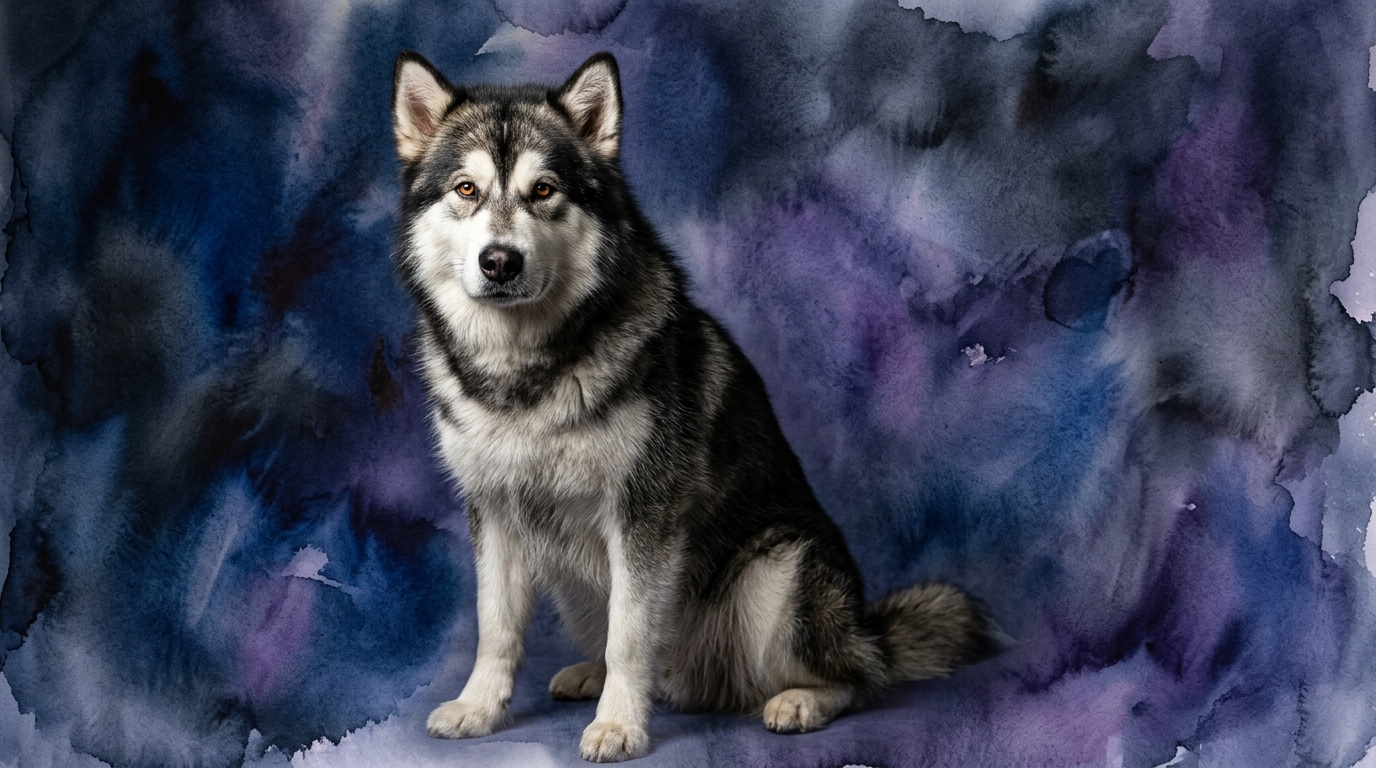
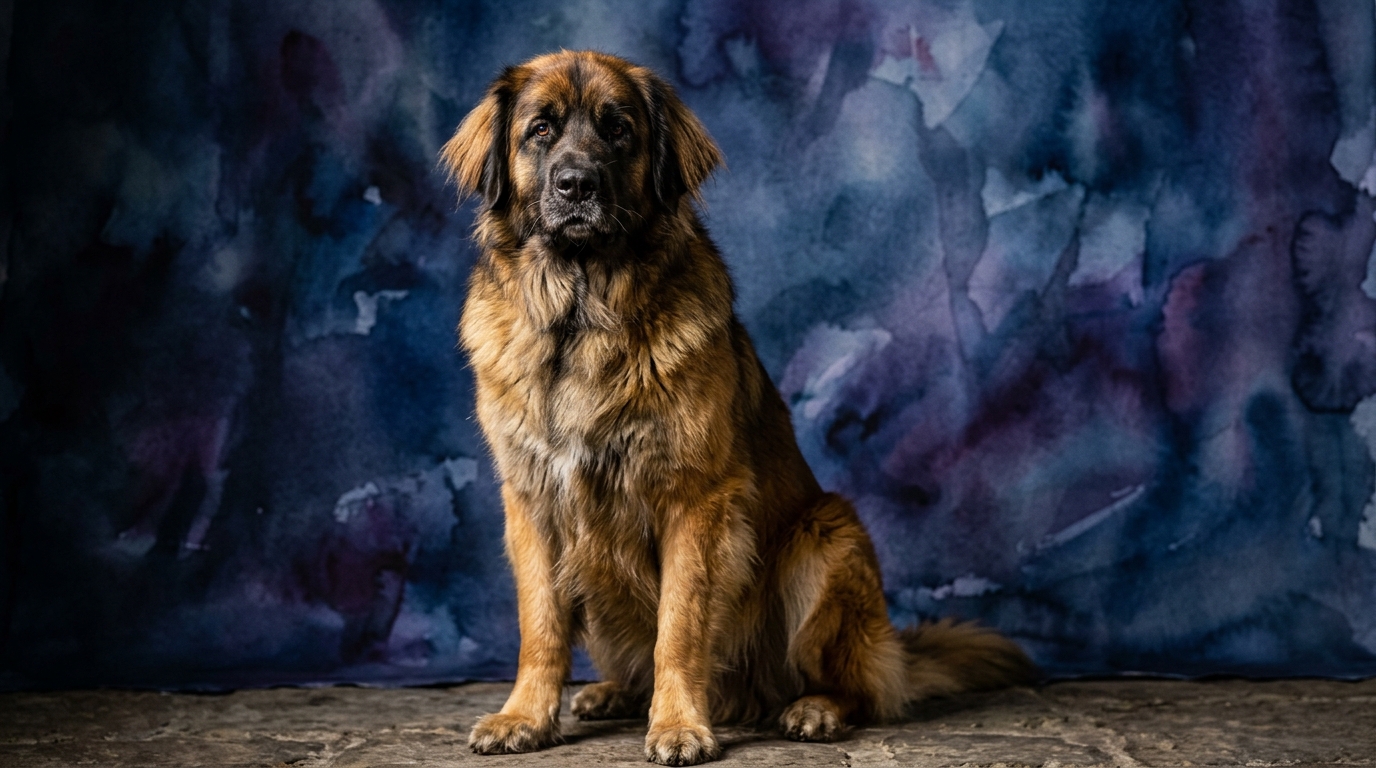
Side-by-Side IQ Profile for Alaskan Malamute and Leonberger
The Cosmic Pet Pet IQ Lab employs a five-dimensional framework to dissect canine intelligence, offering a granular view beyond simple rankings. For the Alaskan Malamute, a breed ranked #50 by Coren, its profile shows exceptional problem-solving at 4 out of 5, reflecting its historical role in navigating challenging Arctic environments. However, its training speed is a more moderate 2 out of 5, indicating a preference for independent thought over immediate compliance. Social intelligence stands at 3 out of 5, suggesting adequate but not overwhelming desire for human interaction, while its instinctive drive is a formidable 5 out of 5, a testament to its powerful working heritage. Memory is also robust at 4 out of 5, crucial for retaining complex routes and tasks.
In contrast, the Leonberger, currently unranked by Coren, presents a more balanced cognitive spread. Its problem-solving ability is rated 3 out of 5, suggesting competence in novel situations but perhaps less pioneering spirit than the Malamute. Training speed is a more accommodating 3 out of 5, hinting at a greater willingness to engage in structured learning. Social intelligence matches the Malamute at 3 out of 5, denoting a comfortable level of interaction. Its instinctive drive is a moderate 3 out of 5, providing ample motivation for activity without the Malamute's intense focus. Memory for the Leonberger is also rated 3 out of 5, indicating a solid capacity for retaining information pertinent to daily life and learned behaviors.
Where the Alaskan Malamute Excels Cognitively
The Alaskan Malamute's cognitive strengths are deeply rooted in its heritage as an arctic sled dog, demanding self-reliance and acute environmental awareness. Its superior problem-solving score of 4 out of 5, compared to the Leonberger's 3 out of 5, highlights an inherent capacity for independent thought and strategic action. This isn't about solving puzzles for treats; it's about navigating treacherous ice, finding hidden paths, or devising ways to access resources without direct human instruction.
This ingenuity is propelled by an unparalleled instinctive drive, rated at a perfect 5 out of 5. This powerful internal motivation means Malamutes are not merely capable of work, but are compelled by it, whether it's pulling, digging, or exploring. This intrinsic motivation, coupled with their robust memory of 4 out of 5 (versus the Leonberger's 3/5), allows them to retain complex spatial maps, recall past successful strategies, and remember intricate details of their environment. For instance, a Malamute might remember the precise location of a squirrel's cache from weeks ago or recall an escape route from a securely fenced yard, demonstrating a cognitive tenacity born from survival needs. This combination of drive, memory, and problem-solving makes them exceptionally resourceful animals, often thinking several steps ahead.
Where the Leonberger Demonstrates Cognitive Advantages
While the Malamute's intellect leans towards rugged independence, the Leonberger's cognitive profile showcases strengths in areas that foster harmonious human-canine partnership and adaptability. A key advantage lies in its training speed, rated at 3 out of 5, which is notably higher than the Malamute's 2 out of 5. This indicates a greater receptiveness to learning new commands and behaviors efficiently, often displaying a more cooperative attitude during training sessions. Their more balanced instinctive drive, at 3 out of 5 compared to the Malamute's intense 5/5, means their natural urges are strong enough for engagement but are also more easily channeled and redirected.
This allows Leonbergers to integrate more seamlessly into diverse family routines without the constant, overwhelming pull towards singular, intense activities. Their social intelligence, matching the Malamute at 3 out of 5, ensures they are comfortable and responsive in social settings, fostering strong bonds. While their problem-solving and memory scores are moderate at 3 out of 5, these are entirely sufficient for understanding complex household rules, responding to varied cues, and remembering routines, making them versatile and agreeable companions within a structured environment. This blend of attributes supports a dog that is both capable and eager to participate in shared activities.
Training Dynamics: Alaskan Malamute vs. Leonberger
The ease of training presents a significant divergence between these two breeds, stemming directly from their distinct cognitive profiles. The Leonberger, with its training speed of 3 out of 5 and a balanced instinctive drive of 3 out of 5, typically proves more amenable to structured training. These dogs often exhibit a willingness to please and a desire to engage with their human counterparts, making them responsive to positive reinforcement and consistent guidance. Their social intelligence, also at 3 out of 5, further aids this process by making them attentive to human cues and motivations. Owners often report that Leonbergers learn new commands with reasonable speed and retain them well, provided training is clear and fair.
In stark contrast, the Alaskan Malamute's training speed is a lower 2 out of 5, paired with an intense instinctive drive of 5 out of 5. This combination means training a Malamute requires exceptional patience, consistency, and a deep understanding of canine motivation. Their high problem-solving capacity (4/5) often manifests as an independent thought process; they are prone to evaluating the utility of a command from their perspective rather than offering immediate, unquestioning compliance. For example, a Malamute might understand "come" but choose to complete an interesting scent trail first, leveraging its strong memory (4/5) to recall the location later. Their self-reliant nature, a hallmark of a breed bred to make decisions in harsh environments, can be misinterpreted as stubbornness. Effective Malamute training often involves making them believe that complying with a command was their own brilliant idea, or that the reward for compliance far outweighs the satisfaction of their independent pursuit. This isn't a lack of cognitive ability, but a distinct approach to learning, demanding a more nuanced and engaging training partnership.
Matching Breed to Owner Lifestyle
Choosing between an Alaskan Malamute and a Leonberger often comes down to the owner's lifestyle and their willingness to engage with a dog's inherent drives. For individuals or families with an exceptionally active lifestyle, a deep appreciation for canine independence, and a commitment to providing substantial physical and mental outlets, the Alaskan Malamute is a compelling choice. Their formidable instinctive drive (5/5) means they require consistent, vigorous exercise, thriving on activities like long-distance hiking, skijoring, or advanced scent work that tap into their problem-solving (4/5) and memory (4/5) strengths. A Malamute that isn't adequately stimulated can become bored and channel its considerable intellect into less desirable behaviors, such as digging or exploring boundaries. They need owners who respect their self-reliant nature and can provide a challenging yet structured environment.
Conversely, the Leonberger aligns well with owners seeking a large, social companion that enjoys activity but also possesses a more adaptable ‘off-switch’. While still a working breed requiring regular exercise and mental engagement, their balanced instinctive drive (3/5) means they are less intensely driven than Malamutes. Daily walks, playtime in a securely fenced yard, and participation in family activities are often sufficient to keep a Leonberger content. Their social intelligence (3/5) and higher training speed (3/5) make them generally more eager to please and integrate into a family routine, transitioning smoothly between energetic play sessions and relaxed companionship indoors. They are suited for owners who can provide consistent attention and training but may not necessarily be seeking a partner for extreme endurance activities or constant, independent problem-solving challenges.
The Verdict
Choose the Alaskan Malamute if you are an experienced, active owner seeking an independent, highly driven partner for challenging outdoor activities and appreciate a dog that thinks for itself.
Opt for the Leonberger if you desire a responsive, large companion that enjoys family life, is moderately active, and generally offers a more cooperative training experience.
🧠 Find Your Pet's IQ Score
Our Pet IQ Lab assessment covers 25+ tests across 5 cognitive dimensions — personalized to your breed.
Take the Full IQ Test →Frequently Asked Questions
Is an Alaskan Malamute difficult to live with due to its high instinctive drive?
The Malamute's 5/5 instinctive drive means it requires significant physical and mental stimulation to prevent boredom and destructive behaviors. They thrive with owners who can channel this drive into purposeful activities like sledding, hiking, or advanced obedience, which is crucial for a harmonious household.
How does the Leonberger's social intelligence impact its family role?
With a social intelligence score of 3/5, Leonbergers are generally good-natured and enjoy being part of the family, often forming strong bonds. This score suggests they are attuned to human emotions and social cues, making them adaptable companions in a family setting, though early socialization is always beneficial.
Can a first-time dog owner manage an Alaskan Malamute?
A first-time owner might find the Alaskan Malamute's independent problem-solving (4/5) and lower training speed (2/5) challenging without dedicated commitment to consistent, positive training and ample exercise. Their strong will and high drive require an owner who can be a confident, patient, and engaging leader from day one.