
Side-by-side IQ profile
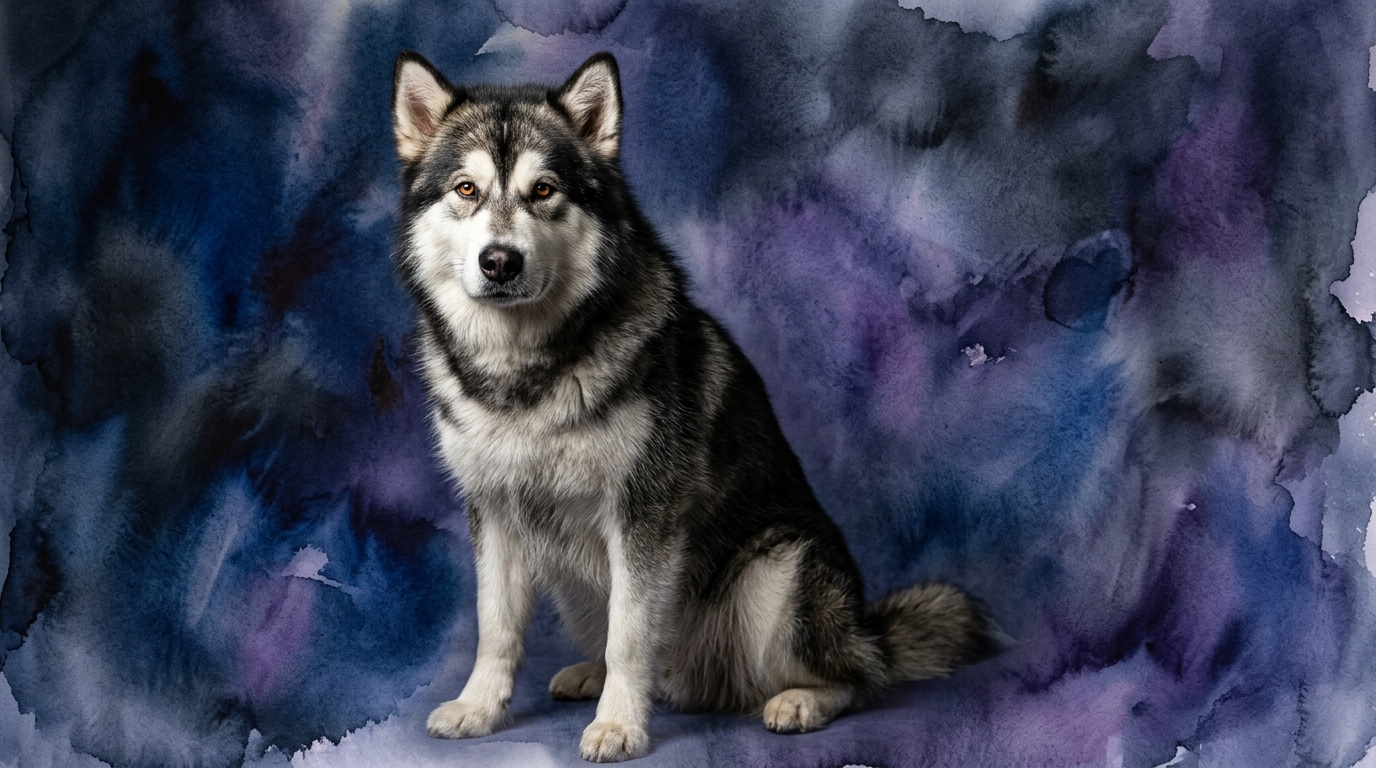
The Alaskan Malamute, a majestic Working dog with a Coren rank of #50, presents a cognitive profile built for endurance and complex tasks. Their problem-solving ability scores an impressive 4/5, enabling them to navigate intricate environments and overcome obstacles with thoughtful determination. Memory is equally robust at 4/5, crucial for retaining routes and learned sequences over time. Social intelligence sits at a moderate 3/5, suggesting they understand group dynamics but often prioritize their own strong instinctive drive, which is a commanding 5/5. This powerful drive fuels their inherent desire to work and achieve, though it contributes to a slower training speed of 2/5, as their independence can sometimes outweigh immediate compliance.
In contrast, the Manchester Terrier, a keen member of the Terrier group, offers a more balanced, albeit generally lower, set of cognitive scores. Not Coren-ranked, this breed's intelligence is expressed through agility and quick wit rather than sheer brawn or tireless labor. Their problem-solving ability is a solid 3/5, allowing them to figure out moderate challenges, while their training speed is also 3/5, indicating a quicker uptake of commands compared to the Malamute. Social intelligence stands at 3/5, making them adaptable companions, and their instinctive drive, at 3/5, is present but not as overwhelming as their working counterparts. Memory, too, is rated at 3/5, sufficient for daily routines and learned tricks without the expansive recall of a sled dog.
The absence of a Coren rank for the Manchester Terrier doesn't imply a lack of mental capacity but rather highlights that Coren's framework primarily assessed obedience and working intelligence, often favoring breeds with a strong history in competitive trials. The Malamute's #50 ranking reflects its capacity for understanding and executing commands, even with its independent streak, placing it in the middle tier of breeds studied for that specific metric.
Where Alaskan Malamute wins cognitively
The Alaskan Malamute clearly stands out in several cognitive domains. Their superior problem-solving score of 4/5, compared to the Manchester Terrier's 3/5, equips them to tackle more complex, multi-step challenges, such as figuring out how to bypass an obstacle on a trail or strategically securing a desired item. This cognitive strength is intrinsically linked to their historical role, where independent decision-making was vital for survival and task completion in harsh environments.
Furthermore, the Malamute's powerful instinctive drive, rated at a maximum 5/5 against the Terrier's 3/5, means they possess an unparalleled internal motivation for activity and purpose. This isn't just about physical energy; it's a deep-seated cognitive inclination to engage with tasks, whether it's pulling, exploring, or 'hunting' for resources. Coupled with their robust memory (4/5 versus 3/5), Malamutes excel at recalling extensive routes, complex sequences of commands learned over time, or the precise location of hidden objects, making them formidable partners for demanding, long-term endeavors.
Where Manchester Terrier wins cognitively
While the Malamute excels in raw power and memory for grand tasks, the Manchester Terrier carves its own niche, particularly in training speed. Scoring 3/5 in training speed, the Manchester Terrier demonstrates a quicker ability to grasp and respond to new commands compared to the Malamute's 2/5. This difference is significant for owners seeking a companion that can learn a broader repertoire of tricks or adapt rapidly to various dog sports and urban etiquette.
This quicker learning curve, combined with their balanced problem-solving (3/5) and social intelligence (3/5), makes them highly responsive to consistent, engaging training methods. Their moderate instinctive drive (3/5) means they are less likely to be singularly focused on a self-appointed task, rendering them more amenable to human direction and less prone to the independent decision-making that can sometimes challenge Malamute training. The Manchester Terrier's cognitive profile suggests a dog that enjoys varied mental stimulation and responds well to positive reinforcement in dynamic learning environments.
Which is easier to train and why
When evaluating ease of training, the Manchester Terrier generally holds an advantage due to its higher training speed score of 3/5 compared to the Alaskan Malamute's 2/5. This indicates that Manchester Terriers typically pick up new commands and routines more quickly. Their terrier heritage imbues them with a certain independent streak, but it is often coupled with a desire to engage with their human companions, making them responsive to clear, consistent, and reward-based training.
The Alaskan Malamute, conversely, presents a greater training challenge. Their robust problem-solving (4/5) combined with an overwhelming instinctive drive (5/5) means they possess a powerful internal compass and a strong will. If a Malamute perceives a task or a command as less efficient or less personally rewarding than an alternative, their independent nature often leads them to make their own choices. This isn't a lack of understanding, but rather a preference for self-directed action, which contributes to their lower training speed. Training a Malamute demands exceptional patience, creativity in motivation, and a deep understanding of their working dog mentality to harness their drive effectively. While capable of learning complex tasks, their propensity for independent thought means "easier" is not a word often associated with their initial training phase.
Which suits active owners vs relaxed owners
For truly active owners seeking a dedicated partner for demanding physical and mental pursuits, the Alaskan Malamute is an ideal match. Their commanding 5/5 instinctive drive and 4/5 problem-solving ability necessitate extensive daily engagement. These dogs thrive on activities that mimic their historical roles, such as long hikes, sledding, weight pulling, or complex scent work, providing outlets for their substantial energy and cognitive prowess. An owner who can commit to hours of structured activity, often outdoors, and appreciates a dog with an independent, strong-willed mind will find profound satisfaction with a Malamute.
The Manchester Terrier also suits active owners, but with a different intensity and variety of engagement. Their balanced scores across the board (mostly 3/5) indicate a need for consistent mental and physical stimulation, but perhaps not the sheer endurance or single-minded focus required by a Malamute. They excel in activities like agility, obedience trials, or flyball, where their quick training speed and moderate problem-solving can shine. Owners who enjoy varied, engaging activities and can provide regular, stimulating exercise in a more compact form will appreciate the Manchester Terrier. Neither breed is suitable for truly "relaxed" owners who prefer minimal engagement; both require significant cognitive input and physical exercise to prevent boredom and ensure well-adjusted behavior, though the scale of that commitment differs considerably.
The Verdict
Choose the Alaskan Malamute if you are an experienced owner seeking a deeply bonded partner for demanding outdoor adventures or complex, driven tasks, and appreciate a canine mind that thinks big and remembers well. Their powerful drive and problem-solving require an owner dedicated to channeling their unique cognitive strengths into purpose.
Opt for the Manchester Terrier if you desire a sharp, agile companion for engaging activities, value quicker learning in a smaller package, and are prepared for a spirited personality that enjoys varied mental challenges and responds well to consistent, positive training.
🧠 Find Your Pet's IQ Score
Our Pet IQ Lab assessment covers 25+ tests across 5 cognitive dimensions — personalized to your breed.
Take the Full IQ Test →Frequently Asked Questions
Does Coren rank apply to the Manchester Terrier?
No, the Manchester Terrier is not Coren-ranked, meaning its obedience and working intelligence hasn't been formally assessed in that specific framework, unlike the Alaskan Malamute at #50. This doesn't indicate a lack of intelligence, but rather a different set of cognitive strengths or less participation in the types of trials Coren studied.
How does the Malamute's high instinctive drive impact its behavior?
The Malamute's 5/5 instinctive drive means it possesses a powerful, innate urge to perform its historical tasks, like pulling or independent problem-solving. This can manifest as strong independence, a need for substantial physical and mental outlets, and a persistent focus on goals it deems important, sometimes overriding human commands.
Is a Manchester Terrier easily bored?
While not extreme, a Manchester Terrier's balanced cognitive profile, including moderate problem-solving and training speed, suggests it benefits from consistent mental stimulation. Without varied activities and training, its quick wit could lead to boredom, potentially resulting in undesirable behaviors as it seeks its own entertainment.