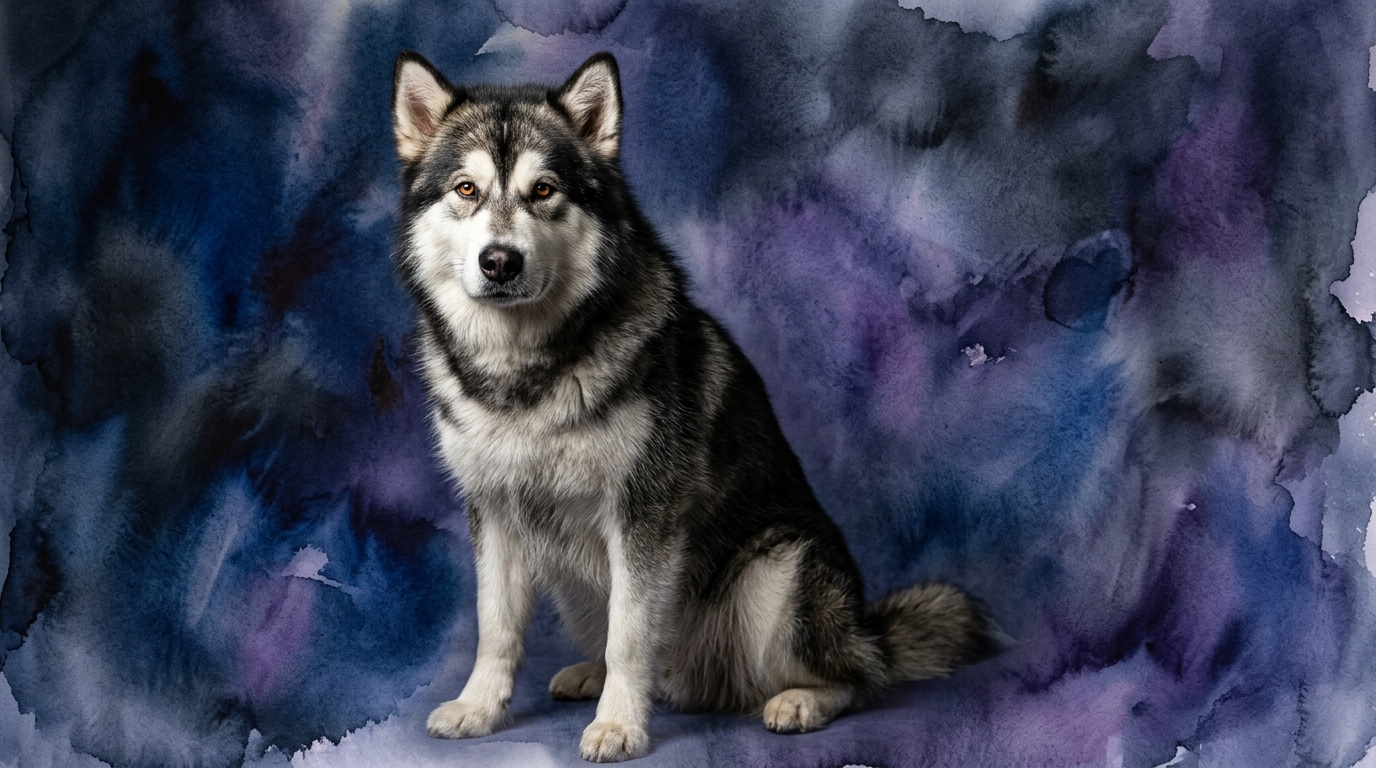
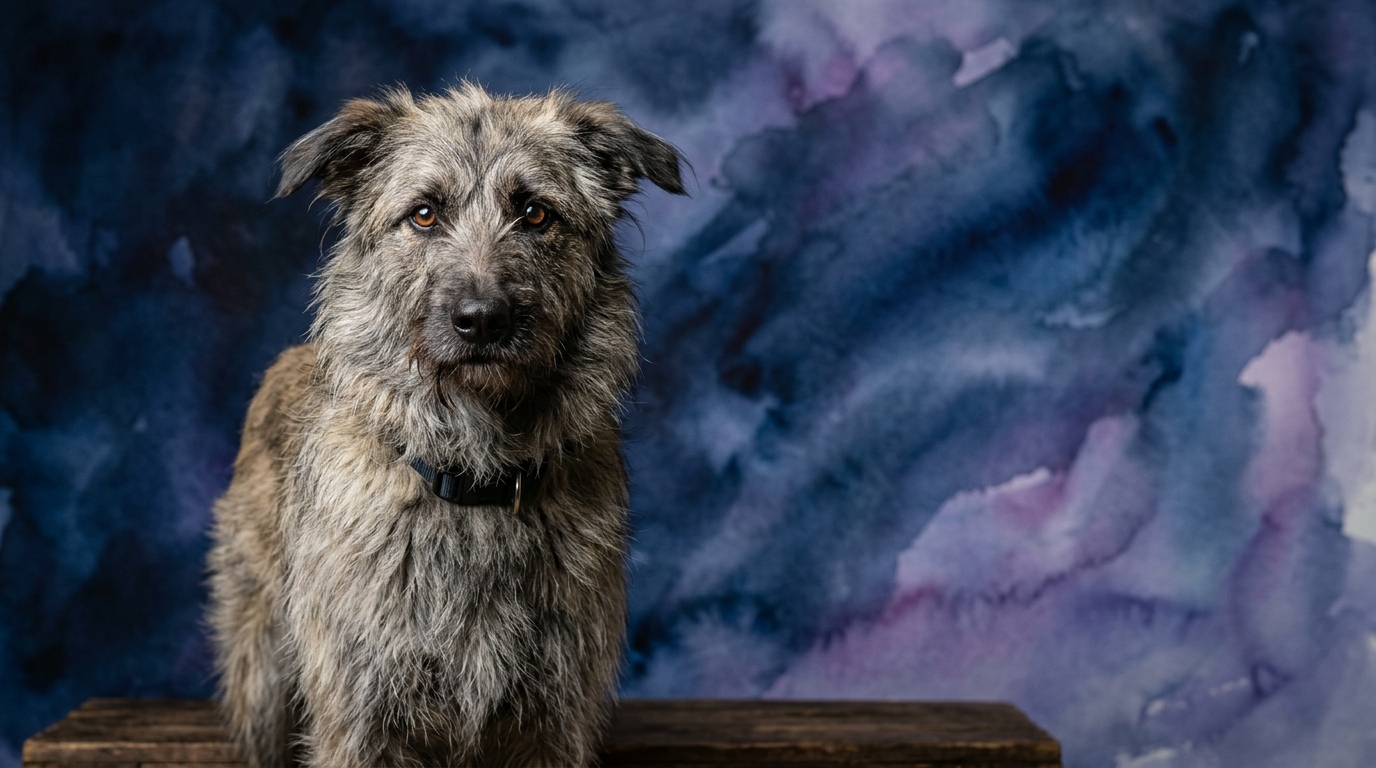
Side-by-Side Cognitive Profile
The Cosmic Pet IQ Lab evaluates canine cognition across five crucial dimensions, offering a nuanced view beyond simple rankings. For the Alaskan Malamute, a powerful Working breed, we observe a robust problem-solving ability, marked at 4 out of 5, indicating a capacity for independent thought and strategic navigation of complex situations. However, their training speed registers at 2 out of 5, reflecting a strong will and a need for highly motivating training approaches. Social intelligence stands at 3 out of 5, suggesting a discerning approach to interactions, often preferring familiar company. Their instinctive drive is exceptionally high at 5 out of 5, encompassing powerful urges for pulling, digging, and exploring. Finally, their memory is strong at 4 out of 5, allowing them to retain complex routines and spatial information.
In contrast, the Pyrenean Shepherd, a spirited Herding breed without a specific Coren rank, presents a different cognitive blueprint. Their problem-solving score of 3 out of 5 indicates good adaptive thinking, particularly in task-oriented scenarios. They show a quicker training speed at 3 out of 5, often demonstrating a readiness to engage and learn new commands. Social intelligence also sits at 3 out of 5, highlighting their attentiveness to human cues and their role as a cooperative partner. Their instinctive drive is rated at 3 out of 5, primarily focused on herding and guarding, but less intense in its raw expression compared to the Malamute's drives. Their memory is also balanced at 3 out of 5, sufficient for recalling routines and learned behaviors.
Where the Alaskan Malamute Excels Cognitively
The Alaskan Malamute's cognitive strengths are deeply rooted in their heritage as a heavy-duty freighting dog in harsh Arctic environments. Their problem-solving score of 4/5 is a testament to their capacity for independent thinking and resourcefulness. This manifests as an ability to navigate challenging terrains, figure out complex puzzles, and even master escape artistry from seemingly secure enclosures. They aren't waiting for a human command to assess a situation; rather, they'll often analyze and act on their own initiative, a trait essential for survival and task completion in remote settings. This robust cognitive independence allows them to make decisions under pressure, relying on their own judgment when direct human guidance might be absent or delayed.
Furthermore, the Malamute's instinctive drive, rated at a perfect 5/5, is a significant cognitive asset for their intended purpose. This isn't just about physical power; it's a profound mental tenacity that fuels their desire to pull, to explore, and to endure. Their memory score of 4/5 complements this, enabling them to remember complex routes, the locations of cached resources, and intricate sequences of tasks over long periods. This combination of independent problem-solving, powerful drive, and strong memory makes them exceptional at sustained, goal-oriented activities, even when those goals are self-directed or require significant physical and mental exertion over time. They remember patterns, consequences, and successful strategies, applying them to future challenges.
Where the Pyrenean Shepherd Excels Cognitively
The Pyrenean Shepherd's cognitive profile shines in areas demanding responsiveness, agility, and a close working partnership. Their training speed, rated at 3/5, indicates a quicker uptake of new commands and a more eager disposition to learn from their handler compared to the Malamute. This isn't just about raw speed; it's about a particular type of cognitive flexibility that allows them to quickly adapt to changing instructions and scenarios, a vital trait for a dog tasked with managing dynamic livestock. They are often described as more 'biddable,' meaning they are more inclined to follow human direction, which is a specific cognitive advantage in cooperative tasks.
While their instinctive drive (3/5) is lower than the Malamute's, it is precisely tuned for herding and guarding, demanding a different kind of cognitive focus. This involves keen observation, quick reactions to animal movements, and the ability to anticipate and influence flock behavior. Their social intelligence (3/5) plays a crucial role here, as they are adept at reading human body language and vocal cues, allowing for seamless communication in the field. This nuanced social understanding, combined with their problem-solving (3/5) and memory (3/5) scores, makes them highly effective at intricate, cooperative tasks where precision and immediate response are paramount. They excel at understanding and executing multi-step commands, remembering their purpose, and adjusting their approach based on feedback from their human partner.
Which Breed is Easier to Train and Why?
When considering ease of training, the Pyrenean Shepherd generally presents a more straightforward path for most owners. Their training speed of 3/5, coupled with a more moderate instinctive drive (3/5), means they are typically more receptive to commands and less likely to be sidetracked by powerful internal motivations. They possess a strong desire to work with their handler and often find positive reinforcement highly motivating, quickly associating actions with rewards. Their herding background has fostered a cognitive framework that values cooperation and responsiveness, making them keen learners who thrive on consistent guidance and clear communication.
The Alaskan Malamute, with a training speed of 2/5 and an exceptionally high instinctive drive (5/5), offers a greater challenge for many. Their independent problem-solving nature means they often question the necessity of a command, preferring to make their own decisions. Their strong drives for pulling, digging, and exploring can easily override a handler's request if not managed with significant consistency, patience, and high-value rewards. Training a Malamute requires an owner who understands how to channel these powerful instincts into acceptable behaviors, often requiring creative approaches to keep them engaged and motivated. They are not 'stubborn' in a negative sense, but rather possess a self-reliant cognitive style that requires respect and understanding, making them less inherently 'easy' to train compared to the more biddable Pyrenean Shepherd.
Suitability for Active vs. Engaged Owners
Neither the Alaskan Malamute nor the Pyrenean Shepherd are suitable for truly 'relaxed' owners; both require significant engagement and activity. However, their specific needs cater to different types of active lifestyles. The Alaskan Malamute thrives with highly active, outdoor-oriented owners who relish extreme adventures. Their 5/5 instinctive drive for endurance, combined with their independent problem-solving, means they excel in activities like sledding, skijoring, long-distance hiking, or backpacking. Owners must be prepared to provide consistent, vigorous physical and mental outlets that tap into their powerful work ethic and allow them to make choices within a structured framework. They are excellent companions for those who spend extensive time in challenging natural environments and appreciate a dog that can keep pace and think for itself.
The Pyrenean Shepherd, while also requiring an active lifestyle, suits owners who are perhaps less focused on raw endurance and more on intricate, cooperative activities. Their cognitive strengths make them ideal for dog sports such as agility, obedience, flyball, or advanced trick training, where their quicker training speed and social intelligence can truly shine. They thrive on having a 'job' that engages their mind and body in partnership with their human. Owners who enjoy structured training, canine sports, and active, engaged companionship will find the Pyrenean Shepherd a rewarding partner. While they enjoy hiking and outdoor adventures, their activity needs lean more towards varied mental and physical stimulation rather than continuous, brute-force exertion.
The Verdict
Choose the Alaskan Malamute if you are an experienced, highly active owner seeking a powerful, independent companion for extreme outdoor adventures and sustained physical challenges.
Opt for the Pyrenean Shepherd if you are an active, engaged owner who enjoys cooperative dog sports, structured training, and a responsive partner for dynamic activities.
🧠 Find Your Pet's IQ Score
Our Pet IQ Lab assessment covers 25+ tests across 5 cognitive dimensions — personalized to your breed.
Take the Full IQ Test →Frequently Asked Questions
Are Alaskan Malamutes difficult to live with due to their high instinctive drive?
Alaskan Malamutes possess a profound instinctive drive (5/5) for pulling, digging, and exploring, which can be challenging if not properly managed. Owners must provide ample outlets for these natural behaviors through structured activities, consistent training, and secure environments to ensure a harmonious coexistence.
Do Pyrenean Shepherds require a 'job' to be content?
While their instinctive drive (3/5) is moderate, Pyrenean Shepherds are working dogs by nature and thrive when given a purpose. Engaging them in dog sports, advanced obedience, or even complex puzzle toys can fulfill their cognitive need for a 'job,' preventing boredom and channeling their energy constructively.
Which breed is generally better for a first-time dog owner?
Given the Pyrenean Shepherd's higher training speed (3/5) and more biddable nature, they are generally a more manageable choice for a dedicated first-time owner willing to commit to consistent training and activity. The Alaskan Malamute's strong independence and high instinctive drives (5/5) typically require an owner with prior experience in managing powerful, strong-willed working breeds.