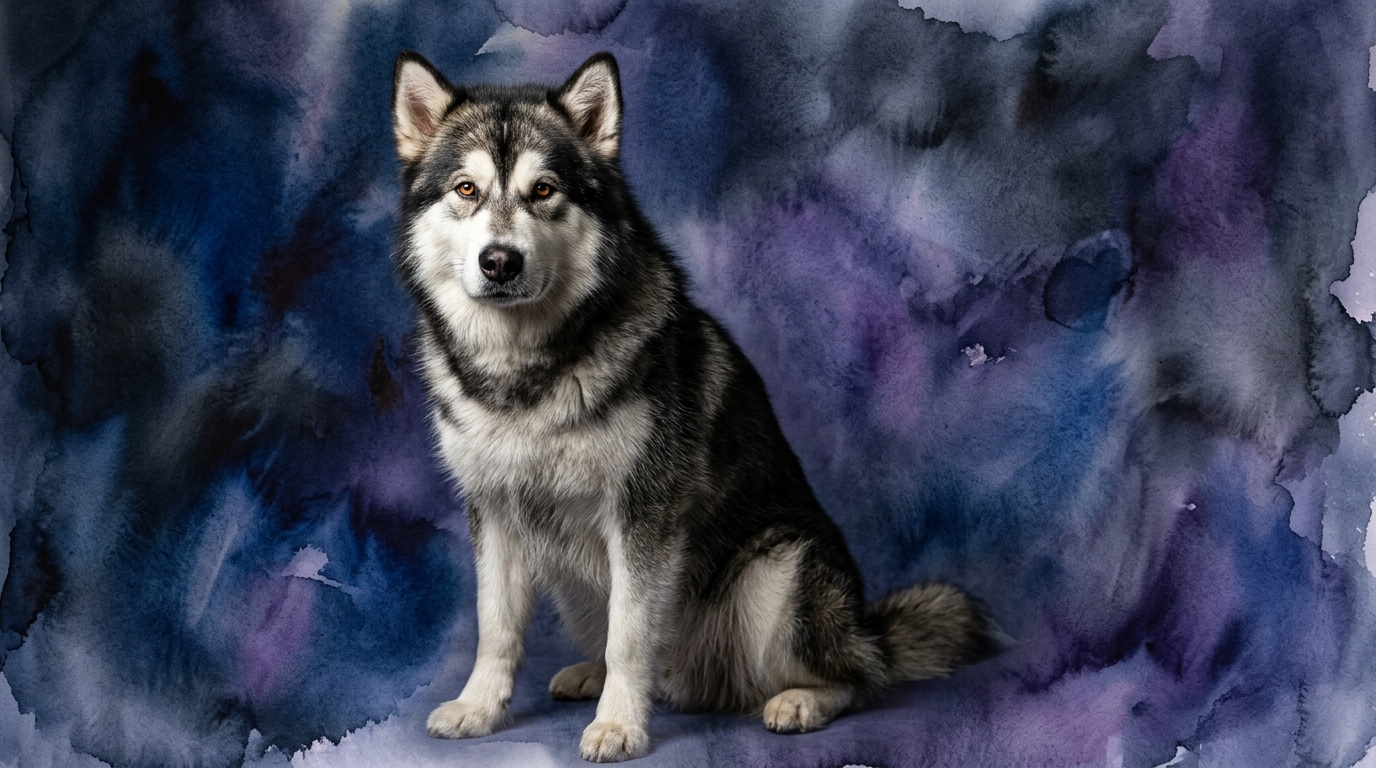
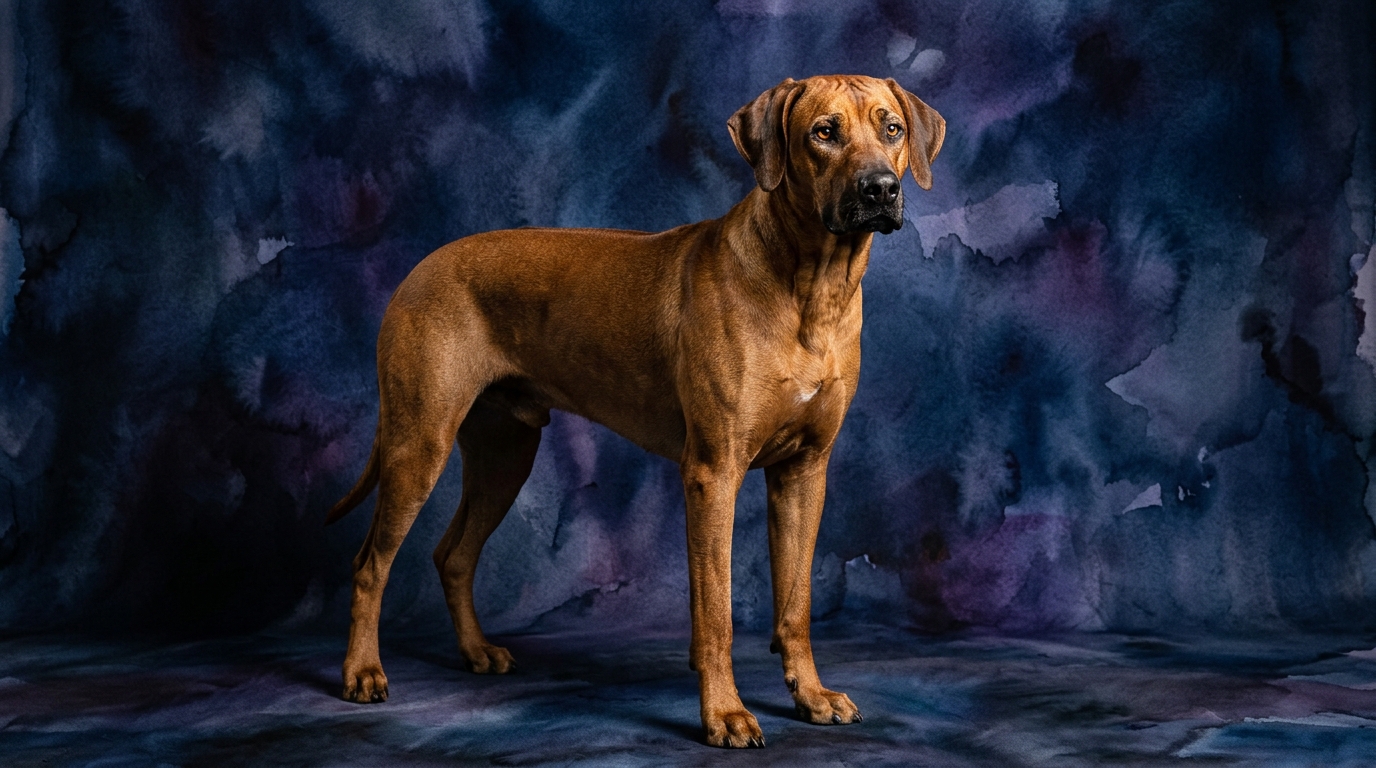
Side-by-Side Cognitive Profiles: Malamute vs. Ridgeback
At The Cosmic Pet Pet IQ Lab, we dissect canine intelligence across five critical dimensions. The Alaskan Malamute, ranked #50 by Coren, demonstrates a formidable Problem Solving ability at 4/5, reflecting centuries of navigating complex, often harsh, environments to find paths and overcome obstacles. However, their Training Speed is a more moderate 2/5, indicative of an independent spirit that values self-reliance over strict obedience. Their Social Intelligence scores 3/5, rooted in a strong pack mentality and nuanced communication within their group. Instinctive Drive is exceptionally high at 5/5, fueled by an innate desire to pull, endure, and work with purpose. Finally, their Memory registers a robust 4/5, crucial for recalling vast territories and learned tasks.
In contrast, the Rhodesian Ridgeback, holding a Coren rank of #52, presents a different cognitive blueprint. Their Problem Solving ability is rated 3/5, effective in strategizing during hunts and navigating varied terrain, though perhaps less geared towards complex environmental puzzles than the Malamute. Training Speed for the Ridgeback stands at 3/5, suggesting a moderate willingness to learn and respond to commands, often requiring patience and consistent methods. Social Intelligence aligns with the Malamute at 3/5, reflecting their role as watchful family guardians and adaptable companions. Their Instinctive Drive is 3/5, primarily manifesting as a strong prey drive and protective instincts. Memory for the Ridgeback is 3/5, sufficient for recognizing familiar faces, territories, and learned routines, but possibly not as extensive as a breed needing to recall vast wilderness routes.
Where the Alaskan Malamute Excels Cognitively
The Alaskan Malamute's cognitive strengths clearly shine in areas demanding resourcefulness, endurance, and spatial memory. Their superior Problem Solving score of 4/5 isn't just about figuring out puzzles; it's about making independent decisions in challenging situations, like finding the safest route through a blizzard or strategizing to free a trapped sled. This translates to an impressive capacity for practical application of intelligence, where they can adapt and innovate on the fly without constant human direction. Their exceptional Instinctive Drive, a perfect 5/5, means they are profoundly driven by purpose and work. This isn't just about physical stamina; it's a mental fortitude that allows them to remain focused on a task for extended periods, whether it's pulling a sled or navigating a long hike, making them exceptional partners for goal-oriented activities.
Furthermore, the Malamute's 4/5 Memory score underpins their ability to retain complex information over time, such as intricate routes, multi-step tasks, and the nuances of their environment. This robust memory, combined with their problem-solving prowess, makes them adept at recalling past experiences to inform future actions, a critical trait for survival and successful completion of demanding roles. Their social intelligence, while equal to the Ridgeback's, operates within a strong, nuanced pack structure, meaning they understand and respond deeply to established hierarchies and group dynamics, often preferring to work collaboratively within a defined team.
Where the Rhodesian Ridgeback Holds a Cognitive Edge
While the Malamute excels in raw environmental problem-solving and sustained effort, the Rhodesian Ridgeback offers a distinct cognitive advantage, particularly in their Training Speed, scoring 3/5 compared to the Malamute's 2/5. This higher score indicates a greater willingness and capacity to absorb and respond to human commands more readily, making them generally more amenable to formal obedience training. They possess a keen observational intelligence, often learning through watching and mimicking, which can expedite their understanding of new routines and expectations within a domestic setting. Their problem-solving, while a 3/5, is often applied to more nuanced tasks like tracking, where they must interpret subtle environmental cues and develop strategies to locate prey, showcasing a different kind of analytical skill.
The Ridgeback's Instinctive Drive, at 3/5, is powerful but perhaps more focused on specific roles like guarding and tracking, rather than the Malamute's broad endurance-based work. This means their drive can be channeled effectively into protective roles or scent work, providing a clear purpose that aligns with their historical background. Their social intelligence, also 3/5, often manifests as a deep loyalty and protective instinct towards their human family, making them excellent, watchful companions. While their memory is 3/5, it is perfectly sufficient for recalling household rules, familiar faces, and learned boundaries, contributing to their reputation as dependable and consistent family members.
Training Dynamics: Which Breed is More Amenable?
When it comes to ease of training, the Rhodesian Ridgeback generally presents a more straightforward path than the Alaskan Malamute, primarily due to their respective Training Speed scores. The Ridgeback's 3/5 score suggests a dog that, while possessing an independent hound spirit, is more receptive to consistent instruction and positive reinforcement. They are often eager to please their chosen humans and can learn complex commands with patience and clear communication. Their problem-solving is often geared towards achieving a goal, and if that goal is pleasing their owner, they will apply their intellect to understand and execute tasks, albeit sometimes with a charming stubborn streak typical of the hound group.
The Alaskan Malamute, with a Training Speed of 2/5, embodies a more independent and self-sufficient mindset. Their intelligence is geared towards independent decision-making in challenging environments, not necessarily towards following human commands without question. This means training requires immense patience, creativity, and a deep understanding of their drive and motivations. They can learn a great deal, thanks to their strong memory (4/5) and problem-solving (4/5), but they will often weigh whether a command is truly necessary or beneficial from their perspective. Their powerful instinctive drive (5/5) means they are happiest when given a 'job' that aligns with their natural inclinations, and training must often be framed as a collaborative effort rather than strict obedience to truly engage them.
Matching Breeds to Lifestyles: Active vs. Relaxed Owners
For active owners seeking a true adventure partner and who appreciate a dog with immense physical and mental fortitude, the Alaskan Malamute is an ideal match. Their perfect 5/5 Instinctive Drive demands an outlet for their energy and purpose, whether through sledding, skijoring, long hikes, or other demanding activities. These are not dogs content with a short walk; they thrive on structured work and exploration. Owners must be prepared to engage their Malamute's 4/5 problem-solving and 4/5 memory with consistent training, environmental enrichment, and opportunities for independent thought. They suit individuals or families who are experienced with strong, independent breeds and can provide a consistent pack structure.
Conversely, the Rhodesian Ridgeback caters well to active owners who appreciate a protective, loyal, and somewhat more adaptable companion. While they still require significant exercise to manage their 3/5 instinctive drive and maintain their powerful physique, their needs are often met with vigorous daily runs, hikes, or active play, rather than the sustained, purpose-driven work of a Malamute. Their 3/5 training speed makes them generally more responsive to obedience and less likely to challenge authority as frequently. They fit owners who are consistent, firm, and can provide clear boundaries, making them excellent family protectors and active companions without the extreme demands of a working sled dog.
The Verdict
Choose an Alaskan Malamute if you are an experienced, highly active owner seeking a truly independent, enduring partner for challenging outdoor adventures and are prepared for a lifelong commitment to their specific working needs and training approach.
Choose a Rhodesian Ridgeback if you are an active, consistent owner looking for a devoted, protective family companion who excels in focused activities like tracking or guarding and is generally more amenable to traditional obedience training.
🧠 Find Your Pet's IQ Score
Our Pet IQ Lab assessment covers 25+ tests across 5 cognitive dimensions — personalized to your breed.
Take the Full IQ Test →Frequently Asked Questions
Do Alaskan Malamutes and Rhodesian Ridgebacks get along with other pets?
Alaskan Malamutes, with their strong pack drive, can often coexist with other dogs if properly socialized, but their high prey drive may pose a challenge with smaller pets. Rhodesian Ridgebacks also possess a prey drive and can be selective with other dogs, often preferring their own family unit, requiring careful introductions and supervision.
Are these breeds suitable for first-time dog owners?
Neither the Alaskan Malamute nor the Rhodesian Ridgeback is typically recommended for first-time dog owners. Both breeds possess strong wills, significant energy requirements, and specific training needs that benefit from experienced handling, consistency, and a deep understanding of canine behavior.
What kind of mental stimulation do these breeds require?
Alaskan Malamutes thrive on problem-solving tasks, scent work, and opportunities to 'work' or explore, engaging their high instinctive drive and memory. Rhodesian Ridgebacks benefit from training challenges, tracking games, and puzzle toys that satisfy their innate curiosity and moderate problem-solving abilities.