
Side-by-Side IQ Profile: Alaskan Malamute vs. Shih Tzu
At The Cosmic Pet Pet IQ Lab, we evaluate canine cognition across five key dimensions, providing a granular view of each breed’s unique mental architecture. Let's delve into how the Alaskan Malamute and Shih Tzu measure up.
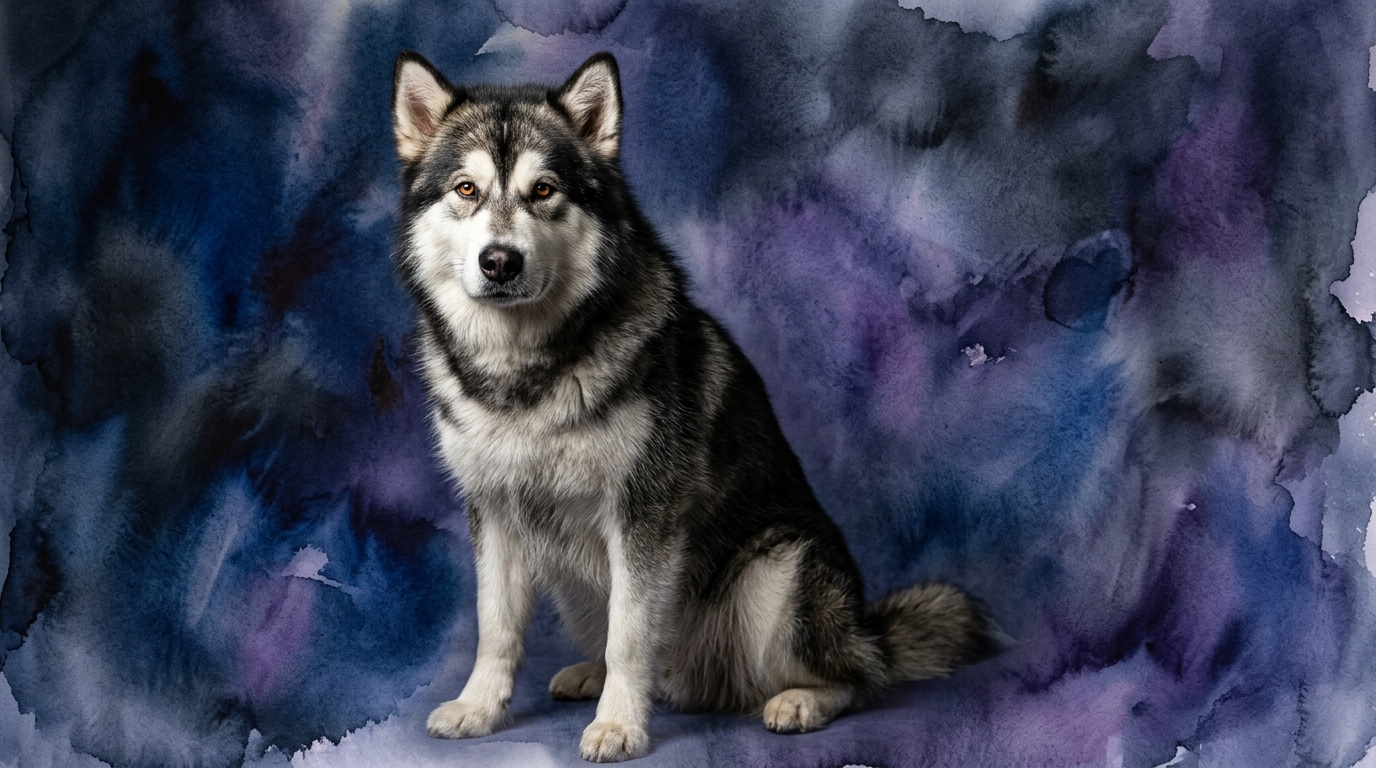
The Alaskan Malamute, a Working group dog with a Coren rank of #50, presents a profile shaped by its heritage as a powerful sled dog.
Problem Solving (4/5): These dogs exhibit a robust ability to navigate complex situations, often finding creative solutions to obstacles, a trait honed by their need to overcome challenges in harsh environments. Their strong will sometimes translates into solving problems in ways that benefit them, rather than their human.
Training Speed (2/5): Despite their problem-solving acumen, Malamutes are not quick to pick up new commands. Their independence and strong self-will mean they require consistent, patient, and engaging training methods, often questioning the necessity of a task.
Social Intelligence (3/5): Malamutes possess a moderate level of social perceptiveness. They can read human cues but are often more focused on their pack dynamics and established hierarchy, sometimes appearing aloof or less overtly responsive to subtle social signals.
Instinctive Drive (5/5): Their drive is exceptionally powerful, rooted in their heritage as sled dogs. This manifests as a strong prey drive, a desire to pull, and an innate need for purposeful activity, making them highly motivated by tasks that tap into these instincts.
Memory (4/5): Their memory is quite reliable, enabling them to recall complex routes, past experiences, and learned behaviors over extended periods, crucial for navigation and task retention in their original working roles.
In contrast, the Shih Tzu, a Toy group dog with a Coren rank of #70, showcases a cognitive design optimized for companionship.
Problem Solving (3/5): Shih Tzus demonstrate a moderate capacity for problem-solving. They can figure out simple puzzles or how to get what they want through charming persistence, though they are less inclined towards complex, independent solutions.
Training Speed (2/5): Similar to Malamutes, Shih Tzus are not known for rapid command acquisition. Their focus on companionship and comfort, coupled with a playful stubborn streak, means training requires patience, positive reinforcement, and a light-hearted approach.
Social Intelligence (5/5): This breed excels in social intelligence, possessing an acute ability to read human emotions and intentions. They are highly attuned to their family's mood, often seeking to comfort or engage, making them exceptional companions.
Instinctive Drive (2/5): Their instinctive drives are comparatively low. Bred primarily for companionship, they have a minimal prey drive and little inclination for strenuous physical tasks, preferring instead to be close to their people.
Memory (3/5): Shih Tzus have a functional memory, remembering routines, people, and basic commands. While not as robust for complex sequences as a working dog, it is perfectly adequate for their role as a cherished household member.
Where the Alaskan Malamute Wins Cognitively
The Alaskan Malamute clearly demonstrates superior cognitive strengths in areas demanding independent thought and physical perseverance. Their problem-solving score of 4/5 reflects an ability to strategize and overcome obstacles, a trait vital for their historical role in navigating challenging Arctic terrains and securing resources. This extends beyond simple obedience; a Malamute might ingeniously figure out how to open a gate or bypass a barrier to achieve a desired outcome, showcasing a proactive and resourceful mind.
Furthermore, their instinctive drive, rated at a perfect 5/5, is a profound cognitive advantage for specific tasks. This deep-seated motivation to pull, explore, and work with purpose means they possess an innate mental framework for sustained effort and goal-oriented behaviors, making them excel in activities like sledding, canicross, or even complex scent work. Their memory, at 4/5, underpins these capabilities, allowing them to retain intricate spatial information and learned task sequences, which is invaluable for long-distance journeys or repeated working patterns.
Where the Shih Tzu Wins Cognitively
In contrast, the Shih Tzu's cognitive strengths shine brightest in the realm of social interaction and emotional attunement. Their stellar social intelligence, a perfect 5/5, signifies an extraordinary capacity to perceive and respond to human emotions and social cues. This isn't merely about being friendly; it's about a nuanced understanding of their human companions' moods, often prompting them to offer comfort or solicit interaction precisely when needed.
This profound empathy and ability to integrate seamlessly into human social structures is a sophisticated cognitive skill, making them masters of companionship. While their problem-solving is rated lower at 3/5, this often manifests as cleverness in achieving social goals, such as charming their way into an extra treat or securing a prime lap spot. Their lower instinctive drive (2/5) means their minds are less cluttered with the demands of ancient working roles, freeing up cognitive resources to focus almost entirely on their immediate social environment and the well-being of their family.
Which is Easier to Train, and Why?
Neither the Alaskan Malamute nor the Shih Tzu are recognized for rapid training speed, both scoring 2/5 in this dimension, yet their training challenges differ significantly. The Malamute's difficulty stems from profound independence and powerful instinctive drives. Bred to make decisions in challenging environments without constant human direction, they possess a strong will and tend to question commands if they don't perceive a clear purpose or benefit. Training a Malamute requires immense patience, consistency, and a deep understanding of their motivations, often leveraging their desire to work or their prey drive in a controlled manner. They engage in mental negotiation, not blind obedience.
Conversely, the Shih Tzu's training challenges often arise from their comfort-seeking nature and occasional stubbornness. While eager to please their beloved humans, their motivation is typically affection-driven, not task-oriented. They can be easily distracted by their environment or the allure of a cozy lap. House-training can be particularly challenging due to small bladders and sometimes a preference for indoor comfort. Therefore, while both require patience, the Shih Tzu might be considered marginally "easier" for basic obedience, as their motivations (treats, praise, attention) are more straightforward to harness than the Malamute's inherent self-reliance.
Suitability for Active vs. Relaxed Owners
The contrast between these two breeds regarding owner lifestyle suitability is stark, primarily driven by their differing instinctive drives and physical needs. The Alaskan Malamute, with its 5/5 instinctive drive, is unequivocally suited for highly active owners. These dogs possess an inherent need for strenuous physical activity and mental engagement rooted in their sled dog heritage. They thrive when given a "job," whether it's pulling a cart, participating in long hikes, or engaging in intense dog sports. An owner who can provide several hours of vigorous exercise daily, coupled with consistent mental challenges, will find a Malamute to be a fulfilled and balanced companion. Their independent problem-solving nature also means they need owners who can provide structure and channels for their cognitive energy, preventing boredom-induced destructive behaviors.
In stark contrast, the Shih Tzu, with its 2/5 instinctive drive, is the quintessential companion for more relaxed owners. Their primary desire is to be close to their human family, enjoying comfortable indoor living. While they appreciate short, leisurely walks and playtime, their physical requirements are minimal. They are content with lounging, cuddling, and being the center of gentle attention. An owner seeking a calm, affectionate lapdog who doesn't demand extensive outdoor adventures will find the Shih Tzu to be an ideal match, fitting seamlessly into a less active, home-centric lifestyle.
The Verdict
Opt for an Alaskan Malamute if you are an experienced, active owner committed to providing extensive physical exercise, consistent mental challenges, and understanding a profoundly independent, working-oriented mind.
Select a Shih Tzu if you desire an affectionate, socially attuned companion who thrives in a relaxed indoor environment and requires moderate physical activity and gentle, consistent training.
🧠 Find Your Pet's IQ Score
Our Pet IQ Lab assessment covers 25+ tests across 5 cognitive dimensions — personalized to your breed.
Take the Full IQ Test →Frequently Asked Questions
Do Alaskan Malamutes get bored easily?
Yes, Malamutes, with their high instinctive drive and problem-solving abilities, require significant mental and physical stimulation to prevent boredom. A bored Malamute can become destructive or vocal, needing engaging activities like pulling, long walks, or puzzle toys to stay content.
Are Shih Tzus good with children?
Shih Tzus are generally good with older, respectful children due to their high social intelligence and affectionate nature. However, their small size makes them vulnerable to accidental injury from very young children, so supervised interactions are always recommended.
Can a Shih Tzu live in an apartment?
Absolutely, Shih Tzus are well-suited for apartment living thanks to their low instinctive drive and minimal exercise requirements. They thrive indoors as long as they receive daily short walks, playtime, and plenty of human companionship.