Side-by-Side IQ Profile: Alaskan Malamute vs. Staffordshire Bull Terrier
The Cosmic Pet Pet IQ Lab employs a multi-dimensional approach to assess canine intelligence, moving beyond single-score rankings to explore five crucial cognitive dimensions: problem-solving, training speed, social intelligence, instinctive drive, and memory. This framework allows for a nuanced understanding of how different breeds process information and interact with their environment, rather than simply labeling one as 'smarter' than another.
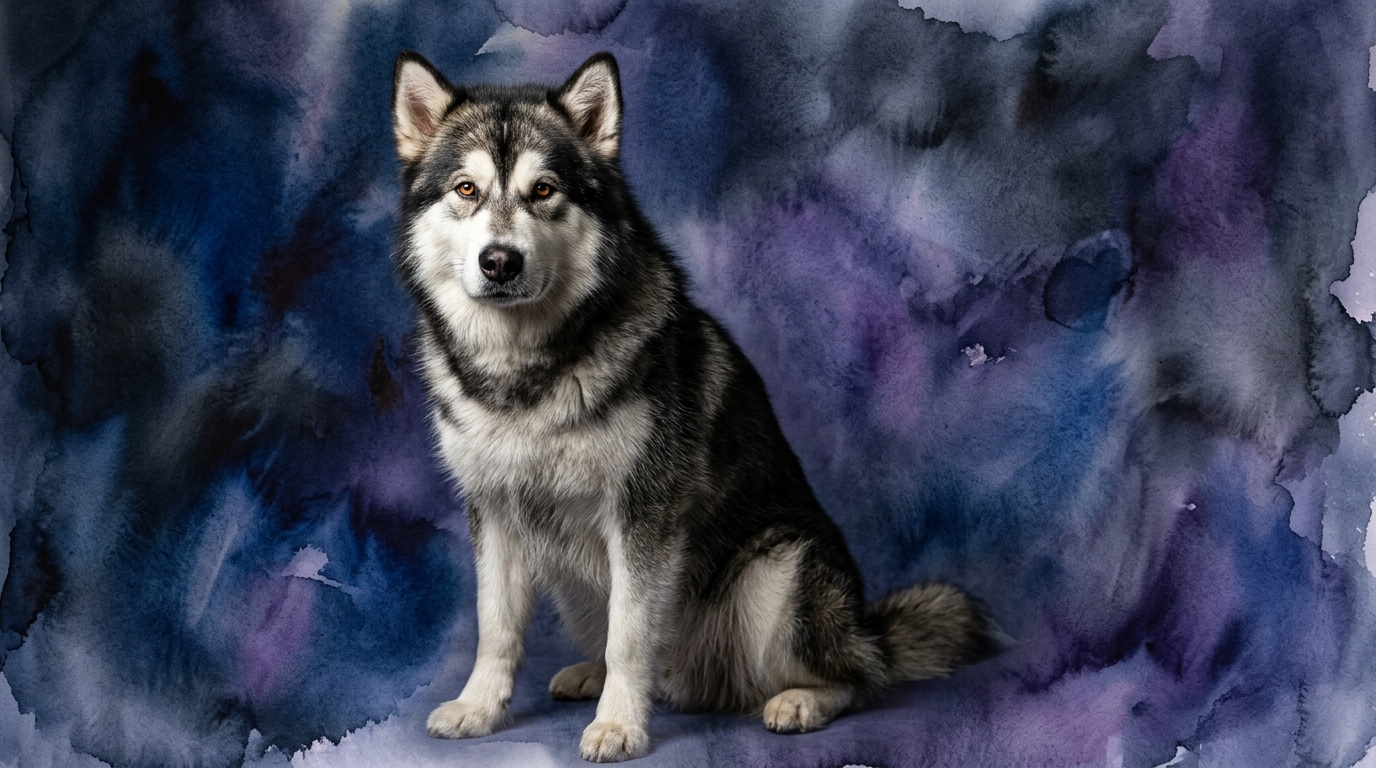
The Alaskan Malamute, ranked #50 by Coren, demonstrates a profile shaped by its demanding heritage. Their problem-solving ability scores a strong 4/5, indicating a capacity for independent thought and resourceful navigation of challenges. However, their training speed is a more moderate 2/5, suggesting a need for patient, consistent instruction. Social intelligence sits at 3/5, reflecting an awareness of human cues coupled with a notable independence. A powerful instinctive drive earns them a perfect 5/5, underscoring their innate urge to pull, explore, and work. Finally, their memory is robust at 4/5, enabling them to retain complex information and routines.
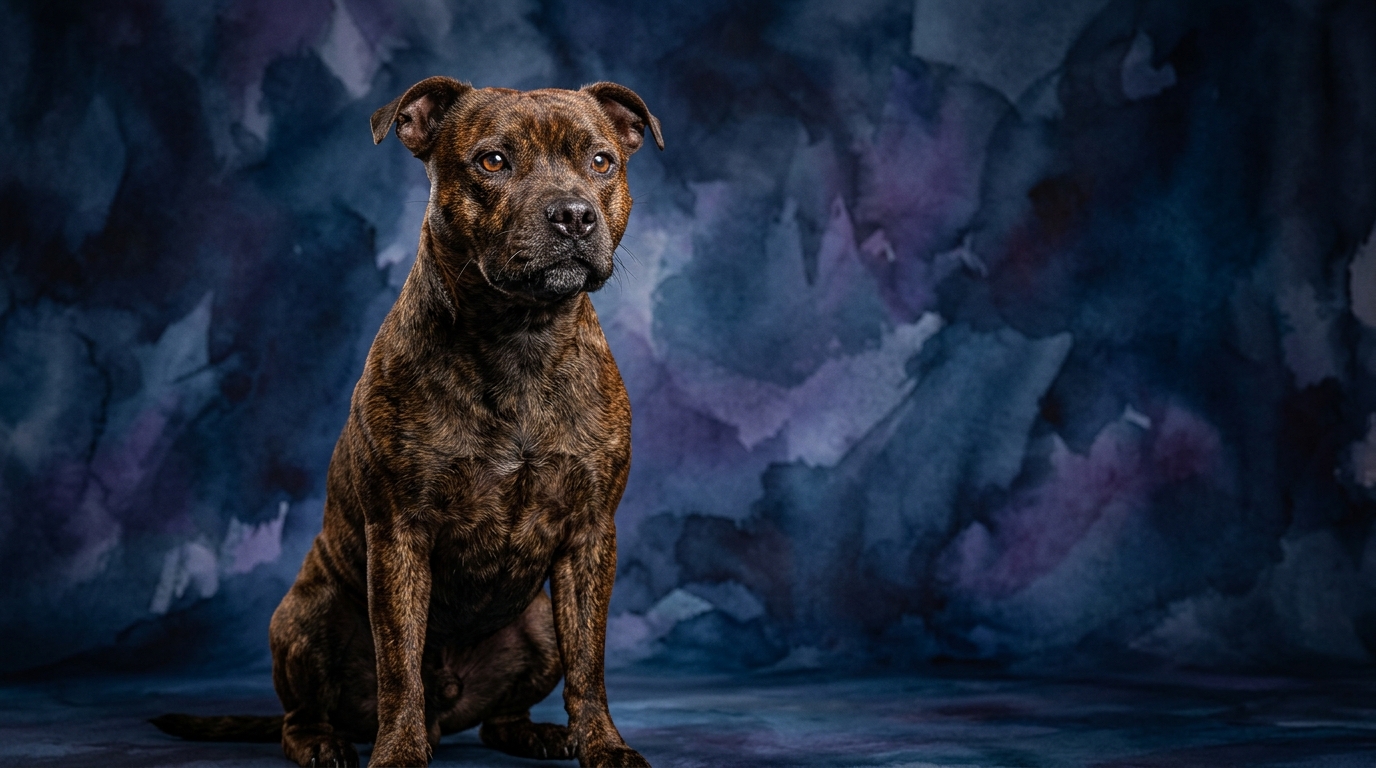
In contrast, the Staffordshire Bull Terrier, while not Coren-ranked, presents a balanced cognitive profile. Their problem-solving ability is rated 3/5, indicating competence in navigating everyday situations without the Malamute's intense self-reliance. Training speed also scores 3/5, suggesting an average capacity for learning new commands with positive reinforcement. Social intelligence matches the Malamute at 3/5, highlighting their engagement with human interaction and emotional awareness. Their instinctive drive is a moderate 3/5, less specialized than the Malamute's, focusing more on play and companionship. Memory is also 3/5, indicating average retention of experiences and learned behaviors.
Where the Alaskan Malamute Wins Cognitively
The Alaskan Malamute’s cognitive strengths are deeply rooted in its original purpose as a powerful sled dog and hunter in harsh Arctic environments. Their problem-solving score of 4/5 shines when faced with environmental challenges, such as figuring out how to unlatch a gate or navigating a complex trail independently without constant human direction. This isn't about solving abstract puzzles, but practical, survival-oriented ingenuity.
Coupled with their exceptional instinctive drive (5/5), Malamutes excel at tasks requiring sustained effort and self-motivation, like endurance pulling or tracking. Their strong memory (4/5) further enhances these abilities, allowing them to recall intricate routes, remember scent trails, or understand the layout of their territory over time. This combination makes them highly effective in roles demanding self-sufficiency and persistent engagement with a task, even when human oversight is minimal.
Where the Staffordshire Bull Terrier Wins Cognitively
While the Staffordshire Bull Terrier’s individual cognitive scores may not reach the Malamute’s peaks in specific areas, their balanced profile offers distinct advantages in a companion role. Their social intelligence, rated 3/5, combined with their average training speed (3/5), means they often demonstrate a keen willingness to engage and cooperate with their human companions. They are adept at reading human body language and vocal tones, adjusting their behavior accordingly to maintain positive interaction.
Their moderate problem-solving (3/5) is often directed towards social negotiation or figuring out how to achieve desired outcomes within a human household, perhaps by subtly nudging for attention or learning complex routines tied to rewards. Unlike the Malamute’s drive for independent work, the Staffy's instinctive drive (3/5) is more oriented towards interactive play and companionship, making them quick to learn games and participate enthusiastically in shared activities. This makes them highly adaptable to varied home environments, thriving on interaction and positive reinforcement.
Which is Easier to Train and Why
When evaluating ease of training, the Staffordshire Bull Terrier generally presents a more straightforward path for the average owner. Their training speed of 3/5 indicates they are receptive to learning and tend to pick up new commands at an average pace. Crucially, their moderate instinctive drive (3/5) means they are often more inclined to cooperate and respond to human directives without significant internal conflict, as their natural inclinations align well with interactive, reward-based training methods.
The Alaskan Malamute, with a training speed of 2/5 and an instinctive drive of 5/5, offers a different training experience. They are not unintelligent, but their independence and powerful intrinsic motivations mean they often perceive commands as suggestions rather than absolute rules. Training a Malamute requires immense patience, consistency, and a deep understanding of their innate drives. They require handlers who can channel their desire to pull or explore into structured activities, making consistent engagement and clear boundaries non-negotiable for successful training.
Which Suits Active Owners vs. Relaxed Owners
For owners seeking a partner for demanding outdoor adventures, the Alaskan Malamute is an exceptional match. Their profound instinctive drive (5/5) and problem-solving acumen (4/5) demand rigorous physical exercise, such as long hikes, sledding, or skijoring, and extensive mental enrichment. A Malamute requires an owner dedicated to providing daily, purposeful activity that taps into their working heritage. Without sufficient outlets, their ingenuity can turn towards destructive behaviors, making them unsuitable for a relaxed or sedentary lifestyle.
The Staffordshire Bull Terrier, while certainly an active breed, suits a broader range of lifestyles, including those of moderately active owners. Their balanced instinctive drive (3/5) means they thrive on regular walks, playtime in the yard, and engaging training sessions, but do not typically require the same intensity or specialized 'work' as a Malamute. They are adaptable and enjoy being part of family activities, making them a good fit for owners who enjoy daily activity but aren't necessarily extreme sports enthusiasts. Their social nature means they value interaction and companionship over solitary, endurance-based tasks.
The Verdict
Choose the Alaskan Malamute if you are an experienced, active owner seeking a truly independent and resourceful partner for demanding outdoor adventures and are prepared for patient, consistent training methods.
Opt for the Staffordshire Bull Terrier if you desire an affectionate, responsive companion who thrives on interactive play and training, and adapts well to a family environment with regular, but not extreme, activity.
🧠 Find Your Pet's IQ Score
Our Pet IQ Lab assessment covers 25+ tests across 5 cognitive dimensions — personalized to your breed.
Take the Full IQ Test →Frequently Asked Questions
Is the Alaskan Malamute truly "stubborn" or just independent?
They are more independent than stubborn, with a strong internal drive to make their own decisions, which can be perceived as resistance to commands. This stems from their history as working dogs requiring self-reliance and problem-solving without constant human direction.
How does the Staffordshire Bull Terrier's social intelligence manifest?
Their social intelligence often shows in their ability to read human emotions and their strong desire for interaction. They thrive on companionship and can be highly attuned to their family's mood, making them empathetic and responsive companions.
Can a Malamute be a good family dog despite its high drive?
Yes, with proper training, early socialization, and ample outlets for their substantial drive, Malamutes can be devoted family members. Their independence necessitates clear boundaries and consistent leadership, ensuring their powerful instincts are channeled constructively.