
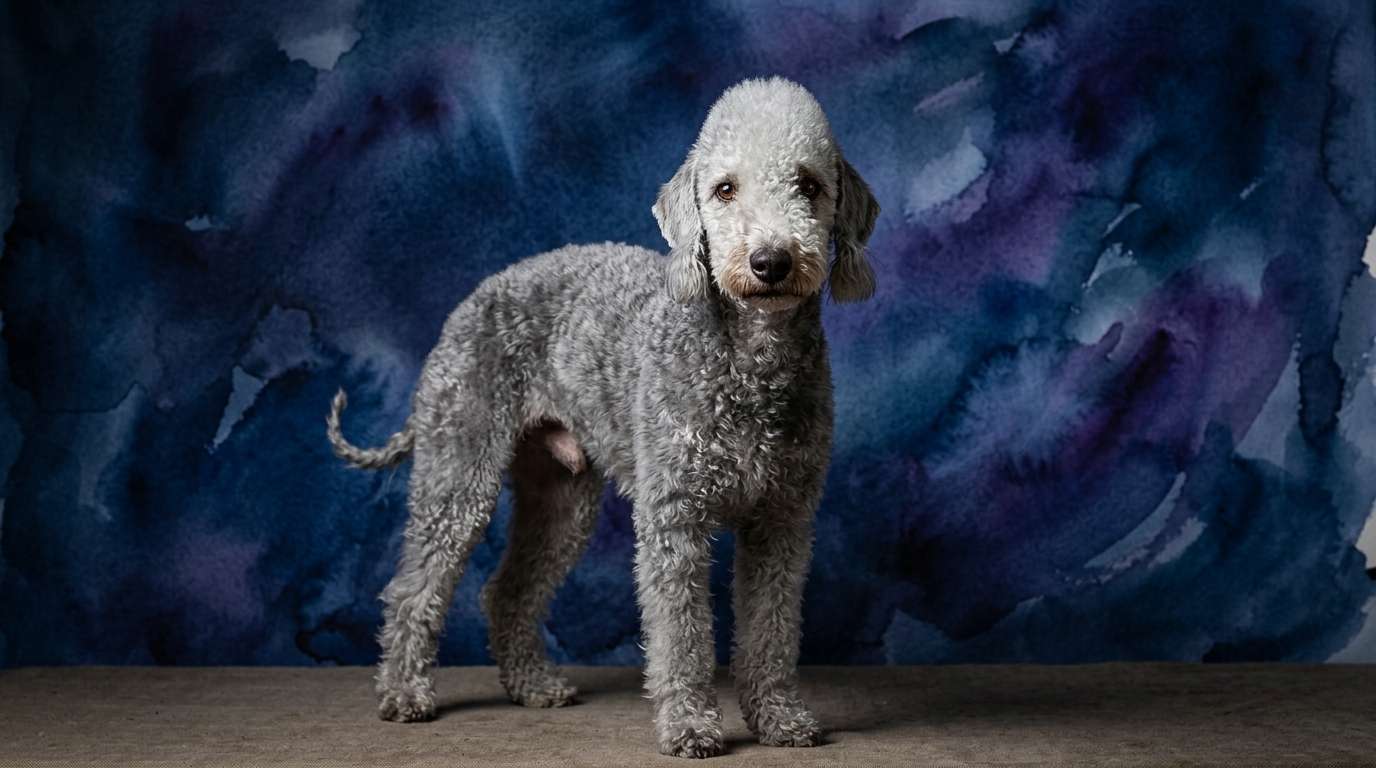
Side-by-Side Cognitive Profiles: AWS vs. BT
The Cosmic Pet Pet IQ Lab employs a multi-dimensional assessment, allowing us to parse distinct aspects of a dog's mental capabilities. For the American Water Spaniel, a Sporting breed, and the Bedlington Terrier, a member of the Terrier group, a closer look at these dimensions reveals both commonalities and subtle, yet significant, differences.
In Problem Solving, both breeds register a 3 out of 5. This indicates a moderate capacity for navigating novel challenges, such as figuring out how to access a treat puzzle or overcoming minor obstacles in their environment. An American Water Spaniel might apply this to strategizing the best retrieve path in varied terrain, while a Bedlington Terrier could use it to outwit a burrowing critter or navigate a complex backyard.
Training Speed for both breeds stands at 3 out of 5. This suggests they can learn new commands and routines at a respectable pace, though neither is likely to pick up complex sequences in a single session. Consistency and positive reinforcement are key for both, with lessons needing reinforcement over time rather than instant mastery.
Social Intelligence also scores 3 out of 5 for both the American Water Spaniel and the Bedlington Terrier. This means they are generally capable of interpreting human cues and interacting appropriately within a family structure. They can read body language and vocal tones to a reasonable extent, fostering good bonds with their human companions, though perhaps not with the extreme sensitivity seen in some higher-scoring companion breeds.
When it comes to Instinctive Drive, both breeds again score 3 out of 5, but the nature of this drive diverges significantly due to their breed histories. For the American Water Spaniel, this drive manifests as a strong inclination towards retrieving, swimming, and working cooperatively alongside a handler in wetland environments. For the Bedlington Terrier, the drive is rooted in their vermin-hunting heritage, expressed through a propensity for digging, chasing small animals, and independent exploration.
Memory is where we observe the most notable distinction: the American Water Spaniel earns a 4 out of 5, while the Bedlington Terrier scores 3 out of 5. The AWS's superior memory suggests a greater capacity to retain complex sequences of commands, recall past experiences, and remember specific locations or patterns over longer periods. This is a crucial asset for a working retriever, remembering where multiple birds fell or navigating a familiar hunting territory. The Bedlington Terrier's 3/5 memory score indicates a solid, but not exceptional, ability to recall information, meaning they may require more frequent refreshers for learned behaviors and might not retain intricate routines as readily.
Where the American Water Spaniel Shines Cognitively
The American Water Spaniel's cognitive strength is most pronounced in its memory capabilities, scoring a 4 out of 5. This enables them to excel in tasks requiring sustained recall, such as remembering multi-step retrieving patterns or intricate field commands. An AWS can effectively 'map' its environment, recalling locations where items were last seen or navigating complex terrain based on prior experience. This cognitive advantage is directly tied to their role as a versatile hunter, where remembering the precise location of a downed bird amidst dense cover is paramount.
Furthermore, the AWS's Coren ranking of #44 among working dogs suggests a general aptitude for obedience and problem-solving within a structured working context. While individual IQ scores provide granular detail, the Coren ranking reflects a breed's overall capacity to understand and execute commands, requiring fewer repetitions to learn new tasks and demonstrating a higher rate of successful compliance. This indicates a breed that generally applies its cognitive abilities to cooperative tasks with a focus on human direction, a trait often less emphasized in unranked terrier breeds.
Where the Bedlington Terrier Excels Cognitively
While the Bedlington Terrier's individual cognitive scores are consistently 3 out of 5, their strength lies in the practical application of these abilities within their specific breed context. Their problem-solving, training speed, and instinctive drive, though moderate, are perfectly suited for their historical role as tenacious vermin hunters. A Bedlington Terrier might not devise elaborate strategies, but they apply their moderate problem-solving skills with unwavering focus and determination when pursuing a scent or attempting to dig out a perceived pest.
The Bedlington's cognitive profile also suggests a balanced and adaptable intelligence. Their consistent 3/5 across most dimensions implies a dog that is generally capable without being overly complex, making them adaptable to various living situations. They bring a focused, independent thinking to tasks that require persistence and self-reliance, rather than constant human direction. Their social intelligence at 3/5, combined with their generally affectionate nature, allows them to integrate well into family life, reading general emotional cues and adapting to household routines with competence.
Training Dynamics: Which is Easier and Why?
When considering ease of training, the American Water Spaniel generally presents a more straightforward path. Their 4/5 memory score means they retain commands and routines more effectively, requiring fewer refreshers and building upon learned behaviors more consistently. Coupled with their sporting dog heritage, they often possess a stronger desire to work cooperatively and please their handler, which can translate into greater focus during training sessions and a quicker understanding of expectations. Their moderate training speed of 3/5 is enhanced by their superior retention.
The Bedlington Terrier, despite sharing a 3/5 training speed score, can present more challenges due to their inherent terrier independence and moderate memory. While capable of learning, their strong instinctive drive, particularly their prey drive and inclination to dig, can lead to distractions. Their independent nature means they may require more patience and creative motivation to remain engaged. Owners might find themselves needing to refresh commands more frequently and manage potential stubbornness, as the Bedlington may prioritize its own interests over immediate compliance, characteristic of many terrier breeds.
Matching Breeds to Lifestyles: Active vs. Relaxed Owners
For active owners seeking a true partner in outdoor pursuits, the American Water Spaniel is an excellent match. Their strong instinctive drive for retrieving and swimming, combined with their superior memory, means they thrive on structured activities like hunting, dock diving, or advanced obedience. They require consistent physical exertion and mental engagement that taps into their working heritage. An AWS will flourish with an owner who enjoys long hikes, water sports, and providing consistent training that builds on their natural aptitudes, ensuring both physical and cognitive needs are met.
The Bedlington Terrier, while certainly not a couch potato, can suit a wider range of owners, including those with a more relaxed lifestyle, provided their specific needs are addressed. They are adaptable and enjoy being a part of family activities but do not demand the same level of intense, task-oriented work as the AWS. Owners should be prepared for bursts of terrier energy, the need for regular walks, and mental stimulation to prevent boredom-induced behaviors like digging. Their moderate cognitive profile means they are generally agreeable but still require consistent boundaries and engagement to channel their inherent terrier tenacity positively.
The Verdict: When to Choose Each Breed
The Verdict
Choose the American Water Spaniel if you are an active owner seeking a cooperative, biddable companion for outdoor adventures and structured work, valuing strong memory for complex tasks.
Opt for the Bedlington Terrier if you appreciate an adaptable, spirited, and moderately independent companion that integrates well into family life, offering balanced cognitive abilities for everyday living.
🧠 Find Your Pet's IQ Score
Our Pet IQ Lab assessment covers 25+ tests across 5 cognitive dimensions — personalized to your breed.
Take the Full IQ Test →Frequently Asked Questions
Does the Coren ranking affect how I should interpret the IQ scores?
Yes, while the IQ scores provide granular data on specific cognitive dimensions, the Coren ranking (#44 for AWS, unranked for BT) offers a broader context. A ranked breed typically demonstrates higher working intelligence and trainability, suggesting the AWS might apply its scores more readily to obedience and cooperative tasks compared to the unranked Bedlington, which may prioritize independent action.
How does the 'instinctive drive' score of 3/5 differ between these two breeds?
Even with the same score, the manifestation of instinctive drive is breed-specific. For the American Water Spaniel, it's a drive for retrieving, swimming, and cooperative hunting. For the Bedlington Terrier, it's a drive for chasing, digging, and independent vermin control. Understanding this distinction is crucial for providing appropriate outlets for their natural behaviors.
If both have similar problem-solving scores, will they approach puzzles the same way?
Not necessarily in their approach, though their success rate might be similar. An American Water Spaniel might patiently work through a puzzle, seeking handler guidance, while a Bedlington Terrier might employ more persistent, independent trial-and-error, potentially using its paws or nose more assertively to achieve its goal, reflecting its terrier tenacity.