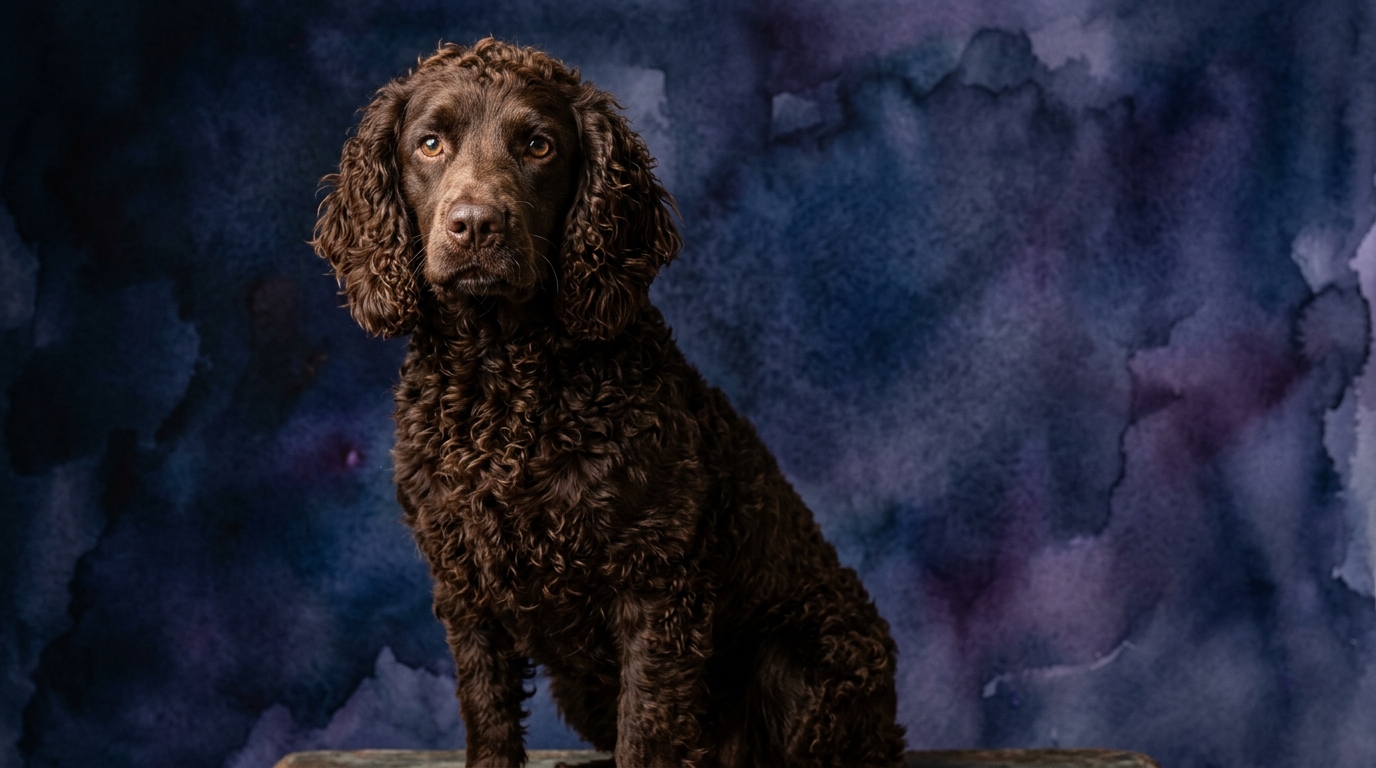
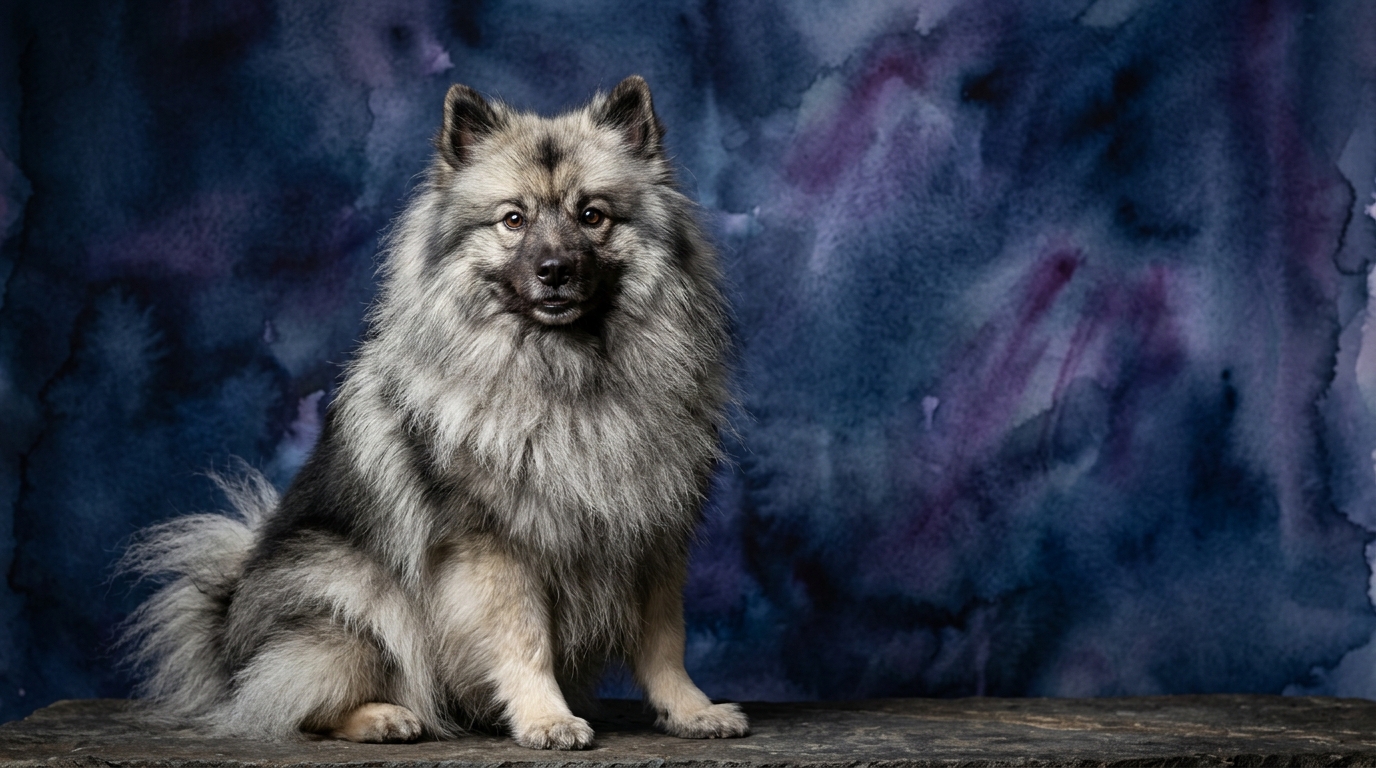
Side-by-Side IQ Profile: American Water Spaniel vs. Keeshond
The Cosmic Pet Pet IQ Lab's granular assessment provides a unique lens through which to understand the cognitive faculties of these two distinct breeds. While both are capable and engaging companions, their intellectual predispositions, measured across five dimensions and summarized by their Coren ranks, paint a clear picture of their differing strengths.
The American Water Spaniel, with a Coren rank of #44, is categorized as an 'above average working dog,' indicating a solid, functional intellect geared towards its historical roles. Its Problem Solving is rated 3/5, meaning it's capable of navigating moderately complex tasks, particularly those related to its working heritage like retrieving in varied terrain, but might not excel at abstract puzzles. Its Training Speed is 3/5, suggesting it requires consistent, clear instruction and positive reinforcement, learning at a steady pace but potentially needing more repetitions than some breeds. Social Intelligence stands at 3/5, showing it's generally attuned to human cues and forms strong bonds, though its focus can often be task-oriented. Instictive Drive is 3/5, reflecting a moderate drive for hunting, retrieving, and water work—a persistent inclination that needs constructive outlets. Notably, its Memory is 4/5, indicating it retains information well, especially learned tasks and routes, crucial for recalling game locations or complex scent trails.
In contrast, the Keeshond, boasting a Coren rank of #16, is classified as an 'excellent working dog,' reflecting a notably sharp and responsive intellect. Its Problem Solving is 4/5, demonstrating a higher aptitude for figuring out novel situations and puzzles, often devising creative solutions to gain access to desired items or navigate complex environments. Training Speed is also 4/5, meaning it picks up new commands and routines with relative swiftness, often requiring fewer repetitions due to its eagerness to please and focus. Its Social Intelligence is 3/5, similar to the AWS, being socially aware and connecting well with its families, reading human emotions and intentions effectively as empathetic companions. Instictive Drive is 3/5, primarily expressed as an alert watchdog tendency and a desire for companionship, not intense task-oriented hunting. The Keeshond's standout feature is its Memory at 5/5, an exceptional ability to recall vast amounts of information, from complex command sequences to household routines; they rarely forget what they've learned.
Where the American Water Spaniel Wins Cognitively
While the Keeshond boasts a higher overall Coren rank, the American Water Spaniel exhibits distinct cognitive strengths particularly suited to its heritage. Its 4/5 memory, combined with its 3/5 instinctive drive, creates a formidable package for recall-based tasks in dynamic environments. An AWS excels at remembering specific locations where objects were dropped, navigating complex scent trails, or recalling intricate sequences of retrieves over varied terrain. This isn't just about remembering a command; it's about spatial memory interwoven with a purpose-driven instinct, allowing them to effectively perform complex, multi-stage tasks requiring sustained focus and physical execution. Their problem-solving, while rated 3/5, shines brightest when challenges directly relate to their retrieving instincts, such as figuring out the best path through reeds to reach a downed bird or retrieving an object from a tricky spot in water.
Where the Keeshond Wins Cognitively
The Keeshond's cognitive profile, marked by a superior 5/5 memory and 4/5 problem-solving ability, gives it a clear edge in adaptive learning and complex pattern recognition within a domestic context. Their exceptional memory means they absorb and retain a remarkable amount of information about their environment and family, quickly learning household rules, routines, and even anticipating human actions. This isn't just about remembering commands; it’s about constructing a comprehensive mental map of their world. Their 4/5 problem-solving score enables them to adapt swiftly to new situations, figure out how to manipulate objects to achieve a goal, or understand complex multi-step requests. For instance, a Keeshond might quickly learn a sequence of tricks or understand subtle nuances of human language, displaying quick mental processing for rapid understanding and application of new information at home.
Which is Easier to Train and Why
Based on their IQ profiles, the Keeshond generally presents as the easier breed to train. Its 4/5 training speed, 4/5 problem-solving, and outstanding 5/5 memory mean it typically grasps new commands with fewer repetitions and retains them longer. A Keeshond often displays eagerness in training, motivated by praise and treats, and can quickly generalize behaviors. Their higher cognitive flexibility allows them to understand the 'why' behind a command more readily. In contrast, the American Water Spaniel's 3/5 training speed and problem-solving suggest a more deliberate learning curve. While certainly trainable, they may require more patience, consistent methods, and a trainer who understands how to harness their independent sporting instincts. Their memory at 4/5 is good, but initial acquisition of new, non-instinctive commands might take more effort. The AWS can exhibit a more independent streak if not adequately stimulated or if training doesn't appeal to their drives, making initial obedience slower compared to the responsive Keeshond.
Matching Breeds to Owner Lifestyles: Active vs. Relaxed
The American Water Spaniel, with its Sporting Group heritage and 3/5 instinctive drive, is undeniably better suited for active owners. These dogs thrive on purpose-driven activity, requiring consistent physical exercise combined with mental engagement that taps into their retrieving and water-loving instincts. Owners who enjoy hunting, dock diving, long hikes, or engaging in complex scent work will find the AWS an eager and capable partner. Their cognitive strengths are best utilized when given a job. A relaxed owner might struggle to provide the necessary outlets, potentially leading to boredom. Conversely, the Keeshond, while not a couch potato, is a better fit for moderately active to relaxed owners. Their 3/5 instinctive drive is primarily expressed as alertness and a desire for companionship, not intense physical exertion. They enjoy daily walks, playtime, and interactive indoor games, but don't demand strenuous, task-oriented activity. Their quick learning and exceptional memory make them excellent candidates for trick training or obedience for fun, providing mental stimulation without extreme physical output. They are happiest when integrated into family life, making them ideal for owners prioritizing companionship and a well-mannered household member.
The Verdict
Choose the American Water Spaniel if you are an active individual or family seeking a dedicated, task-oriented partner for outdoor adventures, hunting, or water sports, and you are prepared to engage their strong memory and purposeful drive with consistent training and mental challenges.
Opt for the Keeshond if you desire a quick-witted, adaptable, and highly trainable companion for a family home, valuing their exceptional memory and problem-solving for a well-mannered presence and engaging daily interactions rather than intense physical demands.
🧠 Find Your Pet's IQ Score
Our Pet IQ Lab assessment covers 25+ tests across 5 cognitive dimensions — personalized to your breed.
Take the Full IQ Test →Frequently Asked Questions
Is the American Water Spaniel good with children?
The American Water Spaniel's social intelligence is rated 3/5, indicating they are generally good-natured and can form strong bonds. With proper socialization and training from a young age, they can be affectionate family members, though their energy and drive mean they thrive best in active households where children understand how to interact respectfully.
Do Keeshonds bark a lot?
Keeshonds are known for their alert nature and can be quite vocal, especially in their role as watchdogs. Their moderate instinctive drive (3/5) often manifests as a tendency to announce visitors or unusual occurrences. Consistent training can help manage excessive barking, but owners should be prepared for a dog that uses its voice.
Which breed is more independent?
While both breeds possess a degree of independence, the American Water Spaniel, with its sporting background, can exhibit a more self-reliant problem-solving approach in the field. The Keeshond, despite its intelligence, typically prefers to be more involved with its human family, making it less inclined towards prolonged independent activity and more focused on companionship.