
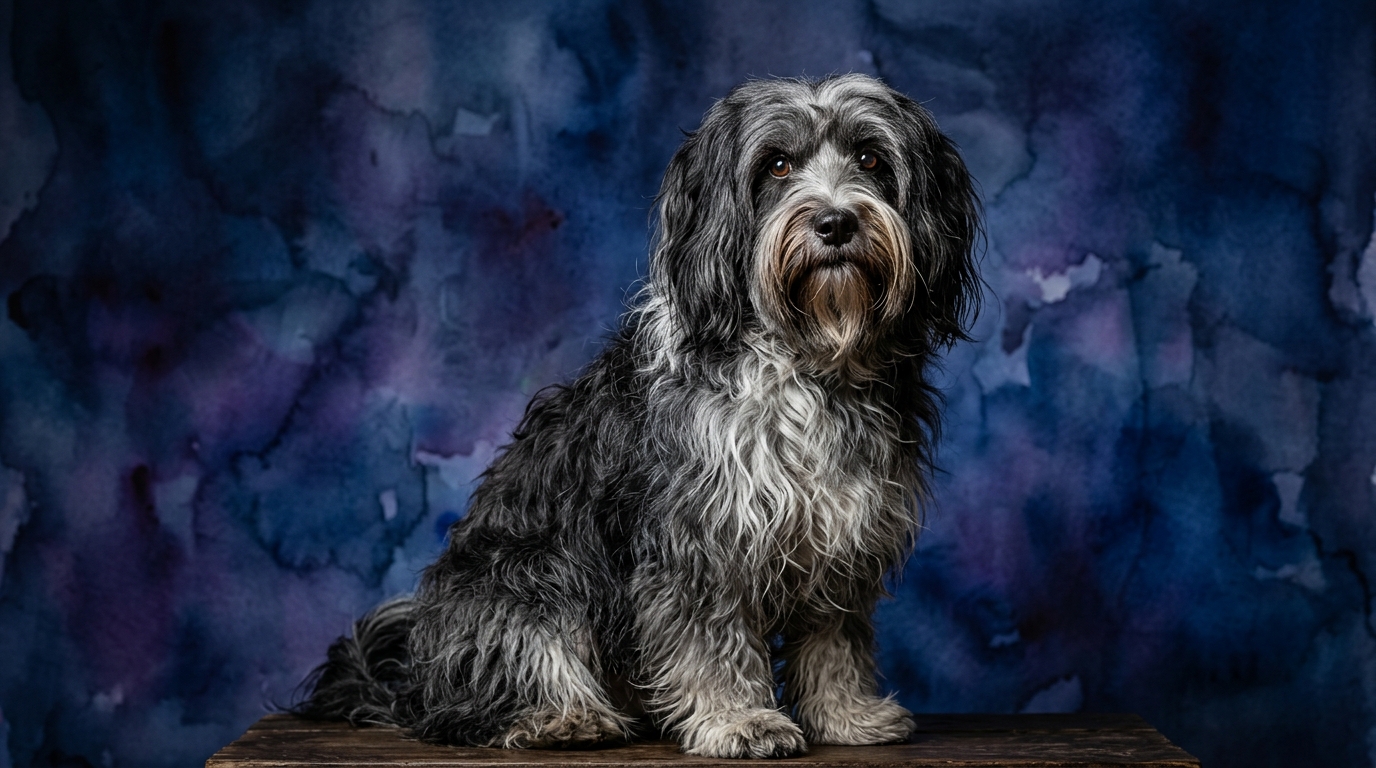
Side-by-Side Cognitive Profiles: AWS vs. TT
To understand the unique mental strengths of the American Water Spaniel (AWS) and the Tibetan Terrier (TT), we examine their intelligence across five key dimensions. The AWS, a Sporting breed, holds a Coren rank of #44, indicating a respectable capacity for working intelligence. Its cognitive breakdown includes Problem Solving at 3/5, Training Speed at 3/5, Social Intelligence at 3/5, Instinctive Drive at 3/5, and a notable Memory at 4/5.
In contrast, the Tibetan Terrier, a Non-Sporting breed, has a Coren rank of #63, suggesting it falls a bit lower on the spectrum of 'working intelligence' as measured by quick command acquisition. Its cognitive scores present a remarkably consistent profile: Problem Solving at 3/5, Training Speed at 3/5, Social Intelligence at 3/5, Instinctive Drive at 3/5, and Memory at 3/5. This consistency suggests a well-rounded, adaptable intellect rather than specialized cognitive strengths in any single area.
Where the American Water Spaniel Excels Cognitively
The American Water Spaniel's primary cognitive advantage lies in its superior Memory, scoring 4/5 compared to the Tibetan Terrier's 3/5. This enhanced recall is a significant asset, particularly for a breed developed for retrieving game. It translates to an ability to remember complex sequences of commands, the locations of fallen birds, or intricate scent trails over varied terrain. For owners, this means the AWS can retain a wider array of learned behaviors and commands with greater consistency over time, making it adept at tasks requiring sequential learning or long-term recall.
Furthermore, the AWS's higher Coren rank of #44 suggests a quicker understanding of new commands, even if its initial Training Speed score is similar to the TT's. This implies that while both breeds learn at a moderate pace, the AWS may grasp the *concept* of a new command more readily and integrate it into its repertoire due to its working background and overall cognitive architecture geared towards task execution. Its Instinctive Drive at 3/5, while not exceptionally high, is often channeled into focused, purposeful activities, making it a dedicated partner in structured work or sports.
Where the Tibetan Terrier Shines Cognitively
While the Tibetan Terrier doesn't boast a numerically superior score in any single dimension compared to the AWS, its cognitive strength lies in its remarkable balance and adaptability. With consistent scores of 3/5 across Problem Solving, Training Speed, Social Intelligence, Instinctive Drive, and Memory, the TT possesses a versatile intellect that allows it to navigate diverse situations with a thoughtful, independent approach. This balanced profile means it's not overly specialized, making it a capable companion in a wide range of living environments and social dynamics.
The TT's 3/5 in Problem Solving and Social Intelligence, combined with its independent nature inherent to many Non-Sporting breeds, suggests a dog that can assess situations and make its own decisions. It's not merely a follower but an active participant in its environment, often displaying a charming resourcefulness. This can manifest as an ability to figure out how to open a gate or creatively engage with its surroundings, offering an owner a companion with a distinct personality and a flair for independent thought, rather than a dog solely reliant on human direction for engagement.
Training Dynamics: Which is Easier and Why?
Determining which breed is 'easier' to train involves more than just their identical 3/5 Training Speed scores. The American Water Spaniel's superior Memory (4/5) gives it a distinct advantage in retaining learned behaviors and complex commands over the long term. Once an AWS learns something, it's more likely to stick, making subsequent refreshers or building upon existing skills more efficient. Its background as a working retriever also means it generally possesses a strong desire to cooperate and work alongside its human, leveraging its instinctive drive towards purposeful tasks.
The Tibetan Terrier, despite its 3/5 Training Speed, may present different training nuances. Its balanced 3/5 in all dimensions, coupled with its historical role as a companion and guardian rather than a dedicated worker, means it can sometimes display an independent streak. While it learns effectively, it might require more varied motivation and consistent, positive reinforcement to maintain engagement, as it may not always possess the same inherent 'eagerness to please' that drives many Sporting breeds. Its slightly lower Coren rank also suggests it might need a few more repetitions to fully internalize new concepts compared to the AWS, emphasizing patience and consistency in training.
Lifestyle Suitability: Active vs. Relaxed Owners
The cognitive profiles of these breeds strongly influence their suitability for different owner lifestyles. The American Water Spaniel, with its Sporting group heritage and a robust 3/5 Instinctive Drive, is an ideal match for active owners. This breed thrives on structured activity, mental engagement, and opportunities to utilize its memory and drive in tasks like retrieving, scent work, or dog sports. An AWS needs regular, vigorous exercise and a 'job' to do, whether it's daily long walks, swimming, or training sessions, to prevent boredom and channel its natural working instincts productively. Owners who enjoy outdoor adventures and want a dedicated partner for activities will find the AWS a rewarding companion.
The Tibetan Terrier, with its balanced 3/5 across all cognitive dimensions, offers greater versatility and can adapt to a wider range of owner activity levels, though it's far from a sedentary dog. While it enjoys walks, playtime, and mental stimulation, its needs are typically less intense and demanding than those of a Sporting breed. Its independent problem-solving and social intelligence make it a charming companion for owners who appreciate a dog with a distinct personality and a capacity for self-entertainment, as well as engaging with its family. It suits owners who are moderately active and seek a companion that is content to participate in family life, offering affection and a watchful presence without requiring an extreme athletic commitment.
The Verdict: When to Choose Each Companion
The Verdict
Choose the American Water Spaniel if you are an active individual or family seeking a dedicated, task-oriented canine partner who thrives on structured activity, advanced training, and opportunities to utilize its exceptional memory and working drive.
Opt for the Tibetan Terrier if you desire a versatile, adaptable companion with a balanced intellect, a charming independent streak, and the capacity to integrate into a moderately active family lifestyle, valuing companionship and thoughtful engagement over intense work.
🧠 Find Your Pet's IQ Score
Our Pet IQ Lab assessment covers 25+ tests across 5 cognitive dimensions — personalized to your breed.
Take the Full IQ Test →Frequently Asked Questions
Do American Water Spaniels require more mental stimulation than Tibetan Terriers?
Yes, generally. While both breeds benefit from mental engagement, the American Water Spaniel's Sporting background and higher memory score mean it typically thrives on more structured, task-oriented mental challenges, such as advanced obedience, retrieving games, or scent work, to fulfill its working drive. The Tibetan Terrier appreciates stimulation but often in a more independent, less intensely structured way.
Are Tibetan Terriers difficult to train due to their independence?
Tibetan Terriers are not necessarily difficult to train, but their independent nature and balanced cognitive scores mean they may require more consistent motivation and positive reinforcement than some working breeds. They learn at a moderate pace (Training Speed 3/5) but may choose when to apply their knowledge, requiring patient and engaging training methods to maintain their interest and cooperation.
Which breed is better for first-time dog owners?
For first-time dog owners, the Tibetan Terrier might be a slightly more adaptable choice due to its balanced cognitive profile and slightly lower demands for intense physical and mental exertion compared to the American Water Spaniel. However, both breeds require consistent training and socialization; the AWS's higher drive and memory can make it excel with a committed owner willing to provide ample structured activities.