Side-by-Side IQ Profile: AWS vs. TWC
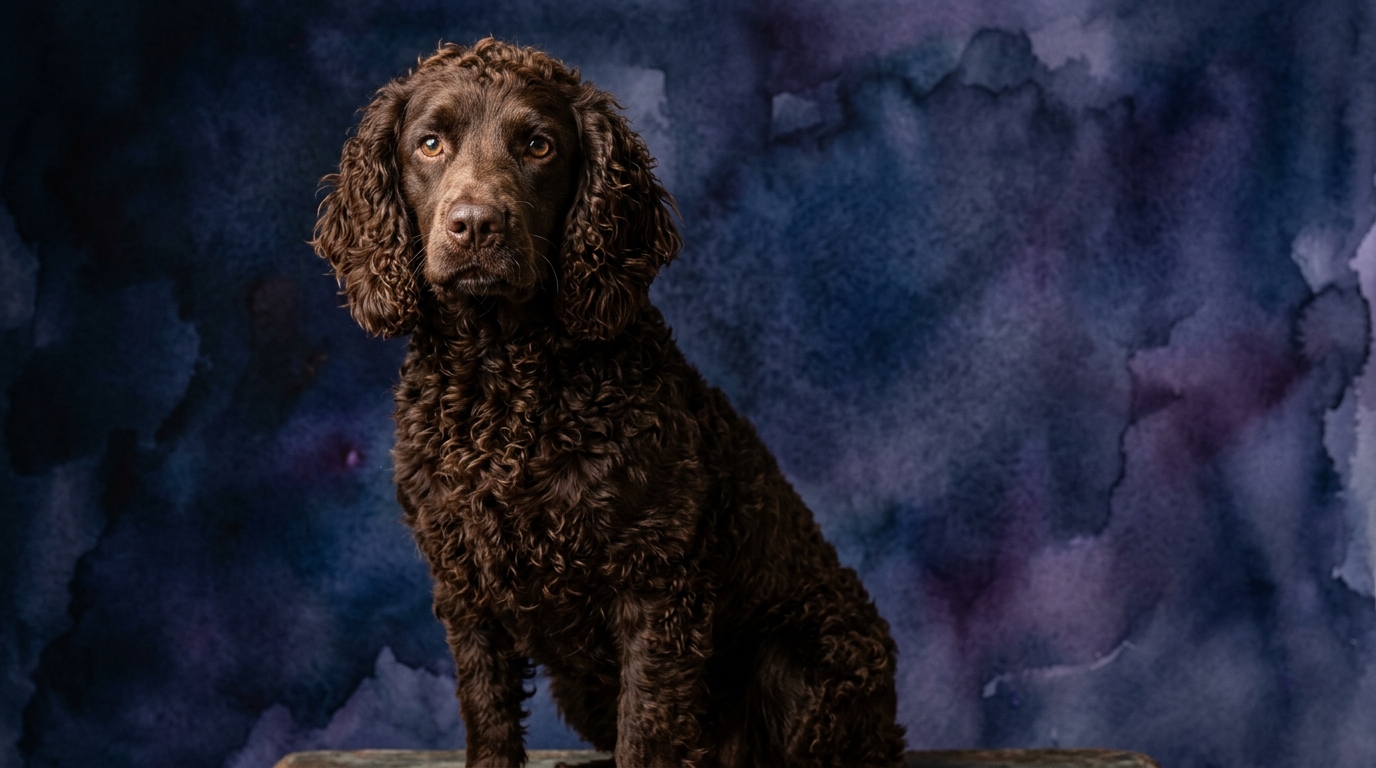
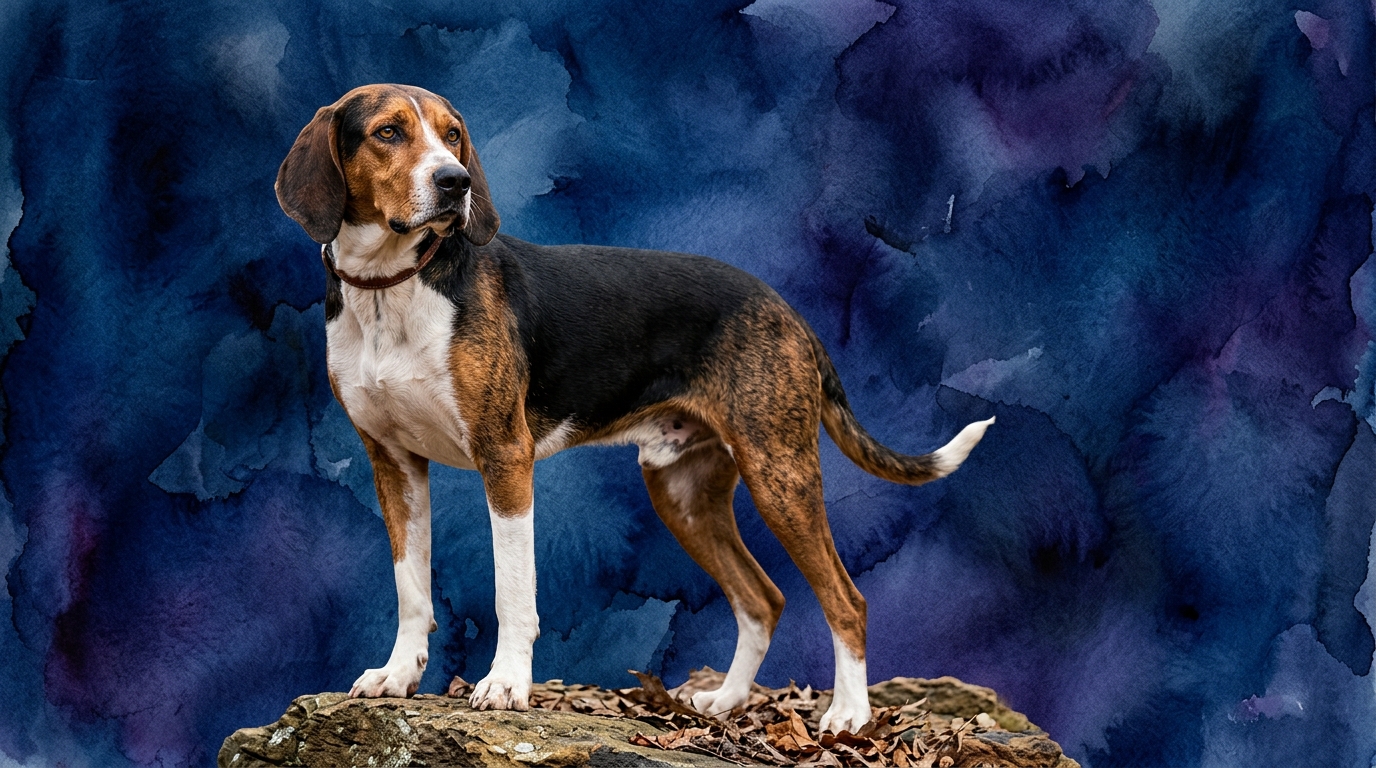
To truly understand the mental makeup of these two distinct breeds, we delve into five key dimensions of canine intelligence as measured by The Cosmic Pet Pet IQ Lab. The American Water Spaniel, a Sporting Group member, and the Treeing Walker Coonhound, a dedicated Hound, offer contrasting yet equally compelling cognitive profiles.
When it comes to **Problem Solving**, both breeds score a solid 3 out of 5. For the American Water Spaniel, this manifests in its capacity to navigate complex water environments to retrieve game, figuring out the most efficient path or how to manage obstacles. Its problem-solving is often tied to its hunting companion role, requiring adaptability in varied terrain. The Treeing Walker Coonhound's 3/5 in problem-solving is evident in its relentless pursuit of scent trails, deciphering intricate olfactory puzzles, and strategizing how to 'tree' its quarry. This involves complex decision-making based on environmental cues and scent density.
In **Training Speed**, both breeds are rated 3 out of 5. The American Water Spaniel, with its sporting background, generally possesses a willingness to engage and learn, though it's not a breed known for instant mastery; consistent, positive reinforcement methods yield steady progress. The Treeing Walker Coonhound, while equally capable of learning, often appears to learn at a similar pace but with a more independent streak. Its strong prey drive means that while it can grasp commands, its attention might be more easily diverted by a compelling scent, making initial training feel like a more deliberate process.
**Social Intelligence** for both breeds registers at 3 out of 5. The American Water Spaniel typically forms strong bonds with its human family, often displaying a keen awareness of human emotions and intentions, making it an empathetic companion. Its social intelligence aids in its cooperative hunting role, where understanding its handler's cues is paramount. The Treeing Walker Coonhound’s social intelligence is often expressed within its 'pack' dynamics, whether with other dogs or its human family. While affectionate, its primary focus in a working context is on its hunt, meaning its social cues might be more subtle or less directly focused on human-centric interaction during tracking.
The **Instinctive Drive** for both breeds is also a 3 out of 5. The American Water Spaniel's drive is deeply rooted in its retrieving instincts, a powerful urge to fetch and carry, particularly from water. This drive is channeled into its working purpose, making it a focused and persistent retriever. The Treeing Walker Coonhound's instinctive drive is overwhelmingly centered on scent tracking and pursuit. This innate urge to follow a trail, often for miles, is a powerful force that dictates much of its behavior and cognitive focus, making it a tireless and dedicated hunter.
Finally, **Memory** presents a key distinction. The American Water Spaniel scores an impressive 4 out of 5, indicating a robust capacity for remembering commands, routines, and spatial information relevant to its retrieving tasks. This superior memory contributes to its reliability in complex working scenarios and its ability to learn and retain a wide array of behaviors. The Treeing Walker Coonhound, in contrast, scores a 3 out of 5 for memory. While it possesses an excellent memory for scent patterns and territory, its recall of human-centric commands might be less consistent or require more reinforcement than the AWS, particularly when its powerful hunting instincts are engaged.
Where the American Water Spaniel Wins Cognitively
The American Water Spaniel's cognitive strengths truly shine in its superior memory and its capacity for cooperative learning. With a memory score of 4/5, the AWS demonstrates an enhanced ability to retain a broader repertoire of commands, complex sequences, and spatial layouts, particularly crucial for intricate retrieving tasks in varied environments. This cognitive edge allows them to quickly recall learned behaviors, making them more consistent in obedience and adaptable to diverse training scenarios. Their Coren rank of #44 further underscores their general aptitude for understanding and executing human directives with relative ease compared to many breeds. This isn't just about remembering a single command, but retaining a whole 'vocabulary' of actions and understanding how they fit into a larger pattern, such as a multi-stage retrieve or a complex agility course. Their problem-solving (3/5) is often applied in a way that seeks human approval, using their memory to refine their approach to tasks based on past successes and failures under guidance.
Where the Treeing Walker Coonhound Wins Cognitively
While the American Water Spaniel excels in general memory and biddability, the Treeing Walker Coonhound's cognitive prowess lies in its highly specialized, unwavering focus on olfactory problem-solving. Its 3/5 problem-solving and instinctive drive ratings, while numerically similar to the AWS, are channeled into an incredibly sophisticated and persistent form of environmental intelligence. The TWC possesses an extraordinary ability to interpret, follow, and differentiate complex scent trails, often over vast distances and varied terrain, which is a nuanced cognitive feat. This involves a unique form of 'working memory' dedicated to scent, allowing them to hold and compare multiple scent profiles simultaneously. Their independence, often mistaken for stubbornness, is a cognitive trait enabling them to make critical decisions autonomously during a hunt, relying on their internal map of scent rather than constant human direction. This deep, specialized intelligence for tracking is a profound strength, making them masters of their olfactory world.
Which is Easier to Train and Why
Given their respective cognitive profiles, the American Water Spaniel generally presents as the easier breed to train. Their 4/5 memory score means they are more likely to retain commands and routines consistently, requiring fewer repetitions over time to solidify a behavior. As a Sporting breed, AWS dogs often possess a natural inclination to work cooperatively with humans, finding satisfaction in pleasing their handlers, which enhances their 3/5 training speed. For instance, an AWS will often eagerly practice 'come' and 'stay' drills, remembering previous sessions and striving for accuracy to earn praise or rewards. Their Coren ranking of #44 places them well within the above-average category for obedience and working intelligence, indicating a strong capacity for understanding and executing learned tasks.
The Treeing Walker Coonhound, while scoring 3/5 in training speed, often poses more challenges due to its independent nature and powerful instinctive drive. Their primary cognitive focus is on scent, meaning that during training, a compelling smell can easily override a command, even if they conceptually understand it. For example, a TWC might perfectly execute a 'sit' in a quiet living room, but if a rabbit scent drifts by, its deep-seated instinctive drive (3/5) will often compel it to follow the trail, making recall or focus on other commands difficult. Their 3/5 memory, while adequate for general learning, doesn't quite match the AWS's retention for human-centric commands, requiring more consistent and dedicated reinforcement to overcome their inherent drive for the hunt. Training a TWC demands exceptional patience, understanding of their motivations, and a commitment to making training more rewarding than the allure of the trail.
Which Suits Active Owners vs. Relaxed Owners
Neither the American Water Spaniel nor the Treeing Walker Coonhound can be accurately described as suitable for truly relaxed, sedentary owners; both breeds demand substantial physical and mental engagement. However, their activity needs differ in nature. The American Water Spaniel, while requiring significant exercise, often finds fulfillment in structured activities like retrieving, swimming, and hiking. They thrive with owners who can provide consistent opportunities for water work or field activities, and once their energy is appropriately expended, they are generally content to settle down indoors, often enjoying close proximity to their family. Their cognitive preference for cooperative work means they often integrate well into an active family’s routine, participating in shared experiences.
The Treeing Walker Coonhound is suited for owners who are not just active, but specifically dedicated to providing an outlet for their profound instinctive drive. These dogs require extensive, vigorous exercise that ideally engages their powerful nose, such as long, investigative walks, scent work, or participation in actual tracking sports. A TWC will not be satisfied with a short walk around the block; their cognitive and physical well-being depend on sustained opportunities to follow scents and explore. For owners seeking a more laid-back companion who is content with minimal outdoor activity, neither breed is a match, but the TWC's relentless drive and potential for vocalization when under-stimulated make it particularly unsuitable for a relaxed indoor lifestyle without a dedicated working outlet.
The Verdict
Choose the American Water Spaniel if you seek a biddable, water-loving companion with strong memory for complex commands, thriving on cooperative activities and consistent training. They are ideal for active individuals or families who value a dog that excels in structured sporting pursuits and enjoys close companionship.
Opt for the Treeing Walker Coonhound if you are a dedicated, active owner passionate about providing an outlet for a powerful scent drive, appreciating an independent working partner. They are best suited for those who understand and celebrate a hound's unique focus, offering extensive opportunities for tracking and exploration.
🧠 Find Your Pet's IQ Score
Our Pet IQ Lab assessment covers 25+ tests across 5 cognitive dimensions — personalized to your breed.
Take the Full IQ Test →Frequently Asked Questions
Is the American Water Spaniel truly smarter than the Treeing Walker Coonhound?
The term 'smarter' is subjective and depends on what cognitive abilities are prioritized. The American Water Spaniel shows a stronger general memory and a higher rank in obedience intelligence (Coren #44), making it generally more adaptable to diverse human-centric training. The Treeing Walker Coonhound possesses a profound, specialized intelligence for scent work and independent problem-solving in tracking.
Do Treeing Walker Coonhounds really have a problem with memory compared to American Water Spaniels?
The data suggests the American Water Spaniel has a slightly higher general memory (4/5) compared to the Treeing Walker Coonhound (3/5). This means AWS dogs tend to retain learned commands and routines more consistently. TWC memory is robust for scent trails and environmental cues, but perhaps less focused on general human-directed obedience over time.
Which breed is better for a first-time dog owner?
For a first-time dog owner, the American Water Spaniel might be a more manageable choice due to its higher general biddability and stronger memory for commands, which can make training a more rewarding experience. The Treeing Walker Coonhound's independent nature and intense instinctive drive require a more experienced hand and a deep understanding of hound behavior.