
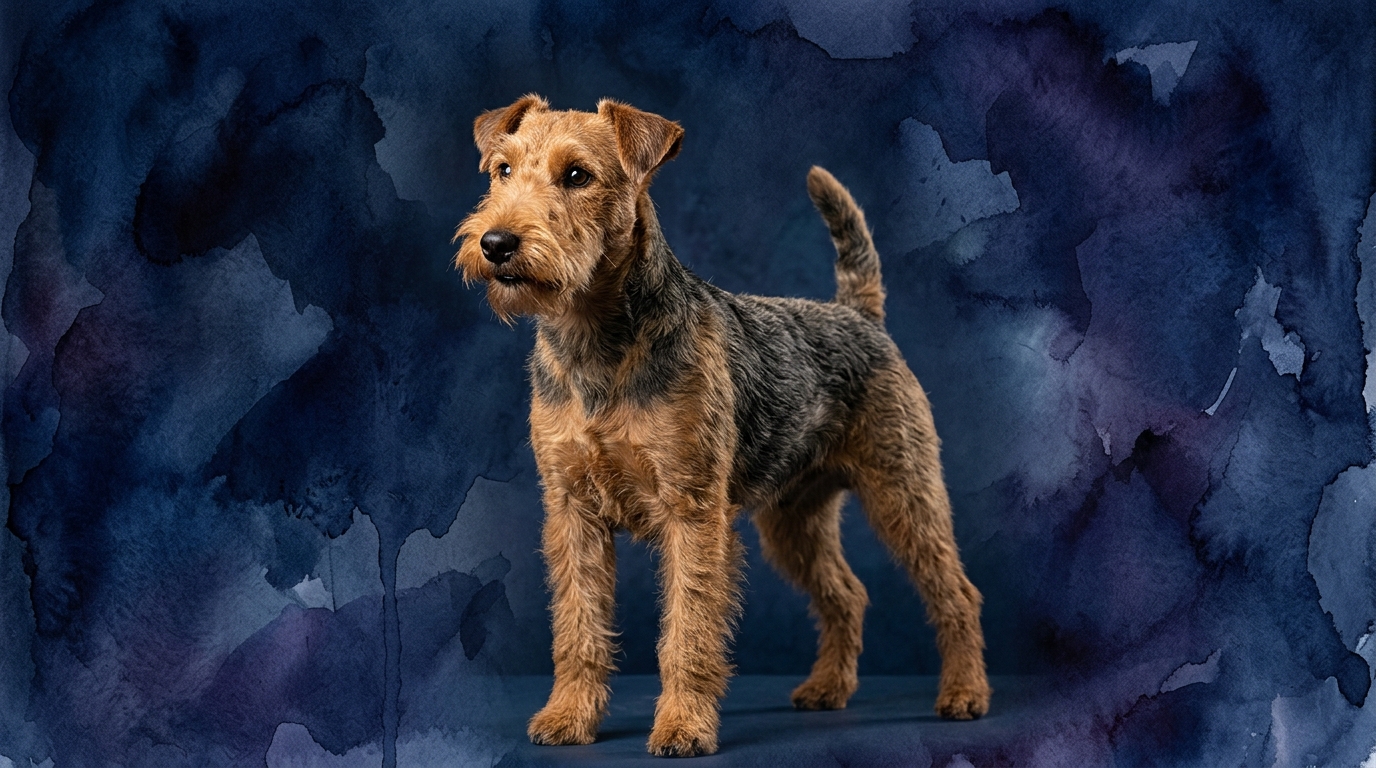
Side-by-Side IQ Profile: AWS vs. Welsh Terrier
The American Water Spaniel, a devoted retriever from the Sporting Group, exhibits a balanced cognitive profile geared towards cooperative tasks. Its Problem Solving at 3/5 reflects a practical intelligence for retrieving, while a Training Speed of 3/5 suggests a willingness to learn coupled with an independent streak that can sometimes require patience. Social Intelligence, also at 3/5, points to an ability to connect with its human companions, often displaying a watchful loyalty, and its Instinctive Drive, at 3/5, is clearly rooted in its historical role as a waterfowler, demonstrating a persistent drive for scent work and retrieval. A standout feature is its Memory at 4/5, indicating a strong capacity to retain commands, routines, and experiences over time, a crucial trait for a working gundog.
In contrast, the Welsh Terrier, a spirited member of the Terrier Group, shares several cognitive scores but with distinct underlying motivations. Its Problem Solving at 3/5 is often applied to navigating its environment and outsmarting perceived prey, showcasing a cunning typical of terriers. A Training Speed of 3/5 means they are capable learners, but their independent nature and strong will can make consistency key, often requiring engaging and varied methods to maintain focus. Social Intelligence at 3/5 suggests they are generally amenable to human interaction, though often with a terrier's characteristic self-assuredness, and their Instinctive Drive at 3/5 is deeply tied to their historical purpose of hunting vermin, manifesting as a keen desire to chase, dig, and explore. The Welsh Terrier's Memory at 3/5 is solid, allowing them to recall learned behaviors, but perhaps with less long-term retention compared to breeds bred for complex, multi-stage tasks.
Where the American Water Spaniel Wins Cognitively
The American Water Spaniel distinguishes itself primarily in the domain of Memory, scoring a notable 4/5 compared to the Welsh Terrier's 3/5. This superior recall isn't just about remembering where the treat jar is; it's a fundamental aspect of their historical role. A gundog needs to remember complex sequences of commands, the location of fallen birds, and the boundaries of a hunting area, often over extended periods and amidst distractions. This enhanced memory contributes significantly to their ability to execute multi-step tasks reliably and consistently, making them particularly adept at advanced obedience or field trials where precision and retention are paramount.
Furthermore, the AWS's Coren ranking of #44 among working dogs points to a general aptitude for understanding and executing human commands with fewer repetitions than many other breeds. While the Welsh Terrier isn't ranked, the AWS's placement suggests a readiness to engage in structured learning that is inherent to their Sporting group lineage. Their balanced instinctive drive, coupled with this memory capacity, means they are often more inclined to work *with* their handler in a cooperative manner, leveraging their recall to follow directions rather than solely relying on their own problem-solving instincts in the field.
Where the Welsh Terrier Wins Cognitively
While not scoring higher numerically in any single category, the Welsh Terrier's cognitive strengths lie in the *application* of its balanced scores, particularly its Problem Solving (3/5) and Instinctive Drive (3/5), within its unique terrier context. Their problem-solving isn't about retrieving fallen game but about independently figuring out how to get to a perceived “prey” – be it a squirrel in the yard or a buried treasure. This often manifests as a clever, persistent ingenuity in navigating obstacles or outsmarting situations, a trait invaluable for a dog originally bred to hunt independently in tunnels and dens.
The Welsh Terrier's Instinctive Drive, while rated 3/5, is channeled into a tenacity and determination that can be perceived as a cognitive advantage in specific scenarios. This drive fuels their independent spirit, making them less prone to “learned helplessness” and more inclined to persist until a self-identified goal is achieved, whether it's digging under a fence or finding a hidden toy. This self-reliance and acute awareness of their environment, coupled with their inherent prey drive, equip them to make quick, decisive judgments in dynamic situations, a distinct cognitive advantage in tasks requiring independent decision-making rather than handler-directed cooperation.
Training Dynamics: Which is Easier?
Comparing ease of training between these two breeds requires looking beyond identical “Training Speed” scores of 3/5 and considering their overall cognitive architecture and historical roles. The American Water Spaniel generally presents as the more straightforward student, primarily due to its superior Memory (4/5) and its background as a cooperative gundog. Their innate desire to work alongside a handler, combined with a strong ability to retain learned behaviors and commands, means that once a lesson is grasped, it tends to stick. They are often eager to please and respond well to positive reinforcement, making the initial stages of obedience and complex skill acquisition smoother.
The Welsh Terrier, while equally capable of learning (Training Speed 3/5), often requires a more nuanced approach. Their independent terrier spirit and strong instinctive drive can lead to selective hearing or a tendency to prioritize their own agenda over a handler's command. Training a Welsh Terrier often becomes a negotiation, demanding creativity, patience, and absolute consistency from the owner. While they can excel in various disciplines, their problem-solving skills might be applied to figuring out how to *avoid* a command rather than execute it, requiring an owner who understands their intrinsic motivation and can make training feel like a stimulating game rather than a rigid instruction.
Matching Lifestyles: Active vs. Relaxed Owners
Both the American Water Spaniel and the Welsh Terrier possess an Instinctive Drive of 3/5, indicating a moderate to high need for mental and physical engagement, meaning neither is truly suited for a purely “relaxed” owner in the sense of minimal activity. However, the *type* of activity they thrive on differs significantly. The American Water Spaniel's drive is geared towards sustained, cooperative outdoor activities. They excel with owners who enjoy long walks, hiking, swimming, or engaging in scent work and retrieving games. Their energy is often steady and enduring, making them ideal companions for active individuals or families who want a dog to join them on adventures, especially those involving water or field environments.
The Welsh Terrier, while also requiring an active owner, channels its drive into more intense, burst-like activities and independent exploration. They are suited for owners who can provide outlets for their digging, chasing, and “hunting” instincts, such as secure yards for energetic play, earthdog trials, or agility courses. A “relaxed” owner might find their persistent curiosity and tendency to create their own entertainment, often involving digging or exploring scent trails, challenging. They need mental stimulation that satisfies their terrier cunning and physical exercise that burns off their spirited energy, making them a better fit for owners who appreciate a dog with a bold, self-directed personality and are prepared to engage with it actively and creatively.
The Verdict
Choose the American Water Spaniel if you seek a cooperative, devoted companion with a strong memory, eager to participate in shared outdoor adventures, particularly those involving water or retrieving. They thrive with owners who appreciate a steady, trainable partner for field activities or advanced obedience.
Opt for the Welsh Terrier if you are drawn to a spirited, independent, and clever companion who enjoys challenges and requires an owner prepared to engage with their cunning and tenacity. They are ideal for active individuals who can provide consistent, creative training and outlets for their innate terrier drive.
🧠 Find Your Pet's IQ Score
Our Pet IQ Lab assessment covers 25+ tests across 5 cognitive dimensions — personalized to your breed.
Take the Full IQ Test →Frequently Asked Questions
Does the Coren rank indicate the American Water Spaniel is universally "smarter" than the Welsh Terrier?
Not necessarily "smarter" in every aspect. Coren's ranking primarily assesses "working and obedience intelligence," focusing on how quickly a dog learns and obeys commands. While the American Water Spaniel's #44 ranking indicates a strong aptitude in this area, the unranked Welsh Terrier's intelligence manifests differently, often in independent problem-solving and tenacity, which aren't the primary metrics for Coren's list.
How does the "Instinctive Drive" score of 3/5 differ between these two breeds?
While both score 3/5, the *nature* of their drives diverges significantly. The American Water Spaniel's drive is typically geared towards retrieving, swimming, and cooperative hunting, making them eager for tasks alongside a handler. The Welsh Terrier's drive, in contrast, is rooted in independent vermin hunting, manifesting as a strong desire to chase, dig, and explore with a more self-directed purpose, often requiring specific outlets to manage.
My Welsh Terrier seems to learn quickly but sometimes ignores commands. Is this reflected in their IQ profile?
Yes, this behavior aligns with their profile. While their Training Speed is 3/5, indicating learning capability, their strong independent nature and problem-solving skills (3/5) mean they may choose to follow their own instincts, especially if a command conflicts with a perceived opportunity for self-reward like chasing a squirrel. Consistent, engaging training that taps into their drive is key to gaining their cooperation.