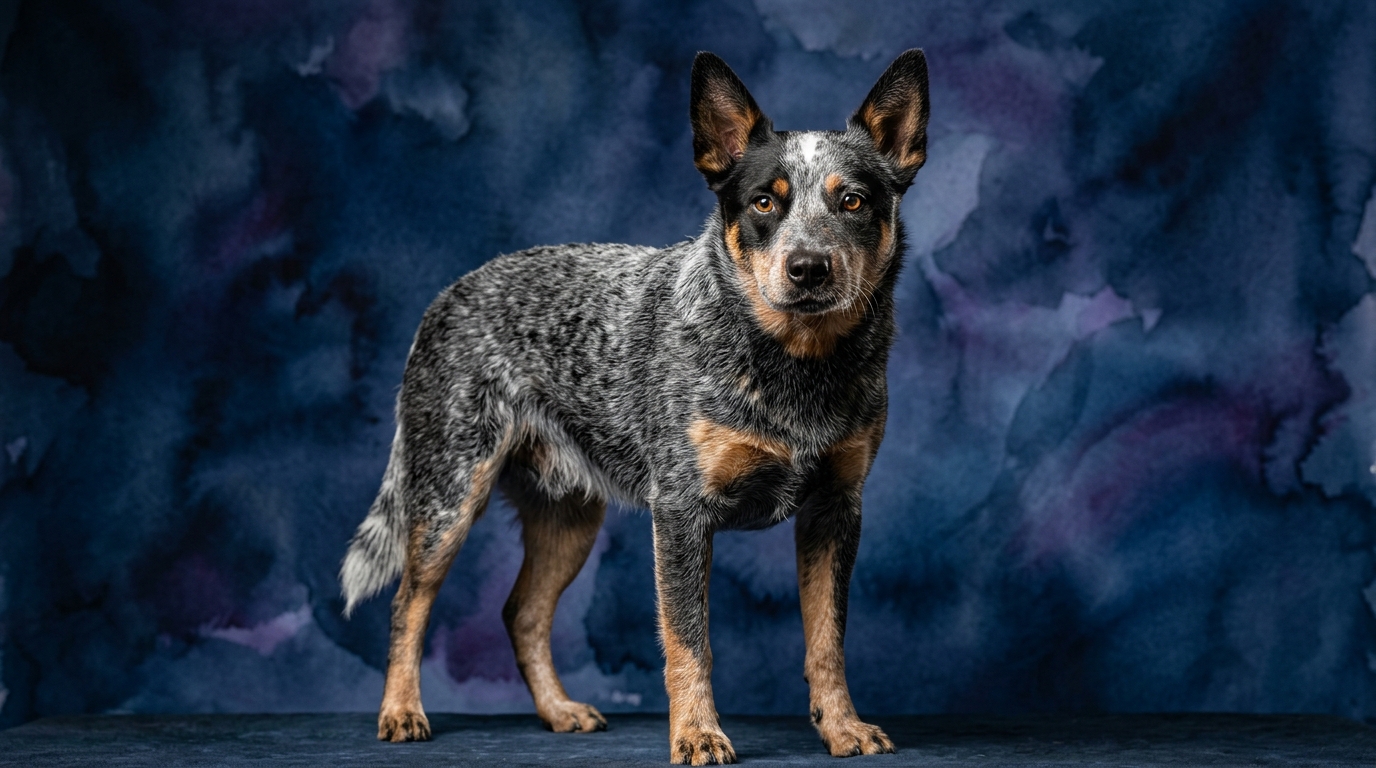

Side-by-Side IQ Profile: Australian Cattle Dog vs. Basset Hound
Originating from the demanding Australian outback, the Australian Cattle Dog, or ACD, exhibits a cognitive profile tailored for demanding work. Their Problem Solving is rated 5/5, reflecting an exceptional capacity for independent thought and strategic action in complex situations. Training Speed also stands at 5/5, indicating a rapid assimilation of new commands and behaviors, often requiring minimal repetition.
Social Intelligence for the ACD is 3/5; while they understand human cues, their focus often leans more towards tasks than subtle social nuances, sometimes preferring the company of their chosen few. Instinctive Drive is a robust 5/5, manifesting as an intense desire to herd, work, and engage with their environment. Their Memory is likewise 5/5, allowing them to recall intricate sequences, learned tasks, and past experiences with impressive accuracy.
In stark contrast, the Basset Hound, a breed originally developed for tracking small game, presents a distinct cognitive blueprint. Their Problem Solving is rated 3/5; while capable, their approach is often driven by scent rather than abstract reasoning, and they may take a more deliberate, nose-first path to solutions. Training Speed is also 3/5, meaning they learn at a moderate pace, often requiring more patience and consistent motivation due to their easily distracted nature.
The Basset Hound's Social Intelligence is 3/5; they are typically amiable and enjoy companionship, yet their primary focus can often be consumed by the olfactory world around them, sometimes making them seem less attuned to human social signals. Their Instinctive Drive is 3/5, overwhelmingly centered on their powerful scenting ability and the pursuit of a trail. Memory is 3/5, particularly strong for scent information, but perhaps less so for complex obedience routines or abstract concepts compared to the ACD.
Where the Australian Cattle Dog Wins Cognitively
The Australian Cattle Dog's cognitive strengths shine brightest in areas demanding strategic thinking and rapid adaptation. With a 5/5 rating in Problem Solving, an ACD excels at figuring out intricate puzzles, opening latches, or devising methods to move livestock. Their capacity to assess a situation, formulate a plan, and execute it efficiently is a hallmark of their intelligence, allowing them to independently manage dynamic environments. This isn't just about following commands; it's about making intelligent decisions on the fly.
Furthermore, the ACD's 5/5 Training Speed and 5/5 Memory mean they not only pick up new skills almost instantly but retain them for the long term. This makes them exceptionally proficient in advanced obedience, agility, and complex task work. They thrive on learning and mastering new challenges, demonstrating a remarkable ability to connect cause and effect, remember sequences of actions, and apply past learning to novel situations. Their cognitive advantage lies in their mental agility and their deep desire to engage actively with their environment through intellect.
Where the Basset Hound Wins Cognitively
The Basset Hound's cognitive prowess lies in a deeply specialized domain: olfaction. While their Problem Solving and Training Speed are rated lower than the ACD, their true genius is in their scent-driven intelligence. Their long ears, loose skin, and extraordinary nose create a living scent-tracking machine, allowing them to follow and interpret complex odor trails with unparalleled precision and endurance. This isn't just instinct; it's a sophisticated cognitive process of data collection, discrimination, and persistent pursuit.
A Basset's ability to maintain focus on a faint scent trail for extended periods, ignoring visual distractions, showcases a unique form of cognitive dedication. Their memory, while rated 3/5 generally, is exceptional when it comes to scent profiles and tracking routes. They excel at tasks that require sustained, detailed sensory processing, demonstrating a profound understanding of their olfactory world. Their cognitive victory is in their dedicated, methodical approach to unraveling the mysteries of scent, a skill that few breeds can match.
Which Is Easier to Train and Why
Based on their Cosmic Pet IQ Lab profiles, the Australian Cattle Dog is unequivocally easier to train for general obedience and complex tasks. Their 5/5 Training Speed means they grasp concepts quickly, often requiring only a few repetitions to solidify a command. This rapid learning is fueled by their strong desire to work and engage their minds, making them eager participants in training sessions. ACDs respond well to positive reinforcement and thrive on the mental stimulation that training provides, viewing it as a collaborative problem-solving exercise.
In contrast, the Basset Hound's 3/5 Training Speed and powerful Instinctive Drive (3/5, primarily scent-focused) present unique training challenges. While not incapable of learning, Bassets can be easily distracted by compelling scents, making it difficult to hold their attention. Their independent nature, driven by their nose, means they may prioritize following a captivating odor over executing a command. Training a Basset requires immense patience, consistency, and often, a higher value reward to compete with the allure of a good scent. Their stubbornness often stems from their deep immersion in their olfactory world, not a lack of capacity.
Which Suits Active Owners vs. Relaxed Owners
For owners leading an active lifestyle who seek a canine partner for adventures and mental challenges, the Australian Cattle Dog is the clear choice. Their 5/5 Instinctive Drive and 5/5 Problem Solving mean they require substantial physical exercise and, crucially, consistent mental engagement. ACDs thrive when given a 'job,' whether it's herding, agility, advanced obedience, or even complex puzzle toys. An owner who can provide daily vigorous activity and stimulating training sessions will find an ACD a devoted and fulfilled companion. Without sufficient outlets for their energy and intellect, ACDs can become bored and destructive.
Conversely, the Basset Hound is better suited for owners who prefer a more relaxed pace. While they still require regular walks to stay healthy and satisfy their sniffing instincts, their energy levels are generally much lower than an ACD's. A Basset is content with a leisurely stroll where they can explore scents, followed by long naps on the couch. Their moderate Instinctive Drive (3/5, focused on scent) doesn't demand constant strenuous activity, making them an ideal companion for individuals or families seeking a calm, affectionate presence without the need for intense daily work.
The Verdict
Choose the Australian Cattle Dog if you're an active owner seeking a highly trainable, problem-solving partner eager for mental and physical challenges.
Opt for the Basset Hound if you appreciate a calm, affectionate companion whose greatest joy is exploring the world through its nose, perfect for a more relaxed home.
🧠 Find Your Pet's IQ Score
Our Pet IQ Lab assessment covers 25+ tests across 5 cognitive dimensions — personalized to your breed.
Take the Full IQ Test →Frequently Asked Questions
Can Basset Hounds be trained for complex tasks beyond basic obedience?
Yes, Basset Hounds can learn complex tasks, especially those that leverage their superior olfactory skills, such as scent work or tracking. Training requires more patience and creative methods to keep them engaged, as their focus can easily be diverted by environmental scents.
Are Australian Cattle Dogs suitable for first-time dog owners?
Australian Cattle Dogs can be challenging for first-time owners due to their high energy, intense herding instincts, and need for consistent mental stimulation and firm, positive training. They thrive with experienced owners who understand their work ethic and can dedicate time to their needs.
How do their distinct instinctive drives manifest in their daily behavior?
An ACD's strong instinctive drive often manifests as attempts to 'herd' family members, especially children, or chase moving objects, requiring careful management. A Basset Hound's drive primarily involves following interesting scents, which means they might ignore calls to stay on a trail, making a secure yard and leash essential.