A Side-by-Side Cognitive Profile
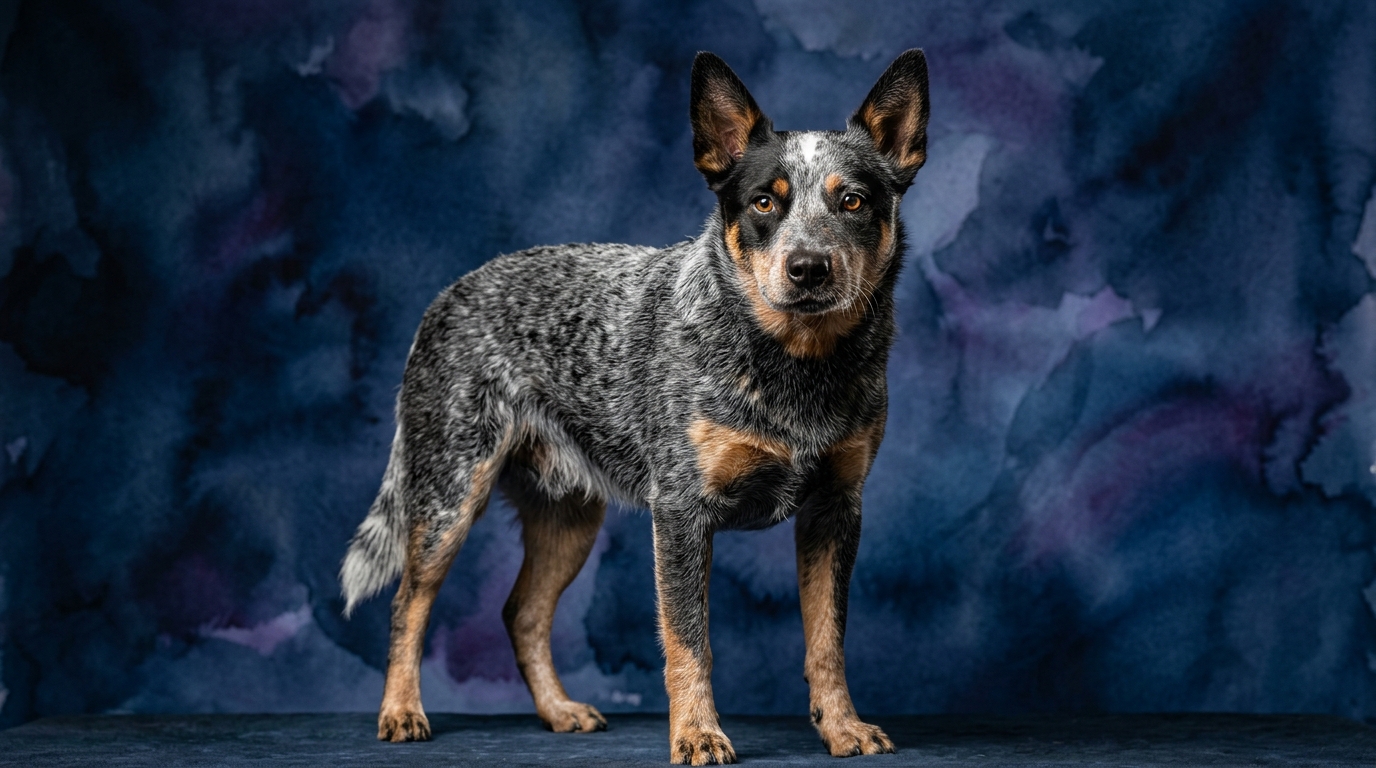
The Australian Cattle Dog, a breed forged in the rugged Outback, presents a cognitive profile optimized for complex herding tasks and dynamic problem-solving. Our Pet IQ Lab scores them exceptionally high across several dimensions: Problem Solving at 5/5, Training Speed at 5/5, Instinctive Drive at 5/5, and Memory at 5/5. Their Social Intelligence is rated 3/5, reflecting their independent nature and focus on task over generalized social deference. This breed's Coren ranking at #10 further solidifies their capacity for understanding and executing commands with remarkable efficiency, showcasing a rapid acquisition of new behaviors and a profound ability to retain them.
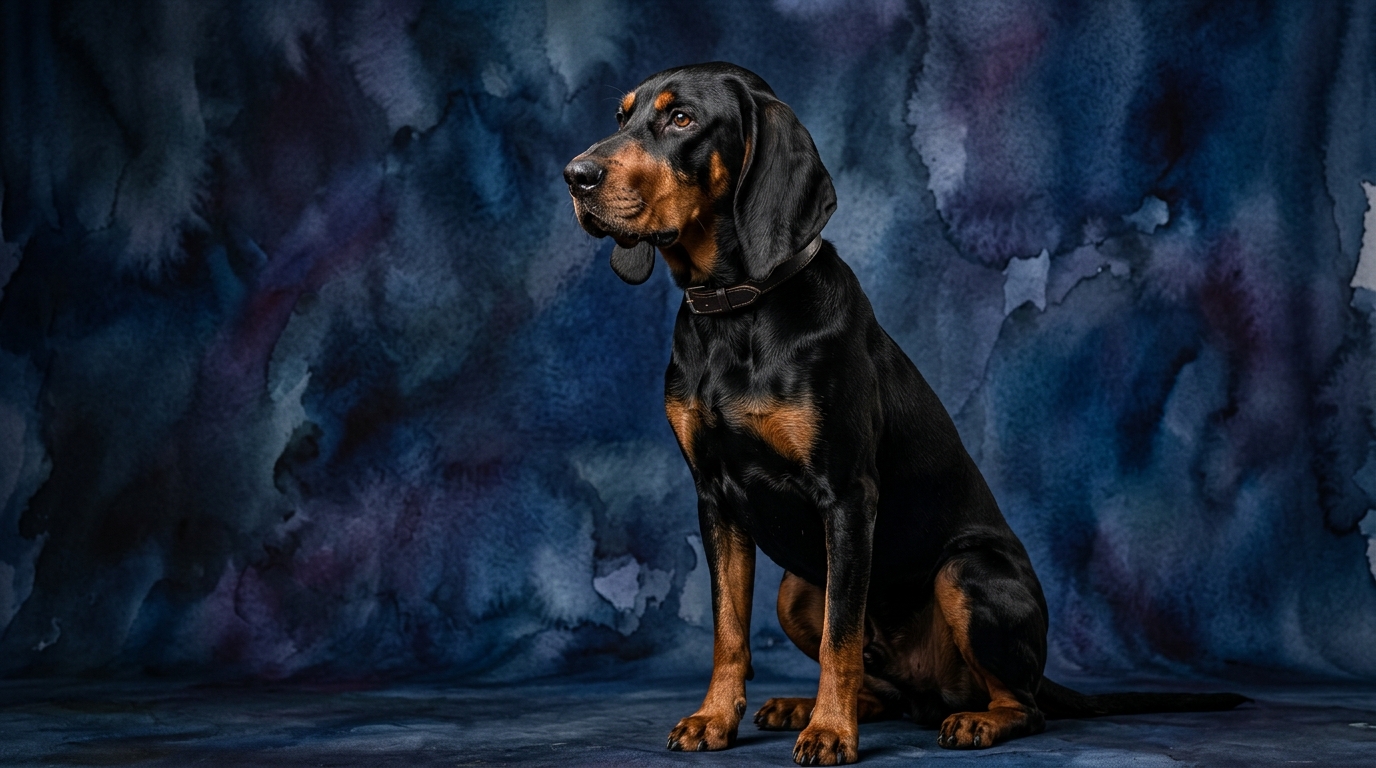
In contrast, the Black and Tan Coonhound, bred for trailing game through diverse terrains, exhibits a specialized cognitive toolkit. Our Pet IQ Lab assigns them a consistent 3/5 across all measured dimensions: Problem Solving, Training Speed, Social Intelligence, Instinctive Drive, and Memory. This breed is not Coren-ranked, which underscores that their cognitive strengths are less about human-directed obedience and more about autonomous, scent-driven work. Their scores reflect a different kind of operational intellect, one geared towards persistent tracking and independent decision-making in the field rather than rapid, multi-faceted instruction following.
Where the Australian Cattle Dog Excels Cognitively
The Australian Cattle Dog's cognitive triumphs are rooted in their exceptional Problem Solving (5/5) and Training Speed (5/5). They possess an innate ability to analyze situations and devise solutions, whether it's navigating complex obstacles during a herding trial or figuring out how to open a child-proof gate. This strategic thinking, coupled with their rapid learning acquisition, means they grasp new commands and concepts with minimal repetition, often anticipating their handler's next move. Their cognitive agility allows them to generalize learned behaviors to new environments and scenarios quickly, making them formidable competitors in canine sports.
Furthermore, their 5/5 Memory and 5/5 Instinctive Drive contribute significantly to their cognitive prowess. An ACD remembers intricate sequences of commands and past experiences, which informs their future actions and decision-making. Their powerful instinctive drive is not merely about physical energy but a deep mental engagement with their purpose. They exhibit intense focus and sustained attention on tasks, translating into unwavering dedication during training sessions and working assignments. This combination makes them highly responsive to consistent guidance, thriving on mental challenges that tap into their problem-solving and memory capabilities.
Distinct Cognitive Strengths of the Black and Tan Coonhound
While their scores may appear modest in a generalized comparison, the Black and Tan Coonhound demonstrates specific cognitive strengths perfectly tailored to their ancestral calling. Their 3/5 Problem Solving isn't about abstract puzzles, but about unraveling the complex 'puzzle' of a scent trail. They excel at discriminating between faint and strong odors, interpreting environmental cues, and persisting through distractions to follow a specific scent, a highly specialized form of cognitive processing that demands sustained focus and intricate sensory analysis. Their problem-solving is an endurance event, not a sprint.
The Coonhound's 3/5 Instinctive Drive and Memory are also deeply intertwined with their scent work. Their drive manifests as an unwavering commitment to a trail, often overriding other stimuli, including human commands, once a compelling scent is engaged. Their memory, while perhaps not focused on a vast repertoire of tricks, is exceptional for recalling scent patterns and past successful tracking routes. They learn and remember the nuances of terrain and scent behavior, building a cognitive map of their hunting grounds. Their Social Intelligence (3/5), too, is sufficient for cooperation within a pack or with a handler, but their primary focus remains on their nose, not social cues.
Training Dynamics: A Tale of Two Approaches
Training an Australian Cattle Dog (Training Speed 5/5) is typically a rewarding experience for an engaged owner due to their eagerness to learn and retain information. They thrive on structure, consistency, and mental stimulation, quickly picking up commands and enjoying the challenge of advanced obedience or complex tasks. Their high instinctive drive means they need a purpose, and training provides that outlet. However, their 3/5 Social Intelligence can mean they are not inherently people-pleasers in the traditional sense; they respond best to clear, fair leadership and engaging activities, rather than simply seeking approval.
In contrast, training a Black and Tan Coonhound (Training Speed 3/5) requires a different approach, characterized by patience, persistence, and an understanding of their deep-seated motivations. While capable of learning, their strong instinctive drive to follow a scent can make them appear 'stubborn' or easily distracted from human-centric commands. High-value rewards and positive reinforcement are crucial, as is making training sessions engaging enough to compete with the allure of a captivating odor. Their 3/5 Social Intelligence means they form strong bonds but will often prioritize their nose over your voice if a tempting trail crosses their path, requiring consistent recall training in distraction-rich environments.
Lifestyle Compatibility: Active vs. Relaxed Owners
The Australian Cattle Dog is ideally suited for highly active owners who can provide extensive daily physical exercise and, crucially, significant mental engagement. Their 5/5 Problem Solving and Instinctive Drive mean they need a 'job' to do, whether it's herding, agility, flyball, or advanced obedience. Owners who enjoy long hikes, running, or structured training sessions will find a devoted partner. Without adequate stimulation, an ACD can become restless, destructive, or develop undesirable behaviors due to boredom and unspent energy. They are not a breed for a truly 'relaxed' owner who prefers minimal interaction or activity.
The Black and Tan Coonhound, while also requiring substantial activity, fits a different owner profile. While they certainly aren't for entirely 'relaxed' owners, their activity needs are more about endurance and scent work than high-intensity bursts or constant structured tasks. They thrive on long, investigative walks where they can follow their nose, exploring scents at their own pace. Owners who appreciate a companion for leisurely but extensive strolls through varied environments, or who are interested in scent work or tracking, will find a compatible partner. After fulfilling their need to 'hound,' they can be surprisingly calm and affectionate indoors, though their vocalizations (baying) are a distinct consideration.
The Verdict: When to Choose Each Breed
The Verdict
Choose the Australian Cattle Dog if you seek a highly engaged, quick-learning partner for advanced training, sports, or a demanding working role, and are prepared to provide extensive daily mental and physical challenges.
Opt for the Black and Tan Coonhound if you appreciate a tenacious, independent scent-worker, are ready for long, investigative walks, and value a companion whose deepest satisfaction comes from following a compelling trail.
🧠 Find Your Pet's IQ Score
Our Pet IQ Lab assessment covers 25+ tests across 5 cognitive dimensions — personalized to your breed.
Take the Full IQ Test →Frequently Asked Questions
Are Australian Cattle Dogs good family pets?
Yes, but they require significant socialization and activity to thrive in a family setting. Their herding instincts mean they might try to 'herd' children or other pets, needing consistent guidance and a clear understanding of boundaries.
How much exercise does a Black and Tan Coonhound need?
They require substantial daily exercise, primarily long walks where they can engage their powerful sense of smell and explore. Without this essential outlet for their instinctive drive, they can become restless, bored, or excessively vocal indoors.
What are the primary training differences between these breeds?
ACDs are generally more eager to please and quicker to learn obedience commands, thriving on structured tasks and mental challenges. Coonhounds, while trainable, require more patience and high-value motivation, often prioritizing a compelling scent trail over human directives, making recall a particular focus.