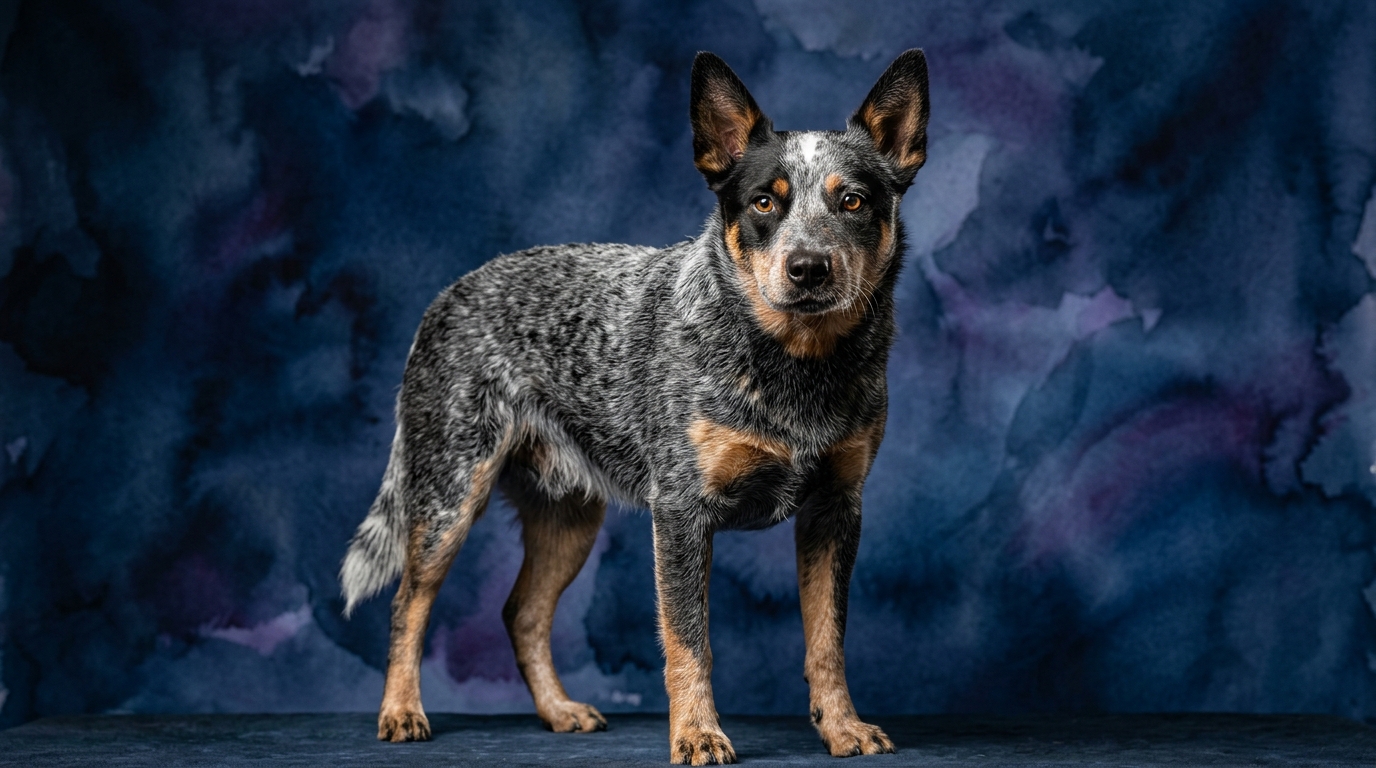
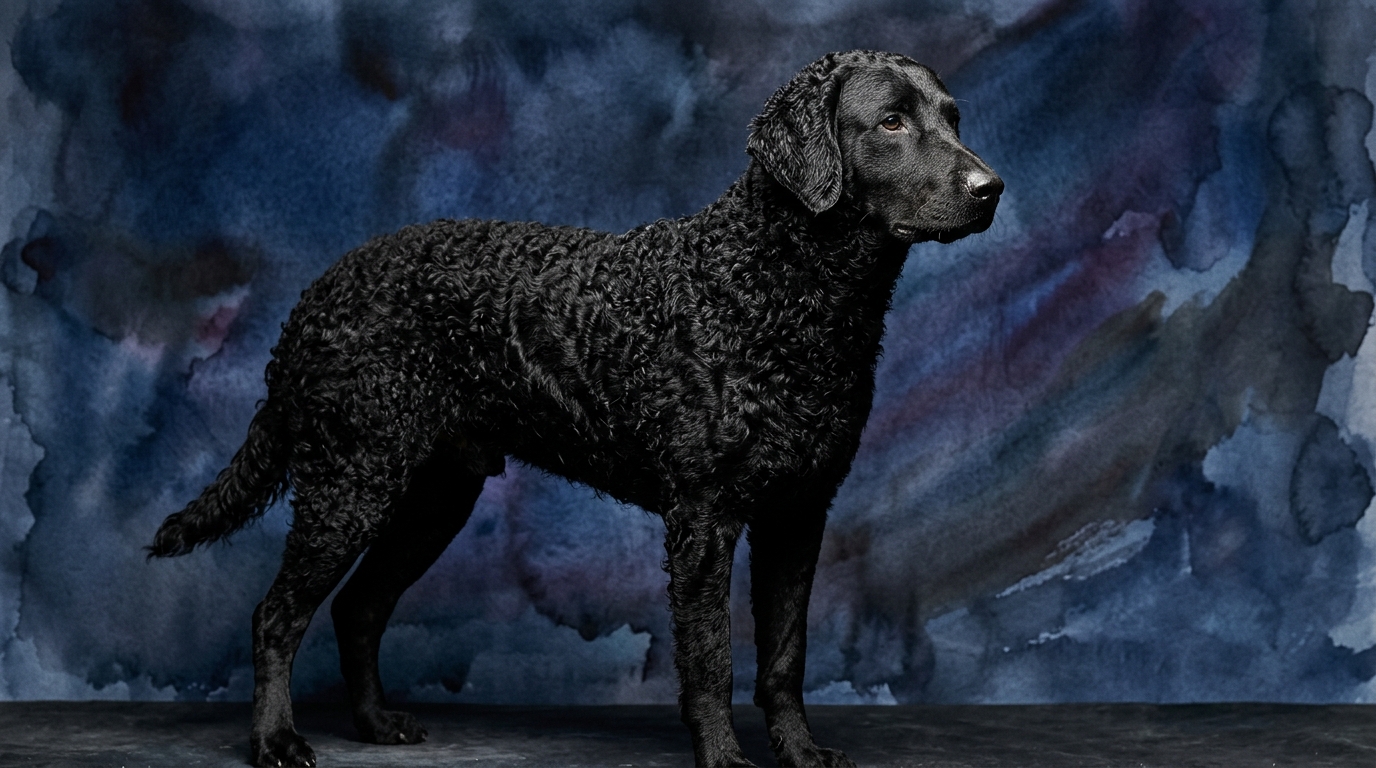
A Side-by-Side Cognitive Blueprint
The Cosmic Pet Pet IQ Lab offers a nuanced perspective on canine cognition, and comparing the Australian Cattle Dog (ACD) and the Curly-Coated Retriever (CCR) highlights their distinct mental makeups. The ACD, a Herding breed, holds a Coren rank of #10, placing it in a category of dogs demonstrating very high working obedience and adaptive intelligence. Its IQ profile is striking: Problem Solving 5/5, Training Speed 5/5, Social Intelligence 3/5, Instinctive Drive 5/5, and Memory 5/5. This suggests a dog with exceptional mental agility, a rapid capacity for acquiring new behaviors, a powerful intrinsic motivation for work, and an outstanding ability to recall information and experiences. Their 3/5 Social Intelligence, while moderate, often reflects a more task-focused interaction style.
In contrast, the Curly-Coated Retriever, a Sporting breed, occupies Coren rank #41, indicating a solid but less intense cognitive framework compared to the ACD. Its IQ dimensions are Problem Solving 3/5, Training Speed 3/5, Social Intelligence 3/5, Instinctive Drive 3/5, and Memory 4/5. This profile describes a dog that is a capable learner and problem-solver, but with a more measured pace and less overwhelming drive. The CCR’s 3/5 in Social Intelligence matches the ACD, but within the context of a retriever, it often translates to a steady, companionable nature rather than the ACD’s intense, focused gaze. Their 4/5 Memory is robust, essential for remembering retrieve locations and complex hunting scenarios, though perhaps not as all-encompassing as the ACD’s perfect score.
Where the Australian Cattle Dog Excels Cognitively
The Australian Cattle Dog's cognitive strengths are deeply rooted in its heritage as a drover of recalcitrant cattle across vast, challenging terrains. Its 5/5 Problem Solving isn't merely about understanding commands; it signifies an innate ability to assess dynamic situations, anticipate animal movement, and devise novel strategies to achieve a desired outcome without direct human intervention. This cognitive independence is paramount when facing a stubborn herd or navigating complex obstacles, demanding more than rote obedience.
Complementing this is their 5/5 Training Speed. ACDs absorb new commands and complex sequences with remarkable alacrity, often requiring only a handful of repetitions to ingrain a behavior. This rapid learning curve allows them to master advanced tasks like agility courses, obedience trials, or intricate herding patterns at an accelerated pace. However, this also means they can just as quickly pick up undesirable habits if not consistently engaged and directed.
Their 5/5 Instinctive Drive translates into an almost insatiable need for purposeful activity. This isn't just high energy; it's a powerful mental engine that compels them to work, to organize, and to control their environment. Owners who can channel this drive into constructive outlets, such as advanced training, herding sports, or demanding physical tasks, unlock the ACD's full cognitive potential. Finally, their 5/5 Memory ensures that once a lesson is learned or a routine established, it is retained with exceptional fidelity, making them incredibly reliable partners in their chosen 'work,' whether that involves remembering complex sequences or the precise location of livestock.
Where the Curly-Coated Retriever Shines Cognitively
While the Curly-Coated Retriever’s cognitive scores might appear less extreme than the ACD’s, their strengths lie in a different, equally valuable balance, perfectly suited to their retrieving role. Their 3/5 Problem Solving and 3/5 Training Speed indicate a capable and steady learner, one that approaches new tasks with thoughtful consideration rather than immediate, intense analysis. This means they are less prone to the 'overthinking' or independent strategizing that can sometimes characterize high-scoring herding breeds, preferring a more direct and cooperative approach to solving tasks like finding a downed bird.
The CCR's 3/5 Instinctive Drive, while not as overwhelming as the ACD's, is consistently directed towards its retrieving purpose. They possess a natural inclination to fetch, swim, and carry objects, exhibiting a focused yet less frenetic energy. This allows for a more relaxed partnership in the field or at home, where their drive is strong enough to perform tasks reliably but not so consuming that it requires constant, intense management.
Their 4/5 Memory is a significant asset, crucial for a retriever. This robust memory allows them to accurately recall the fall of multiple birds, navigate complex terrain to retrieve them, and remember intricate hand signals or whistle commands over long distances. Unlike the ACD's memory which might be applied to strategic herding patterns, the CCR's memory is finely tuned for the precise recall of locations and sequences vital to successful retrieving. Their 3/5 Social Intelligence, in their context, often manifests as a generally amiable and adaptable temperament, allowing them to integrate well into various social settings without the ACD's intense focus on 'managing' its human or animal companions.
Training: Ease and Behavioral Nuances
When considering ease of training, the raw numbers suggest the Australian Cattle Dog (ACD) is the clear winner with a 5/5 Training Speed. They grasp new concepts and commands with astonishing rapidity, often making an owner feel like they have a canine prodigy. However, this speed comes with a caveat: their 5/5 Problem Solving and 5/5 Instinctive Drive mean they are not just quick to learn what you want, but also quick to learn how to outsmart you or find their own 'job' if left unstimulated. Training an ACD requires immense consistency, mental engagement, and a handler who can channel their powerful will and independent thinking. They thrive on challenge and can become bored or destructive with repetitive or uninspiring training, often choosing to ignore commands if they don't see the point or if a more interesting 'problem' presents itself. Their 3/5 Social Intelligence implies they require a clear, consistent leader and may not always be intrinsically motivated by pleasing their human alone; the task itself holds significant weight.
The Curly-Coated Retriever (CCR), with a 3/5 Training Speed, learns at a more moderate, steady pace. They might require more repetitions than an ACD to master a new command, but their lower scores in Problem Solving (3/5) and Instinctive Drive (3/5) often make them less prone to the independent, sometimes challenging, self-employment that can characterize an ACD. CCRs are typically more sensitive and responsive to positive reinforcement, preferring a gentle yet firm approach. Their training is less about managing an overwhelming drive and more about consistent, clear communication and building a strong, trusting bond. While they may not execute complex commands with the ACD's lightning speed, they are often more forgiving of handler mistakes and more consistently cooperative, making them a good fit for owners who appreciate a thoughtful, less intense training partner. They are less likely to 'question' the command and more likely to comply once they understand it, making their training journey a steady and rewarding progression.
Matching Breeds to Lifestyles: Active vs. Relaxed Owners
The choice between an Australian Cattle Dog and a Curly-Coated Retriever hinges significantly on an owner's lifestyle and capacity for engagement. The Australian Cattle Dog is unequivocally suited for highly active, experienced owners who are prepared to provide daily, intensive physical and mental stimulation. Their 5/5 Instinctive Drive demands a 'job,' and without one, their extraordinary problem-solving skills and energy can quickly manifest as destructive behaviors, neurotic tendencies, or relentless herding of children, pets, or even inanimate objects. Owners must be willing to engage in advanced training, dog sports like agility, flyball, or actual herding, and provide complex puzzle toys or brain games. A relaxed or sedentary owner would likely find an ACD overwhelming and frustrating, unable to meet the breed's profound cognitive and physical needs.
The Curly-Coated Retriever, while still an active breed, offers a more adaptable profile for owners. Their 3/5 Instinctive Drive means they require regular exercise and mental engagement—daily walks, retrieving games, swimming, and consistent training are essential—but they are generally more content to relax and settle down after a good workout than the perpetually 'on-duty' ACD. They are well-suited for active families or individuals who enjoy outdoor activities and can commit to daily interaction and training, but who may not be seeking a dog for competitive, high-intensity sports every weekend. While not for entirely relaxed owners, the CCR can thrive in a moderately active household that prioritizes companionship alongside activity, making them a more versatile choice for those who appreciate a capable outdoor companion without the ACD's relentless mental demands.
The Verdict: When to Choose Each
The Verdict
Choose the Australian Cattle Dog if you are an experienced, highly active owner eager to commit to advanced training and provide constant mental and physical challenges for a dog with unmatched drive and problem-solving acumen.
Opt for the Curly-Coated Retriever if you seek a steady, capable, and moderately active companion for outdoor adventures and consistent training, valuing a dog that learns reliably without the intense, demanding mental energy of a dedicated herder.
🧠 Find Your Pet's IQ Score
Our Pet IQ Lab assessment covers 25+ tests across 5 cognitive dimensions — personalized to your breed.
Take the Full IQ Test →Frequently Asked Questions
What's the biggest difference in their working styles?
The ACD's working style is characterized by independent problem-solving and strategic control, often involving nipping and driving livestock. The CCR's style is more focused on cooperative retrieving, using scent and memory to locate and bring back game with a steady, less confrontational approach.
How do their social intelligence scores impact family life?
Both breeds score 3/5 in social intelligence, but this manifests differently. The ACD's social interactions can be more about managing its environment, potentially leading to herding behaviors with family members. The CCR's 3/5 often translates to a more generally amiable and adaptable temperament, making it a steady companion without the ACD's intense need to 'work' its human family.
Is one breed more prone to boredom than the other?
Yes, the Australian Cattle Dog, with its 5/5 Problem Solving and 5/5 Instinctive Drive, is significantly more prone to boredom if not adequately stimulated. Their minds are constantly seeking tasks, and a lack of engagement can quickly lead to destructive behaviors. The Curly-Coated Retriever, with its 3/5 scores, is less prone to extreme boredom but still requires regular activity to remain content.