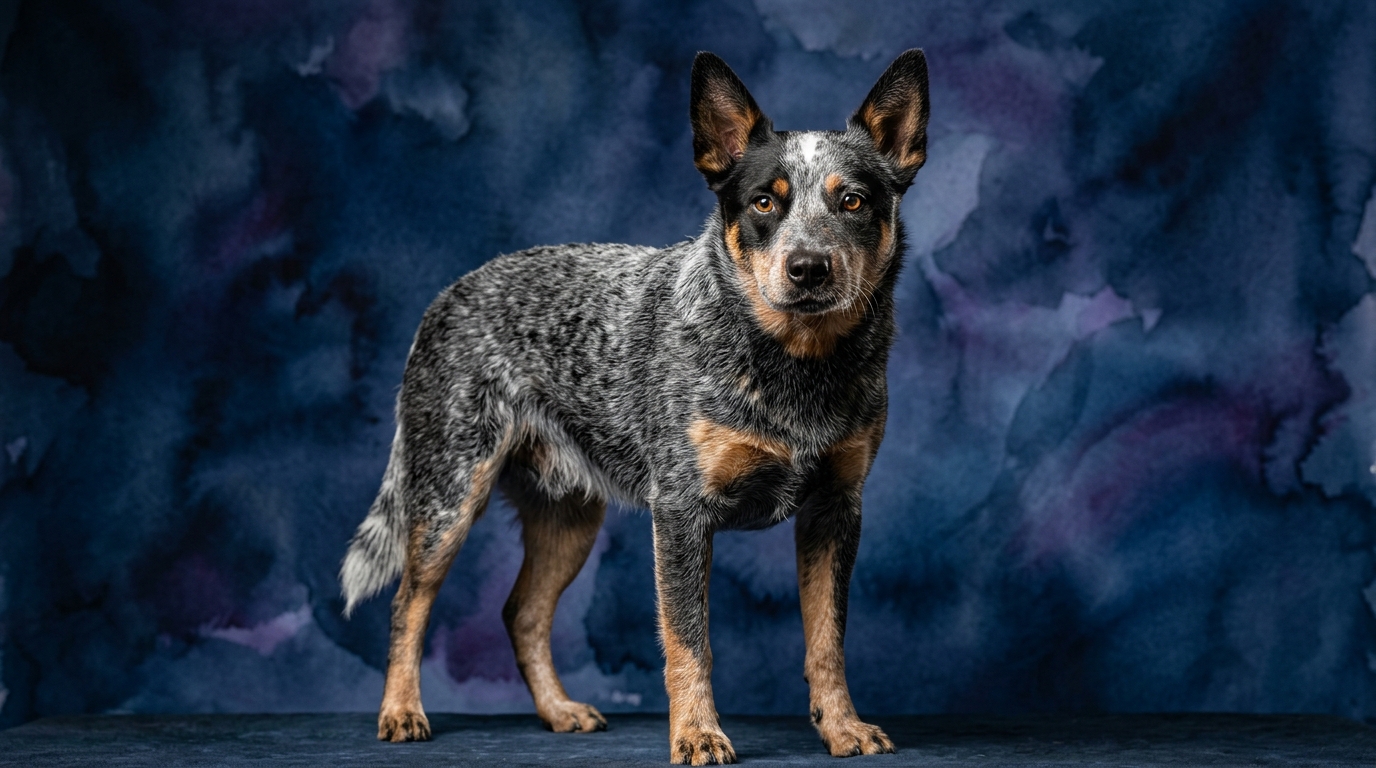
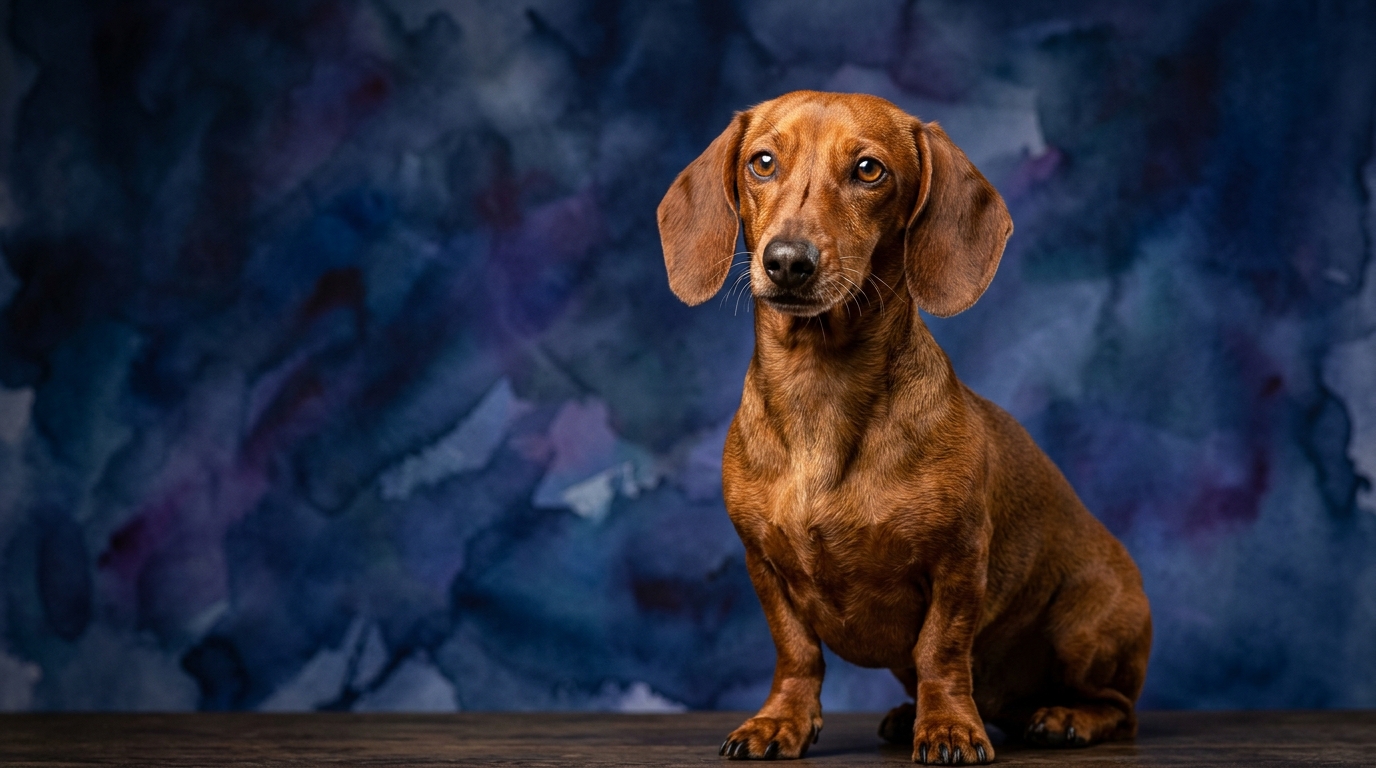
Side-by-Side IQ Profile: Australian Cattle Dog vs. Dachshund
To truly understand the cognitive makeup of these two breeds, The Cosmic Pet Pet IQ Lab breaks down their intelligence across five critical dimensions. The Australian Cattle Dog, ranking at Coren #10, presents a profile reflecting its demanding working heritage, while the Dachshund, at Coren #49, showcases a specialized brilliance tied to its tenacious hunting role.
For the Australian Cattle Dog:
Problem Solving (5/5): This score reflects a breed highly adept at analyzing complex situations and devising solutions, often independently. Their herding role demanded split-second decisions to manage livestock, predicting animal movements and adapting strategies on the fly, translating to a dog that can figure out puzzle toys, navigate obstacles, or even open latches with remarkable ingenuity.
Training Speed (5/5): The Australian Cattle Dog absorbs new commands and routines with exceptional swiftness. Their eagerness to work, coupled with a desire to please and a quick grasp of cause-and-effect, means they typically require fewer repetitions to master a task, making them a joy for experienced trainers.
Social Intelligence (3/5): While capable of forming deep bonds, their social intelligence rating suggests a more reserved or selective approach to interactions. They are often dedicated to their primary human companions but may exhibit wariness or a lack of overt enthusiasm towards strangers or unfamiliar dogs, preferring a smaller, trusted circle.
Instinctive Drive (5/5): Their drive is profoundly rooted in their herding heritage. This manifests as a powerful urge to gather, control, and move things, whether it's livestock, children, or even other pets. This intense, innate motivation is a core component of their cognitive makeup, fueling their focus and persistence in tasks related to their historical purpose.
Memory (5/5): An Australian Cattle Dog possesses an outstanding memory, retaining learned commands, routines, and experiences over long periods. This superior recall is crucial for their complex working roles, allowing them to remember intricate herding patterns, the layout of a property, or past interactions with specific animals and people, contributing significantly to their reliability.
For the Dachshund:
Problem Solving (4/5): The Dachshund demonstrates a respectable capacity for problem-solving, particularly when it aligns with their inherent drives. They can figure out how to access desired items or navigate environments to achieve their goals, often employing persistence and cleverness, especially if a reward like a hidden treat or a tunneling opportunity is involved.
Training Speed (2/5): Their training speed is notably slower compared to many breeds, often requiring significant patience and consistency. While they can learn, their independent nature and strong will mean they might take more repetitions to solidify commands, and their attention can be easily diverted if the task isn't inherently motivating to them.
Social Intelligence (3/5): Similar to the Cattle Dog, the Dachshund's social intelligence is rated at a moderate level. They often form very strong attachments to their families but can be reserved, aloof, or even opinionated with strangers and other animals. Their social interactions are often dictated by their individual personality and perceived threat or opportunity.
Instinctive Drive (5/5): The Dachshund's instinctive drive is exceptionally powerful, centered around their original purpose: hunting badgers and other burrowing animals. This manifests as a relentless prey drive, a keen sense of smell, and an unwavering determination to follow a scent trail or dig, often overriding other commands or distractions.
Memory (3/5): Their memory is considered average. While they remember important people and routines, they might not retain complex sequences or less-frequently reinforced commands with the same precision or longevity as breeds with higher scores. Their focus is often on immediate sensory input and their primary drives rather than long-term, intricate recall.
Where the Australian Cattle Dog Excels Cognitively
The Australian Cattle Dog’s cognitive edge lies in its holistic processing and adaptive strategy formulation. Their superior Problem Solving (5/5) and Memory (5/5) allow them to not just react to situations but to anticipate, plan, and execute multi-step solutions, whether it’s outsmarting a stubborn steer or figuring out a multi-stage puzzle toy. This breed excels at understanding complex command chains and applying learned principles to novel situations, demonstrating an impressive capacity for abstract thought within a working context. Their cognitive strength is in their ability to integrate various pieces of information – visual cues, handler commands, and environmental factors – to achieve a specific, often dynamic, outcome, making them exceptional at tasks requiring intricate coordination and foresight.
Where the Dachshund Excels Cognitively
The Dachshund's cognitive strengths are deeply rooted in their specialized hunting heritage, offering a distinct kind of brilliance. Their high Instinctive Drive (5/5) fuels an unparalleled focus and tenacity when pursuing a scent or engaging in digging behaviors. While their Problem Solving is rated slightly lower (4/5), it manifests differently; they are masterful at single-minded, persistent problem-solving aimed at achieving a specific, instinct-driven goal, such as locating a hidden treat by scent or navigating tight spaces. Their cognitive prowess shines in tasks requiring intense, sustained focus on a sensory input, often ignoring distractions that would deter other breeds. They possess an unwavering determination to complete a self-appointed 'mission,' showcasing a unique form of independent, goal-oriented intelligence.
Training Dynamics: Which Breed is Easier to Teach?
When it comes to ease of training, the Australian Cattle Dog is unequivocally the front-runner, primarily due to their exceptional Training Speed (5/5) and a strong desire to collaborate with their human partners. Their intelligence is geared towards understanding and executing commands quickly, absorbing new information with minimal repetition. They thrive on mental challenges and derive satisfaction from working alongside their owners, making them highly responsive to positive reinforcement and structured training, often learning complex sequences with relative ease. Their natural inclination to herd means they are often receptive to direction and eager to please, making them highly biddable.
In contrast, the Dachshund, with a Training Speed of 2/5, presents a greater training challenge. Their powerful Instinctive Drive (5/5) and independent nature mean they are often more interested in following a scent or pursuing their own agenda than complying with human directives. While capable of learning, their wilfulness requires immense patience, consistent motivation, and a deep understanding of their hound mentality; they might understand a command but choose not to execute it if a more compelling scent or activity presents itself. This often makes training a prolonged and sometimes frustrating endeavor for the inexperienced owner, as their cognitive makeup prioritizes self-directed action over handler cooperation.
Matching Breeds to Owner Lifestyles: Active vs. Relaxed
The Australian Cattle Dog is an ideal companion for highly active owners who can provide ample physical exertion and, crucially, consistent mental engagement. Their 5/5 Problem Solving and Instinctive Drive demand a lifestyle rich in activities like herding trials, agility, flyball, or demanding hikes and runs. They require a 'job' to do, and without sufficient outlets for their considerable energy and cognitive capacity, they can become bored, restless, and potentially destructive, often inventing their own 'tasks' like herding children or nipping at heels. These dogs thrive when their intelligent minds are challenged and their bodies are active, making them unsuitable for a sedentary home.
Conversely, while a Dachshund might appear suited for a relaxed owner due to their smaller size, their intense Instinctive Drive (5/5) for scent work and digging means they are not entirely 'relaxed' companions. They thrive with owners who appreciate their independent spirit and can offer engaging, often scent-based, activities like nose work games or regular sniff walks. A truly relaxed owner might struggle with their persistence and occasional stubbornness, especially if their powerful nose leads them astray or their digging instinct takes over. They are not built for marathon runs but demand mental stimulation related to their prey drive, and an owner who understands this unique need will find them rewarding.
The Verdict
Choose the Australian Cattle Dog if you are an experienced, active owner seeking a highly trainable, cognitively flexible partner for complex tasks, sports, or a working role, prepared to provide extensive mental and physical stimulation.
Opt for the Dachshund if you appreciate a tenacious, independent companion with a powerful scent drive, understanding that their training requires patience and that their unique problem-solving skills are often directed by their strong instincts.
🧠 Find Your Pet's IQ Score
Our Pet IQ Lab assessment covers 25+ tests across 5 cognitive dimensions — personalized to your breed.
Take the Full IQ Test →Frequently Asked Questions
Is an Australian Cattle Dog better at learning tricks than a Dachshund?
Yes, an Australian Cattle Dog is generally better at learning tricks due to their 5/5 Training Speed and high problem-solving ability. They quickly grasp new concepts and enjoy the mental challenge, whereas a Dachshund's 2/5 Training Speed means they require more repetition and motivation to learn complex routines.
Do Dachshunds need less exercise than Australian Cattle Dogs because they are smaller?
While Dachshunds don't need the same endurance exercise as an Australian Cattle Dog, their 5/5 Instinctive Drive requires consistent mental and moderate physical activity, often focused on scent work or exploration. An ACD demands significantly more vigorous and sustained physical outlets to satisfy their working heritage.
How does social intelligence differ between these two breeds?
Both breeds have a 3/5 Social Intelligence rating, indicating they can be reserved or selective. Australian Cattle Dogs typically bond intensely with their primary family but are wary of strangers, while Dachshunds also show strong family loyalty but can be opinionated or aloof with outsiders, often expressing their preferences quite vocally.