Side-by-Side Cognitive Profiles
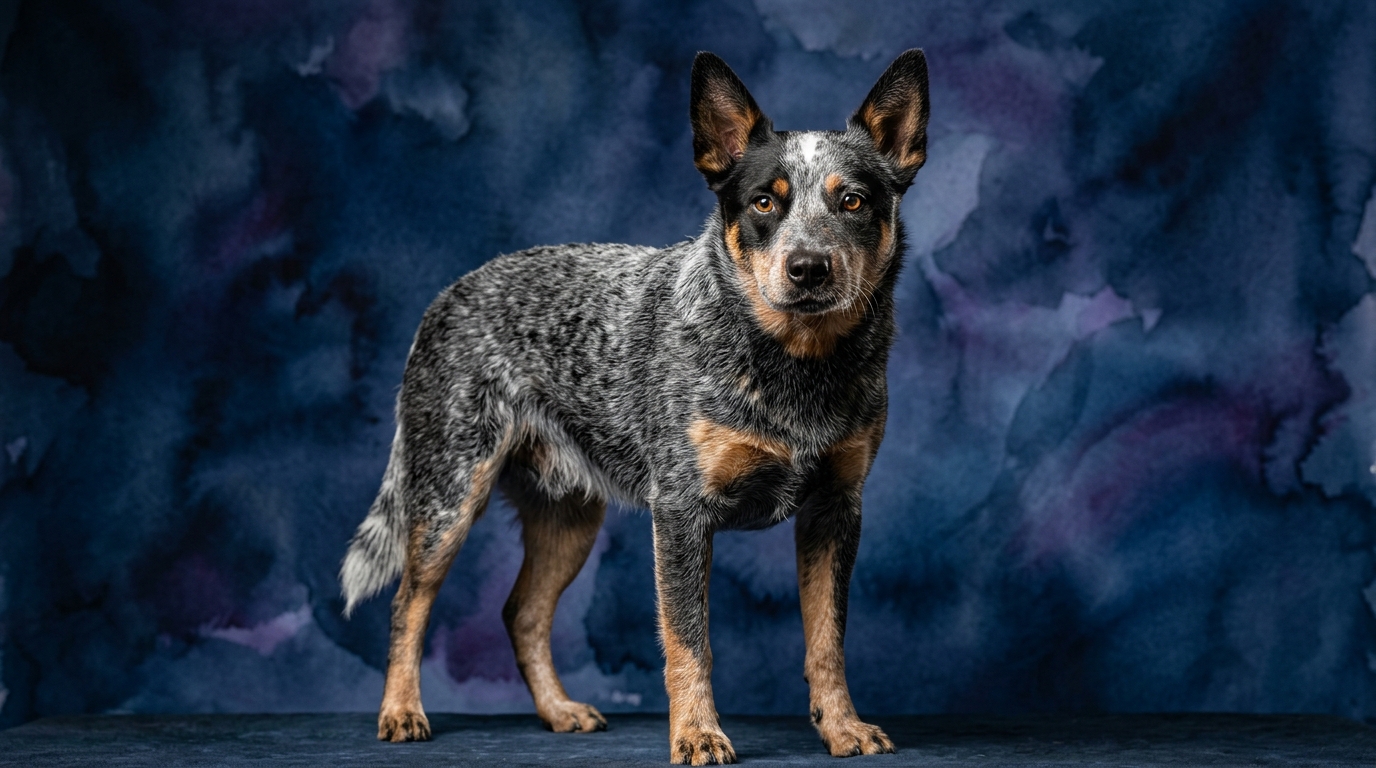
The Australian Cattle Dog (ACD), a Herding type ranked #10 by Coren, demonstrates exceptional cognitive faculties tailored for complex work. Their Problem Solving is rated 5/5, indicating a capacity for strategic thinking and adapting to dynamic situations. Training Speed is also 5/5, meaning they acquire new commands and behaviors with remarkable alacrity. Social Intelligence stands at 3/5, suggesting a practical rather than broadly effusive relational style, often focused on their working partnership. Their Instinctive Drive is a powerful 5/5, channeling intense herding and control behaviors. Finally, their Memory is an impressive 5/5, allowing for retention of intricate routines and patterns.
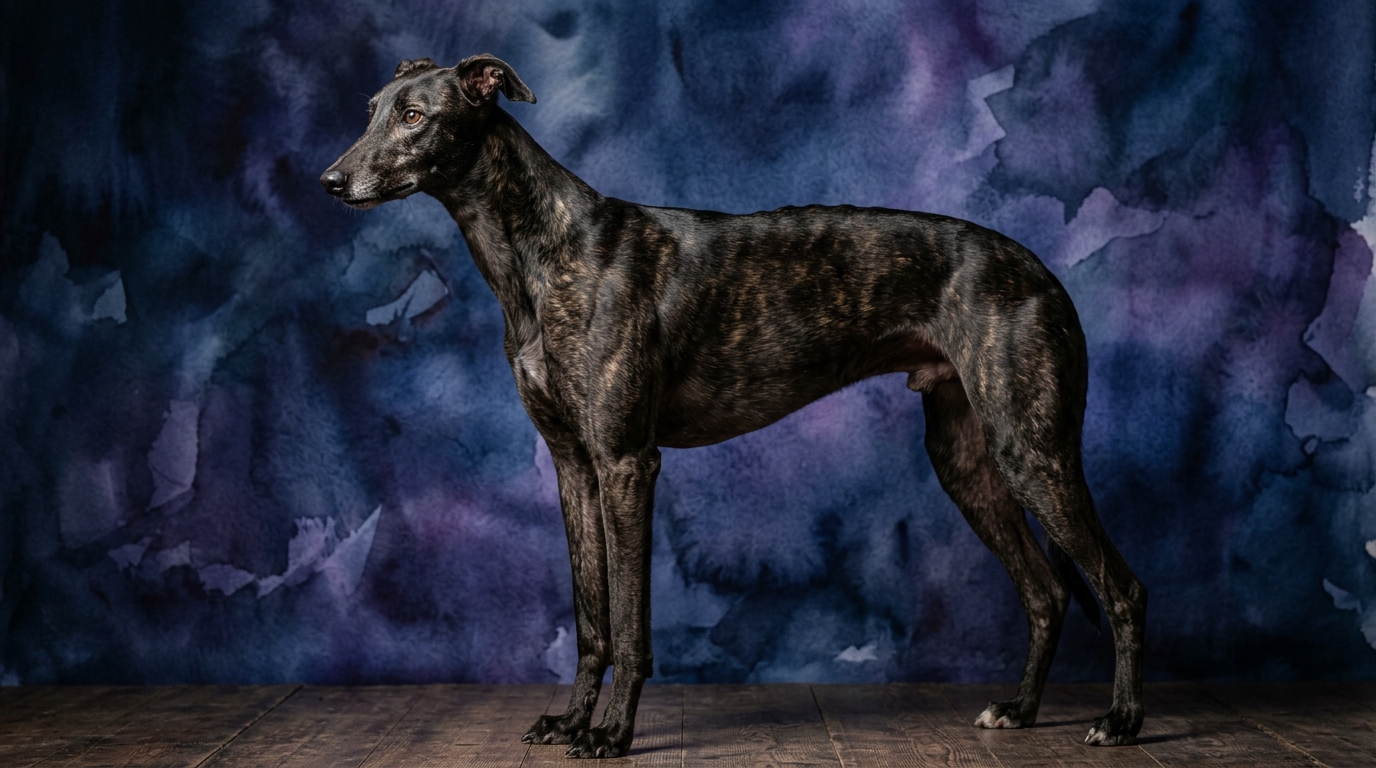
In contrast, the Greyhound, a Hound type ranked #46 by Coren, presents a different cognitive blueprint, optimized for speed and chase. Their Problem Solving is rated 3/5, indicating a more situational and immediate approach to challenges, rather than complex manipulation. Training Speed is 2/5, suggesting a need for more patience and varied methods in instruction. Social Intelligence matches the ACD at 3/5, often manifesting as a reserved but affectionate demeanor. Like the ACD, their Instinctive Drive is a potent 5/5, focused primarily on prey drive and pursuit. Their Memory is 3/5, enabling recall of specific cues and visual layouts pertinent to their primary function, but less for complex, multi-step sequences.
Where the Australian Cattle Dog Excels Cognitively
The Australian Cattle Dog's cognitive design is fundamentally centered on intricate problem-solving, rapid learning, and robust memory, earning them top marks in these areas. Their 5/5 Problem Solving isn't just about figuring things out; it’s about anticipating, strategizing, and making autonomous decisions in a constantly changing environment, like managing a herd of livestock across varied terrain. This translates into a dog that can quickly grasp and apply abstract concepts, making them adept at tasks requiring sequential thinking and adaptive strategies. Their 5/5 Training Speed means they absorb complex multi-step commands and new skills with remarkable efficiency, often seeming to predict what is asked of them. This mental agility is underpinned by a 5/5 Memory, allowing them to recall vast amounts of information, intricate routines, and past experiences to inform future actions, a critical asset in dynamic working roles.
Where the Greyhound Excels Cognitively
While the Greyhound's general problem-solving and training speed ratings are lower than the ACD's, their cognitive strengths are acutely specialized and profoundly effective within their intended purpose. Their 5/5 Instinctive Drive is a powerful engine for a unique form of real-time, high-speed intelligence. This manifests in an exceptional ability to process visual information rapidly and make instantaneous decisions during a chase. Their problem-solving, though rated 3/5, is acutely tuned for immediate, decisive action in high-speed pursuit scenarios, allowing them to rapidly assess distances, trajectories, and obstacles to optimize their path. This is a practical, intuitive spatial intelligence that prioritizes swift execution over deliberate contemplation. Their 3/5 Memory, while not as broad as an ACD's, is precise for visual cues and environmental layouts pertinent to their chase, enabling them to navigate courses or remember specific landmarks with clarity.
Training: Engagement vs. Encouragement
The ease of training significantly diverges between these two breeds, primarily due to their intrinsic motivations and cognitive predispositions. The Australian Cattle Dog, with its 5/5 Training Speed, 5/5 Problem Solving, and powerful 5/5 Instinctive Drive, is often described as a 'student' of canine behavior. They are eager to work, thrive on mental stimulation, and absorb commands quickly, seeing training as a rewarding collaborative effort. Their herding background instills a deep desire to cooperate closely with a human partner on complex tasks, making them highly receptive to consistent, engaging training that channels their abundant energy and intellect constructively. A lack of mental engagement can lead to boredom and potentially destructive behaviors, as their minds are constantly seeking a 'job'.
The Greyhound, with a 2/5 Training Speed, requires a different approach. They are not inherently driven by the same desire for intricate cooperation or constant mental work as an ACD. Their focus is often on speed and chase, not traditional obedience, and they can be less motivated by repetitive drills. Training Greyhounds requires patience, positive reinforcement, and shorter, engaging sessions that capitalize on their athleticism and gentle nature. Their lower problem-solving and memory scores mean that complex chains of commands might be more challenging and take longer to solidify. The key behavioral difference is that ACDs are bred to *actively partner* in complex, evolving tasks, while Greyhounds are bred to *execute* a single, powerful instinct, and their trainability reflects these distinct purposes.
Lifestyle Match: Active Engagement vs. Calm Companionship
When considering an owner's lifestyle, the Australian Cattle Dog and the Greyhound present almost opposite requirements. The ACD is ideally suited for highly active owners who can meet their substantial physical and mental demands. Their 5/5 instinctive drive and problem-solving capacity necessitate constant engagement; they require a 'job' or a challenging outlet for their energy and intellect. This breed thrives with owners who enjoy dog sports like agility, herding trials, advanced obedience, or extensive outdoor activities, providing structured exercise and mental puzzles. A more relaxed owner would likely find an ACD to be a demanding companion, potentially manifesting boredom or frustration through unwanted behaviors.
Conversely, the Greyhound, despite its racing heritage, often surprises prospective owners with its suitability for a more relaxed lifestyle. While they absolutely require opportunities for intense, short bursts of exercise—a good sprint in a securely fenced area—they are famously known as '45 mph couch potatoes.' After their run, they are typically content to lounge quietly, enjoying comfort and companionship. Their energy is concentrated rather than sustained, making them excellent companions for owners who appreciate a calm, affectionate presence and can provide a safe space for their powerful bursts of speed, but don't necessarily desire hours of continuous activity. Their moderate 3/5 social intelligence means they are not overly demanding of constant interaction, often content to be near their people.
The Verdict
Choose an Australian Cattle Dog if you are seeking a highly engaged, intellectually demanding partner for dog sports, complex obedience, or a working role, and can provide consistent mental and physical challenges.
Choose a Greyhound if you appreciate a calm, affectionate companion with a powerful athletic streak, able to provide secure spaces for sprinting and comfortable lounging.
🧠 Find Your Pet's IQ Score
Our Pet IQ Lab assessment covers 25+ tests across 5 cognitive dimensions — personalized to your breed.
Take the Full IQ Test →Frequently Asked Questions
Can a Greyhound excel at agility despite its training speed rating?
While Greyhounds may not pick up complex sequences as rapidly as an Australian Cattle Dog, their incredible athleticism and speed can make them surprisingly adept at agility with patient, positive training focused on their natural movement and enjoyment of running. Their drive for speed can be channeled effectively.
Do Australian Cattle Dogs need a lot of space?
More than just space, Australian Cattle Dogs need structured activity and mental engagement. A large yard is less important than consistent training, long walks, and activities that challenge their problem-solving and instinctive drive, regardless of their living environment. They need purpose, not just acreage.
Are Greyhounds good with other pets?
Greyhounds possess a strong prey drive (5/5 instinctive drive), which means they may not be suitable for homes with small, fast-moving pets like cats or rabbits without careful, supervised introductions and management. However, many retired racers live harmoniously with other dogs and can adapt well to multi-pet households with proper care.