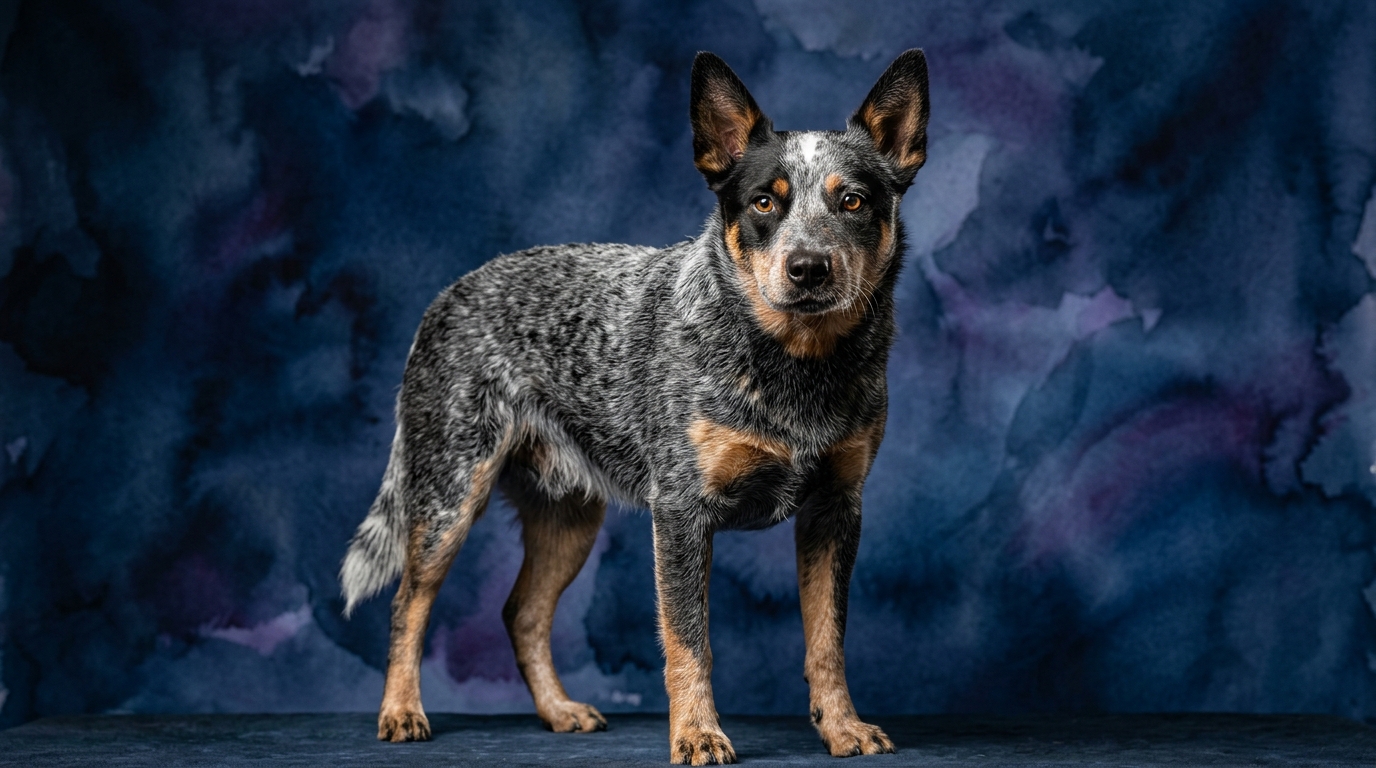
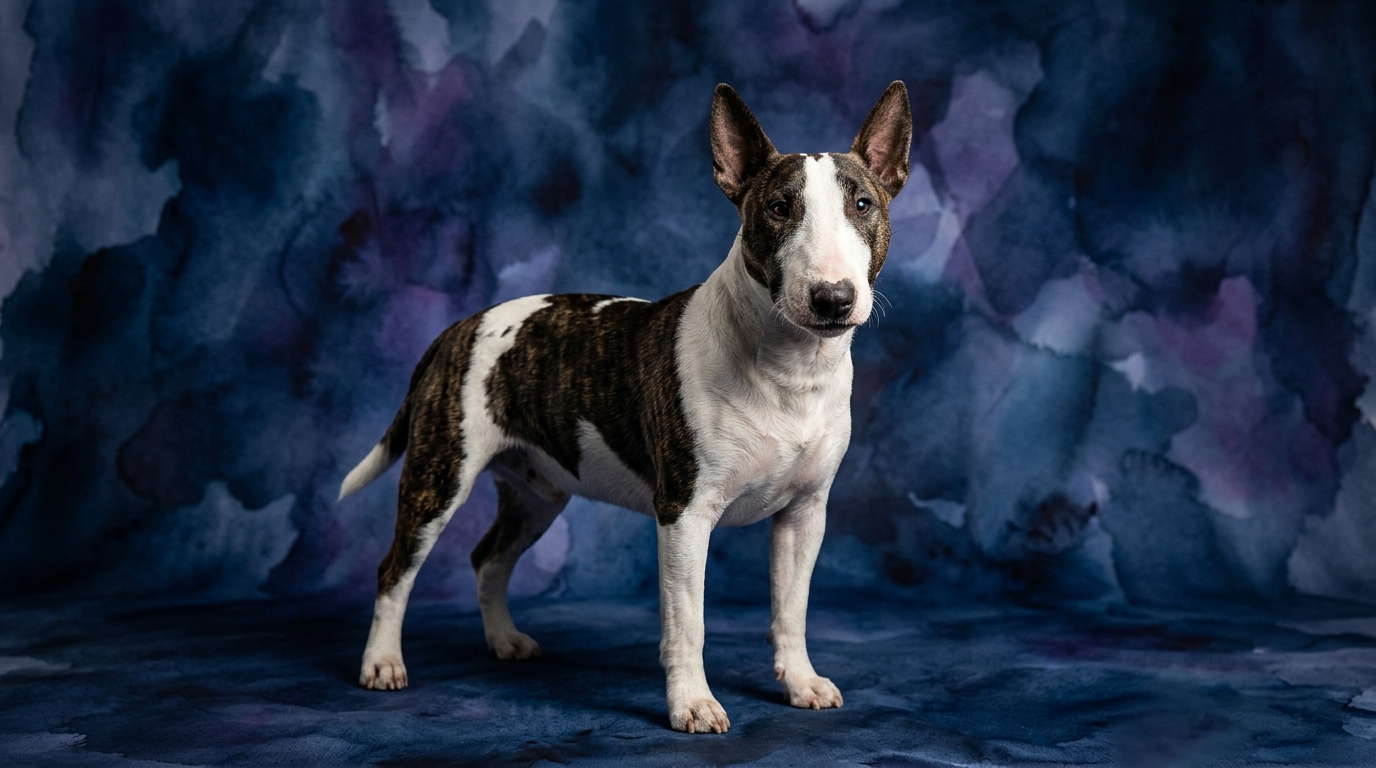
Side-by-Side IQ Profile: Australian Cattle Dog vs. Miniature Bull Terrier
The Cosmic Pet Pet IQ Lab provides a structured framework for understanding canine cognitive abilities across five key dimensions. For the Australian Cattle Dog, a breed recognized for its working prowess and ranked #10 by Coren, its profile shows Problem Solving 5/5, Training Speed 5/5, Social Intelligence 3/5, Instinctive Drive 5/5, and Memory 5/5. These scores paint a picture of a dog with exceptional mental acuity and a strong drive to perform.
In contrast, the Miniature Bull Terrier, a breed from the Terrier group and not Coren-ranked, presents a different cognitive blueprint. Its scores are Problem Solving 3/5, Training Speed 3/5, Social Intelligence 3/5, Instinctive Drive 3/5, and Memory 3/5. This profile suggests a dog with moderate cognitive abilities across the board, leaning more towards an independent and less intensely driven nature compared to its herding counterpart.
Where the Australian Cattle Dog Excels Cognitively
The Australian Cattle Dog's top marks in Problem Solving (5/5) signify an extraordinary capacity to analyze situations and devise effective solutions. This isn't just about quick learning; it's about a dog that can strategically navigate complex environments, often anticipating outcomes and adapting its approach, a trait honed by its history of managing stubborn livestock in challenging terrains. Owners frequently observe them figuring out intricate puzzles or opening latches with surprising ingenuity.
Their perfect score in Training Speed (5/5) highlights an inherent eagerness and ability to rapidly acquire and retain new commands and routines. This breed doesn't just learn quickly; it thrives on the engagement and mental challenge that structured training provides, making them exceptionally responsive and capable of mastering advanced obedience and complex task work. This rapid assimilation allows for an expansive behavioral repertoire.
Furthermore, the Australian Cattle Dog's 5/5 in Instinctive Drive and Memory sets it apart. This intense, focused drive for work, particularly herding, means they are purpose-driven animals who excel when given a job. Their exceptional memory ensures they retain intricate sequences, boundaries, and learned experiences with remarkable ease, making them ideal for demanding roles where precision and consistent recall are paramount.
Where the Miniature Bull Terrier Shines Cognitively
While the Miniature Bull Terrier’s cognitive scores are moderate across the board, their particular brand of intelligence offers distinct advantages for specific owners. Their 3/5 in problem-solving indicates an independent thought process; rather than seeking immediate human guidance for every challenge, they often prefer to tackle obstacles on their own terms, sometimes with a determined, resilient approach. This self-reliance means they can be content entertaining themselves, not constantly demanding intricate mental exercises from their human companions.
Their 3/5 social intelligence, while equal to the Cattle Dog's, manifests differently. It often involves a playful, sometimes mischievous understanding of family dynamics, appreciating companionship without the same intensity of a working partner. This can translate into a dog that is delightfully quirky and capable of forming strong, affectionate bonds, offering a different flavor of companionship that some owners cherish over constant cognitive engagement and direction.
Additionally, the Miniature Bull Terrier's moderate instinctive drive (3/5) can be a cognitive 'win' for owners who desire a less demanding mental companion. Unlike breeds with extremely high drives that require constant outlets for ingrained working behaviors, the Miniature Bull Terrier's drives are present but more manageable. This allows for a more relaxed home environment without the incessant pressure to redirect obsessive focus, appealing to those who prefer a companion that is active but not perpetually seeking a 'job'.
Training Dynamics: Which Breed is Easier to Shape?
The Australian Cattle Dog unequivocally presents as the easier breed to train, primarily due to their top scores in Training Speed (5/5) and Problem Solving (5/5). Their historical role demanded they interpret subtle cues and make independent decisions while remaining highly responsive to their handler, fostering a natural inclination towards learning and compliance. This means they pick up new commands with minimal repetition and often enjoy the process of learning complex sequences, viewing training as a rewarding mental challenge.
In contrast, the Miniature Bull Terrier, with a 3/5 in training speed, requires a more patient and consistent approach. Their terrier independence often means they will weigh a command against their own immediate desires, sometimes appearing stubborn rather than slow to learn. While they are certainly capable of learning, their problem-solving (3/5) is more about finding their own way than quickly adopting a human-prescribed solution, necessitating creative and engaging training methods to maintain their interest and overcome their inherent self-reliance. Consistency, positive reinforcement, and making training feel like a game are crucial for success with a Miniature Bull Terrier.
Matching Cognitive Needs to Owner Lifestyles
For active owners seeking a true partner in adventure and mental engagement, the Australian Cattle Dog is an ideal match. Their 5/5 problem-solving and instinctive drive, coupled with their relentless energy, demand a lifestyle filled with purpose. These dogs thrive on activities like agility, herding trials, long hikes, and complex puzzle toys, requiring owners who are prepared to dedicate significant time to both physical exercise and intricate mental stimulation to prevent boredom and the development of undesirable behaviors.
The Miniature Bull Terrier, while certainly not a couch potato, caters to a different kind of active owner or even a moderately active one who appreciates bursts of energy followed by periods of calm. Their cognitive profile, with 3/5 in instinctive drive and problem-solving, means they enjoy activity and play but aren't typically driven by the same intense, ceaseless need for a 'job.' They are content with regular walks, playful interactions, and engaging toys, but don't require the same level of structured cognitive work as their herding counterpart, making them suitable for owners who want an active companion without the constant pressure of a working dog's mental demands.
The Verdict
Opt for the Australian Cattle Dog if you are an experienced, active owner seeking a highly responsive, cognitively demanding partner for advanced training, dog sports, or a working role.
Select the Miniature Bull Terrier if you appreciate an independent, spirited companion with a moderate activity level, a playful personality, and are prepared for a more patient, creative approach to training.
🧠 Find Your Pet's IQ Score
Our Pet IQ Lab assessment covers 25+ tests across 5 cognitive dimensions — personalized to your breed.
Take the Full IQ Test →Frequently Asked Questions
Are Australian Cattle Dogs good family pets?
While their social intelligence is 3/5, Australian Cattle Dogs can be devoted family members, often forming strong bonds with one person. They require early socialization and consistent training to ensure they are well-adjusted around children and other pets, benefiting from a structured environment that provides mental and physical outlets.
Do Miniature Bull Terriers need a lot of exercise?
Miniature Bull Terriers have a moderate energy level; they enjoy daily walks, playtime, and mental stimulation but do not typically require the intense, constant activity of a high-drive working breed. Regular exercise is essential to keep them fit and prevent boredom, but they are also content to relax with their family after their activity needs are met.
How do their instinctive drives impact their behavior?
The Australian Cattle Dog's 5/5 instinctive drive means they have a powerful urge to herd, which can manifest as nipping at heels or trying to 'manage' family members if not given proper outlets. The Miniature Bull Terrier's 3/5 drive involves a terrier's tenacity and prey drive, making them persistent but generally less obsessive, requiring consistent management for chasing small animals or digging.