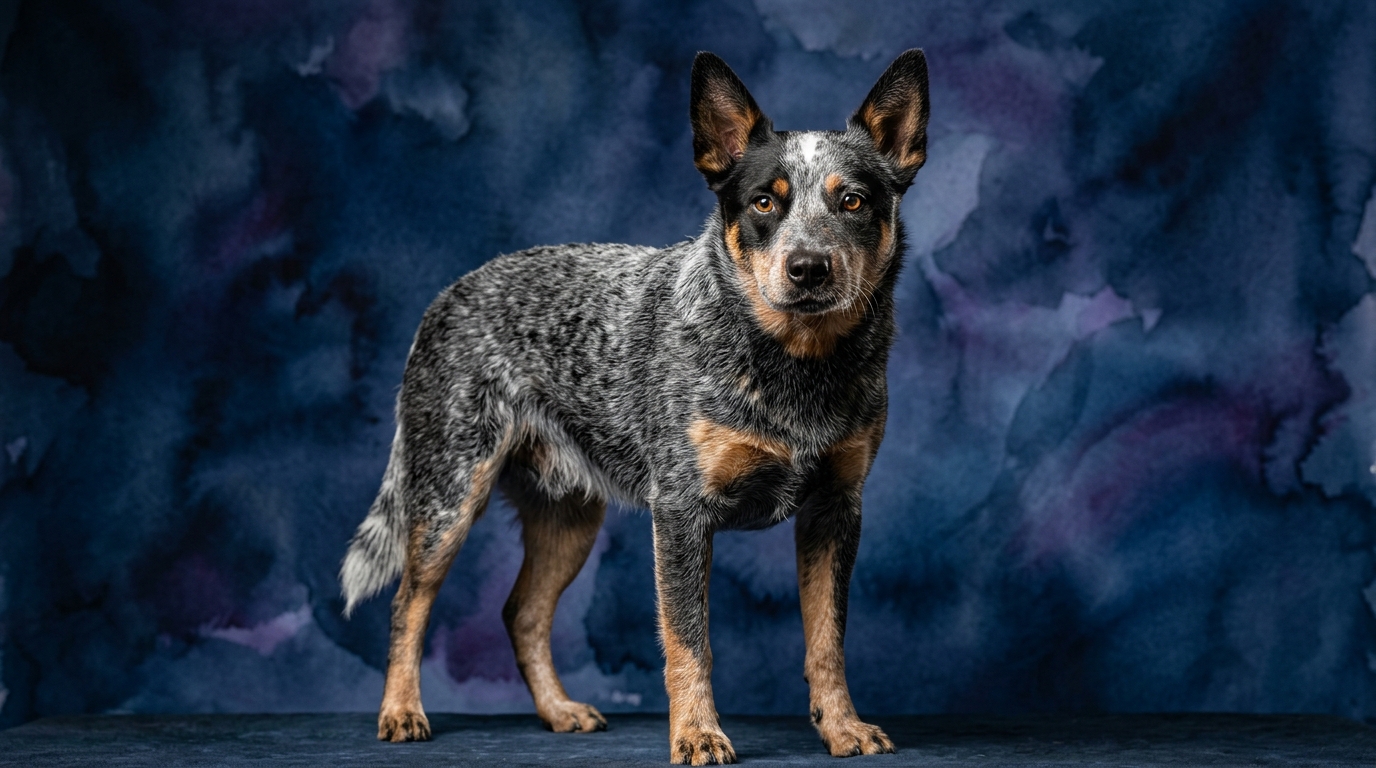
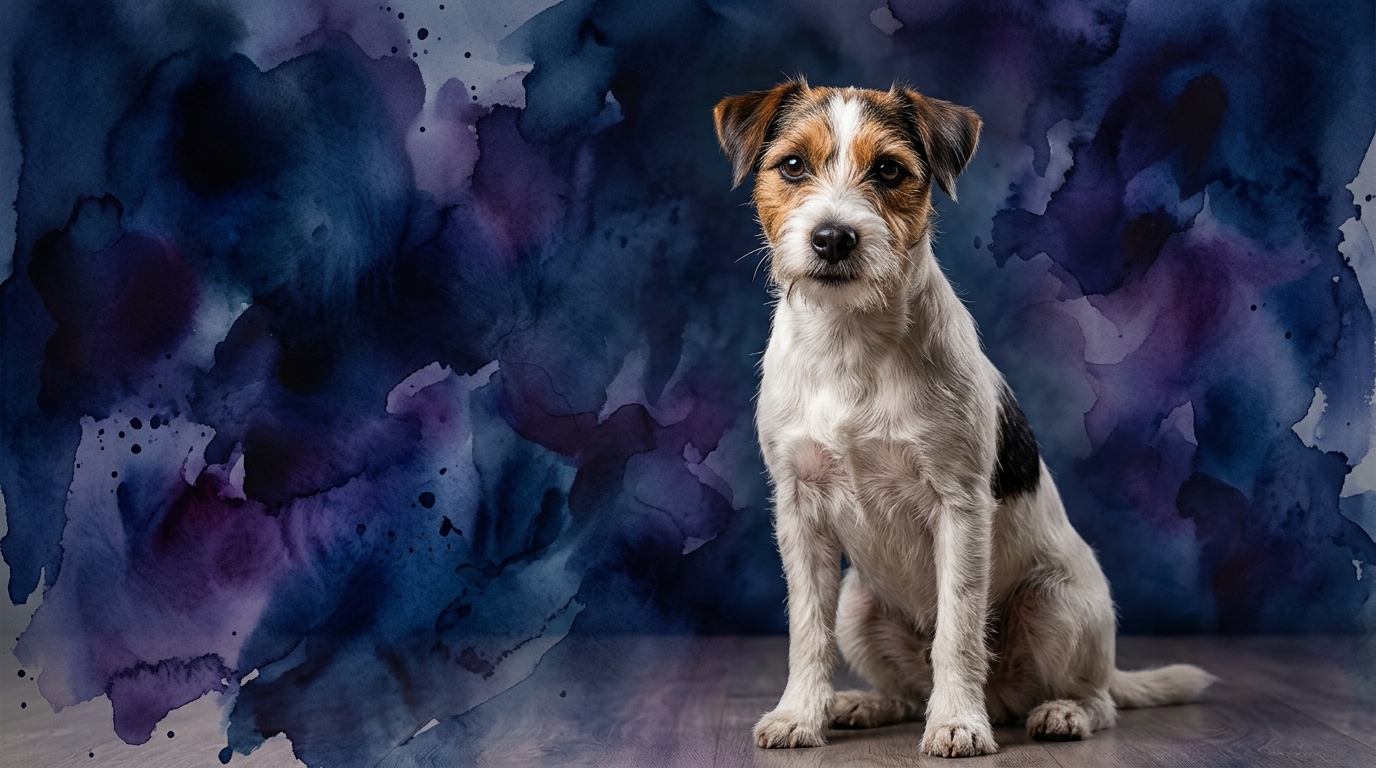
A Side-by-Side Cognitive Profile
The Cosmic Pet Pet IQ Lab employs a five-dimensional framework to assess canine intelligence, offering a nuanced view beyond simple ranking. For the Australian Cattle Dog (ACD), a Herding group member, their profile is marked by exceptional cognitive prowess, while the Parson Russell Terrier (PRT), a Terrier, presents a distinct, practical set of mental attributes.
**Problem Solving:** The Australian Cattle Dog earns a 5/5, indicating an exceptional capacity for complex, multi-step problem-solving. They excel at understanding intricate sequences and adapting strategies. The Parson Russell Terrier, rated 3/5, approaches problems with persistence and resourcefulness, often relying on physical tenacity rather than abstract reasoning.
**Training Speed:** Australian Cattle Dogs achieve a perfect 5/5 in training speed, absorbing new commands and routines with remarkable efficiency and a strong desire to cooperate. Parson Russell Terriers, at 3/5, learn at a moderate pace; they are capable, but their independent nature often means training requires more consistent motivation and patience.
**Social Intelligence:** Both breeds register a 3/5 in social intelligence. ACDs can be reserved, focusing more on their task or primary handler rather than broad social engagement. PRTs are generally affable but possess a self-reliant streak, sometimes prioritizing their own interests over group dynamics.
**Instinctive Drive:** The Australian Cattle Dog’s instinctive drive is a robust 5/5, channeled into their innate herding abilities and strong work ethic. This drive is purposeful and directed. The Parson Russell Terrier’s instinctive drive, at 3/5, is characterized by a strong prey drive, digging tendencies, and a relentless pursuit of targets, often less structured than the ACD's herding drive.
**Memory:** Australian Cattle Dogs stand out with a 5/5 memory, adept at recalling complex sequences, routines, and spatial information over extended periods. Parson Russell Terriers have a 3/5 memory, sufficient for everyday commands and experiences, but perhaps less capacity for the intricate, multi-layered recall seen in the ACD.
Where the Australian Cattle Dog Shines Cognitively
The Australian Cattle Dog's cognitive strengths are deeply rooted in their herding heritage, demanding a mind capable of intricate planning and execution. Their perfect 5/5 in problem-solving means they are adept at navigating dynamic situations, such as anticipating the movements of a scattered herd and devising a strategy to gather them efficiently. This isn't just about following commands; it's about making real-time decisions based on environmental cues and desired outcomes.
Their superior memory (5/5) complements this problem-solving ability, allowing them to retain complex sequences of commands and routines, even after long periods. An ACD can remember a specific route through varied terrain or a multi-step agility course with remarkable accuracy. This capacity for detailed recall makes them exceptionally reliable in tasks requiring consistent, precise performance, where a deviation could compromise the goal. They are masters of predictive thinking within their working environment, constantly evaluating and adapting.
Where the Parson Russell Terrier Excels Cognitively
The Parson Russell Terrier's cognitive advantages are forged in their role as tenacious hunters, requiring a different kind of mental fortitude. While their problem-solving scores 3/5, it manifests as practical, persistent ingenuity rather than abstract strategy. A PRT excels at overcoming physical obstacles to reach a goal, such as persistently digging to access a scent or maneuvering through tight spaces to retrieve a toy. Their solutions are often direct and determined, driven by an unwavering focus on their objective.
Their instinctive drive (3/5), though lower than the ACD's, is a powerful asset in its own right. It fuels their relentless pursuit and resourcefulness, allowing them to remain focused on a task despite distractions or setbacks. This persistence, combined with their moderate social intelligence (3/5) which allows for independent action without constant human input, means a PRT can work autonomously to achieve specific, often physical, objectives. They are masters of the 'never give up' approach to challenges.
Training Dynamics: ACD vs. PRT
When it comes to training, the differences between these breeds become particularly apparent. The Australian Cattle Dog, with a training speed of 5/5, is generally easier to train. They possess an innate desire to understand and comply, coupled with a strong work ethic. An ACD thrives on having a job and quickly grasps new commands, often anticipating what is expected of them. Their high problem-solving capacity means they can learn complex chains of behaviors and adapt to subtle cues, making advanced obedience and specialized tasks a natural fit. Their cooperative nature channels their powerful instinctive drive into productive learning.
The Parson Russell Terrier, with a training speed of 3/5, presents a different kind of training challenge. While capable of learning, their independent spirit and strong instinctive drive (often prey-focused) mean they can be more selective about when and how they apply their knowledge. Training a PRT requires immense patience, consistency, and creativity to keep them engaged. They are less inclined to simply 'obey' and more likely to question the utility of a command if it doesn't align with their immediate interests. Real behavioral differences like a PRT's sudden fixation on a squirrel mid-command, or their determination to dig under a fence rather than wait for a gate, highlight the need for persistent, engaging training methods that make learning more rewarding than following their own agenda.
Suitability for Active vs. Relaxed Lifestyles
Neither the Australian Cattle Dog nor the Parson Russell Terrier is suited for a truly relaxed or sedentary owner. Both breeds demand significant mental and physical engagement, though the nature of that engagement differs. The Australian Cattle Dog requires a highly active owner who can provide structured activities, complex training, and a sense of purpose. Their high energy and strategic mind need outlets like competitive dog sports (agility, obedience, herding), extensive hiking, or work that challenges their problem-solving and memory skills. Without adequate mental stimulation and physical exertion, an ACD can become bored, leading to destructive behaviors or excessive herding of people and other pets.
The Parson Russell Terrier also needs an active owner, but one who appreciates their tenacious, adventurous spirit. While they might not require the same level of structured 'work' as an ACD, PRTs need ample opportunity to explore, chase, and engage their strong prey drive safely. Earthdog trials, long walks with plenty of sniffing opportunities, interactive puzzle toys, and secure areas for off-leash running are crucial. A PRT will not be content with short strolls and will become restless and potentially destructive if their need for physical activity and mental engagement, often involving independent exploration, is not met. Their energy is boundless and requires consistent outlets.
The Verdict
Choose an Australian Cattle Dog if you seek a highly trainable, strategic partner for complex tasks, competitive dog sports, or a working role requiring precision, rapid learning, and exceptional memory. You must be prepared to consistently challenge their sharp mind and robust physique.
Opt for a Parson Russell Terrier if you appreciate a spirited, tenacious companion for adventurous outings, earthdog trials, or a household that can channel their independent drive into engaging, persistent activities. Be ready for a dog that sometimes prefers their own ingenious solution to a problem and requires patient, creative training.
🧠 Find Your Pet's IQ Score
Our Pet IQ Lab assessment covers 25+ tests across 5 cognitive dimensions — personalized to your breed.
Take the Full IQ Test →Frequently Asked Questions
Are Australian Cattle Dogs good family pets with their 3/5 social intelligence?
Australian Cattle Dogs can be loyal family pets, but their 3/5 social intelligence means they may be reserved with strangers and prefer a close bond with their primary family members. They are often protective and thrive in a structured environment where their role is clear, benefiting from early socialization to ensure they are comfortable in various social settings.
How does the Parson Russell Terrier's 3/5 instinctive drive impact their interaction with other pets?
The Parson Russell Terrier's 3/5 instinctive drive, particularly their strong prey drive, means they might view smaller pets like cats, hamsters, or birds as quarry. Early and thorough socialization is crucial, but owners should always supervise interactions and understand that their terrier's instincts can be powerful, requiring careful management in multi-pet households.
What specific types of 'work' are best for these breeds to satisfy their cognitive needs?
For the Australian Cattle Dog, activities like herding, advanced obedience, agility, flyball, or puzzle toys that involve multi-step problem-solving and memory recall are ideal. For the Parson Russell Terrier, earthdog trials, barn hunt, scent work, extensive hiking, and interactive toys that allow for digging or 'hunting' for treats can effectively satisfy their tenacious drive and practical problem-solving needs.