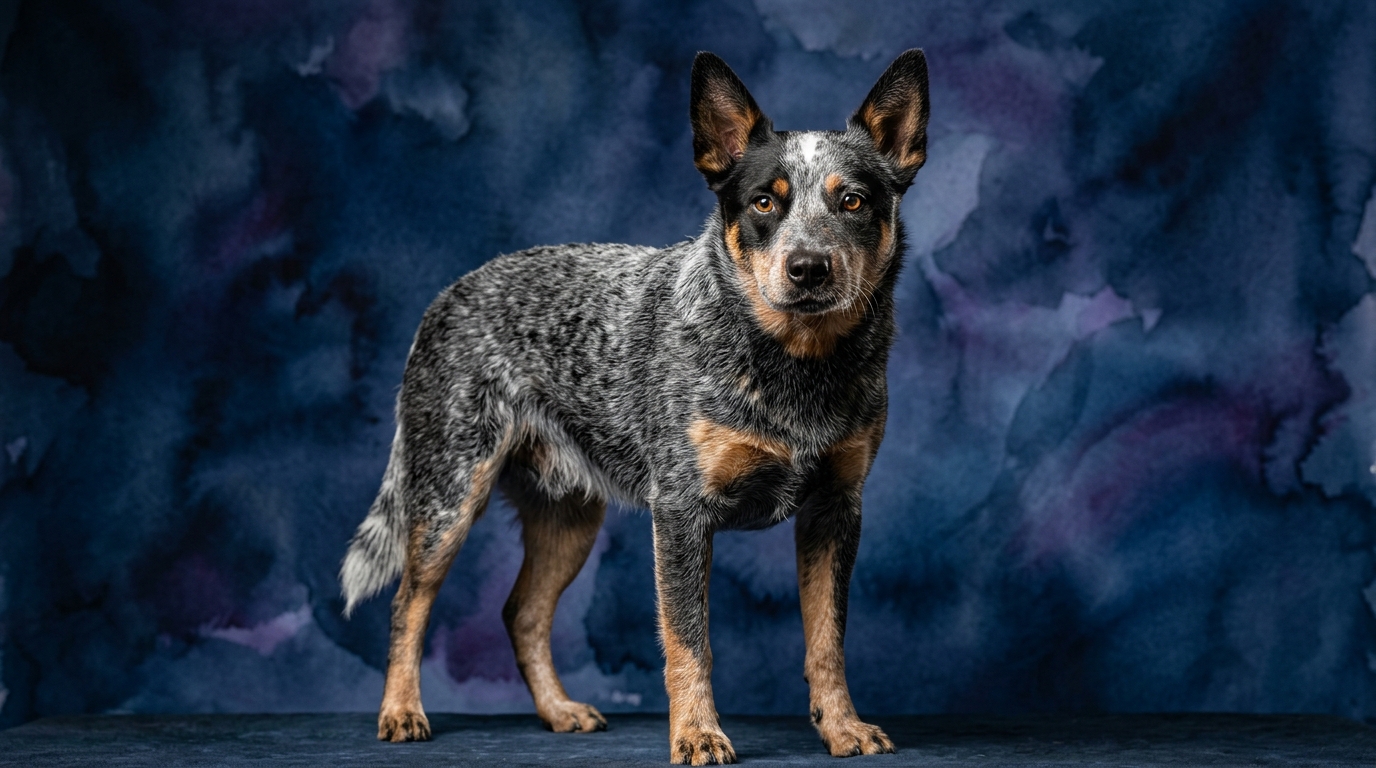
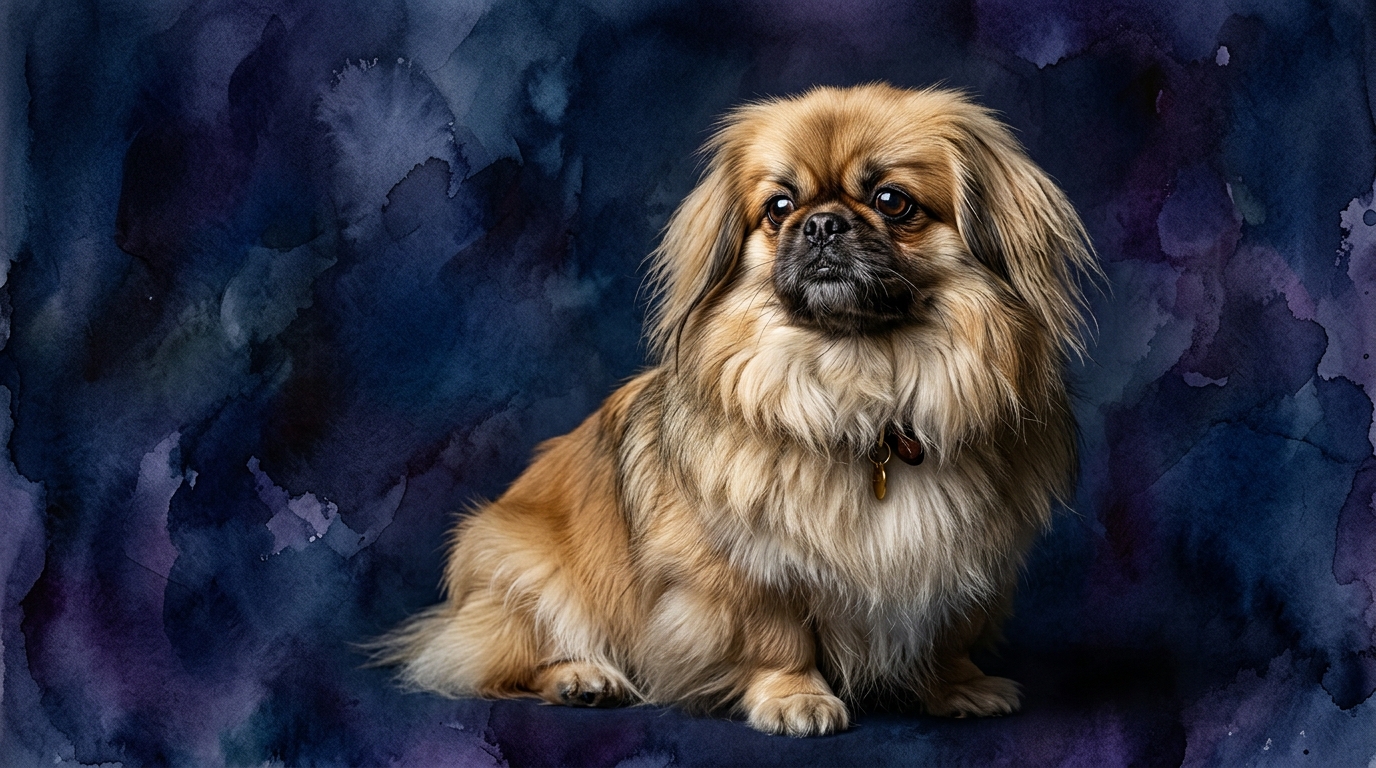
Side-by-Side IQ Profile: Australian Cattle Dog vs. Pekingese
The Australian Cattle Dog, with a Coren Rank of #10, demonstrates a remarkable capacity for understanding and executing new commands, placing them among the top tier of working breeds. Their Problem Solving at 5/5 indicates an exceptional ability to independently assess and navigate complex situations, a trait honed by their historical role in managing livestock over challenging terrains. Training Speed at 5/5 means these dogs grasp new concepts with minimal repetition, eager to engage in learning and master new tasks. Social Intelligence, rated 3/5, suggests they are discerning in their interactions, often forming deep bonds with their primary handlers but less inclined towards universal friendliness. Instinctive Drive at 5/5 highlights a powerful innate urge to herd, chase, and work, requiring purposeful outlets to prevent misdirection of these strong impulses. Memory, also 5/5, ensures they retain learned behaviors and routines over long periods, making them reliable partners once trained.
Conversely, the Pekingese, with a Coren Rank of #77, indicates a lower command-following reliability, suggesting they require more patience and repetition during training. Problem Solving at 3/5 points to an average capacity for independent thought in novel situations, often preferring established routines or human guidance to figure things out. Their Training Speed, also 3/5, means they learn at a moderate pace, benefiting from consistent, positive reinforcement rather than demanding, fast-paced sessions. Social Intelligence at 3/5 suggests a selective sociability, often devoted to their inner circle but capable of aloofness towards strangers, reflecting their history as imperial companions. Instinctive Drive, rated 3/5, points to a moderate level of innate behaviors, primarily focused on companionship rather than strong working or prey drives. Memory at 3/5 indicates they retain information adequately for daily life and familiar routines, but complex multi-step commands might require more reinforcement over time.
Where the Australian Cattle Dog Excels Cognitively
The Australian Cattle Dog's cognitive strengths are deeply rooted in their heritage as independent problem-solvers on ranches. Their Problem Solving score of 5/5 reflects a dog capable of strategic thinking, such as anticipating cattle movement, finding lost animals, or navigating complex environments without direct human command. This breed excels at tasks requiring initiative and judgment, like advanced obedience routines that involve multiple steps, or canine sports like agility where they must quickly assess and execute a sequence of obstacles. Their 5/5 Training Speed and Memory further amplify these advantages, allowing them to rapidly acquire and flawlessly recall intricate command sets, making them exceptional for complex roles like search and rescue or competitive dog sports where precision is paramount. The powerful 5/5 Instinctive Drive, when properly channeled, becomes a formidable asset, providing an unwavering focus and determination to complete tasks, whether it’s herding sheep or mastering a new trick. They don't just learn; they immerse themselves in the learning process, often seeking out challenges.
Where the Pekingese Shows Unique Cognitive Strengths
While the Pekingese might not boast the same scores in problem-solving or training speed, their cognitive strengths lie in areas often overlooked by traditional intelligence metrics, specifically their nuanced adaptation to a life of companionship. Their Social Intelligence score of 3/5, while matching the ACD's, manifests differently; for the Pekingese, it's about forming intensely devoted bonds with their chosen humans, often displaying a sophisticated understanding of household dynamics and personal routines. They excel at reading subtle cues from their family members, discerning moods and preferences with an almost intuitive grasp, a skill vital for a dog historically bred to be a royal lap warmer. Their moderate Instinctive Drive (3/5) means they are less prone to independent actions driven by strong working urges, making them naturally more inclined to a relaxed, indoor existence. This lower drive translates into a dog less likely to invent its own 'job' (like herding children or chasing squirrels), thereby simplifying daily management for owners seeking a calm presence. Their 'win' is in their specialized ability to thrive as a devoted, observant companion, requiring a cognitive engagement centered on intimate social connection and adapting to a more sedate lifestyle, rather than complex physical or mental labor. They are masters of subtle communication within their immediate family unit, often communicating needs with particular barks, glances, or body language their owners quickly learn to interpret.
Training Dynamics: Which Breed is Easier?
The Australian Cattle Dog is demonstrably easier to train for a wide array of commands and complex tasks, primarily due to their exceptional 5/5 Training Speed and 5/5 Memory. They possess an inherent eagerness to learn and please, coupled with a deep capacity for understanding and retaining information quickly. A typical ACD can master a new command in just a few repetitions, often showing a keen interest in problem-solving during training, quickly figuring out what's expected. However, their formidable 5/5 Instinctive Drive means that while they learn quickly, owners must be diligent in providing consistent, engaging training and mental stimulation to channel this energy productively. Without a 'job' or clear guidance, their strong herding instincts can manifest as nipping heels or attempting to 'herd' family members, requiring owners to actively direct their formidable energies.
In contrast, the Pekingese, with a 3/5 Training Speed and 3/5 Memory, presents a more significant challenge in traditional obedience training. They require more patience and repetition to grasp new commands, often demonstrating an independent streak or a preference for their own agenda. Their motivation might not be as straightforward as the ACD's work ethic; a Pekingese might decide a command isn't worth their effort unless the reward is sufficiently enticing or they are in the mood. Real behavioral differences include the Pekingese's tendency to be less food-motivated for training or more easily distracted, whereas an ACD will often remain intensely focused on the task. While they can learn house rules and basic manners, achieving high-level obedience or complex tricks will demand significantly more time, creativity, and consistency from the owner, often requiring a more nuanced approach than simply repeating commands. Their moderate Instinctive Drive means less urgency to 'work' for mental stimulation, but also a potential for stubbornness when asked to perform.
Matching Breeds to Owner Lifestyles
The choice between these two breeds largely hinges on an owner's lifestyle and their capacity to meet a dog's inherent needs. The Australian Cattle Dog is an ideal match for active owners who thrive on outdoor adventures, engage in dog sports, or are seeking a canine partner for demanding activities. These dogs require substantial physical exercise, such as long hikes, running, or cycling alongside their human, coupled with rigorous mental stimulation through puzzle toys, advanced training, or working roles. Owners who enjoy participating in agility, obedience trials, flyball, or herding activities will find the ACD an unparalleled companion, eager to share their energy and intellect. Without sufficient outlets for their 5/5 Instinctive Drive and 5/5 Problem Solving, an ACD can become bored, destructive, or develop undesirable behaviors from unspent energy.
Conversely, the Pekingese is perfectly suited for more relaxed owners who appreciate a calm, devoted companion for an indoor-centric lifestyle. Their moderate Instinctive Drive and lower need for intense physical activity make them excellent apartment dwellers or companions for individuals with a less active routine. Owners who enjoy gentle strolls, cozy evenings, and a dog content to be a regal lap ornament will find the Pekingese a delightful fit. While they still benefit from short, regular walks and some playtime, their cognitive and physical needs are far less demanding than those of a herding breed. They thrive on close companionship and a predictable, comfortable environment, preferring to observe the world from a soft cushion rather than conquer a mountain trail. Their 'work' is often simply to be present, offering quiet affection and a discerning gaze.
The Verdict
Choose an Australian Cattle Dog if you are an active, experienced owner ready to provide consistent mental challenges and physical exercise, seeking a highly trainable partner for sports, work, or complex tasks.
Opt for a Pekingese if you desire a devoted, relatively independent companion for a quieter, indoor lifestyle, appreciating a dog that thrives on close bonds and a relaxed routine.
🧠 Find Your Pet's IQ Score
Our Pet IQ Lab assessment covers 25+ tests across 5 cognitive dimensions — personalized to your breed.
Take the Full IQ Test →Frequently Asked Questions
Can a Pekingese truly learn complex commands or tricks despite their lower Coren rank?
Yes, a Pekingese can absolutely learn commands and tricks, though it may require more patience and repetition compared to breeds with higher training scores. Their 3/5 training speed means they benefit from short, engaging sessions and high-value rewards to maintain their interest and overcome any independent tendencies.
How much mental exercise does an Australian Cattle Dog truly need to stay content and well-behaved?
An Australian Cattle Dog requires significant daily mental exercise to channel their 5/5 problem-solving and instinctive drives productively. This can include puzzle toys, advanced obedience training, dog sports, or even learning complex multi-step routines, preventing boredom and potential destructive behaviors.
Is the Pekingese's moderate instinctive drive a disadvantage for owners looking for an engaged companion?
Not at all; the Pekingese's moderate instinctive drive means they are less prone to demanding independent 'work' and are generally content with a more relaxed companionship role. This can be an advantage for owners who prefer a dog that doesn't constantly seek out tasks or challenges, instead thriving on close, quiet interaction.