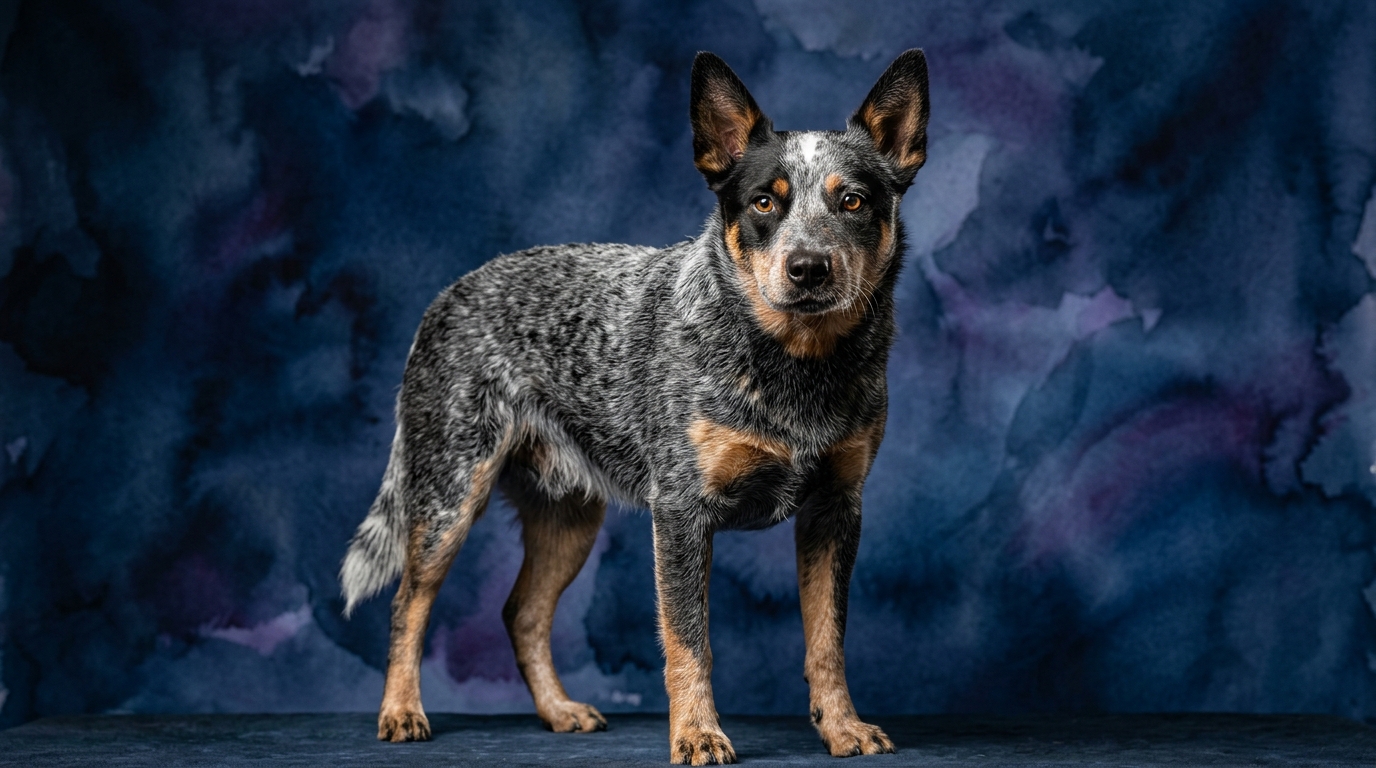
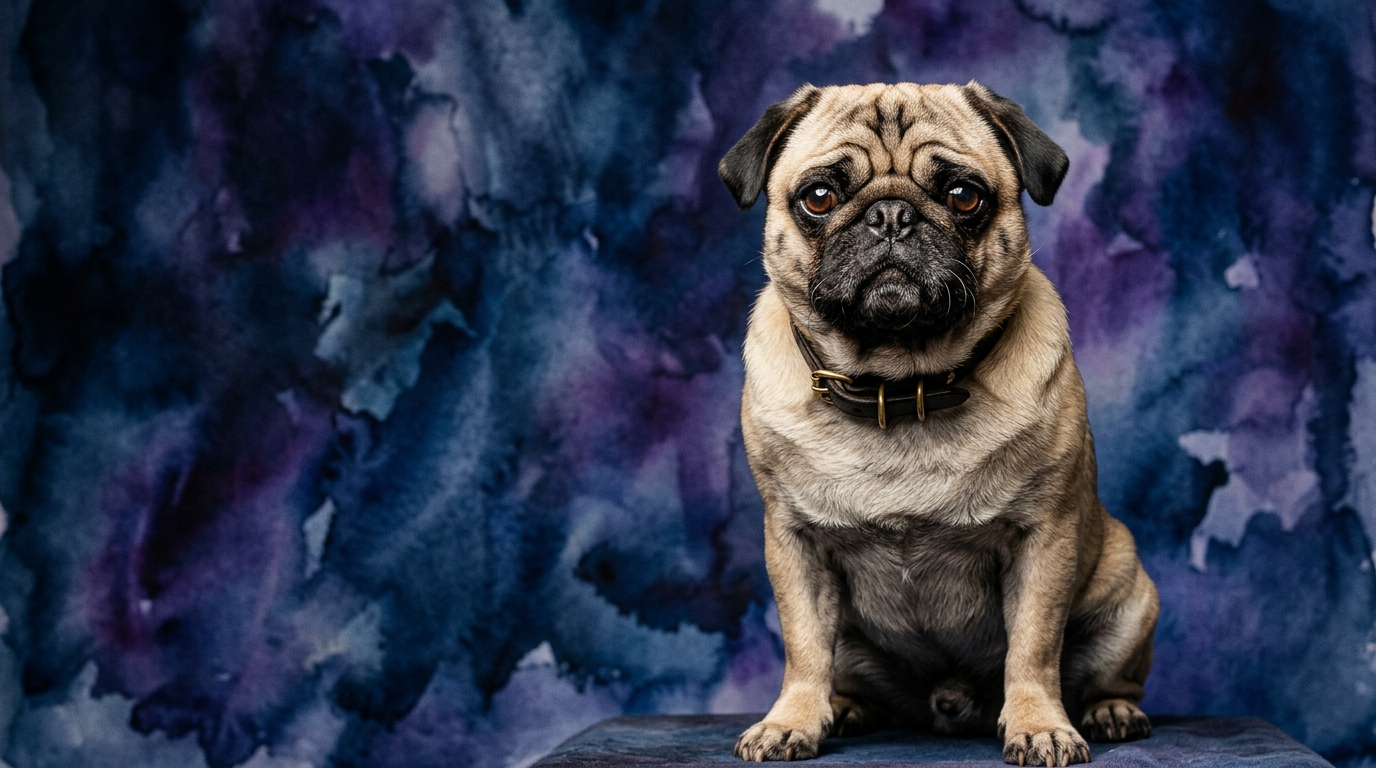
Side-by-Side IQ Profile
The Cosmic Pet Pet IQ Lab employs a multi-dimensional framework to assess canine cognition, moving beyond simple obedience scores to reveal a richer tapestry of mental abilities. For the Australian Cattle Dog (ACD), a Herding group member with a Coren rank of #10, and the Pug, a Toy group member ranked #57, these dimensions highlight their unique strengths and approaches to the world.
Problem Solving: The Australian Cattle Dog excels here with a perfect 5/5, demonstrating a remarkable capacity to analyze novel situations, overcome obstacles, and devise effective solutions, often independently. The Pug, with a 2/5, generally prefers straightforward scenarios and may rely more on learned patterns or human intervention when faced with complex challenges.
Training Speed: Scoring 5/5, the ACD absorbs new commands and routines with impressive rapidity, eager to engage in structured learning and master new tasks. The Pug registers a 2/5, indicating a slower acquisition rate for new commands, often requiring more repetition and patience, preferring engagement that feels less like work and more like play.
Social Intelligence: Here, the Pug shines with a perfect 5/5, possessing an exceptional ability to read human emotions, understand social cues, and adapt their behavior to foster close companionship. The ACD, while capable of understanding human signals, scores 3/5, suggesting a more independent social approach, less driven by constant human attunement compared to the Pug.
Instinctive Drive: The ACD's 5/5 in instinctive drive reflects their powerful, ingrained herding behaviors and a profound desire to work, control, and organize, making them highly motivated by purposeful activity. The Pug's 2/5 indicates a significantly lower drive for task-oriented work, instead being primarily motivated by comfort, affection, and proximity to their human companions.
Memory: With a 5/5, the Australian Cattle Dog demonstrates superior retention of complex sequences, learned behaviors, and spatial information over extended periods. The Pug's 3/5 indicates a functional memory for routines and key people, but perhaps less precision or long-term recall for intricate command sequences or abstract concepts.
Where Australian Cattle Dog Wins Cognitively
The Australian Cattle Dog's cognitive triumphs are rooted in their heritage as working dogs, demanding independent thought and proactive decision-making. Their exceptional problem-solving ability (5/5) means they don't just follow commands; they understand the objective and can adapt if the initial approach fails, a critical skill for managing livestock across varied terrains. This breed's high instinctive drive (5/5) translates into a profound self-motivation to engage with their environment, often anticipating tasks and initiating action, making them proactive partners in activities that require engagement and foresight. Furthermore, their superior memory (5/5) allows them to retain complex sequences of learned behaviors and spatial information, enabling them to execute intricate routines or navigate challenging environments with remarkable precision and recall. These dogs thrive on mental stimulation, finding satisfaction in mastering new skills and overcoming intellectual puzzles, showcasing a formidable capacity for applied intelligence.
Where Pug Wins Cognitively
The Pug's cognitive strengths lie in a completely different, yet equally valuable, domain: social intelligence. With a perfect 5/5 in this dimension, Pugs possess an extraordinary capacity to interpret human emotions, intentions, and subtle non-verbal cues, making them exceptionally attuned and empathetic companions. They excel at nuanced communication, often using their expressions and body language to convey needs, offer comfort, or solicit attention, a form of intelligence that fosters deep emotional bonds and facilitates harmonious living. This acute social awareness allows Pugs to integrate seamlessly into family dynamics, adapting their behavior to suit the mood of the household and providing a source of unwavering affection. Their primary motivation is often to connect and interact, leveraging their understanding of human social structures to maximize companionship and comfort, proving that intelligence can manifest powerfully in emotional and relational contexts.
Which Is Easier to Train and Why
When it comes to formal training, the Australian Cattle Dog typically presents as the "easier" breed for mastering complex commands and advanced obedience, largely due to their exceptional training speed (5/5) and high instinctive drive (5/5). They are eager to learn, quick to grasp new concepts, and find satisfaction in having a purpose or a "job," making them highly responsive to consistent, challenging training regimens. Their problem-solving acumen further aids training, as they can generalize learned behaviors to new situations and often anticipate what is expected. In contrast, the Pug, with a training speed of 2/5 and lower instinctive drive (2/5), generally requires more patience and a different approach. Pugs can learn, but they often need more repetitions, shorter training sessions, and methods heavily reliant on positive reinforcement and play. Their social intelligence (5/5) means they are often motivated by pleasing their beloved humans and receiving affection, so leveraging this bond rather than strict task orientation is key to successful training. While an ACD might learn a new trick in a few repetitions, a Pug might take several sessions, but their desire for connection ensures they will eventually get there with gentle encouragement.
Which Suits Active Owners vs Relaxed Owners
The divergence in cognitive profiles between these two breeds directly informs their suitability for different owner lifestyles. The Australian Cattle Dog is an ideal match for highly active owners who embrace a rigorous outdoor life and are prepared to provide consistent mental and physical challenges. Their strong instinctive drive and problem-solving abilities mean they thrive when given a "job," whether it's herding, agility, advanced obedience, or extensive hiking. Owners who can channel this breed's energy and intellect into purposeful activities will find an incredibly devoted and capable partner. Conversely, the Pug is perfectly suited for more relaxed owners seeking a devoted, low-energy companion. Their primary needs revolve around companionship, comfort, and close human interaction, making them excellent choices for apartment living or households where gentle walks and indoor play suffice. These owners will appreciate the Pug's exceptional social intelligence and capacity for emotional connection, providing a constant source of quiet affection without demanding strenuous physical or mental exertion.
The Verdict
Choose an Australian Cattle Dog if you lead an active lifestyle, desire a dog capable of complex learning and independent problem-solving, and are committed to providing consistent mental and physical challenges for a highly engaged companion.
Opt for a Pug if you seek a highly affectionate, emotionally responsive companion who thrives on close human interaction and requires less demanding physical activity or advanced obedience training, valuing comfort and connection above all else.
🧠 Find Your Pet's IQ Score
Our Pet IQ Lab assessment covers 25+ tests across 5 cognitive dimensions — personalized to your breed.
Take the Full IQ Test →Frequently Asked Questions
Do Australian Cattle Dogs make good family pets?
Yes, with proper socialization and consistent training, their protective nature and profound loyalty can make them excellent family members. However, their strong herding instincts might lead them to 'herd' children or other pets, requiring supervision and early guidance.
Are Pugs truly difficult to train?
Pugs are not inherently difficult to train, but their motivation differs from working breeds; they respond best to positive reinforcement, short, fun sessions, and a trainer who understands their desire for comfort and companionship over strict obedience. Their social intelligence means they often aim to please their beloved humans, making them receptive to gentle, consistent guidance.
How do the energy levels of an Australian Cattle Dog compare to a Pug?
Australian Cattle Dogs possess exceptionally high energy, requiring extensive daily exercise, rigorous physical activity, and consistent mental stimulation to prevent boredom and destructive behaviors. Pugs, in contrast, have significantly lower energy needs, content with short walks and indoor play, prioritizing naps and cuddles over strenuous exertion.