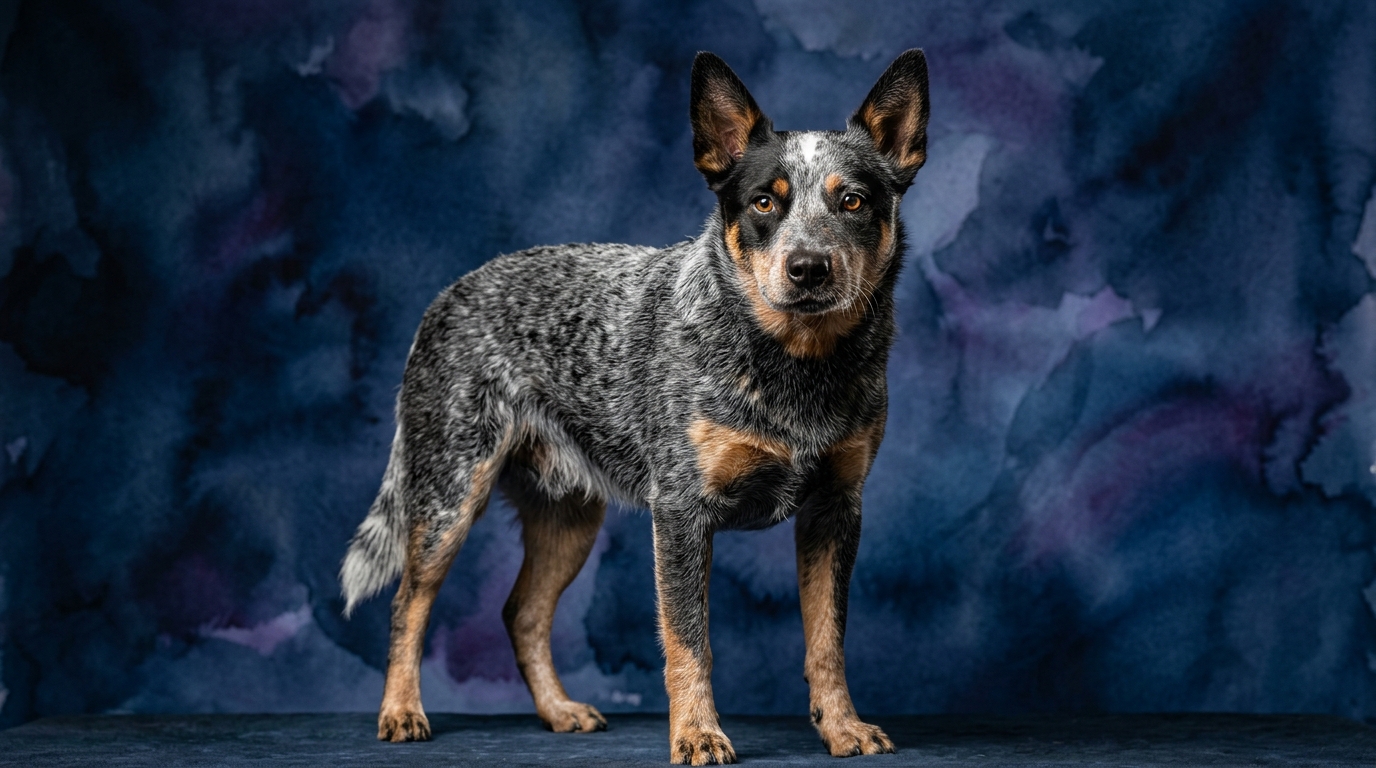

Side-by-Side Cognitive Profiles
The Australian Cattle Dog (ACD) presents a formidable cognitive profile, particularly in areas crucial for its herding heritage. Its Problem Solving is rated 5/5, indicating an exceptional capacity for navigating complex scenarios and devising effective strategies. Training Speed also stands at 5/5, reflecting a remarkable ability to rapidly assimilate new commands and behaviors. Social Intelligence is assessed at 3/5, suggesting a strong bond with its core family but a more reserved demeanor with strangers. The Instinctive Drive is a powerful 5/5, fueling a persistent desire to organize and control, while Memory is an outstanding 5/5, crucial for recalling intricate sequences and learned information.
In contrast, the Rat Terrier (RT) exhibits a balanced but generally moderate cognitive profile, tailored to its historical role as a vermin hunter. Its Problem Solving is rated 3/5, indicating practical and decisive thinking, especially in pursuit. Training Speed is 3/5, meaning it is a capable learner, though it may require more patience and consistency due to a streak of independence. Social Intelligence is 3/5, similar to the ACD, suggesting a capacity for close bonds but also a self-sufficient nature. Instinctive Drive is 3/5, a focused energy directed towards exploration and prey detection. Memory is also 3/5, sufficient for its typical roles but not as extensive as breeds requiring highly complex, long-duration tasks.
Where the Australian Cattle Dog's Cognition Excels
The Australian Cattle Dog's cognitive architecture presents a clear advantage in scenarios demanding intricate planning, rapid learning, and sustained focus on complex tasks. Their 5/5 Problem Solving score means they excel at adapting to novel challenges, piecing together solutions from prior experiences, and even anticipating outcomes, a trait invaluable in dynamic herding environments where livestock movement is unpredictable. This is paired with a 5/5 Training Speed and Memory, enabling them to absorb vast vocabularies of commands and multi-step sequences with remarkable efficiency, retaining these skills over long periods. Owners can teach an ACD a new, multi-part trick in a fraction of the time it might take for many other breeds, and expect near-perfect recall months later. Their potent 5/5 Instinctive Drive fuels a relentless pursuit of purpose, making them tireless in their chosen work and deeply satisfied by mental engagement that taps into this drive. This combination means ACDs aren't just learning commands; they're understanding the *purpose* behind them, making them exceptional partners for advanced obedience, agility, or intricate working roles.
Where the Rat Terrier's Cognition Shines
While the Rat Terrier's overall scores are numerically lower, their cognitive strengths are distinctly tailored to their historical purpose, offering unique advantages. Their 3/5 Problem Solving, though not as complex as an ACD's, is characterized by quick, decisive action and independent thought crucial for hunting vermin. A Rat Terrier might not strategize a complex herding pattern, but it will rapidly assess a scent trail, identify the quickest route to a burrow, and execute a plan with singular focus and tenacity, often without direct human instruction. Their 3/5 Instinctive Drive, while lower, is intensely concentrated on prey drive and exploration, leading to a relentless pursuit of small game. This drive, combined with their moderate problem-solving, means they are adept at navigating environments to find and eliminate targets. Furthermore, their 3/5 Social Intelligence, while not indicating extreme affability, points to a self-sufficient nature. They are not constantly seeking human validation for every action, which can be a distinct 'win' for owners who appreciate a dog capable of independent work and making its own decisions in specific contexts, such as exploring a yard for pests or confidently navigating new surroundings without constant reassurance. This self-reliance prevents them from becoming overly dependent on their handlers, allowing them to excel in roles requiring autonomous action.
Training Aptitude: Ease and Approach
Based on The Cosmic Pet Pet IQ Lab scores, the Australian Cattle Dog is unequivocally easier to train, primarily due to its exceptional 5/5 Training Speed and 5/5 Memory. These attributes allow ACDs to grasp new commands, concepts, and complex routines with remarkable swiftness, often requiring only a few repetitions to solidify a behavior. Their strong instinctive drive also means they are inherently motivated by tasks that challenge their intellect and physical capabilities, making them eager participants in training sessions. For instance, an ACD can quickly learn to differentiate between various objects by name or execute a multi-step retrieve. In contrast, the Rat Terrier, with 3/5 scores in both Training Speed and Memory, will require more consistent effort and patience. Their training isn't difficult, but it demands a handler who understands their terrier independence and occasional stubbornness. A Rat Terrier might understand a command but choose not to execute it if a more interesting scent or perceived 'prey' distraction arises. While they are certainly trainable, their progress will be more gradual and often requires more creative methods to maintain engagement, such as incorporating scent work or games that tap into their natural prey drive, rather than relying solely on repetitive drills.
Matching Canine Cognition to Owner Lifestyle
The choice between these breeds heavily hinges on an owner's lifestyle. The Australian Cattle Dog is an ideal match for highly active owners who can provide substantial physical exercise and, crucially, consistent mental stimulation. Their 5/5 Instinctive Drive and Problem Solving capacity mean they thrive on having a 'job,' whether it's advanced obedience, agility, herding, or complex puzzle toys. A relaxed owner who cannot fulfill these needs risks an ACD developing destructive behaviors or becoming overly 'herdy' with family members due to unmet mental and physical demands. Conversely, the Rat Terrier, while certainly an active breed with a 3/5 Instinctive Drive, can adapt to a slightly less intense regimen than an ACD. They enjoy brisk walks, playtime, and exploring their environment, but their mental stimulation often revolves around scent work and 'hunting' games rather than intricate problem-solving sequences. A relaxed owner might find the Rat Terrier's energy manageable with daily walks and interactive play, but still needs to acknowledge their need for activity and outlets for their prey drive. They are not suited for purely sedentary lifestyles, but they don't demand the relentless, high-level engagement an ACD requires.
The Verdict
Choose an Australian Cattle Dog if you are an experienced, highly active owner eager to engage in advanced training, dog sports, or meaningful work with a canine partner that thrives on complex mental and physical challenges.
Opt for a Rat Terrier if you appreciate a spirited, independent companion for daily adventures and interactive play, and are prepared to channel their keen prey drive into constructive activities.
🧠 Find Your Pet's IQ Score
Our Pet IQ Lab assessment covers 25+ tests across 5 cognitive dimensions — personalized to your breed.
Take the Full IQ Test →Frequently Asked Questions
Are Australian Cattle Dogs good family pets despite their lower social intelligence score?
Yes, ACDs can be wonderful family pets, particularly for active families who understand their need for a 'job' and consistent engagement. Their 3/5 social intelligence often means they form deep bonds with their immediate family but may be more reserved with strangers, requiring proper socialization to ensure they are well-adjusted.
Do Rat Terriers make good apartment dogs given their size?
Rat Terriers can adapt to apartment living if their exercise and mental stimulation needs are consistently met. Their moderate instinctive drive means they still require daily walks, playtime, and opportunities for scent work to prevent boredom and destructive behaviors within a smaller living space.
How important is early socialization for both breeds?
Early socialization is crucial for both Australian Cattle Dogs and Rat Terriers. For ACDs, it helps channel their strong herding instincts appropriately and broadens their social comfort. For Rat Terriers, it helps temper their natural prey drive and independent tendencies, ensuring they are well-mannered around other pets and people.