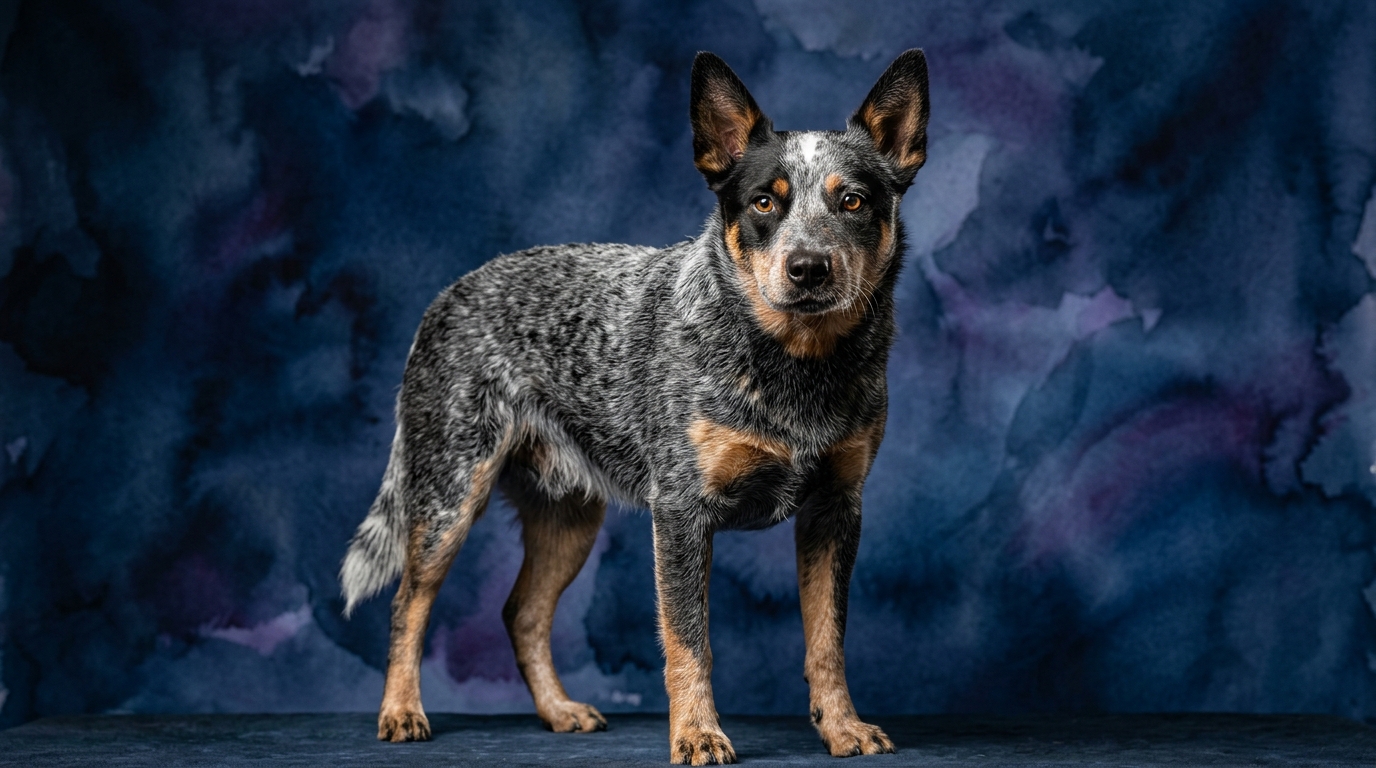
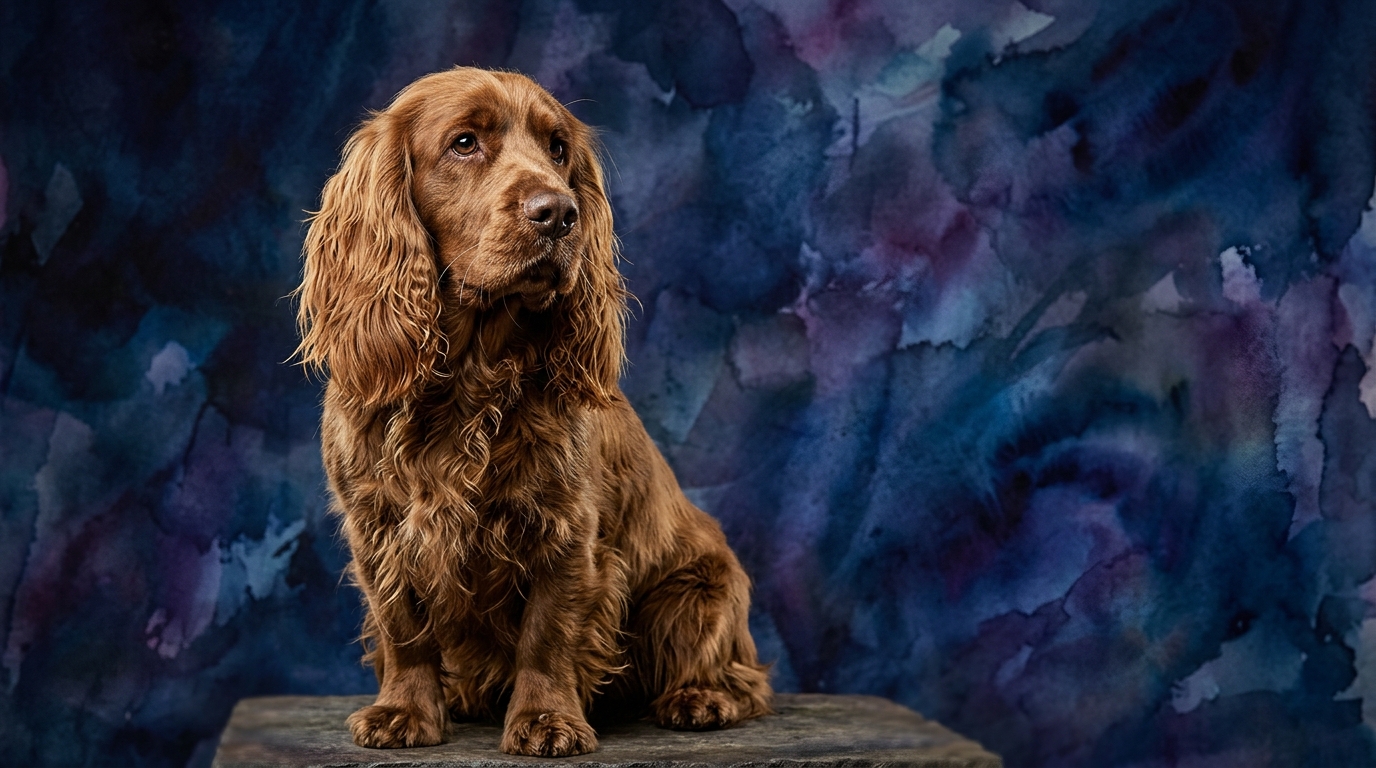
Side-by-Side Cognitive Profiles
To understand the distinct cognitive landscapes of the Australian Cattle Dog (ACD) and the Sussex Spaniel, The Cosmic Pet Pet IQ Lab employs five key dimensions: Problem Solving, Training Speed, Social Intelligence, Instinctive Drive, and Memory. Each dimension is scored on a scale of 1 to 5, providing a nuanced look at their inherent capabilities.
The Australian Cattle Dog, a Herding breed, presents a profile marked by intense mental prowess: Problem Solving 5/5, Training Speed 5/5, Social Intelligence 3/5, Instinctive Drive 5/5, and Memory 5/5. This blueprint reflects a dog bred for complex, independent work, requiring sharp wits and enduring focus.
In contrast, the Sussex Spaniel, a Sporting breed, exhibits a more balanced and moderate cognitive set: Problem Solving 3/5, Training Speed 3/5, Social Intelligence 3/5, Instinctive Drive 3/5, and Memory 3/5. This profile suggests a dog capable and companionable, but without the relentless mental intensity of its herding counterpart.
Problem Solving measures a dog's capacity to independently analyze novel situations and devise solutions. An ACD’s 5/5 indicates exceptional ingenuity, enabling them to troubleshoot complex tasks or outmaneuver stubborn livestock with strategic thinking. A Sussex Spaniel’s 3/5 suggests they can learn to solve puzzles, but might rely more on repetition and human guidance, less prone to spontaneous, inventive solutions.
Training Speed assesses how quickly a dog acquires new commands and behaviors. The ACD’s 5/5 points to a rapid learning curve, often grasping new cues in just a few repetitions, eager to please and to work. The Sussex Spaniel’s 3/5 means they are perfectly trainable, but will likely require more consistent practice and patience, learning at a steady, deliberate pace.
Social Intelligence gauges a dog's ability to interpret human cues, understand social hierarchies, and adapt to varying social contexts. Both breeds score 3/5 here, indicating a solid, functional understanding of social dynamics. They are capable of forming strong bonds and reading human emotions, though perhaps not with the hyper-sensitivity seen in some other breeds.
Instinctive Drive reflects the strength of a breed's innate, hardwired behaviors, such as herding, hunting, or guarding. The ACD’s 5/5 signifies a powerful, ever-present drive to manage and control, specifically to herd, which can manifest as nipping at heels or attempting to 'organize' family members. The Sussex Spaniel’s 3/5 indicates a moderate sporting drive, meaning they are motivated by scent and retrieving, but this drive is generally less intense and more manageable than the ACD's herding compulsion.
Memory pertains to a dog's ability to retain learned commands, experiences, and spatial information over time. An ACD’s 5/5 ensures they rarely forget a lesson or a route, making them reliable partners for complex, multi-stage tasks. The Sussex Spaniel’s 3/5 means they possess a functional memory, capable of recalling commands and routines, but perhaps not with the same depth or longevity as a breed designed for intricate, long-term working roles.
Where the Australian Cattle Dog Excels Cognitively
The Australian Cattle Dog's cognitive profile is overwhelmingly geared towards independent, dynamic problem-solving within a working context. Their 5/5 in Problem Solving means they don't just follow instructions; they proactively assess situations and formulate solutions. For instance, an ACD might figure out how to open a gate that was latched differently than usual, or devise a strategy to gather scattered livestock without direct human command.
Their 5/5 Training Speed is a testament to their exceptional capacity for rapid learning and retention. This isn't just about obedience; it's about absorbing complex sequences of commands, adapting to new training methods, and even learning to differentiate between subtle verbal or hand signals with remarkable efficiency. This rapid acquisition of skills makes them highly versatile in various canine sports and working roles.
The ACD's 5/5 Instinctive Drive fuels their relentless work ethic and focus. This drive translates into an unwavering determination to complete tasks, whether it's moving livestock, excelling in agility, or solving intricate obedience challenges. This powerful internal motivation means they are often self-starters, eager to engage in mentally stimulating activities and requiring less external prompting once a task is understood.
Finally, their 5/5 Memory ensures that lessons learned are lessons retained. An ACD will remember elaborate routines, the layout of vast areas, and specific cues even after long periods. This enduring recall is crucial for a dog expected to perform complex, multi-step tasks over extended durations, making them incredibly dependable in their specialized roles.
Where the Sussex Spaniel's Profile Shines
While the Sussex Spaniel's scores are more moderate across the board, their cognitive profile offers distinct advantages, particularly for owners seeking a less intensely demanding companion. Their 3/5 in Problem Solving, Training Speed, Instinctive Drive, and Memory suggests a dog that is capable and willing, but without the relentless mental engine that requires constant high-level stimulation to prevent boredom-driven behaviors.
The Sussex Spaniel's balanced cognitive traits can be a significant 'win' for owners who appreciate a dog that is engaged but not obsessively driven. Their moderate Problem Solving means they can enjoy puzzle toys and learn new tricks, but they aren't likely to dismantle your house out of sheer intellectual boredom. This makes them easier to manage in a typical home environment, reducing the pressure to provide constant, complex mental challenges.
Their 3/5 Instinctive Drive, primarily focused on scent and flushing, means they have a natural inclination for exploration and retrieving, but this drive is generally more easily satisfied with regular walks and play than the ACD's deep-seated herding compulsion. This can lead to a more relaxed and less 'on-edge' temperament in a home setting, providing a calmer presence.
The Sussex Spaniel’s consistent 3/5 across all categories fosters a well-rounded and adaptable temperament. They are intelligent enough to learn and participate in family life, yet their cognitive demands are not so overwhelming that they require specialized full-time work to thrive. This creates a dog that is content with a good balance of activity and relaxation, making them excellent companions for those who appreciate their steady, amiable nature.
Training: ACD's Drive vs. Sussex Spaniel's Patience
When it comes to ease of training, the Australian Cattle Dog and Sussex Spaniel present markedly different experiences. The ACD, with its 5/5 Training Speed, is often described as a sponge for information, soaking up commands and routines with astonishing rapidity. This breed thrives on having a 'job' and is intrinsically motivated to learn, often anticipating the next instruction. Their intense focus and desire to work mean they can master complex obedience sequences and advanced tasks quickly, making them ideal for competitive dog sports or intricate working roles.
However, this rapid learning comes with a caveat: ACDs require consistent mental engagement. If their keen minds are not adequately stimulated, their intelligence can be channeled into undesirable behaviors, such as destructive chewing, excessive barking, or attempting to 'herd' family members or other pets. Their strong Instinctive Drive (5/5) means they might test boundaries or try to implement their own solutions if left undirected, demanding an experienced handler who can channel their formidable intellect.
The Sussex Spaniel, with its 3/5 Training Speed, offers a different training journey. They are certainly trainable and capable of learning a wide array of commands, but they approach training with a more deliberate, sometimes independent, pace. Patience and positive reinforcement are key, as they may take more repetitions to solidify a command compared to an ACD. Their moderate Instinctive Drive (3/5) means they can be distracted by interesting scents or sights, especially outdoors, requiring consistent focus from their handler.
Real behavioral differences highlight this contrast: an ACD might learn a new agility course in a few sessions, driven by their innate desire for a task and their memory. A Sussex Spaniel might take several more sessions, enjoying the process but perhaps needing more encouragement to maintain focus, especially if a compelling scent trail crosses their path. While the ACD demands an owner who can keep pace with its intellect, the Sussex Spaniel requires an owner who appreciates and accommodates a more relaxed, yet still capable, learning style.
Matching Breeds to Lifestyles: Active vs. Relaxed Owners
The stark differences in cognitive profiles between the Australian Cattle Dog and the Sussex Spaniel directly translate into suitability for different owner lifestyles. An Australian Cattle Dog is unequivocally a companion for the highly active and engaged owner. Their 5/5 in Problem Solving, Instinctive Drive, and Memory means they are always 'on,' constantly seeking mental and physical engagement. Owners must be prepared to provide daily, rigorous exercise that goes beyond a simple walk; think long runs, advanced agility, herding practice, or complex trick training.
An ACD thrives with an owner who can provide consistent structure, challenging mental puzzles, and opportunities to utilize their powerful herding instincts in appropriate ways. They are best suited for individuals or families who lead an active outdoor lifestyle and are willing to dedicate significant time to training and interactive play. Without sufficient outlets for their formidable intellect and energy, an ACD can become restless, destructive, or develop behavioral issues arising from boredom or under-stimulation.
In contrast, the Sussex Spaniel is an excellent match for owners seeking a more relaxed, yet still active, companion. Their consistent 3/5 scores across the cognitive dimensions mean they are not as demanding in terms of relentless mental or physical output. While they still require regular exercise to maintain their health and happiness – daily walks, play sessions, and opportunities to explore with their nose are essential for this Sporting breed – they do not possess the ceaseless drive of an ACD.
A Sussex Spaniel will be content with a moderate amount of activity, followed by ample time for lounging and companionship. They fit well with owners who enjoy leisurely strolls, a bit of backyard play, and appreciate a dog that is amiable and generally less prone to anxiety if not constantly 'working.' They make wonderful companions for those who desire a devoted dog that can integrate smoothly into a less high-octane household, offering a calm and steady presence.
The Verdict
Choose the Australian Cattle Dog if you are an experienced, active owner seeking a highly engaged, relentless working companion who thrives on complex mental and physical challenges.
Opt for the Sussex Spaniel if you desire a devoted, amiable companion with a more moderate energy level and cognitive demands, fitting seamlessly into a moderately active, relaxed household.
🧠 Find Your Pet's IQ Score
Our Pet IQ Lab assessment covers 25+ tests across 5 cognitive dimensions — personalized to your breed.
Take the Full IQ Test →Frequently Asked Questions
What are the key differences in mental stimulation needs?
The Australian Cattle Dog requires constant, high-level mental stimulation, including complex problem-solving tasks and intricate training, to prevent boredom. The Sussex Spaniel needs regular mental engagement, such as puzzle toys and scent games, but not with the same intensity or frequency as the ACD.
Can a Sussex Spaniel be trained for advanced tasks like an Australian Cattle Dog?
While a Sussex Spaniel is capable of learning advanced tasks, their 3/5 Training Speed means they will take more time and repetition compared to an ACD's rapid 5/5 learning curve. They might not achieve the same level of precision or speed in highly complex, multi-stage activities, but they can certainly excel in many dog sports with patience.
How do their social intelligence scores impact family life?
Both breeds score 3/5 in Social Intelligence, indicating they are generally good at understanding human cues and integrating into a family. Neither is exceptionally sensitive, meaning they are likely to be stable and predictable in social interactions, forming strong bonds without displaying overly complex social anxieties or demands.