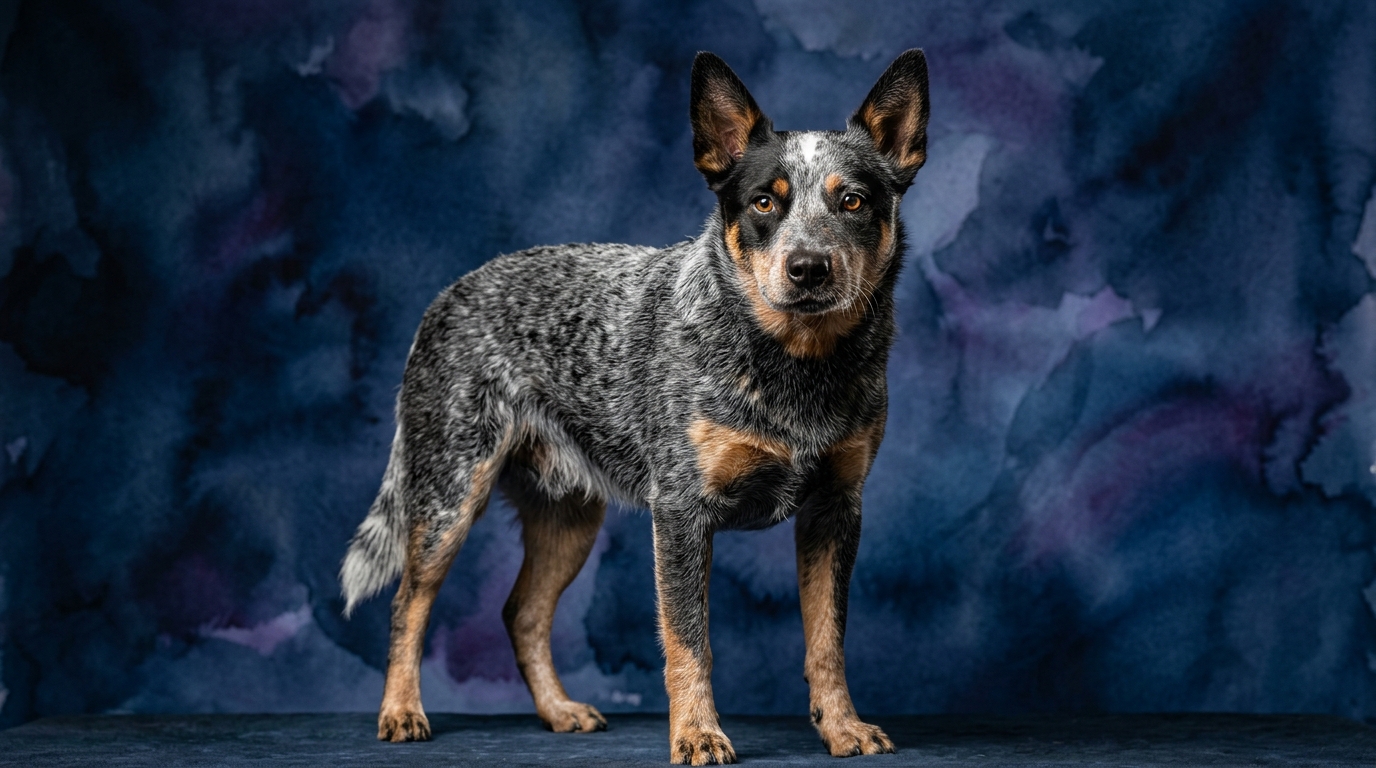
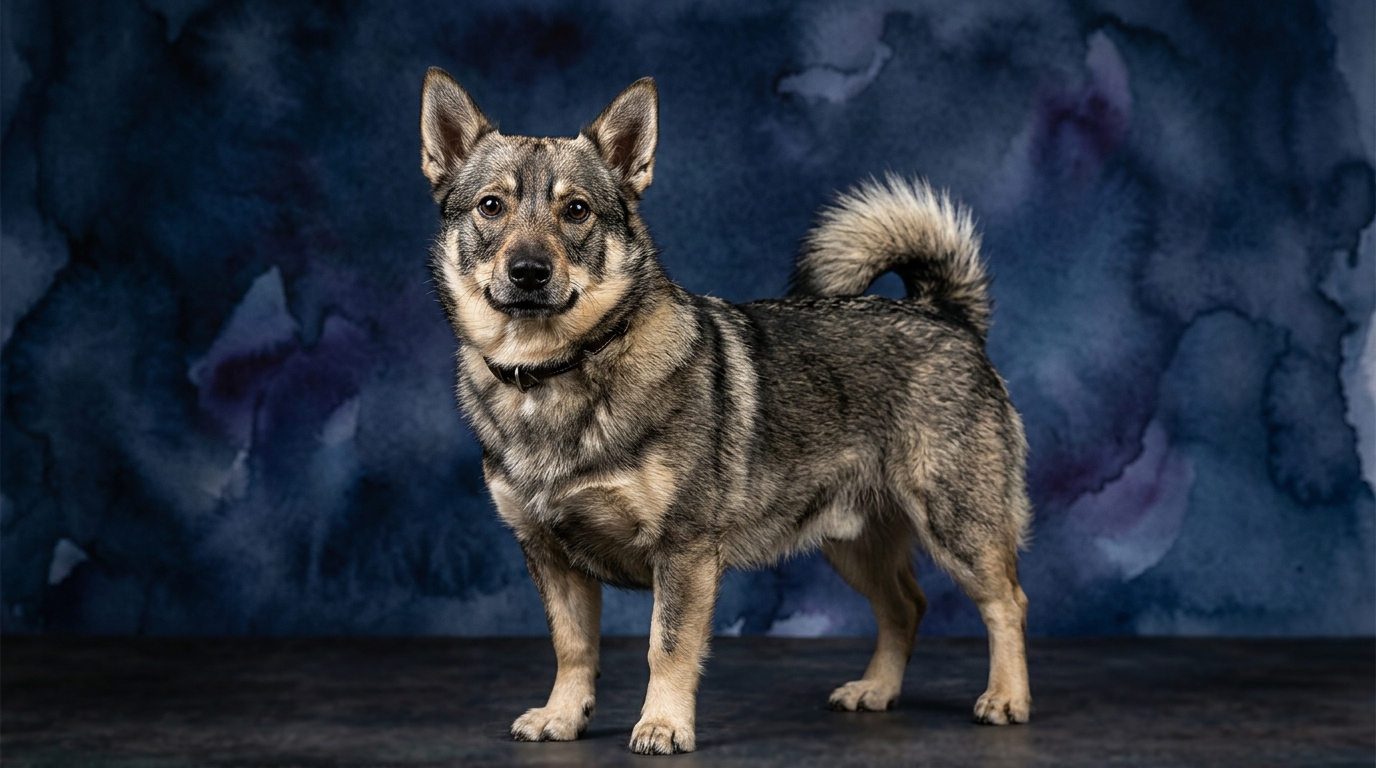
Side-by-Side IQ Profile: ACD vs. Vallhund
The Cosmic Pet Pet IQ Lab categorizes canine intelligence across five crucial dimensions, offering a detailed understanding of each breed's cognitive strengths and tendencies. For the Australian Cattle Dog, these scores paint a picture of a highly engaged and capable working animal. They exhibit a Problem Solving score of 5/5, indicating an exceptional ability to analyze novel situations and devise effective, often independent, solutions. Their Training Speed is also 5/5, meaning they grasp new commands and complex sequences with remarkable rapidity, requiring minimal repetition. Social Intelligence stands at 3/5, suggesting they understand pack dynamics and human cues related to tasks, but may not be as overtly expressive or subtle in their social interactions. Their Instinctive Drive is a profound 5/5, manifesting as an intense desire to control movement, chase, and gather. Finally, their Memory is an outstanding 5/5, allowing them to retain learned commands, routines, and experiences over long periods, aiding consistency.
In contrast, the Swedish Vallhund presents a more uniformly balanced, though still competent, cognitive profile. Their Problem Solving is rated 3/5, meaning they are capable of solving straightforward problems and puzzles, but may require more guidance or struggle with abstract or multi-layered challenges. Their Training Speed is also 3/5; they learn at a moderate pace, necessitating consistent, patient, and positive reinforcement for mastery. Social Intelligence mirrors the ACD at 3/5, indicating they are generally friendly and responsive to their families, understanding basic social cues without highly intricate social negotiation. Their Instinctive Drive is 3/5, signifying they retain herding instincts, particularly for nipping at heels, but with less intensity and obsession than an ACD, making redirection often easier. Lastly, their Memory is 3/5, providing good functional recall for commands and routines, though perhaps not with the same encyclopedic precision as a breed scoring higher in this dimension.
Where the Australian Cattle Dog Wins Cognitively
The Australian Cattle Dog's cognitive profile positions it as a powerhouse of working intelligence, particularly evident in its 5/5 scores for Problem Solving, Training Speed, Instinctive Drive, and Memory. Their ability to independently analyze and resolve complex situations is unparalleled; an ACD can quickly learn how to open latches, navigate intricate obstacle courses, or even figure out how to outsmart livestock. This breed's Coren ranking at #10 further underscores its exceptional capacity for understanding and executing commands with minimal repetition, making them highly efficient learners. Their profound instinctive drive, while a management consideration, also fuels an intense focus and motivation, allowing them to sustain effort on challenging tasks for extended periods. This combination of rapid learning, strategic thinking, and enduring memory means an Australian Cattle Dog can master and recall an extensive repertoire of behaviors, making them exceptional candidates for advanced dog sports, service work, or demanding farm duties.
Where the Swedish Vallhund Wins Cognitively
Where the Swedish Vallhund truly shines cognitively is in its balanced and adaptable intelligence, particularly beneficial for owners seeking a capable companion without the extreme mental intensity of some working breeds. Their consistent 3/5 scores across Problem Solving, Training Speed, Instinctive Drive, and Memory indicate a dog that is consistently competent without being overwhelmingly demanding. A Vallhund's moderate instinctive drive means they possess their herding heritage without the relentless obsession that can characterize a 5/5 drive, making them less prone to compulsive behaviors if their instincts aren't constantly engaged in a formal 'job.' Their problem-solving skills are practical and sufficient for navigating daily life and enjoying engaging puzzles, without leading to them constantly devising complex schemes. This balanced cognitive makeup translates to a dog that is generally biddable and agreeable, less likely to become destructive or anxious due to unmet intellectual demands, offering a more harmonious integration into varied family environments.
Which is Easier to Train and Why
When considering ease of training, the Australian Cattle Dog holds a distinct advantage, primarily due to its 5/5 Training Speed. These dogs are remarkable for their ability to absorb new information and commands almost instantaneously, often picking up complex sequences after only a few repetitions. Their strong desire to work and mental engagement means they actively seek to understand and execute tasks, making the training process feel incredibly responsive and dynamic. This rapid learning, combined with their 5/5 memory, ensures that once a behavior is learned, it is retained with impressive consistency. In contrast, the Swedish Vallhund, with a 3/5 Training Speed, requires a more patient and repetitive approach. While certainly trainable, they may need more sessions and consistent reinforcement to solidify commands. Owners will observe that a Vallhund might take longer to generalize a learned behavior to different environments or cues, necessitating a more structured and consistent training regimen. The ACD's inherent drive means they often want to be trained and given a job, whereas the Vallhund might be more inclined to offer cooperation for rewards rather than an intense drive for mental engagement alone.
Which Suits Active Owners vs. Relaxed Owners
The cognitive profiles of these two breeds dictate vastly different lifestyles for their owners. The Australian Cattle Dog is unequivocally suited for highly active owners who can provide substantial mental and physical engagement. Their 5/5 Problem Solving and Instinctive Drive mean they thrive on structured activities like agility, obedience, flyball, or actual herding work, demanding constant challenges to prevent boredom and destructive behaviors. An ACD needs an owner who views dog ownership as an active partnership, dedicating significant time daily to training, exercise, and mental stimulation. Conversely, the Swedish Vallhund, with its moderate 3/5 scores across the board, offers greater versatility for owners. While they are energetic and enjoy activity, their cognitive demands are less extreme. A Vallhund can certainly participate in dog sports and outdoor adventures, but they are also more adaptable to periods of relaxation and less intense stimulation without becoming problematic. They suit owners who enjoy an active lifestyle but don't necessarily need a dog that requires a full-time mental 'job' to remain balanced. They can be content with daily walks, play sessions, and moderate training, making them a better fit for those with a more balanced pace of life.
The Verdict
Choose the Australian Cattle Dog if you are an experienced, highly active individual or family committed to providing intensive daily mental and physical challenges, seeking a fiercely dedicated working partner.
Opt for the Swedish Vallhund if you desire an energetic yet adaptable companion who enjoys activity and learning, but doesn't require the extreme cognitive demands of a high-drive working breed.
🧠 Find Your Pet's IQ Score
Our Pet IQ Lab assessment covers 25+ tests across 5 cognitive dimensions — personalized to your breed.
Take the Full IQ Test →Frequently Asked Questions
Do Australian Cattle Dogs get bored easily?
Yes, Australian Cattle Dogs, with their 5/5 problem-solving and instinctive drive, are prone to boredom if not adequately stimulated. They require consistent mental and physical challenges to prevent them from creating their own, potentially destructive, entertainment.
Are Swedish Vallhunds good for first-time dog owners?
Swedish Vallhunds can be suitable for first-time owners who are prepared for consistent training and moderate activity levels. Their balanced cognitive profile means they are less intensely demanding than some working breeds, but still require commitment to socialization and training.
How do their herding instincts differ in daily life?
The Australian Cattle Dog's 5/5 instinctive drive often manifests as intense nipping, chasing, and a strong desire to control movement, requiring careful management around children or other pets. The Swedish Vallhund's 3/5 drive means they have similar instincts, but often with less obsessive intensity, making them generally easier to redirect and manage in a typical home environment.