Side-by-Side Cognitive Profiles: Aussie vs. Afghan
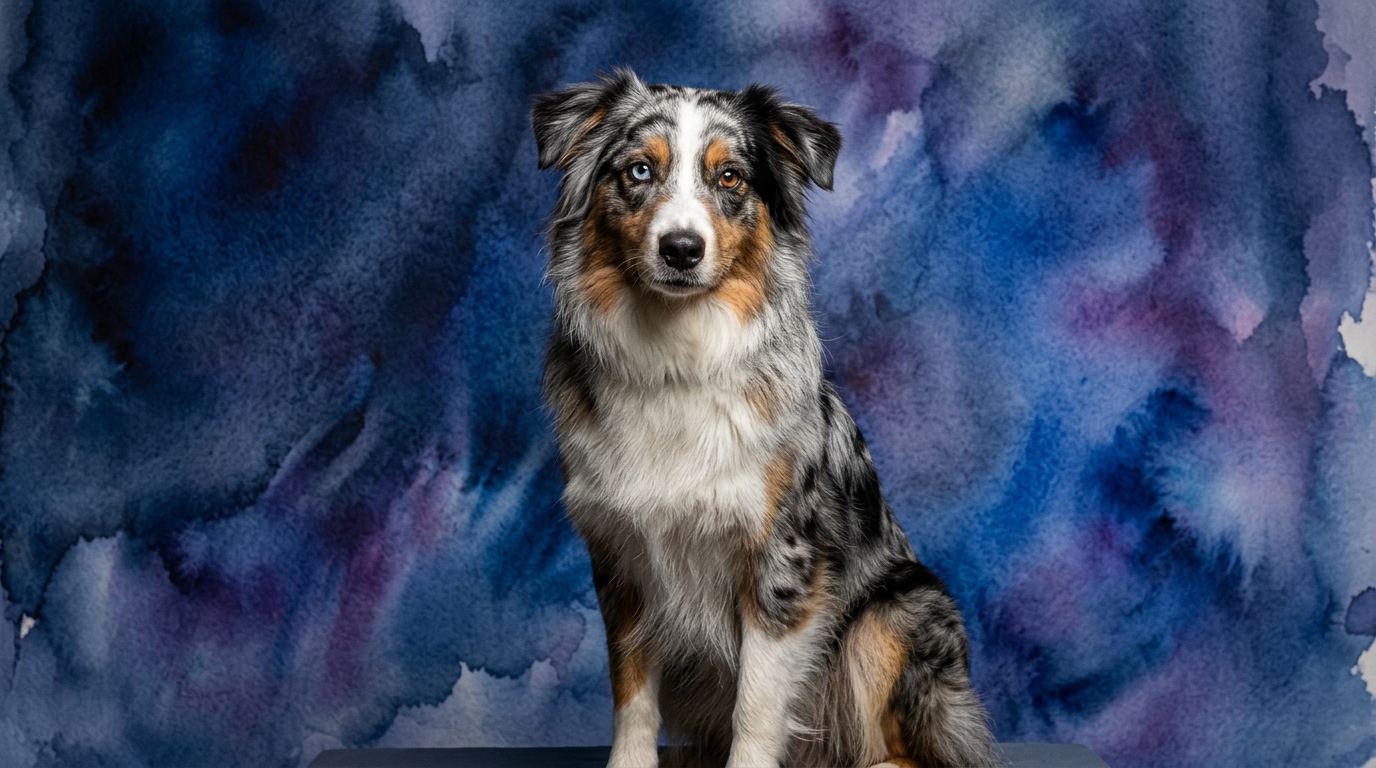
The Cosmic Pet Pet IQ Lab framework illuminates the distinct cognitive landscapes of these two breeds. The Australian Shepherd's profile paints a picture of a highly capable and engaged learner: Problem Solving 5/5 (adept at intricate tasks, strategic thinking, excelling in agility and complex obedience), Training Speed 5/5 (rapid acquisition of new commands, eager to please, making them highly responsive learners), Social Intelligence 4/5 (attuned to human emotions and intentions, capable of forming deep bonds, though sometimes reserved with novel interactions), Instinctive Drive 5/5 (powerful herding instincts, a strong desire to work and manage, requiring mental and physical outlets), and Memory 5/5 (exceptional recall of commands, routines, and past experiences, contributing to their consistency).
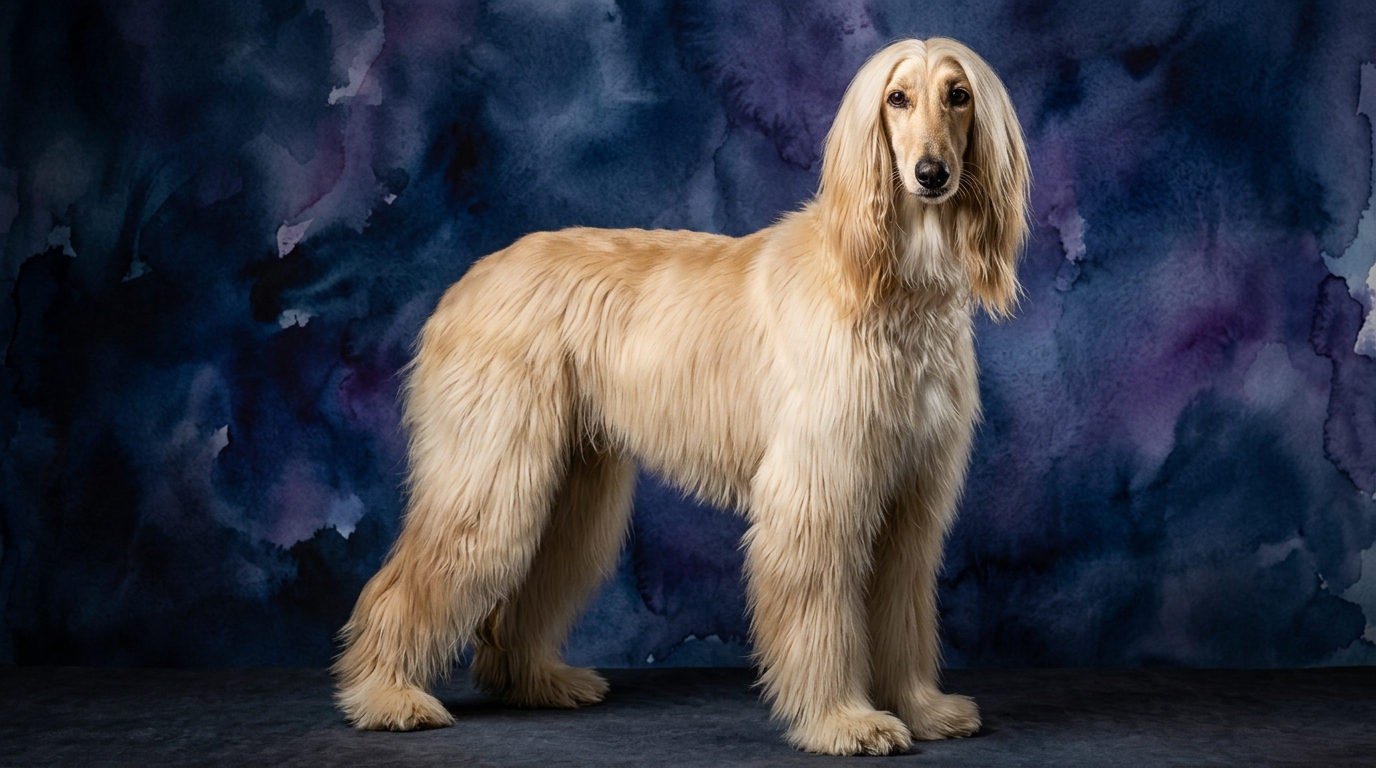
In contrast, the Afghan Hound presents a profile shaped by independence and ancient hunting prowess: Problem Solving 4/5 (capable of navigating their environment and devising solutions, but often driven by self-interest rather than human direction), Training Speed 1/5 (deliberate and independent, often requiring extensive repetition and motivation to learn new cues, resisting rote memorization), Social Intelligence 2/5 (often aloof and independent, less inclined to seek constant human validation or engage in complex social mirroring, preferring their own company or that of a select few), Instinctive Drive 5/5 (predominant sighthound drive for chasing and hunting by sight, a powerful and ancient instinct that shapes much of their behavior), and Memory 3/5 (selective recall, remembering what serves their immediate interest, but not necessarily human-imposed rules or past training sessions with the same consistency as a working breed). This contrast highlights the fundamental differences in their genetic programming and evolutionary paths.
Where the Australian Shepherd Demonstrates Cognitive Strengths
The Australian Shepherd's cognitive strengths truly shine in scenarios demanding collaboration and rapid learning. Their perfect 5/5 in Problem Solving allows them to navigate complex multi-step tasks, such as advanced obedience courses, intricate agility sequences, or even helping with household chores, often anticipating the next step. This isn't just about following commands; it's about understanding the *purpose* behind the task and adapting their approach.
Their 5/5 Training Speed is a direct result of their eagerness to engage and their capacity for quick assimilation of new information. An Aussie can pick up a new trick or command in just a few repetitions, often showing a desire to master it. This rapid learning curve, combined with their 5/5 Memory, means they retain these skills over long periods, making them consistent performers in various roles, from working dogs to competitive sports participants. Their 4/5 Social Intelligence also means they are attuned to their owner's moods and intentions, fostering a highly communicative partnership.
Where the Afghan Hound Demonstrates Unique Cognitive Strengths
While the Afghan Hound's cognitive profile differs significantly from the Aussie, it possesses its own distinct advantages, particularly in areas related to its ancestral role. Their 4/5 in Problem Solving, though lower than the Aussie's, manifests differently. It's less about human-directed puzzles and more about independent navigation and strategic pursuit. A sighthound’s problem-solving often involves assessing terrain, anticipating prey movement, and finding the most efficient path during a chase, a skill honed over centuries in vast, open landscapes, requiring quick, self-directed decisions.
The Afghan Hound's 5/5 Instinctive Drive is a profound cognitive strength, albeit one that is self-directed. This drive is not about pleasing a human but about fulfilling an ancient, deeply ingrained purpose: the pursuit of movement. This powerful instinct gives them incredible focus and determination when their prey drive is activated, allowing them to make split-second decisions and execute precise maneuvers without human intervention. Their lower Social Intelligence (2/5) actually complements this, fostering a remarkable self-reliance and independence that was crucial for hunting far from their human companions.
Trainability: A Tale of Two Temperaments
When comparing trainability, the Australian Shepherd and Afghan Hound represent opposite ends of the spectrum. The Australian Shepherd, with its 5/5 Training Speed and 5/5 Memory, is an exemplary student. They thrive on structure, positive reinforcement, and clear communication. Their inherent desire to work and please, coupled with their ability to quickly associate actions with rewards, makes teaching new behaviors a relatively straightforward and rewarding process. They often anticipate cues and are eager to participate in training sessions, viewing them as collaborative activities.
The Afghan Hound, however, presents a significant challenge to conventional training methods, reflected in its 1/5 Training Speed and 3/5 Memory. Their independent nature and ancient hunting instincts mean they are far less motivated by pleasing a human handler. They often view commands as suggestions rather than directives. Repetition, while necessary for any breed, must be approached with extreme patience and creativity for an Afghan, as they can quickly become bored or simply choose not to comply if they don't see the immediate value. Their selective memory means consistency is paramount, and even then, compliance can be situational rather than absolute. Training an Afghan is less about teaching rote obedience and more about building a respectful partnership based on mutual understanding and clear boundaries, often taking much longer to achieve basic reliability.
Lifestyle Match: Active Owners vs. Relaxed Owners
For active owners seeking a canine partner for adventures and collaborative activities, the Australian Shepherd is an ideal match. Their 5/5 Instinctive Drive translates into a need for constant engagement and purpose. They excel in dog sports like agility, flyball, and obedience, and thrive on long hikes, runs, or even farm work. Owners who can provide consistent mental stimulation through training, puzzle toys, and new challenges, alongside significant physical exercise, will find an Australian Shepherd to be an incredibly devoted and fulfilled companion. Their high social intelligence means they genuinely enjoy being involved in family activities.
The Afghan Hound, despite its powerful physique and strong instinctive drive, often fits a more relaxed owner profile, though 'relaxed' here refers to the *type* of interaction, not necessarily the amount of physical activity needed. While they require regular, vigorous exercise – typically in a securely fenced area where they can sprint – they are generally not seeking constant human interaction or complex tasks. Their independent nature means they are content to lounge elegantly after their exercise, observing rather than participating in every human activity. Owners who appreciate a dog with a dignified, somewhat aloof personality, who can provide ample space for independent running and are prepared for a less overtly 'eager to please' companion, will find joy in an Afghan Hound. They are not dogs that demand constant attention but rather appreciate a calm, consistent environment.
The Verdict
Opt for an Australian Shepherd if you desire a highly engaged, cooperative companion eager to learn, excel in dog sports, and integrate deeply into a busy family life, provided you can meet their substantial needs for mental and physical activity.
Select an Afghan Hound if you appreciate an independent, elegant, and somewhat reserved companion who requires significant exercise but thrives on a calm home environment, and you are prepared for a unique training journey focused on patience and understanding their sighthound instincts.
🧠 Find Your Pet's IQ Score
Our Pet IQ Lab assessment covers 25+ tests across 5 cognitive dimensions — personalized to your breed.
Take the Full IQ Test →Frequently Asked Questions
Are Australian Shepherds good with children?
Australian Shepherds can be wonderful family dogs, often forming strong bonds with children due to their social intelligence and desire to be part of the 'pack.' However, their herding instincts might lead them to playfully nip at heels, so early socialization and teaching children how to interact respectfully are crucial.
Do Afghan Hounds require a lot of grooming?
Yes, Afghan Hounds are known for their long, flowing coats that require significant grooming. Daily brushing is often necessary to prevent mats and tangles, along with regular bathing to keep their coat clean and healthy, especially after outdoor excursions.
Can an Afghan Hound live in an apartment?
While Afghan Hounds are generally calm indoors, their strong instinctive drive and need for vigorous exercise make apartment living challenging without consistent access to a secure, large area for sprinting. They are not ideal for small spaces if their exercise needs are not met daily.