Side-by-Side Cognitive Profiles
Understanding a breed's cognitive make-up goes beyond simple labels, delving into specific dimensions of mental aptitude. For The Cosmic Pet Pet IQ Lab, we evaluate five core areas to paint a detailed picture of each breed's intellectual landscape. Let's explore the Australian Shepherd and Pembroke Welsh Corgi through this lens.
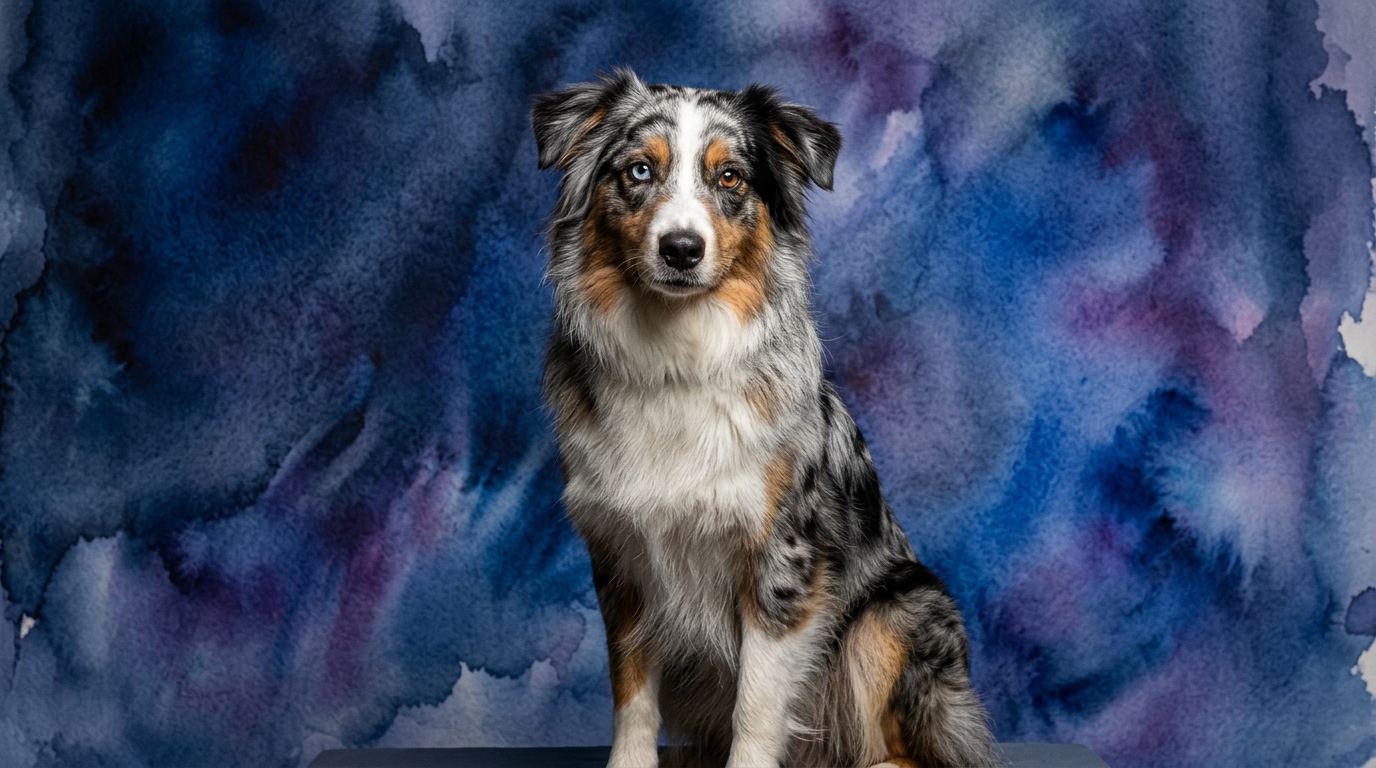
The Australian Shepherd, an agile herding dog, exhibits a full five out of five rating in Problem Solving, indicating an exceptional capacity to independently navigate complex situations and devise novel solutions. Their Training Speed also rates at 5/5, reflecting their rapid assimilation of new commands and routines. In Social Intelligence, they achieve a 4/5, showing a strong ability to read human cues and form deep bonds, though they can sometimes be reserved with strangers. Their Instinctive Drive for herding and work ethic is a powerful 5/5, matched by a stellar Memory rating of 5/5, allowing them to recall information and experiences with remarkable consistency.
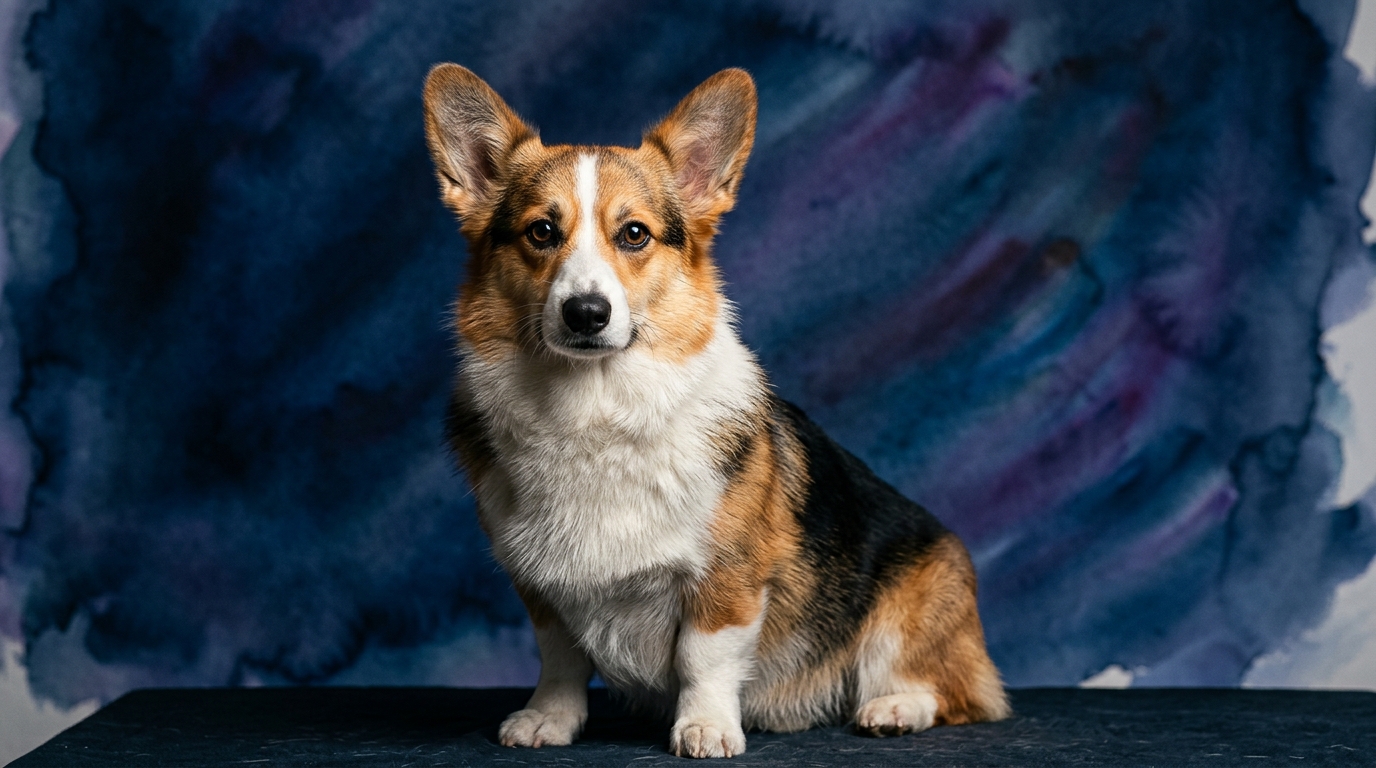
The Pembroke Welsh Corgi, a compact herding breed, demonstrates robust cognitive abilities. Their Problem Solving is rated at 4/5, meaning they are adept at figuring out challenges and adapting to new scenarios, often with a pragmatic approach. Like the Aussie, their Training Speed is a perfect 5/5, signifying quick learning capabilities. Social Intelligence for the Corgi also stands at 4/5, highlighting their perceptive nature and typically outgoing demeanor within their social circle. A strong Instinctive Drive, characteristic of herding breeds, is rated 5/5, translating into persistence and a desire for purpose. Finally, their Memory is solid at 4/5, ensuring they retain learned behaviors and recall past interactions effectively.
Where the Australian Shepherd's Cognition Excels
When comparing the specific cognitive dimensions, the Australian Shepherd edges out the Corgi in two critical areas: Problem Solving and Memory. Their 5/5 Problem Solving score isn't just about learning solutions; it reflects an innate ability to invent solutions to novel challenges. This manifests in their capacity to open latches, understand complex sequences without explicit training, or figure out how to retrieve objects from intricate setups. An Aussie faced with a barrier might not just wait for help; they'll methodically test ways to circumvent or overcome it, demonstrating a level of creative and adaptive thinking that is truly remarkable.
The Australian Shepherd's 5/5 Memory rating further amplifies their cognitive prowess. This translates into exceptional retention of commands, routines, and experiences over extended periods. For an owner, this means less reteaching and more building upon existing knowledge. An Aussie remembers intricate sequences of agility courses, recalls a forgotten toy's location from weeks ago, or anticipates a multi-step routine with precision. Their learning is cumulative and enduring, making them well-suited for roles requiring long-term information recall and the execution of complex, learned behaviors.
Where the Pembroke Welsh Corgi's Cognition Shines
While the Corgi might not hold a numerical advantage in every category, their cognitive profile showcases unique strengths and effective applications of their intelligence. Their 4/5 Problem Solving, though slightly lower than the Aussie, is often characterized by a pragmatic and persistent approach. Corgis excel at figuring out how to achieve desired outcomes within their environment, whether it's manipulating puzzle toys for treats or navigating household obstacles to reach a favorite spot. Their problem-solving is less about abstract ingenuity and more about practical application to their daily goals.
The Corgi's 5/5 Instinctive Drive, while numerically matching the Aussie, manifests distinctly due to their physical structure and herding style. As low-to-the-ground 'heeler' dogs, their drive involves intense focus, quick bursts of movement, and remarkable tenacity in influencing larger livestock. This drive translates into a persistent, determined approach to tasks and a clear sense of purpose, even if that purpose is just to 'herd' family members from one room to another. This focused application of their drive is a significant cognitive strength for their historical role and daily interactions.
Moreover, the Corgi's 4/5 Social Intelligence is often expressed in a particularly endearing and communicative manner. While the Aussie can be reserved, Corgis frequently display an outgoing, expressive nature, readily engaging with people and other animals. They are perceptive of moods and often use a variety of vocalizations and body language to convey their thoughts, making them excellent communicators within a family setting. Their social adaptability allows them to integrate smoothly into various social dynamics, often serving as the amiable, chatty companion.
Which is Easier to Train and Why
Both the Australian Shepherd and the Pembroke Welsh Corgi boast a perfect 5/5 score in Training Speed, indicating that both breeds learn new commands and routines with remarkable swiftness. This means neither breed is inherently 'difficult' to teach new behaviors to; they both pick up on cues rapidly. However, the nuances of their other cognitive traits influence the *ease* of training, particularly for advanced or sustained learning.
The Australian Shepherd's superior Problem Solving (5/5) and Memory (5/5) provide an advantage in advanced training. They don't just learn commands; they often grasp the underlying concepts and can generalize rules to new situations with less repetition. This allows them to quickly master complex, multi-step sequences, string together several behaviors, and retain these intricate lessons over long periods. Their intense instinctive drive means they are often eager for a 'job' and thrive on the mental engagement of structured training, channeling their boundless energy into focused tasks, which can make them seem easier to train for complex endeavors.
Conversely, while the Corgi also learns quickly (5/5 Training Speed), their 4/5 Problem Solving and 4/5 Memory suggest that they might benefit from more consistent reinforcement for less frequently practiced commands and might not generalize concepts as broadly or invent solutions as readily. Corgis are also known for an independent streak, a vestige of their role in managing livestock autonomously. This can translate into a 'what's in it for me?' attitude during training. While they are fully capable of mastering a wide array of commands, sustained motivation and positive reinforcement are key to overcoming this independence, ensuring continued compliance, especially when the task feels mundane. So, while both learn quickly, the Aussie might offer a smoother path for intricate, long-term training due to their cognitive scaffolding of problem-solving and memory, whereas the Corgi demands a consistent, engaging, and motivating approach to maintain focus and enthusiasm.
Better Family Pet: Active Owners vs. Relaxed Owners
When considering a family pet, the owner's lifestyle is a crucial factor, especially with breeds possessing strong instinctive drives. For active owners seeking a true canine partner for rigorous physical and mental challenges, the Australian Shepherd typically aligns better. Their combination of 5/5 Problem Solving, 5/5 Instinctive Drive, and 5/5 Memory means they flourish with constant engagement. They require more than just walks; they need complex tasks, dog sports like agility, herding trials, or advanced obedience to prevent boredom and potential destructive behaviors. An active owner who can provide consistent, high-intensity mental and physical stimulation will find the Aussie an unparalleled, devoted, and highly capable companion.
For owners with a more relaxed lifestyle, or those unable to commit to extensive daily high-impact activities, the Pembroke Welsh Corgi often makes a more suitable family addition. While they also possess a 5/5 Instinctive Drive, their physical structure means their exercise needs, while still significant, can be met with moderate daily walks, engaging playtime, and consistent mental puzzles. Their 4/5 Problem Solving and Memory, combined with 4/5 Social Intelligence, make them adaptable to a busy family life, happy to participate in household activities, and content with puzzle toys, scent games, and shorter, energetic training sessions. A Corgi thrives on being part of the family, offering a balance of spirited play and affectionate companionship without the ceaseless demand for novel, complex work that an Australian Shepherd typically requires for optimal well-being. Placing an Aussie with a relaxed owner who cannot fulfill their extensive cognitive and physical demands often leads to a frustrated dog and owner, whereas a Corgi, while still needing engagement, can adapt more gracefully to a slightly less intense daily routine.
The Verdict
Choose an Australian Shepherd if you desire a canine partner for advanced training, dog sports, or a working role, capable of independently solving new challenges and retaining intricate information with minimal review, and your lifestyle supports consistent, high-intensity mental and physical engagement.
Choose a Pembroke Welsh Corgi if you seek a robust, communicative companion who learns quickly and thrives on regular, engaging activities and mental puzzles, but perhaps doesn't demand the same ceaseless intellectual challenge or expansive physical exertion as their Australian counterpart.
🧠 Find Your Pet's IQ Score
Our Pet IQ Lab assessment covers 25+ tests across 5 cognitive dimensions — personalized to your breed.
Take the Full IQ Test →Frequently Asked Questions
Do Australian Shepherds bark more than Corgis?
Both breeds can be vocal due to their herding backgrounds and strong instinctive drives. Australian Shepherds often bark to alert, herd, or express excitement during play, while Corgis frequently use their voices to communicate opinions, direct movement, or announce perceived intrusions. The frequency often depends on individual temperament and training.
Are Corgis stubborn during training?
Corgis possess a strong independent streak, a remnant of their drive to manage livestock without constant human direction. While they learn quickly due to their 5/5 Training Speed, their willingness to comply can sometimes depend on their perceived value of the task, requiring consistent, positive, and highly motivating reinforcement to ensure enthusiastic participation.
What kind of mental exercise do these breeds need?
Both breeds require daily mental stimulation. Australian Shepherds excel at complex obedience routines, advanced puzzle toys, and dog sports like agility, frisbee, or dock diving. Corgis enjoy puzzle feeders, scent work, trick training, and engaging, short training sessions that keep their pragmatic problem-solving minds active.