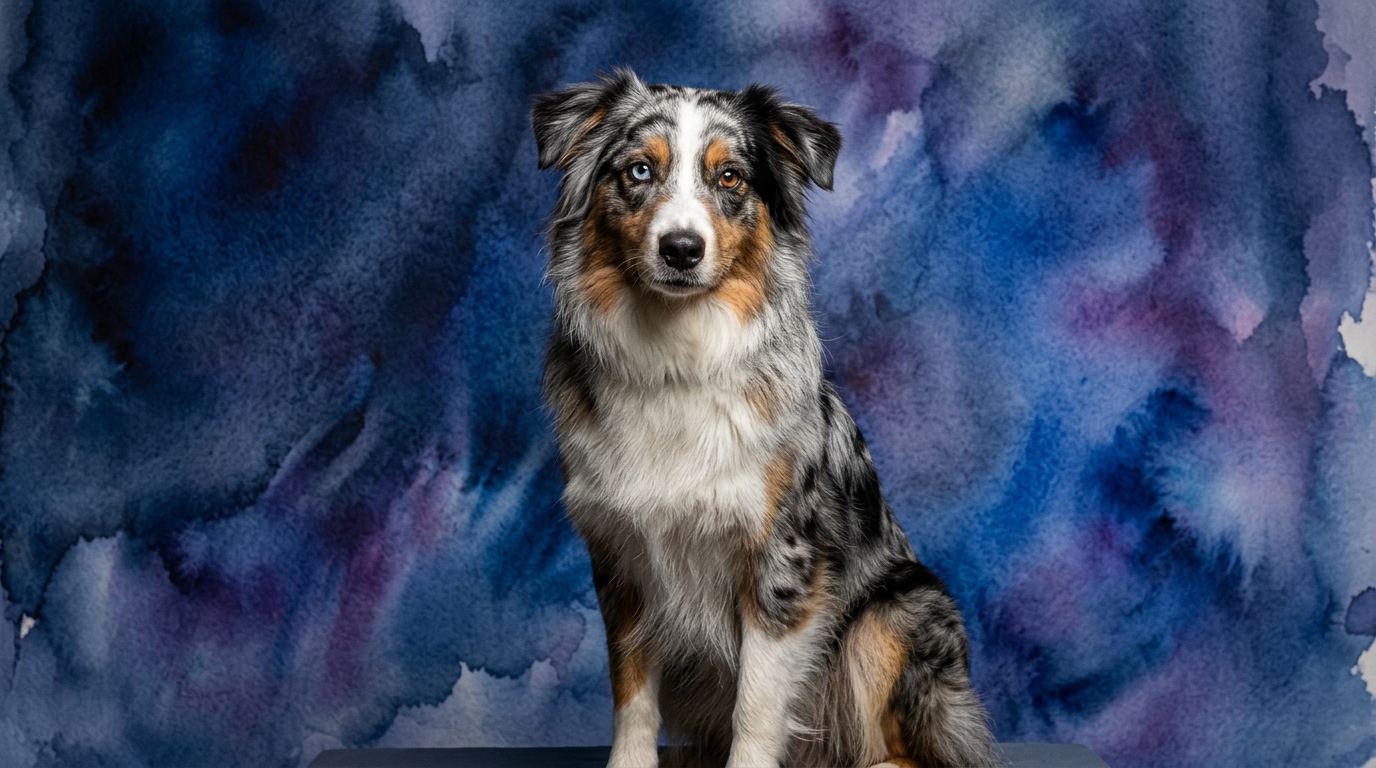
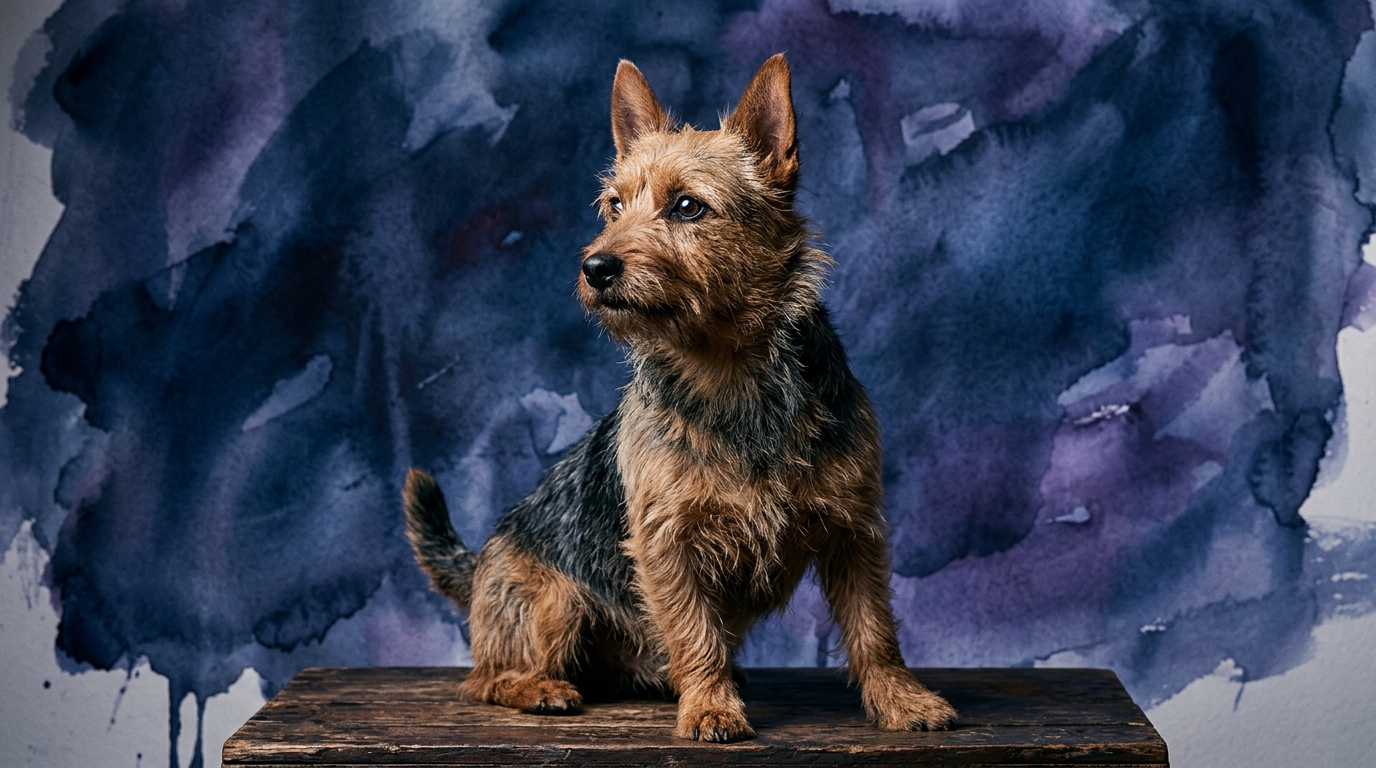
Side-by-Side Cognitive Profiles: Australian Shepherd vs. Australian Terrier
The Cosmic Pet Pet IQ Lab employs a five-dimensional framework to assess canine intelligence, offering a granular view of each breed's mental strengths. For the Australian Shepherd, a breed originating from herding lines, its scores reflect a formidable working intellect. Its Problem Solving is rated 5/5, indicating an exceptional capacity to navigate complex challenges, devise strategies, and learn from experience. Training Speed also scores 5/5, meaning these dogs grasp new commands and routines with impressive alacrity, often requiring fewer repetitions than many other breeds. Social Intelligence stands at 4/5, showcasing a strong ability to interpret human cues, understand social hierarchies, and adapt behavior within a group setting. Instinctive Drive, particularly for herding, is a powerful 5/5, reflecting an innate urge to control movement and organize their environment. Finally, Memory is a perfect 5/5, allowing them to recall vast amounts of information, including commands, routes, and past experiences over long periods.
In contrast, the Australian Terrier, a plucky terrier breed, presents a different cognitive blueprint, reflecting its heritage as a vermin hunter and companion. Its Problem Solving is rated 3/5, suggesting a moderate ability to tackle novel situations, often relying on trial and error or simpler solutions. Training Speed is also 3/5, indicating a reasonable pace of learning new commands, though they may require more consistent reinforcement and patience than their herding counterpart. Social Intelligence for the Australian Terrier is 3/5, meaning they are generally capable of understanding basic social interactions but may not possess the same nuanced interpretive skills as more socially complex breeds. Instinctive Drive, while present for hunting small prey, is rated 3/5, manifesting as a moderate but manageable urge to dig, chase, and explore independently. Memory for the Australian Terrier is 3/5, allowing them to retain information adequately for daily life and basic training, but perhaps not with the same depth or longevity as the Australian Shepherd.
Where the Australian Shepherd's Cognition Excels
The Australian Shepherd's cognitive profile demonstrates clear advantages in areas demanding high mental engagement and quick processing. Their 5/5 Problem Solving means they can quickly assess and overcome obstacles, whether it's figuring out how to open a gate or solving complex puzzle toys designed for advanced canine minds. This capacity extends to understanding intricate multi-step tasks, making them adept at advanced obedience, agility, and even service work where sequential reasoning is paramount. Their superior 5/5 Training Speed allows them to master new skills with minimal repetition, translating into a dog that can learn a vast repertoire of commands and tricks throughout its life. This efficiency in learning, coupled with their 5/5 Memory, means once a concept is learned, it is deeply ingrained, making retraining less frequent and skill retention robust. The intense 5/5 Instinctive Drive fuels their motivation to work and engage, providing a natural inclination towards tasks that require focus and persistence, such as herding livestock or participating in competitive dog sports. Their 4/5 Social Intelligence also means they are often highly perceptive of their handler's moods and intentions, allowing for a deep partnership built on mutual understanding during training and daily interactions.
Unique Strengths in the Australian Terrier's Cognitive Makeup
While the Australian Terrier's cognitive scores are more moderate, their specific profile offers distinct advantages for certain environments and owner preferences. Their 3/5 Instinctive Drive, for example, means they possess enough curiosity and zest for life to be engaging companions without the overwhelming need for constant 'work' or complex tasks that a 5/5 drive breed might demand. This translates to a dog that is less likely to herd children or attempt to 'manage' household dynamics with the same intensity as an Australian Shepherd, making them a more relaxed fit for some family settings. Their 3/5 Problem Solving, while not as advanced, means they are generally content with simpler routines and less prone to devising mischievous schemes to outsmart their owners, leading to a more predictable and often less demanding living situation. The 3/5 Social Intelligence makes them straightforward and honest in their interactions, typically displaying clear social cues without the intense scrutiny or emotional complexity that can sometimes accompany higher social intelligence in other breeds. This can make them easier to read and less prone to overthinking subtle social dynamics, making for a refreshingly uncomplicated companionship.
Training Ease: A Tale of Two Temperaments
When it comes to trainability, the Australian Shepherd generally presents a significantly smoother path for owners, primarily due to its 5/5 Training Speed and 5/5 Problem Solving. These dogs are eager to learn and possess the mental agility to quickly connect actions with consequences, making them highly responsive to positive reinforcement. Their robust 5/5 Memory ensures that lessons stick, and their 5/5 Instinctive Drive provides a strong internal motivation to engage in structured activities, often viewing training as a fulfilling outlet for their energy. They excel in environments where complex commands and consistent mental stimulation are provided, thriving on the challenge of mastering new skills. Conversely, the Australian Terrier, with its 3/5 Training Speed and 3/5 Problem Solving, typically requires more patience and consistency. While capable of learning all essential commands, they may take longer to grasp new concepts and might be more easily distracted by their environment, particularly if their 3/5 Instinctive Drive for chasing small prey is piqued. Their independent terrier spirit means they might question the 'why' behind a command more readily, requiring owners to make training engaging and always worthwhile from the dog's perspective. Real behavioral differences include the Australian Shepherd's tendency to 'offer' behaviors or problem-solve a task proactively, whereas the Australian Terrier might need more direct guidance and motivation to perform a new action.
Suitability for Active vs. Relaxed Lifestyles
The cognitive profiles of these two breeds directly inform their suitability for different owner lifestyles. The Australian Shepherd, with its high scores across the board—particularly 5/5 in Problem Solving, Training Speed, Instinctive Drive, and Memory—is unequivocally suited for active owners who can provide substantial daily mental and physical engagement. These dogs need a 'job,' whether it's herding, agility, obedience, or complex puzzle-solving, to prevent boredom and potential behavioral issues. They thrive on structured activity, learning, and having their formidable intellect challenged daily, making them ideal companions for hikers, runners, dog sport enthusiasts, or individuals looking for a working partner. Their need for consistent mental stimulation means a 'relaxed' owner who offers only basic walks and minimal interaction would likely find an Australian Shepherd to be a challenging, potentially destructive, and certainly unfulfilled companion.
The Australian Terrier, on the other hand, with its moderate scores (3/5 in most cognitive dimensions), is far more adaptable to a range of lifestyles, including those of more relaxed owners. While they certainly enjoy activity and benefit from regular walks and play, their cognitive needs are less intense than those of the Australian Shepherd. Their 3/5 Instinctive Drive means they are less compelled to be constantly 'working' or managing their environment, making them content with moderate daily exercise and a comfortable home life. They can enjoy puzzle toys and short training sessions, but they don't typically demand the same level of complex mental challenges to remain content. This makes them an excellent choice for individuals or families seeking a spirited, affectionate companion who enjoys activity but is also perfectly happy to relax on the couch, without the underlying cognitive restlessness that can characterize a high-drive working breed.
The Verdict
Choose the Australian Shepherd if you are an experienced, active owner dedicated to providing consistent, high-level mental stimulation and physical exercise for a deeply engaged working companion.
Opt for the Australian Terrier if you seek a spirited, adaptable companion who enjoys activity but is also content with a more moderate pace of life, offering straightforward affection without intense cognitive demands.
🧠 Find Your Pet's IQ Score
Our Pet IQ Lab assessment covers 25+ tests across 5 cognitive dimensions — personalized to your breed.
Take the Full IQ Test →Frequently Asked Questions
Do Australian Shepherds need constant mental stimulation?
Yes, Australian Shepherds, with their 5/5 problem-solving and instinctive drive, require significant daily mental stimulation. This can include advanced training, puzzle toys, and engaging in dog sports to prevent boredom and potential destructive behaviors.
Are Australian Terriers difficult to train due to their independence?
Australian Terriers have a 3/5 training speed and instinctive drive, which means they can be more independent and may require consistent, patient, and engaging training methods. While not 'difficult,' they thrive with positive reinforcement and clear motivation.
Which breed is better for a first-time dog owner?
For a first-time dog owner, the Australian Terrier, with its moderate cognitive needs and adaptability, is generally a more manageable choice. The Australian Shepherd's intense cognitive demands and high drive can be overwhelming for those new to dog ownership.