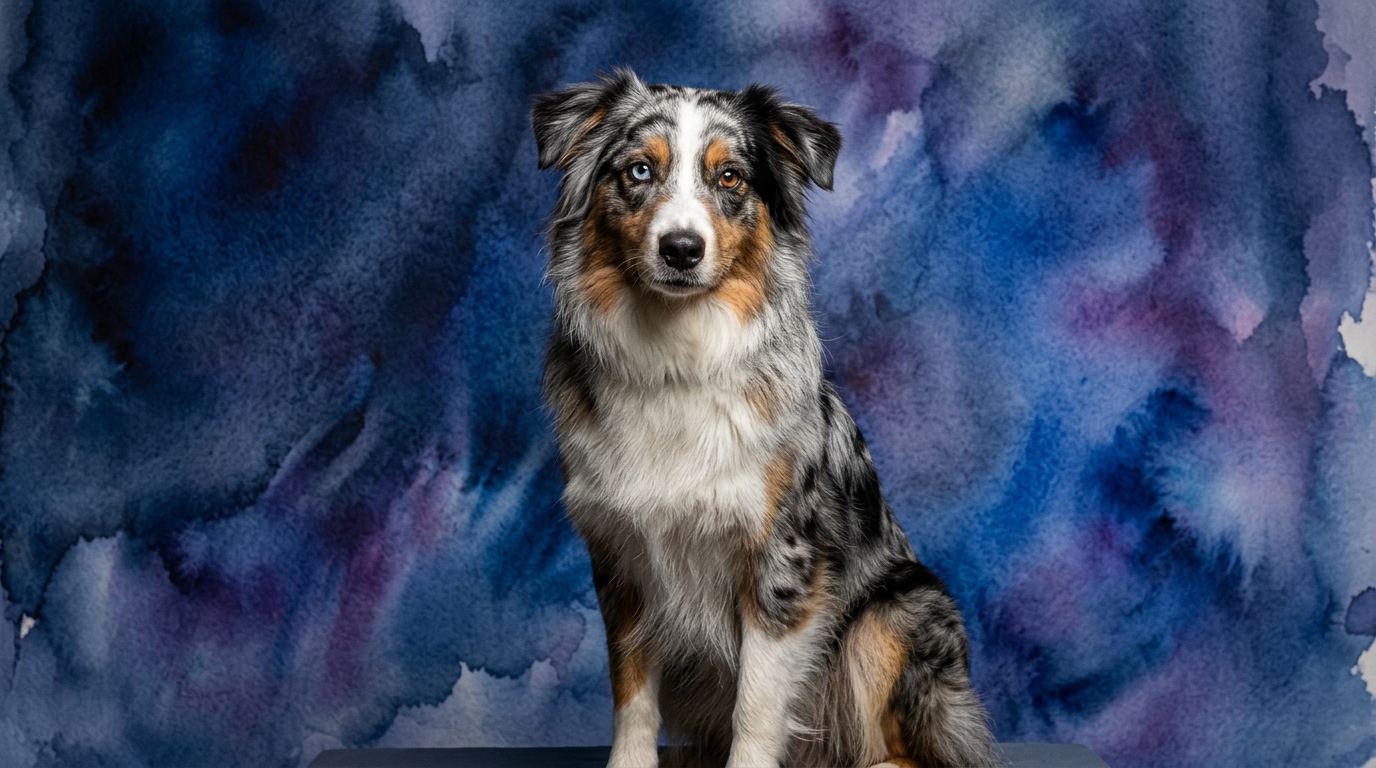
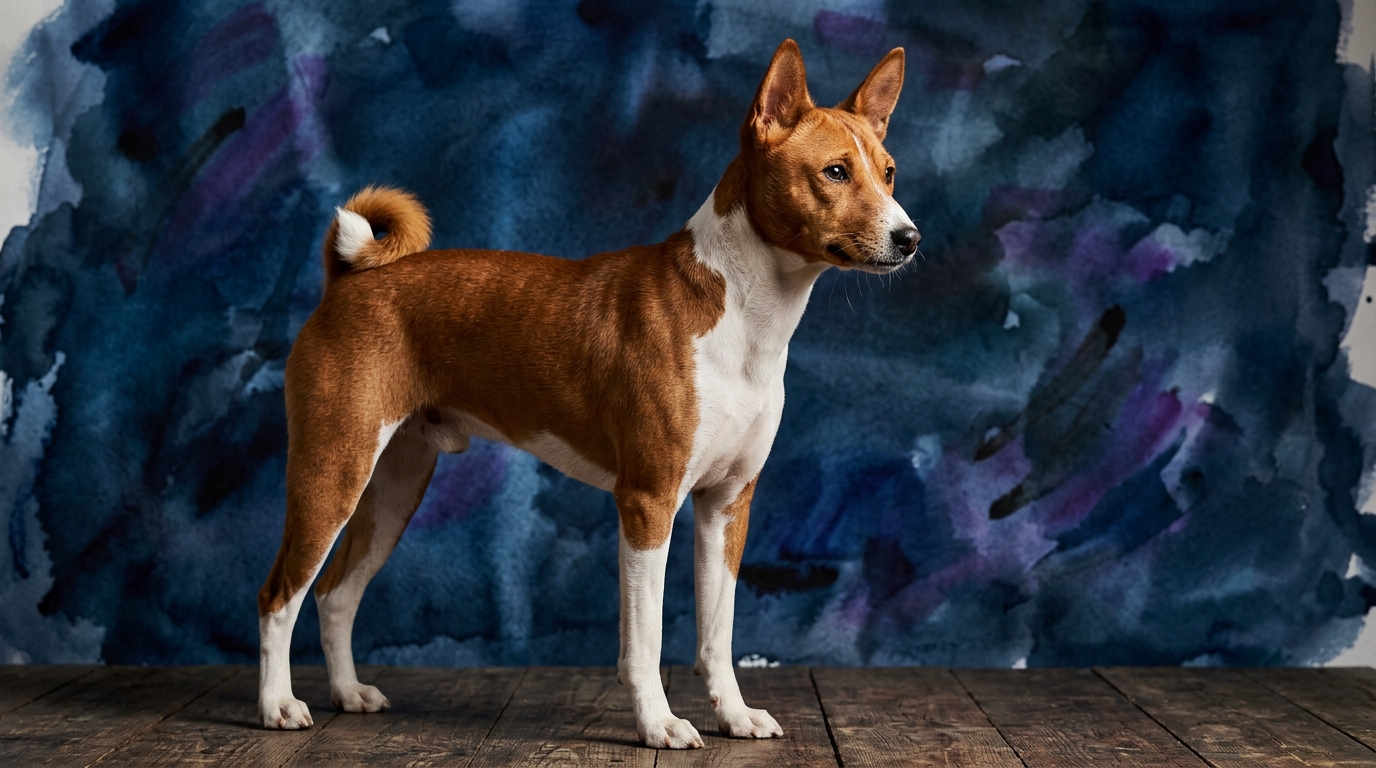
Side-by-Side Cognitive Profiles: Australian Shepherd vs. Basenji
At The Cosmic Pet Pet IQ Lab, we analyze canine cognition across five critical dimensions: problem solving, training speed, social intelligence, instinctive drive, and memory. The Australian Shepherd, a breed rooted in herding, consistently presents a profile indicating robust cognitive abilities across the board. Its Problem Solving is rated 5/5, reflecting a keen ability to navigate complex scenarios and find effective solutions. Its Training Speed also achieves a perfect 5/5, underscoring its readiness and aptitude for absorbing new information and commands. Social Intelligence for the Australian Shepherd stands at 4/5, indicating a strong capacity to read and respond to human intentions and social cues, fostering a cooperative partnership. A 5/5 in Instinctive Drive highlights its potent herding behaviors and a natural inclination towards purpose-driven activities, while its Memory, also 5/5, ensures long-term retention of learned behaviors and experiences.
In stark contrast, the Basenji, an ancient hound breed, offers a fascinatingly different cognitive blueprint. Intriguingly, its Problem Solving also scores 5/5, suggesting a formidable independent intellect capable of devising ingenious solutions, often to its own benefit. However, its Training Speed plummets to 1/5; this isn't due to a lack of understanding but rather a profound self-directedness and a historical lack of dependence on human directives. The Basenji’s Social Intelligence is rated 3/5, reflecting a more reserved and selective engagement with its social environment, preferring to interact on its own terms. Its Instinctive Drive, like the Aussie, is a powerful 5/5, manifesting as strong prey drive, exploration, and an inherent self-sufficiency. Finally, its Memory is a solid 4/5, demonstrating good recall of past events and learned associations, even if its application in training might be inconsistent.
Where the Australian Shepherd Demonstrates Cognitive Prowess
The Australian Shepherd's cognitive strengths are particularly evident in its collaborative learning and applied memory. Its 5/5 Training Speed is a direct reflection of its eagerness to engage with human instruction and its capacity to rapidly form associations between commands and actions. This isn't merely rote learning; it's a deep-seated desire to understand and participate in structured tasks, a hallmark of its herding heritage. This breed thrives on mental stimulation that involves teamwork, excelling in activities like obedience, agility, and complex trick training where quick comprehension and execution are paramount. Their 5/5 Memory further solidifies this advantage, allowing them to build an extensive repertoire of skills and behaviors that can be reliably recalled over time. This cognitive agility, combined with a 4/5 Social Intelligence, allows them to anticipate human needs and adjust their performance, making them exceptionally responsive and intuitive partners in various endeavors.
Where the Basenji Exhibits Unique Cognitive Strengths
While the Basenji's 1/5 Training Speed might initially suggest a cognitive deficit, its 5/5 Problem Solving score tells a different story: one of independent genius. This breed doesn't necessarily excel at *following* human instructions, but it consistently demonstrates an exceptional ability to *figure things out* on its own. Basenjis are renowned for their resourcefulness, whether it's escaping seemingly secure enclosures, opening cabinets, or devising novel ways to obtain desired objects. This problem-solving prowess is often driven by their powerful 5/5 Instinctive Drive, which fuels a persistent curiosity and a determination to achieve their own objectives, frequently related to exploring or hunting. Their 4/5 Memory supports this by allowing them to learn from past successes and failures in their independent pursuits, refining their strategies for self-directed problem-solving. A Basenji might not execute a 'stay' command perfectly, but it will remember how to open the pantry door that was latched five different ways, learning and adapting through trial and error to satisfy its own motivations.
Navigating the Training Landscape: Australian Shepherd vs. Basenji
The chasm between these breeds' Training Speed scores (5/5 for Aussie, 1/5 for Basenji) profoundly dictates their respective training experiences. The Australian Shepherd's eagerness to learn and strong desire to please its human partners make it a highly receptive student. Its high Social Intelligence (4/5) means it actively seeks cues and feedback, making positive reinforcement exceptionally effective. Aussies generally find training sessions engaging and rewarding, viewing them as opportunities for collaboration and mental exercise. They quickly grasp new concepts and enjoy the process of mastering complex tasks, often anticipating the next step in a sequence. Consistency and clear communication are key, but the Australian Shepherd's inherent drive to work alongside humans makes the training journey a generally smooth and gratifying experience.
Conversely, training a Basenji requires a fundamentally different approach. Their low Training Speed (1/5) isn't a lack of intellectual capacity, but rather a reflection of their independent, often self-serving motivations. A Basenji will learn, but only if it perceives a direct and significant benefit to itself, or if the activity aligns with its innate drives. Their 3/5 Social Intelligence means they are less inclined to automatically defer to human authority or seek approval. Patience, creativity, and understanding their unique motivations are paramount. Trainers often describe Basenjis as 'cat-like' in their independence, meaning they respond best to short, engaging sessions that feel more like a game than a command-and-control exercise. Success with a Basenji often involves outsmarting them or making the desired behavior so intrinsically rewarding that it trumps their independent streak, rather than relying on obedience alone.
Matching Cognition to Lifestyle: Active vs. Relaxed Owners
The cognitive profiles of the Australian Shepherd and Basenji offer clear guidance for prospective owners regarding lifestyle compatibility. An Australian Shepherd, with its 5/5 Instinctive Drive and 5/5 Training Speed, thrives with active owners who can provide consistent mental and physical challenges. These are dogs that excel in structured environments where their problem-solving abilities and memory can be channeled into specific tasks, whether it's herding, competitive dog sports, or complex daily routines. Owners who enjoy teaching new skills, engaging in long hikes, or participating in dog sports will find an Australian Shepherd to be an incredibly fulfilling and responsive companion, one that actively seeks out purposeful engagement.
The Basenji, while also possessing a 5/5 Instinctive Drive, directs this energy differently. Their independent problem-solving and lower social intelligence mean they are not inherently driven to please or to participate in highly structured, repetitive tasks. They are better suited for owners who appreciate a more self-sufficient companion and are prepared for a dog that might challenge boundaries with its cleverness. While they need regular exercise to satisfy their hunting instincts and boundless energy, their engagement is often on their own terms. Owners seeking a dog for relaxed companionship, who are content with independent exploration and are prepared for a dog that requires more motivation than command in training, might find the Basenji a unique and charming, albeit challenging, fit. They are not 'relaxed' dogs in terms of activity needs, but they are relaxed in their approach to human directives.
The Verdict
Choose an Australian Shepherd if you seek a highly cooperative, trainable, and eager-to-please companion who thrives on collaborative mental and physical challenges, and whose natural drives align with structured activities. This breed excels when given a job and a clear partnership role.
Opt for a Basenji if you admire independent thinking, value a dog that approaches the world with clever self-reliance, and are prepared for a training journey that prioritizes motivation and creative engagement over strict obedience. This breed offers a unique, often amusing, companionship for those who appreciate a less conventional canine bond.
🧠 Find Your Pet's IQ Score
Our Pet IQ Lab assessment covers 25+ tests across 5 cognitive dimensions — personalized to your breed.
Take the Full IQ Test →Frequently Asked Questions
Is the Basenji less capable of learning than an Australian Shepherd?
No, the Basenji's problem-solving score of 5/5 indicates strong cognitive capacity. Its lower training speed (1/5) reflects an independent nature and a historical lack of selection for human-directed obedience, rather than an inability to learn. They learn on their own terms, often through observation and self-motivation.
Which breed requires more mental stimulation?
Both breeds require significant mental stimulation due to their high instinctive drives and problem-solving abilities. The Australian Shepherd thrives on structured tasks and collaborative learning, while the Basenji needs outlets for independent exploration, creative problem-solving, and managing its strong prey drive.
Can a Basenji be trained for advanced obedience or dog sports?
While challenging due to their independent nature and lower training speed, Basenjis can certainly learn and participate in dog sports. Success often depends on highly engaging, reward-based methods and an owner who understands their unique motivations, making it a different journey than with a more biddable breed like the Australian Shepherd.