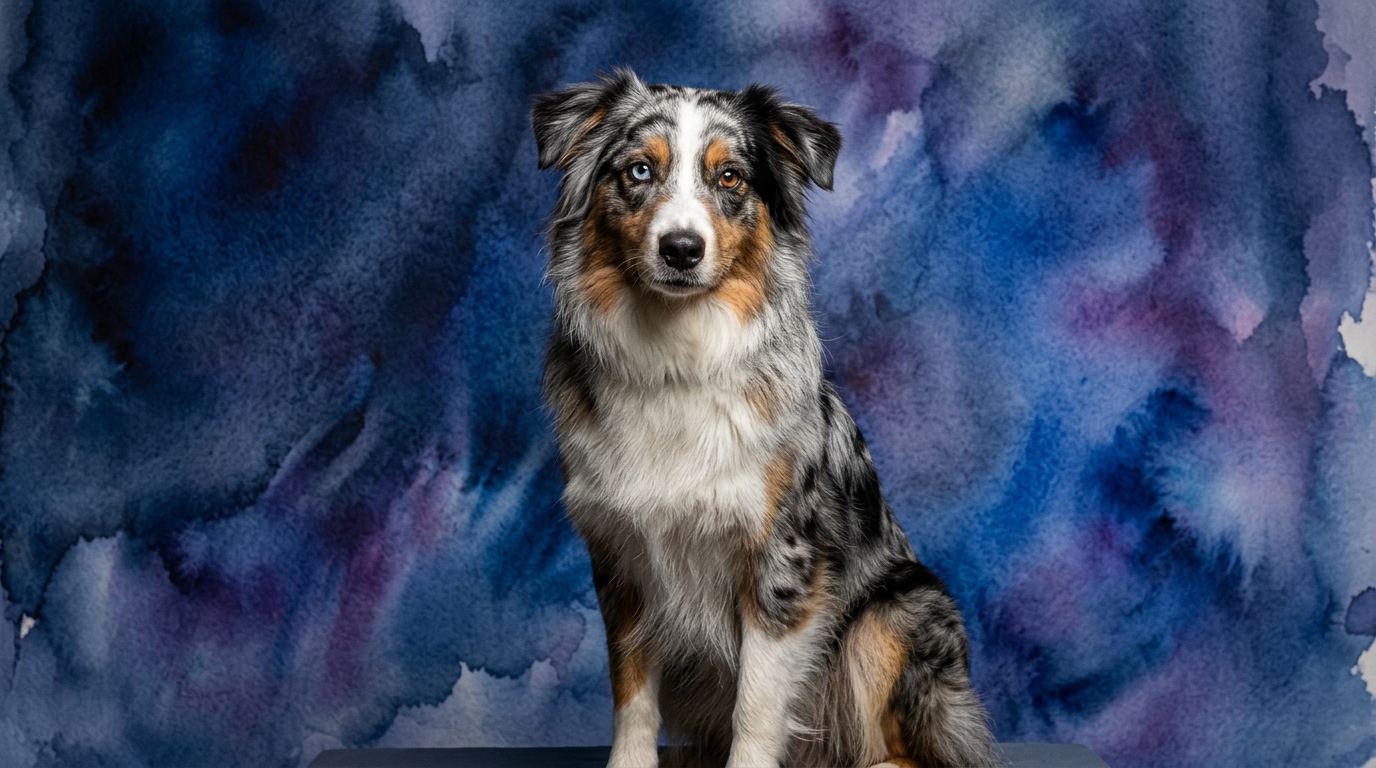

Side-by-Side Cognitive Profiles: Australian Shepherd vs. Belgian Sheepdog (Groenendael)
The Cosmic Pet Pet IQ Lab employs five key dimensions to evaluate a breed's cognitive make-up, offering a precise look into how these dogs think, learn, and interact. Here’s how the Australian Shepherd and Belgian Sheepdog (Groenendael) measure up:
The **Australian Shepherd** showcases exceptional cognitive prowess across the board. Its Problem Solving ability is rated 5/5, indicating a remarkable capacity to independently figure out complex tasks and adapt to new situations with inventive solutions. Training Speed also stands at a perfect 5/5, meaning Aussies absorb new commands and routines with impressive swiftness, often requiring minimal repetition. Their Social Intelligence is strong at 4/5, enabling them to keenly interpret human cues and emotions, fostering deep bonds. A powerful Instinctive Drive, rated 5/5, highlights their innate, tireless urge to herd, chase, and engage in purpose-driven activities. Finally, their Memory is also a perfect 5/5, allowing them to retain learned information and experiences over extended periods.
The **Belgian Sheepdog (Groenendael)** also demonstrates a formidable cognitive profile. Like the Aussie, it earns a 5/5 in Problem Solving, displaying a keen analytical mind and resourcefulness when faced with mental challenges. Training Speed is equally impressive at 5/5, reflecting their rapid uptake of instruction and ability to generalize learned behaviors. However, their Social Intelligence is rated 3/5, suggesting they might be more reserved or require more deliberate socialization to navigate complex social dynamics compared to some breeds, though they are certainly capable of forming strong attachments. Their Instinctive Drive is 3/5, indicating a moderate, yet dedicated, internal push for activity and purpose, less intense than breeds with a 5/5 drive. Memory, like the Aussie, is 5/5, ensuring excellent recall of commands, routines, and past interactions.
Where the Australian Shepherd Excels Cognitively
The Australian Shepherd's most pronounced cognitive advantages lie in its exceptional Instinctive Drive (5/5) and its slightly higher Social Intelligence (4/5). This powerful inherent drive isn't merely about physical energy; it's a mental engine that compels them to actively seek out and engage with tasks, making them proactive participants in their environment. For owners, this translates into a dog that often initiates play, looks for "work," and maintains intense focus on tasks for extended periods, even without constant human prompting. This inherent motivation can make them appear incredibly enthusiastic and self-directed.
Their superior Social Intelligence means Aussies typically pick up on subtle human cues, emotional states, and unspoken signals with greater ease. They can be more attuned to their owner's moods, sometimes anticipating needs or responding to non-verbal communication. This nuanced understanding often fosters a profound sense of connection and makes them highly adaptable in various social settings, whether interacting with new people or other animals. This deep social awareness can transform training into a collaborative, intuitive process, as they often seem to grasp what you're asking on a deeper, empathetic level.
Where the Belgian Sheepdog (Groenendael) Shows Unique Strengths
While the Groenendael shares top marks with the Aussie in Problem Solving (5/5), Training Speed (5/5), and Memory (5/5), its cognitive strength often manifests in a more focused and perhaps less overtly "busy" mental approach due to its lower Instinctive Drive (3/5). This difference is not a deficit, but rather a distinct way their intelligence is applied. A Groenendael's problem-solving acumen, combined with their rapid training speed and excellent memory, enables them to master complex tasks with remarkable precision and reliability, without necessarily needing the same constant outlet for intense, instinct-driven behavior.
Their more moderate Instinctive Drive means they can be incredibly dedicated and precise once engaged in a task, but they might not constantly seek out new "jobs" or exhibit the same relentless, always-on energy that often accompanies a 5/5 drive. This can be a cognitive advantage in environments where a dog needs to be sharp and attentive without the overwhelming internal urge to herd or chase constantly vying for their attention. They can maintain excellent focus on instruction without being as easily sidetracked by intense internal impulses, making them exceptionally precise and reliable workers in structured disciplines like advanced obedience or protection sports.
Ease of Training: Behavioral Differences
Both breeds earn a 5/5 in Training Speed and Memory, indicating they are equally quick to grasp new concepts and retain them over time. However, the perceived "ease" of training often extends beyond just speed, encompassing manageability and adaptability in real-world scenarios. The Australian Shepherd, with its 5/5 Instinctive Drive and 4/5 Social Intelligence, can be perceived as exceptionally "easy" for an owner who thrives on constant engagement and interaction. Their high drive means they are often self-motivated to participate in training, finding inherent satisfaction in the work itself, and they are typically eager to please, responding well to social reinforcement. This combination makes them incredibly rewarding to train for owners who enjoy a dog that actively 'works with' them. However, this powerful drive demands consistent mental and physical outlets; without sufficient structured activity, their intelligence and drive can manifest as unwanted behaviors like excessive herding of people or incessant demand barking, requiring proactive management.
The Belgian Sheepdog (Groenendael), despite its equally high Training Speed and Memory, might require a slightly different training approach due to its 3/5 Social Intelligence and 3/5 Instinctive Drive. They are exceptionally capable learners, but their motivation might stem more from the task itself or clear, consistent instruction rather than a constant, intense desire for social interaction. They thrive on clarity, consistency, and structure in their training. Their moderate instinctive drive means they might not be as relentlessly "on" as an Aussie, potentially making them less prone to developing obsessive behaviors if mental and physical stimulation is occasionally less intense. However, their 3/5 social intelligence means an owner needs to be very clear and consistent with communication, as they might not pick up on subtle cues as readily as an Aussie. They often require a more direct, structured approach to socialization and training, valuing precision and consistency over a more fluid, socially-driven interaction.
Matching Breeds to Lifestyles: Active vs. Relaxed Owners
For **highly active owners**, the Australian Shepherd is often an ideal match. Their 5/5 Instinctive Drive means they possess an almost insatiable need for mental and physical engagement. Owners who enjoy high-energy dog sports like agility, flyball, or disc dog, or embark on long, challenging hikes and runs, will find an Aussie to be an enthusiastic and tireless partner. They thrive when given a "job" and excel in environments where their problem-solving and memory skills are consistently challenged through complex routines and varied activities. A relaxed owner who cannot commit to daily rigorous mental and physical exercise will likely find an Aussie’s unmet needs manifesting in destructive or demanding behaviors, as their powerful cognitive engine is always running and requires an appropriate outlet.
The Belgian Sheepdog (Groenendael), while certainly not a sedentary breed, can suit an **active owner who values precision, structure, and focused activity over constant, high-intensity output**. Their 3/5 Instinctive Drive means they require consistent exercise and mental stimulation, but they may not demand the same relentless pace or duration as an Aussie. They excel in activities like obedience, protection sports, or tracking, where their exceptional problem-solving, training speed, and memory can be applied with focus and discipline. A Groenendael can also adapt to a slightly less intense daily routine than an Aussie, as long as their need for purposeful engagement is met. While they are active, their cognitive profile suggests they might be more content with periods of rest between focused activities, making them potentially more manageable for an active owner who also appreciates downtime and a dog capable of 'switching off' when appropriate.
The Verdict
Choose the Australian Shepherd if you are an exceptionally active individual or family seeking a highly interactive, self-starting partner for dog sports, extensive outdoor adventures, and consistent mental challenges. Their deep social connection and relentless drive will thrive with an owner who can match their enthusiasm and provide abundant opportunities for engagement.
Opt for the Belgian Sheepdog (Groenendael) if you desire a dedicated, precise, and highly trainable companion for structured activities like advanced obedience or protection work, and appreciate a dog with strong mental capabilities that doesn't necessarily demand constant, high-intensity, instinct-driven output. They fit owners who value clarity and consistency in training and can provide purposeful, engaging activities.
🧠 Find Your Pet's IQ Score
Our Pet IQ Lab assessment covers 25+ tests across 5 cognitive dimensions — personalized to your breed.
Take the Full IQ Test →Frequently Asked Questions
Are Australian Shepherds better at learning tricks than Belgian Sheepdogs?
Both breeds score 5/5 in Training Speed and Memory, meaning they are equally adept at learning and retaining tricks. The Australian Shepherd's higher Social Intelligence might make them more eager to perform for an audience, while the Groenendael's focus ensures precise execution.
Which breed is more independent in problem-solving?
Both breeds share a 5/5 Problem Solving score, indicating they are equally capable of independent thought and finding solutions to challenges. The Australian Shepherd's strong Instinctive Drive might lead them to self-initiate problem-solving related to their herding instincts more frequently.
How does the difference in Instinctive Drive impact daily life for owners?
The Australian Shepherd's 5/5 Instinctive Drive means they will constantly seek out engagement and 'jobs,' requiring owners to provide consistent, varied mental and physical outlets to prevent boredom. The Belgian Sheepdog's 3/5 Instinctive Drive still means they need activity, but they might be less relentlessly driven to 'work' and potentially more content with periods of rest between purposeful tasks.