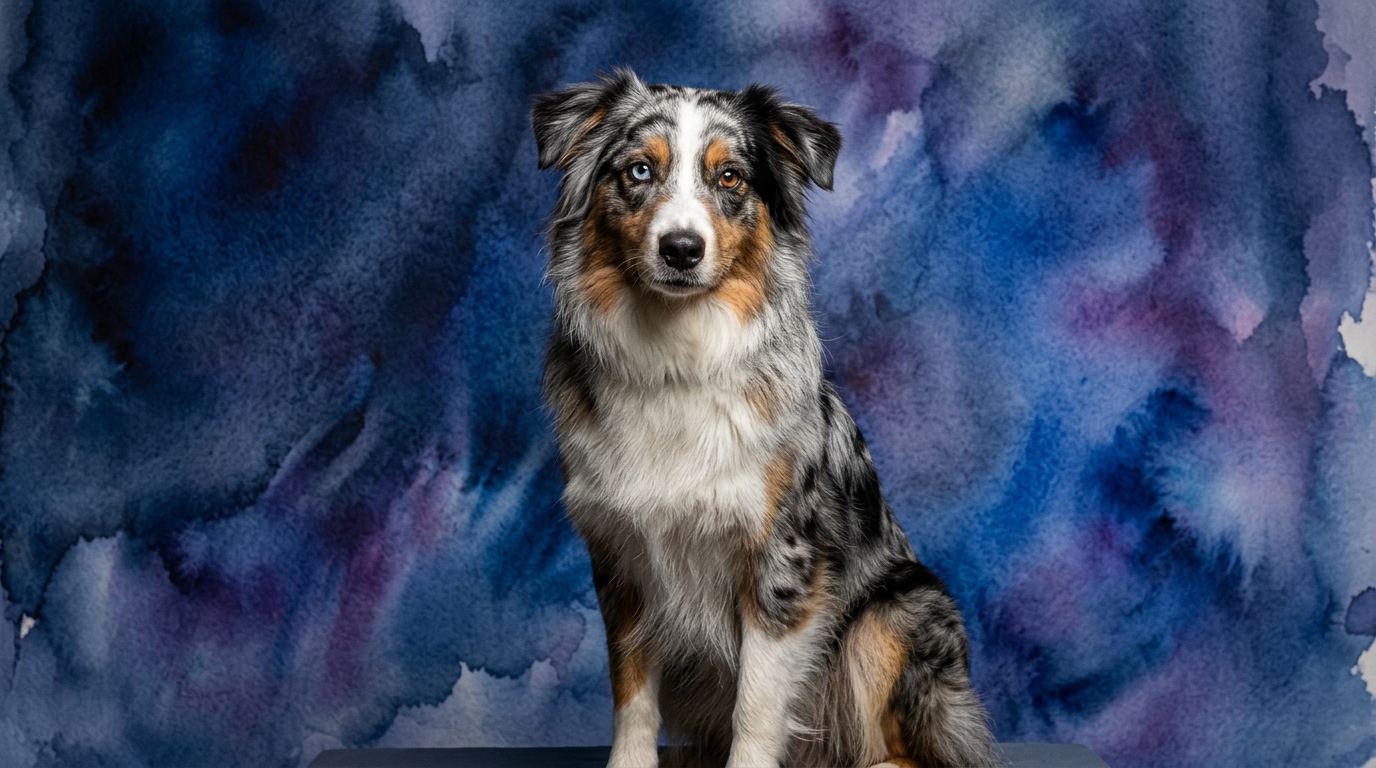
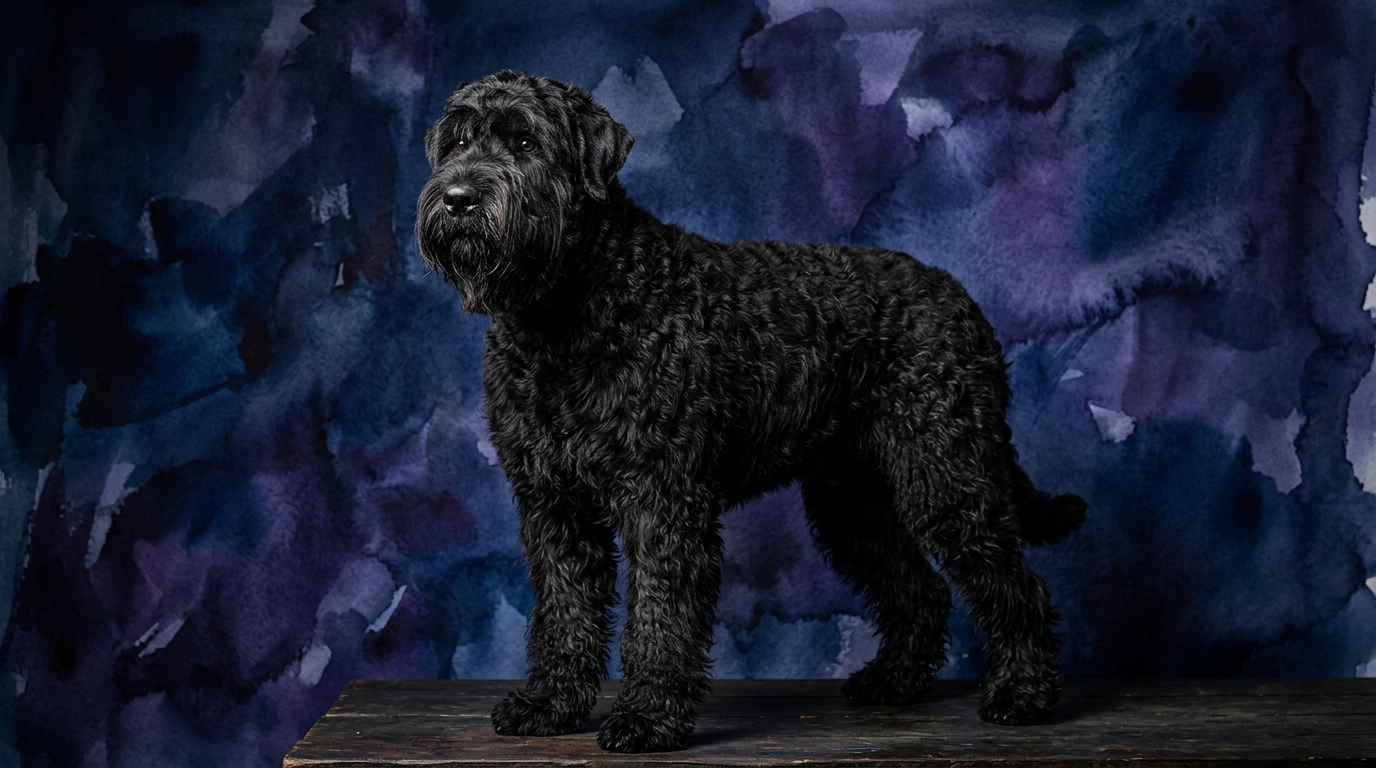
Side-by-Side Cognitive Profiles: A Deeper Look
Our Cosmic Pet IQ Lab evaluates canine intelligence across five critical dimensions, offering a nuanced view beyond simple obedience. For the Australian Shepherd, a herding breed, its scores paint a picture of sharp adaptability and quick engagement: Problem Solving 5/5, Training Speed 5/5, Social Intelligence 4/5, Instinctive Drive 5/5, and Memory 5/5. These top-tier marks across the board suggest a dog designed for dynamic, independent decision-making and rapid learning in complex, fluid environments.
The Black Russian Terrier, a formidable working breed, presents a different cognitive blueprint: Problem Solving 3/5, Training Speed 3/5, Social Intelligence 3/5, Instinctive Drive 3/5, and Memory 3/5. While these scores are not as high as the Aussie's, they reflect a canine mind built for reliability, endurance, and focused execution rather than broad, spontaneous cognitive agility, aligning with its role as a protector and guardian.
The Australian Shepherd's Cognitive Edge
The Australian Shepherd’s cognitive strengths truly shine in scenarios demanding rapid assessment and adaptable responses. Its 5/5 in Problem Solving means an Aussie is adept at navigating novel situations, figuring out how to open gates, retrieve out-of-reach toys, or even manipulate environments to achieve a goal. This isn't just about simple tasks; it's about understanding cause and effect and devising multi-step solutions.
Coupled with a 5/5 in Training Speed and Memory, an Aussie grasps new commands and complex sequences with remarkable speed, retaining them over long periods. Owners often report their Aussies anticipating commands or even initiating actions based on subtle environmental cues, a testament to their 4/5 Social Intelligence and acute observational skills. Their 5/5 Instinctive Drive fuels a persistent, focused energy for tasks, whether it's herding livestock or excelling in agility courses, making them tireless partners in mentally stimulating activities. This combination allows them to excel in dynamic environments where independent thought and quick reactions are paramount.
The Black Russian Terrier's Unique Cognitive Strengths
While the Black Russian Terrier's IQ scores may appear moderate compared to the Australian Shepherd, its cognitive profile represents a different kind of strength, one forged for unwavering dedication and robust purpose. A 3/5 in Problem Solving indicates competence rather than spontaneous brilliance; a BRT might not invent a new way to escape a yard, but it will diligently follow learned protocols. This score, combined with 3/5 in Training Speed and Memory, means the BRT learns effectively, though it typically requires consistent, clear instruction and repetition. Once a task is learned, however, it is embedded with a profound reliability.
Its 3/5 in Social Intelligence suggests a more direct, less nuanced interpretation of human cues, which can be a valuable trait in a protection dog where steadfastness and clear boundaries are preferred over excessive sensitivity to subtle shifts in mood. The BRT's 3/5 Instinctive Drive translates into a powerful, controlled motivation, not easily distracted by fleeting novelties, allowing it to maintain focus on its primary duties without the constant need for varied mental stimulation that a herding dog might demand. Its strength lies in its consistency, its ability to commit to a learned task, and its formidable presence, making it a highly dependable working companion that thrives on structure and purpose.
Training Dynamics: Aussie's Agility vs. BRT's Steadfastness
When it comes to training, the cognitive differences between these two breeds become particularly pronounced. The Australian Shepherd, with its 5/5 Training Speed and Memory, is often described as a sponge for information. They pick up new commands and routines with impressive swiftness, often requiring only a few repetitions to solidify a behavior. Their high Problem Solving and Social Intelligence mean they are constantly processing their environment and their handler's intentions, making them receptive to nuanced cues and capable of generalizing learned behaviors to new contexts. This makes them exceptionally rewarding for owners who enjoy teaching complex tricks, participating in dog sports, or engaging in advanced obedience.
In contrast, the Black Russian Terrier's 3/5 scores in Training Speed and Memory indicate a need for a more patient, consistent, and structured approach. While certainly trainable, BRTs typically require more repetitions and clearer, unambiguous instructions to fully grasp and retain new commands. Their focus is on mastering tasks through diligent practice rather than intuitive leaps. Owners should be prepared for a longer training journey, emphasizing positive reinforcement and avoiding harsh methods that can undermine their trust. The BRT's steadfast nature means once a command is learned, it is often performed with unwavering reliability, making them dependable partners when well-schooled, even if the initial learning phase takes more effort.
Matching Canine Minds to Lifestyles: Active Explorers vs. Dedicated Guardians
The distinct cognitive profiles of the Australian Shepherd and Black Russian Terrier also dictate which lifestyles they naturally complement. The Australian Shepherd, with its top-tier Problem Solving, Instinctive Drive, and Social Intelligence, thrives in active households that can provide constant mental engagement and physical outlets. These dogs need more than just walks; they require puzzles, training challenges, and opportunities to use their innate herding instincts, whether that's through formal dog sports like agility, flyball, or disc, or through "jobs" around the house. Owners who are keen to teach new tricks, explore new environments, and engage in daily interactive play will find an Aussie an incredibly fulfilling companion. Their quick minds can become destructive or anxious if left unstimulated, turning their problem-solving skills to unwanted behaviors.
The Black Russian Terrier, while a large and powerful working breed, suits owners who appreciate a dog with a more deliberate, purposeful cognitive style. While they need regular exercise to maintain their physical condition, their mental needs are often met through clear routines, consistent training, and opportunities to "work" in a structured way, such as guarding the home or participating in protection sports. They are less likely to constantly seek novel mental challenges like an Aussie; instead, they find contentment in fulfilling their role with consistency and loyalty. They are not suited for entirely relaxed owners who prefer minimal interaction, as their working heritage still demands engagement and purpose, but their mental stimulation needs are often focused on reinforcement of learned behaviors and vigilance rather than constant novelty.
The Verdict
Opt for an Australian Shepherd if you desire a highly adaptable, quick-thinking companion eager for constant mental challenges, diverse training, and an owner who enjoys dynamic, interactive engagement.
Select a Black Russian Terrier if you value a steadfast, dedicated companion that thrives on clear structure, consistent training, and a purposeful role, bringing a formidable yet controlled presence to your home.
🧠 Find Your Pet's IQ Score
Our Pet IQ Lab assessment covers 25+ tests across 5 cognitive dimensions — personalized to your breed.
Take the Full IQ Test →Frequently Asked Questions
Do Australian Shepherds get bored easily?
Yes, Australian Shepherds, with their 5/5 Problem Solving and Instinctive Drive, require significant mental stimulation to prevent boredom. They thrive on learning new tasks, solving puzzles, and engaging in activities that challenge their quick minds, otherwise they may invent their own, potentially destructive, entertainment.
Is a Black Russian Terrier difficult to train?
A Black Russian Terrier is not inherently difficult to train, but its 3/5 Training Speed and Memory mean it requires a patient, consistent, and clear training approach. They may take longer to grasp new commands than an Australian Shepherd, but once learned, they are typically very reliable in their execution.
Which breed is better with children?
Both breeds can be good with children with proper socialization and training, but their cognitive profiles suggest different approaches. The Australian Shepherd's 4/5 Social Intelligence makes it generally more perceptive to family dynamics, while the Black Russian Terrier's 3/5 Social Intelligence means it needs clear boundaries and supervision to ensure appropriate interactions, relying more on learned rules than subtle social cues.