A Side-by-Side Look at Canine Cognition
To truly appreciate the cognitive landscape of these two breeds, we delve into five key dimensions: problem-solving, training speed, social intelligence, instinctive drive, and memory. These metrics offer a granular view beyond general perceptions, revealing the specialized mental tools each breed possesses.
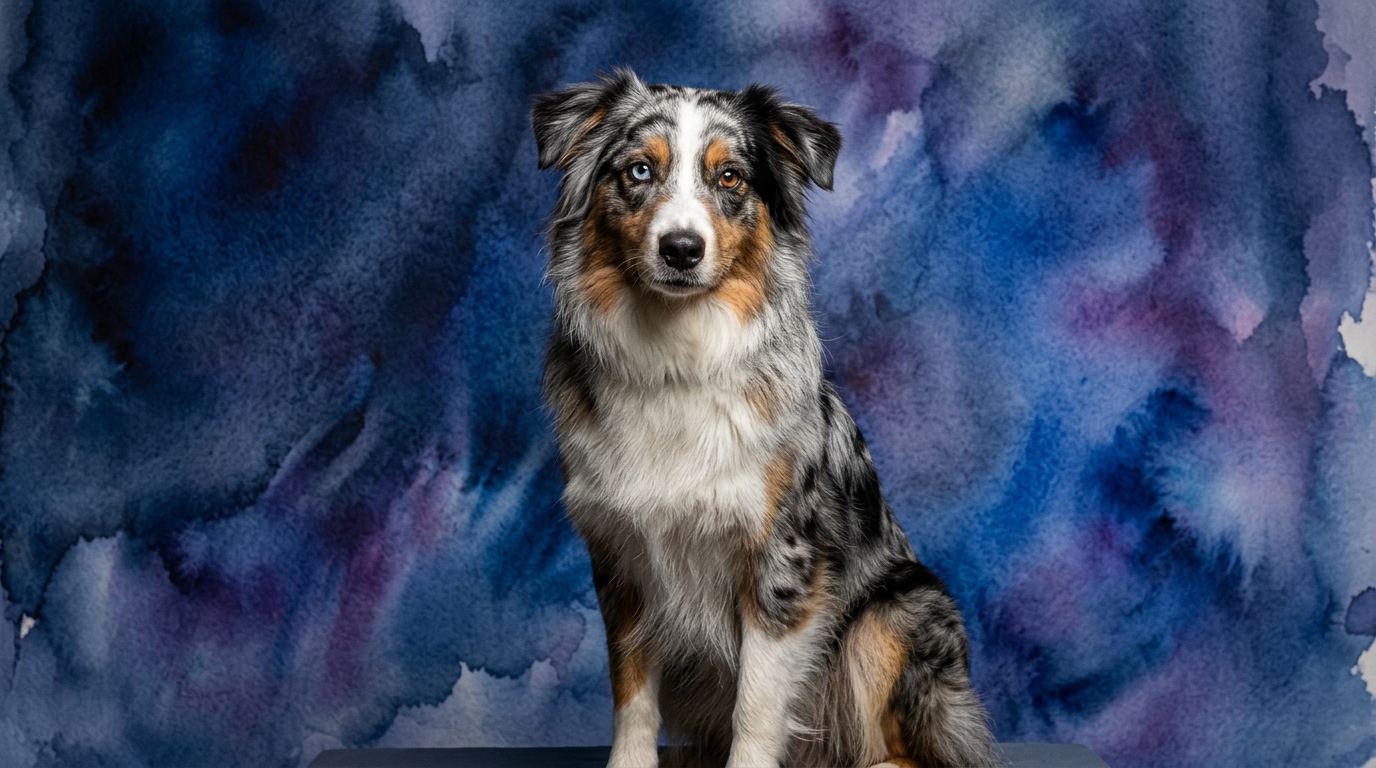
The Australian Shepherd, a member of the Herding group, presents a robust cognitive profile: a 5/5 in Problem Solving, indicating their capacity for complex strategic thought in dynamic environments; a 5/5 in Training Speed, reflecting rapid learning and eagerness to engage; a 4/5 in Social Intelligence, showing their attunement to human cues and social bonding; a 5/5 in Instinctive Drive, rooted in their powerful herding instincts and work ethic; and a 5/5 in Memory, allowing for recall of intricate sequences and past experiences.
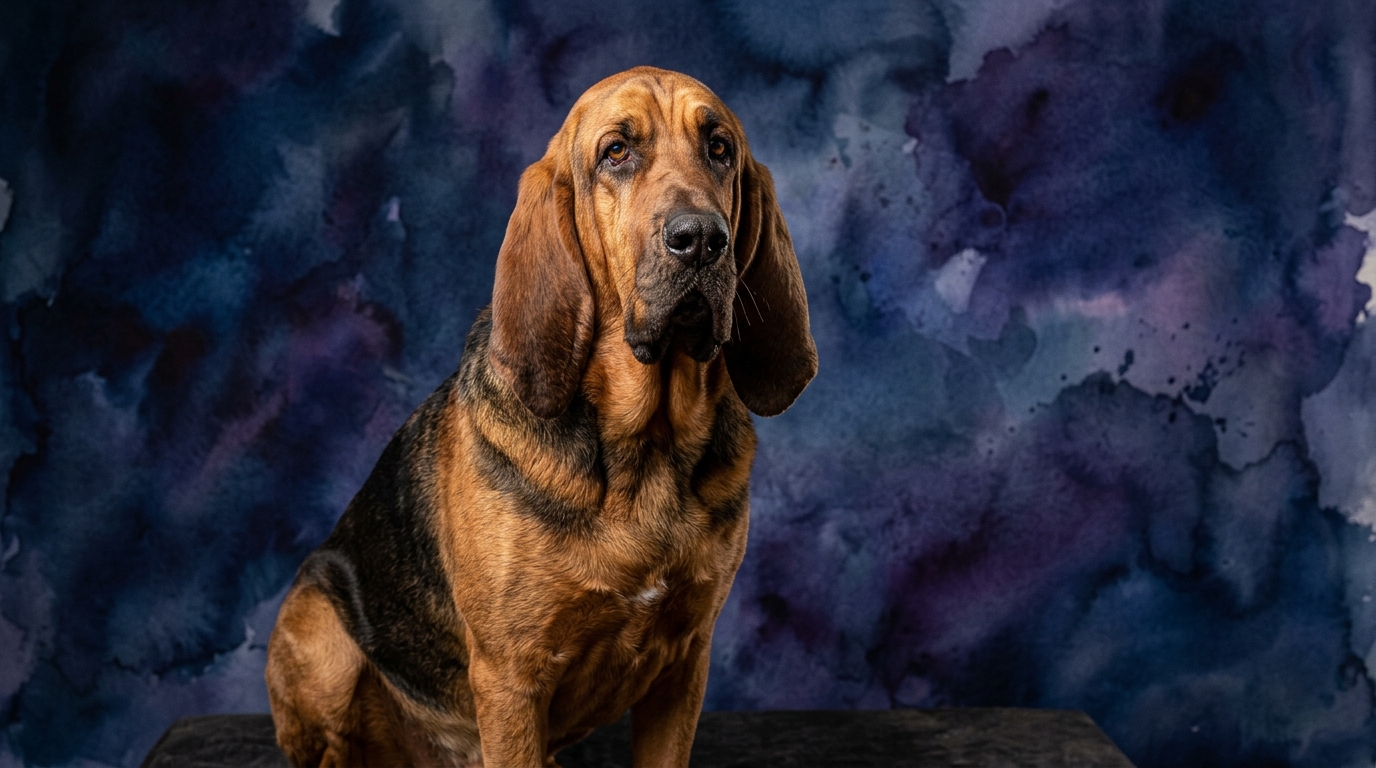
Conversely, the Bloodhound, from the Hound group and Coren-ranked #74, exhibits a highly specialized cognitive makeup: a 5/5 in Problem Solving, uniquely applied to intricate scent discrimination and trail deduction; a 1/5 in Training Speed, due to their independent, scent-driven focus; a 2/5 in Social Intelligence, which indicates amiability but less reliance on human social cues when a scent is present; a 5/5 in Instinctive Drive, manifesting as an unparalleled olfactory obsession; and a 5/5 in Memory, primarily for scent recall and environmental mapping.
Where the Australian Shepherd's Cognition Shines
The Australian Shepherd's cognitive strengths are rooted in their need for adaptability and multi-tasking within a herding context. Their 5/5 problem-solving isn't just about figuring things out; it’s about strategic thinking in real-time, anticipating movements, and reacting to changing variables, whether it’s livestock or an agility course.
Their exceptional 5/5 training speed, combined with a 4/5 social intelligence, allows them to absorb complex commands with remarkable quickness and respond fluidly to human direction. This cognitive synergy makes them highly receptive partners in activities requiring nuanced communication, precision, and a deep understanding of human intent.
Furthermore, their 5/5 memory extends beyond simple recall; it encompasses the ability to remember complex sequences of actions, spatial patterns, and learned associations. This cognitive fluidity enables them to execute elaborate routines, learn from past mistakes, and adapt their behavior based on a vast library of experiences, a clear hallmark of their Herding lineage.
The Bloodhound's Unique Cognitive Prowess
The Bloodhound's 5/5 in problem-solving is a testament to an entirely different form of cognitive brilliance. It's not about general adaptability, but about highly specialized, persistent deductive reasoning along a scent trail. This involves filtering out countless irrelevant stimuli, maintaining focus for hours, and constructing a coherent narrative from faint olfactory data.
Their profound 5/5 instinctive drive is an unparalleled olfactory obsession, making them world-class trackers. This drive, coupled with a 5/5 memory for scents, allows them to recall and follow trails that are days old, a cognitive feat that few other breeds can rival. Their brain is a finely tuned instrument for processing and remembering the most ephemeral of chemical signatures.
While their social intelligence scores a 2/5, this doesn't imply a lack of affection. Instead, it highlights their single-minded focus on scent work. When on a trail, a Bloodhound prioritizes olfactory information over human social cues, effectively operating in its own highly concentrated sensory world. Their Coren rank of #74 reflects this specialized, rather than generalized, cognitive strength.
Training Dynamics: Responsiveness vs. Persistence
When it comes to training, the Australian Shepherd's 5/5 training speed is a significant advantage. They eagerly absorb new commands and concepts, often requiring fewer repetitions. Their strong social intelligence (4/5) means they are attuned to human feedback and motivated by partnership, making training a collaborative and rewarding experience where they thrive on mental engagement and clear communication.
Bloodhounds, with their 1/5 training speed, present a different kind of challenge. Their profound instinctive drive (5/5) for scent work frequently overrides other motivations. Training them demands immense patience, unwavering consistency, and an understanding that their primary reward is often the pursuit of a scent, rather than general human approval or treats in the same way an Aussie might respond.
Real behavioral differences highlight this contrast: an Australian Shepherd might master a complex agility sequence after a few training sessions, eager to please and anticipating the next command. A Bloodhound, however, might completely ignore a 'sit' or 'stay' if a compelling, faint scent crosses its path, demonstrating its internal hierarchy of motivation. Training a Bloodhound often involves leveraging their innate drive, perhaps by using scent games as rewards or incorporating their tracking skills into their learning.
Matching Cognitive Profiles to Lifestyles
Australian Shepherds, with their high problem-solving, rapid training speed, and powerful instinctive drive for work, are ideal companions for active owners who relish mental engagement and structured activities. They thrive in environments offering consistent mental stimulation through agility, obedience, herding, or complex puzzle toys, needing an outlet for their cognitive energy to prevent boredom and the development of unwanted behaviors.
Bloodhounds, while equally driven, channel their energy into their powerful olfactory sense. They suit owners who appreciate their independent nature and are prepared to facilitate their tracking instincts through dedicated scent work, long leash walks where they can 'read the news' with their nose, or even participation in search and rescue training. They are not suited for owners seeking a highly biddable companion for quick command execution in varied contexts.
A more relaxed owner might find an Australian Shepherd's consistent need for mental engagement overwhelming, potentially leading to a restless and understimulated companion. Conversely, an owner expecting a Bloodhound to be a quiet, easily trainable pet for casual walks would quickly encounter frustration due to its unwavering focus on the world of scent, often ignoring calls when a compelling odor presents itself.
The Verdict
Opt for an Australian Shepherd if you seek a highly responsive, mentally agile partner eager to learn complex tasks and participate in varied activities, thriving on a close working relationship.
Select a Bloodhound if you are captivated by a dog's unparalleled olfactory capabilities, appreciate an independent nature, and are prepared to dedicate time to fulfilling their profound instinctive drive for scent work.
🧠 Find Your Pet's IQ Score
Our Pet IQ Lab assessment covers 25+ tests across 5 cognitive dimensions — personalized to your breed.
Take the Full IQ Test →Frequently Asked Questions
Do Australian Shepherds need a "job"?
Yes, their strong instinctive drive and problem-solving skills mean they thrive on mental engagement. Without a job, even simple tasks or puzzle toys, they can become bored and develop undesirable coping behaviors, like excessive barking or destructive chewing.
Is a Bloodhound difficult to train because it's not intelligent?
Not at all. A Bloodhound's problem-solving and memory are exceptional, but they are specialized for scent work. Their 'training speed' score reflects a different motivational hierarchy, prioritizing olfactory data over general obedience commands, which requires a different training approach.
Can a Bloodhound be a good family pet despite its lower social intelligence score?
Absolutely. While their social intelligence might be lower in terms of reading human cues compared to an Aussie, Bloodhounds are typically amiable, gentle, and tolerant companions. Their focus is simply elsewhere when a compelling scent is present, not a sign of disinterest in their family.