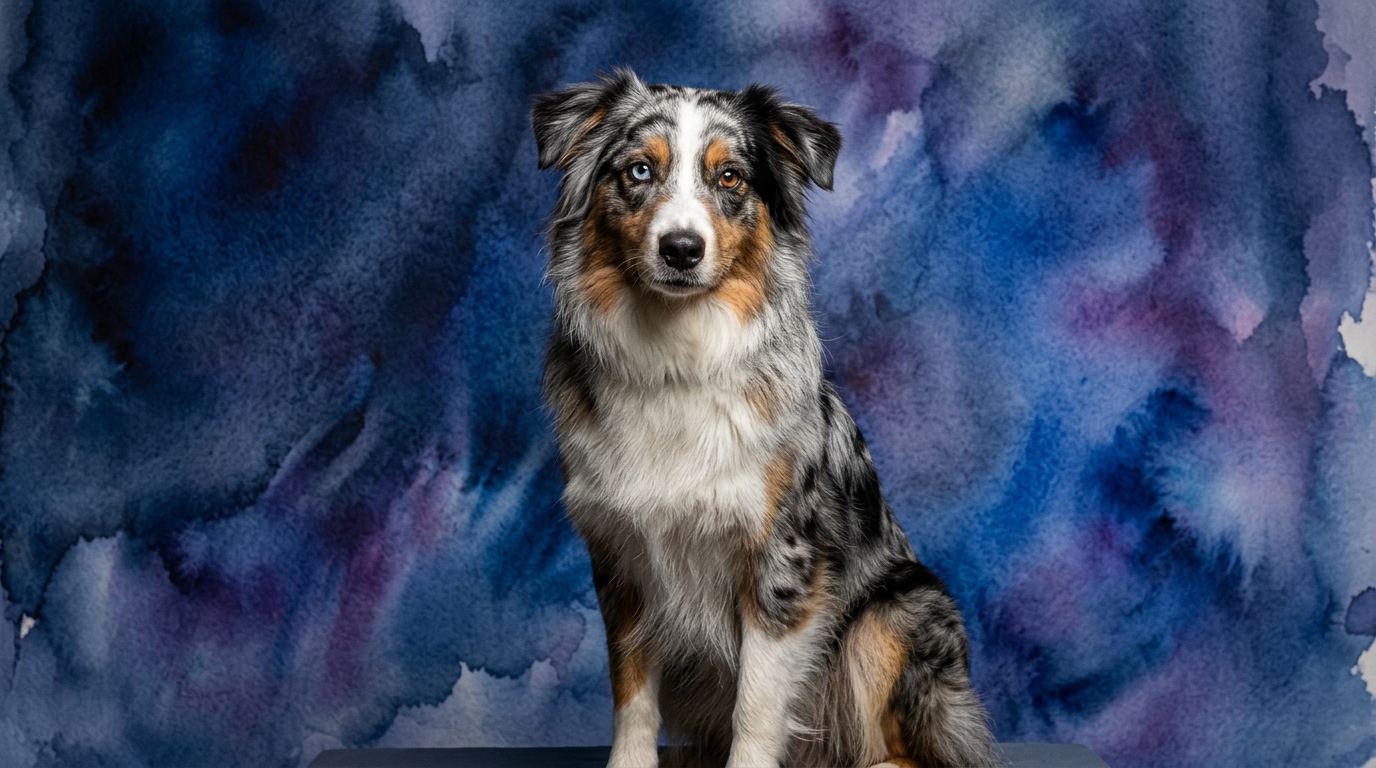
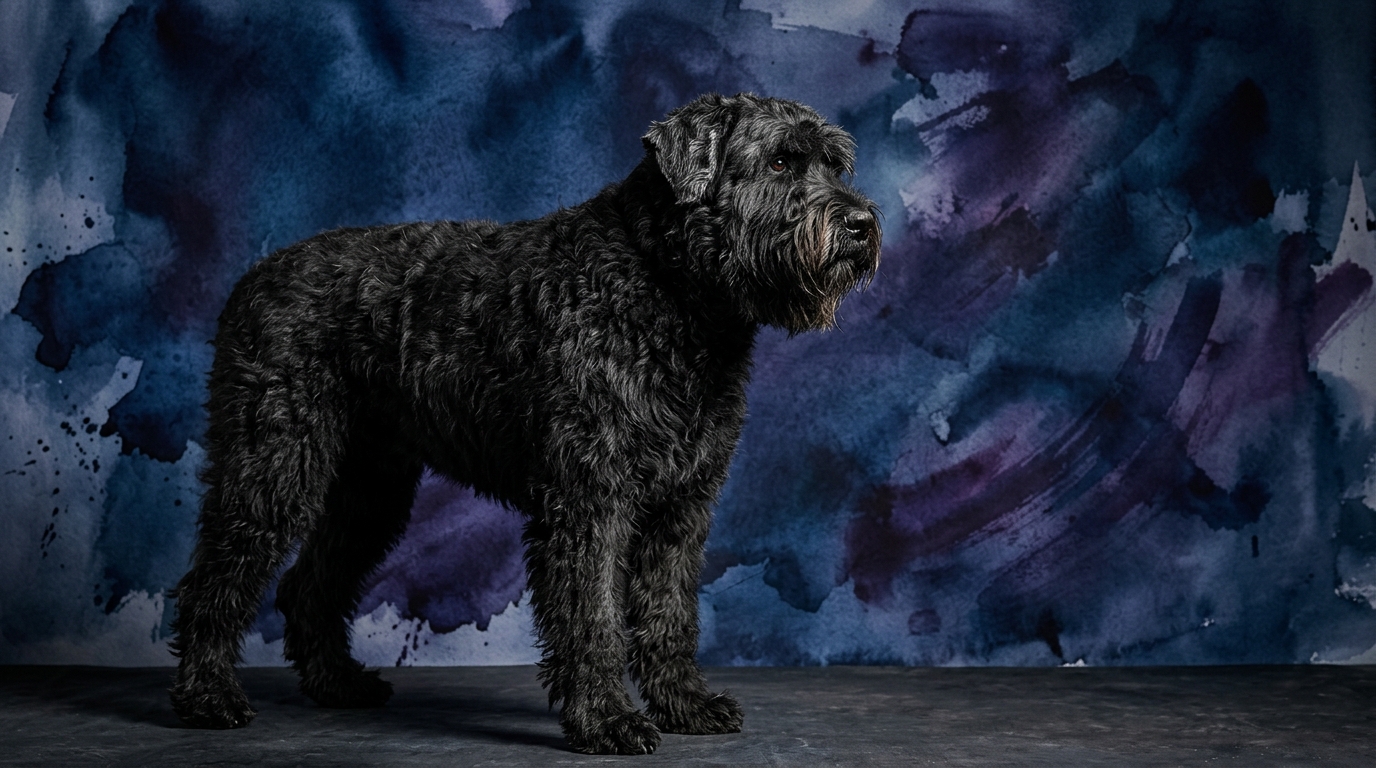
Side-by-Side Cognitive Profiles: Australian Shepherd vs. Bouvier des Flandres
At The Cosmic Pet Pet IQ Lab, we evaluate canine intelligence across five key dimensions, providing a granular view of each breed's unique cognitive strengths. For the Australian Shepherd and the Bouvier des Flandres, these metrics highlight their divergent mental landscapes.
The **Australian Shepherd** displays exceptional cognitive prowess across the board. Their **Problem Solving** ability earns a 5/5, indicating a breed that actively seeks solutions, adeptly navigating complex environments or figuring out intricate puzzle toys. They possess a remarkable knack for understanding cause and effect, often anticipating outcomes. Their **Training Speed** is also a perfect 5/5, meaning they grasp new commands and concepts with astonishing rapidity, often requiring only a few repetitions to solidify a behavior. This quick uptake makes them highly adaptable to varied training regimens. In terms of **Social Intelligence**, Aussies score a 4/5; they are acutely attuned to human emotions and body language, making them responsive and empathetic companions who often anticipate their owner's next move. Their **Instinctive Drive** is a powerful 5/5, rooted in their herding heritage, manifesting as a strong urge to gather, chase, and control movement, which can be channeled into sports or tasks. Finally, their **Memory** is rated 5/5, reflecting an impressive capacity to recall commands, routines, and past experiences with long-term accuracy, rarely forgetting a learned lesson or a familiar face.
In contrast, the **Bouvier des Flandres** presents a more deliberate and steady cognitive profile, scoring a consistent 3/5 across all dimensions. Their **Problem Solving** ability, while present at 3/5, suggests a more methodical approach; Bouviers are capable of solving tasks but typically prefer established methods over creative improvisation, often relying on learned sequences rather than spontaneous innovation. Their **Training Speed** at 3/5 means they learn new commands reliably but require more consistent repetition and patience than their Australian Shepherd counterparts. They absorb information steadily, but not with the immediate flash of insight seen in some breeds. **Social Intelligence** for the Bouvier is also 3/5; they are observant and form deep bonds with their family, but they tend to be less overtly expressive or anticipatory of subtle human cues, preferring clear communication. Their **Instinctive Drive** scores 3/5, primarily manifesting as a strong protective and guarding instinct for their family and territory, rather than the high-octane herding drive of the Aussie. This drive is steadfast but less about rapid movement and control. Lastly, their **Memory** at 3/5 is reliable for well-established commands and routines, though they might benefit from occasional refreshers for less frequently practiced tasks, demonstrating a solid but not photographic recall.
Where the Australian Shepherd Excels Cognitively
The Australian Shepherd's cognitive strengths lie in their unparalleled mental agility and proactive engagement with the world. Their 5/5 problem-solving acumen means they don't just react to situations; they actively strategize, often surprising owners with their ability to manipulate objects or navigate complex sequences to achieve a goal. This translates into a dog that enjoys mental challenges and thrives on opportunities to think independently.
Coupled with their 5/5 training speed and 5/5 memory, Aussies are exceptionally quick learners who retain information long-term. They can master an extensive repertoire of commands, tricks, and multi-step tasks, making them ideal candidates for advanced obedience, agility, and competitive dog sports. Their 4/5 social intelligence further enhances this, as they are adept at reading human intentions and adjusting their behavior, making them highly cooperative partners in any endeavor. An Aussie's cognitive edge is in their capacity for rapid learning, complex task execution, and dynamic responsiveness.
Where the Bouvier des Flandres Shines Cognitively
While not exhibiting the same rapid-fire learning as the Aussie, the Bouvier des Flandres possesses a distinct cognitive strength rooted in steadfastness and unwavering focus. Their consistent 3/5 scores across the board signify a reliable, methodical learner who, once a concept is grasped, applies it with remarkable consistency. Their problem-solving might be less improvisational, but their determination to see a task through, often with great physical strength, is notable.
The Bouvier's cognitive advantage is in their unwavering commitment to learned behaviors and their deep sense of duty, stemming from their protective instincts. Their memory, though rated 3/5, ensures that fundamental commands and established routines become deeply ingrained and reliable. Owners can trust a Bouvier to perform tasks consistently once they have been thoroughly taught. This breed's intelligence is expressed through a calm, deliberate approach, a strong work ethic when given a clear job, and an enduring loyalty that underpins their cognitive application in real-world scenarios.
Training Dynamics: Which Breed is Easier and Why?
When considering ease of training, the Australian Shepherd generally presents a more straightforward path for most owners due to their higher scores in training speed, problem-solving, and social intelligence. An Aussie's 5/5 training speed means they pick up new commands with minimal repetition, often seeming to anticipate what's expected. Their high social intelligence (4/5) makes them eager to please and highly responsive to human cues, translating into a dog that actively seeks to cooperate and understand. Behavioral differences include their innate desire for mental engagement and quick processing power, which means they thrive on varied training sessions and complex challenges, often becoming bored if not adequately stimulated.
The Bouvier des Flandres, with its 3/5 training speed and 3/5 social intelligence, requires a more patient, consistent, and structured training approach. They learn, but at a more deliberate pace, necessitating more repetitions and clear, unambiguous instruction. Their independent nature means they might not always be as intrinsically motivated to please as an Aussie, sometimes requiring stronger incentive-based training. Behavioral nuances include their tendency to be more selective in who they listen to and their preference for routines, meaning sudden changes in training methods or trainers can be less effective. While capable of learning complex tasks, the Bouvier's training journey is a marathon, not a sprint, demanding dedication to build reliable responses.
Matching Breeds to Lifestyles: Active vs. Relaxed Owners
The cognitive profiles of these two breeds significantly inform which lifestyle they will thrive in. The Australian Shepherd, with its 5/5 problem-solving, 5/5 training speed, and 5/5 instinctive drive, is an ideal companion for active owners who relish constant engagement and mental stimulation. These dogs excel in dog sports like agility, flyball, and obedience, and are fantastic partners for hiking, running, or any activity that challenges both their body and mind. An Aussie needs an owner who can commit to daily rigorous exercise and consistent mental work, otherwise, their considerable cognitive power and energy can manifest as destructive behaviors or excessive herding of family members.
The Bouvier des Flandres, characterized by its steady 3/5 scores across all cognitive dimensions, is better suited for owners who appreciate a calmer, more independent canine presence, yet are still committed to consistent training and providing a secure environment. While they do require regular exercise to maintain their physical health, their energy levels are generally lower and their drive less frenetic than an Aussie's. Bouviers are content with daily walks and a clear sense of purpose within the home, often finding satisfaction in guarding their family. They thrive with owners who offer firm, fair leadership and a predictable routine, valuing reliability and steadfast companionship over continuous high-octane activity.
The Verdict
Choose the Australian Shepherd if you are an active individual or family seeking a highly engaged, quick-witted, and endlessly trainable partner for sports, complex tasks, and constant interaction.
Opt for the Bouvier des Flandres if you prefer a steady, reliable, and protective companion who thrives on routine and clear direction, and you appreciate a more deliberate approach to learning and interaction.
🧠 Find Your Pet's IQ Score
Our Pet IQ Lab assessment covers 25+ tests across 5 cognitive dimensions — personalized to your breed.
Take the Full IQ Test →Frequently Asked Questions
Do Australian Shepherds need more mental stimulation than Bouvier des Flandres?
Yes, Australian Shepherds, with their 5/5 problem-solving and memory, have a higher demand for diverse mental stimulation. They thrive on learning new commands, solving puzzles, and engaging in complex tasks, whereas Bouviers are more content with consistent routines and less varied intellectual challenges.
Are Bouvier des Flandres difficult to train due to their lower IQ scores?
Bouvier des Flandres are not difficult to train, but they require a more patient and consistent approach due to their 3/5 training speed. They learn reliably but need more repetition and clear instruction than an Australian Shepherd, thriving with owners who offer structured, positive reinforcement methods.
Which breed is better for first-time dog owners interested in canine sports?
For first-time owners interested in canine sports, the Australian Shepherd is often a better fit due to their 5/5 training speed and high instinctive drive. Their eagerness to learn and natural athleticism make them excellent candidates for agility, obedience, and other competitive activities, provided the owner can meet their significant exercise and mental stimulation needs.