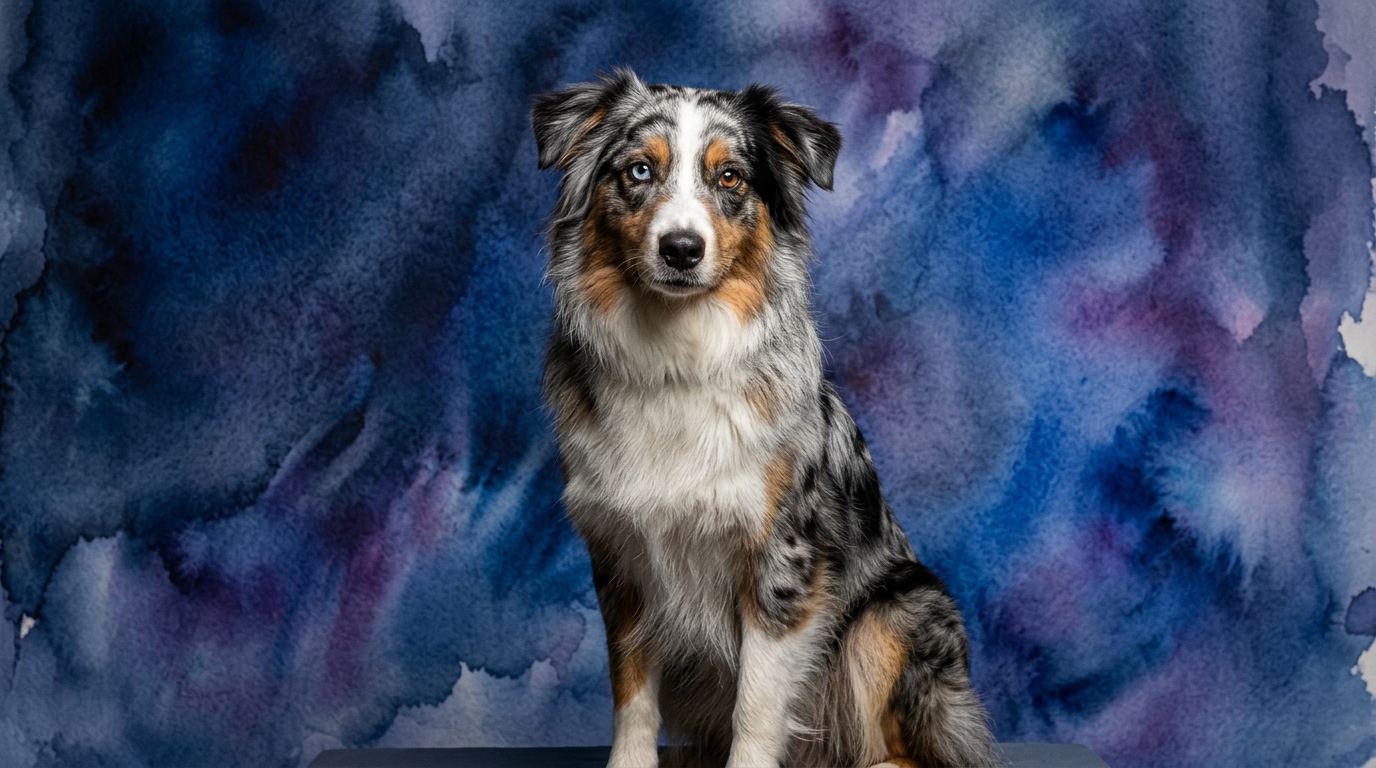
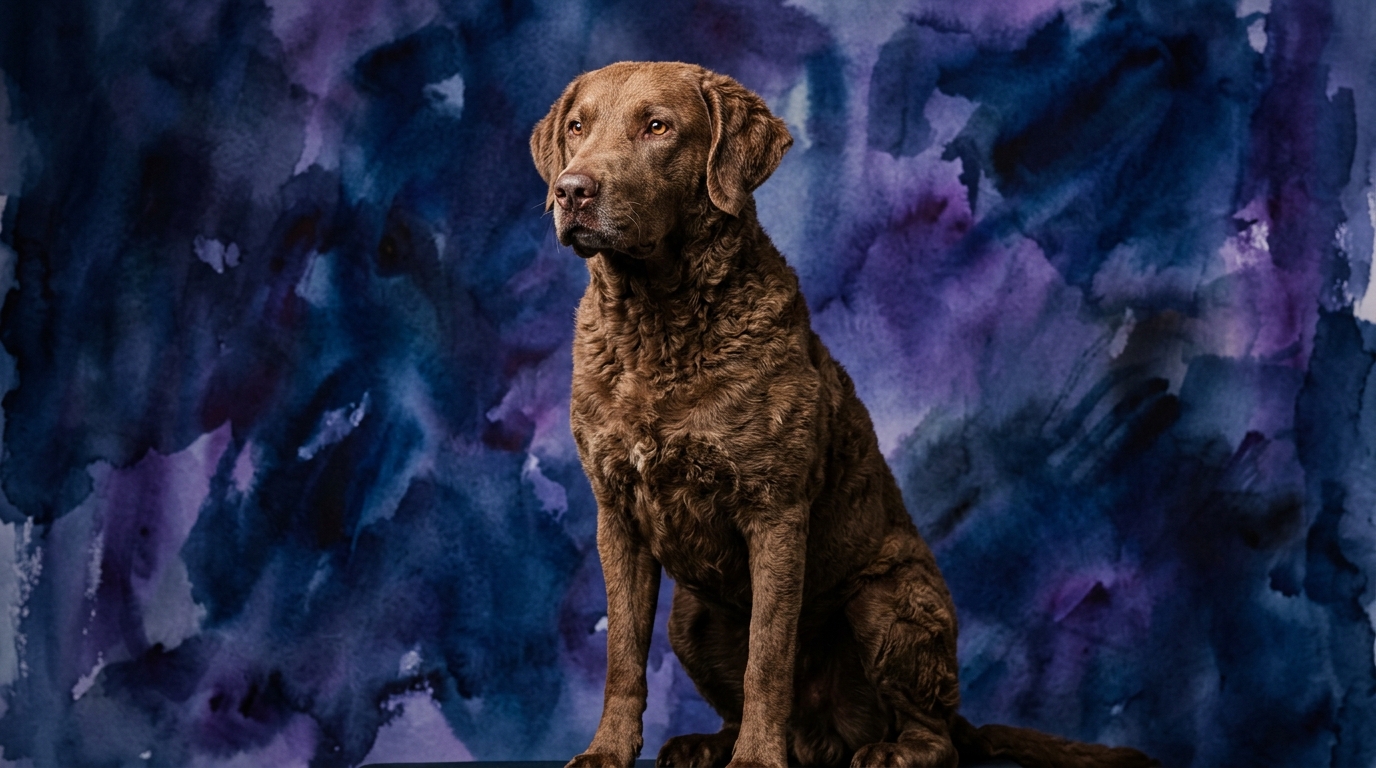
Side-by-Side IQ Profile: Australian Shepherd vs. Chesapeake Bay Retriever
The Cosmic Pet Pet IQ Lab assesses canine intelligence across five critical dimensions, offering a detailed look into each breed's cognitive architecture. For the Australian Shepherd, we observe an exceptional Problem Solving score of 5/5, indicating a profound ability to analyze new situations, devise novel solutions, and adapt strategies independently. Their Training Speed is also a perfect 5/5, demonstrating a remarkable capacity for rapid learning and command acquisition. Social Intelligence, rated 4/5, shows a strong aptitude for reading human cues and understanding social dynamics, though they remain task-oriented. An Instinctive Drive of 5/5 highlights their powerful inherent motivation to herd, manage, and work, while their Memory, a perfect 5/5, ensures excellent retention of learned behaviors and complex routines.
In contrast, the Chesapeake Bay Retriever presents a robust, though distinct, cognitive profile. Their Problem Solving ability stands at 4/5, indicating a capable mind that can effectively navigate challenges, albeit perhaps requiring slightly more deliberation or guidance than an Aussie. Training Speed is a commendable 4/5, signifying ready learners who can master commands and tasks efficiently. Social Intelligence, at 3/5, suggests they understand human signals but may exhibit a more independent streak, less overtly seeking constant interaction compared to some breeds. Their Instinctive Drive, rated 3/5, is focused on their retrieving heritage, showing a strong pull towards water work and fetching, without the intense managerial impulse of a herder. Finally, their Memory score of 4/5 confirms reliable recall for specific tasks, locations, and learned behaviors.
Where the Australian Shepherd Wins Cognitively
The Australian Shepherd's cognitive wins are numerous and pronounced, particularly in areas demanding rapid adaptability and self-directed problem-solving. With a Problem Solving score of 5/5 compared to the Chessie's 4/5, Aussies demonstrate a superior ability to independently strategize and overcome obstacles in unfamiliar contexts, often anticipating next steps without explicit instruction. Their Training Speed of 5/5 significantly outpaces the Chessie's 4/5, allowing them to grasp complex multi-step commands and new concepts with astonishing swiftness, making them exceptionally versatile learners across various disciplines.
Furthermore, the Aussie's Instinctive Drive, a powerful 5/5 against the Chessie's 3/5, translates into an innate, almost insatiable desire to work and manage, which, when channeled, makes them incredibly motivated partners. This drive is coupled with a Memory score of 5/5 (vs. 4/5 for the Chessie), enabling them to retain intricate sequences, vast vocabularies, and past experiences over long periods, facilitating advanced cumulative learning. Their higher Social Intelligence (4/5 vs. 3/5) also means they are generally more attuned to their handler's subtle cues and emotional states, fostering a more responsive and collaborative working relationship.
Where the Chesapeake Bay Retriever Wins Cognitively
While the Australian Shepherd excels in broad cognitive agility, the Chesapeake Bay Retriever's cognitive profile demonstrates distinct strengths, particularly in its specialized domain. The Chessie's Problem Solving (4/5) and Memory (4/5) are applied with remarkable tenacity and focus in demanding outdoor environments. This isn't about rapid-fire adaptation to novel human-invented games, but a profound ability to decipher complex retrieving scenarios, accurately remember fall locations across varied terrain and water, and execute tasks with unwavering determination, often in harsh weather conditions. This focused, enduring application of intellect in its working role is a significant cognitive advantage.
The Chesapeake Bay Retriever's Instinctive Drive (3/5) and Social Intelligence (3/5), while numerically lower than the Aussie's, contribute to a powerful independence that can be a 'win' for certain owners and tasks. Chessies are less prone to seeking constant human direction and possess a self-reliant determination to finish a job, demonstrating impressive autonomy when necessary. Their resilience and single-minded focus on their retrieving purpose, coupled with a stoic ability to endure discomfort, represent a specialized cognitive strength that allows them to excel in their demanding field with an often understated, yet profound, intelligence.
Which is Easier to Train and Why?
Based on The Cosmic Pet Pet IQ Lab's metrics, the Australian Shepherd is generally easier to train due to their superior Training Speed (5/5), higher Social Intelligence (4/5), and exceptional Problem Solving (5/5). Aussies possess an inherent eagerness to please and a remarkable ability to quickly form associations between commands and actions. Their high social intelligence means they are often more attuned to their handler's body language and vocal inflections, making them highly responsive. Real behavioral differences include their tendency to 'offer' behaviors and their quick uptake of complex sequences, excelling in obedience and agility sports with minimal repetition.
The Chesapeake Bay Retriever, while a capable learner with a Training Speed of 4/5, can present more challenges due to their lower Social Intelligence (3/5) and a more independent nature. Chessies tend to be more headstrong and require consistent, firm, and positive reinforcement to establish boundaries and expectations. They may not be as overtly eager to comply and can sometimes appear to 'think' about a command before executing it. Their strong retrieving drive can be a powerful motivator in training, but their less pronounced desire for constant human interaction means a trainer needs patience and a clear, unwavering approach to harness their abilities effectively.
Which Suits Active Owners vs. Relaxed Owners?
Both the Australian Shepherd and the Chesapeake Bay Retriever are working breeds with substantial energy and mental stimulation requirements, making neither suitable for truly 'relaxed' owners. Active owners, however, will find distinct partners in each. The Australian Shepherd, with its 5/5 Instinctive Drive, 5/5 Problem Solving, and 5/5 Memory, thrives on constant mental and physical engagement. They are ideal for owners who are deeply committed to competitive dog sports like agility, obedience, flyball, or herding, as well as those who enjoy long, vigorous hikes and providing complex tasks that challenge their keen intellect. An Aussie needs a job and an owner ready to engage in a constant 'conversation' of training and activity.
The Chesapeake Bay Retriever, with its strong retrieving drive (3/5), robust Problem Solving (4/5), and reliable Memory (4/5), also demands a highly active lifestyle, especially one that incorporates water and retrieving. They are perfectly suited for owners involved in hunting, field trials, dock diving, or long outdoor adventures that involve swimming, fetching, and exploring rugged terrain. While perhaps less prone to the frantic pacing of an under-exercised Aussie, a Chessie needs ample opportunities to expend its physical energy and fulfill its retrieving instincts. Owners must be prepared for a dog that loves the outdoors, often regardless of weather, and thrives on purpose-driven activity.
The Verdict: When to Choose Each Breed
The Verdict
Choose an Australian Shepherd if you are an owner seeking a highly responsive, versatile partner for complex tasks and competitive dog sports, who can provide immense mental stimulation and consistent physical activity, enjoying a constant intellectual engagement with their canine companion.
Opt for a Chesapeake Bay Retriever if you appreciate a more independent, tenacious, and resilient companion, especially for robust outdoor activities like hunting, swimming, and adventurous exploration, and are prepared to provide consistent, firm, but fair training to channel their focused drive.
🧠 Find Your Pet's IQ Score
Our Pet IQ Lab assessment covers 25+ tests across 5 cognitive dimensions — personalized to your breed.
Take the Full IQ Test →Frequently Asked Questions
Are Australian Shepherds prone to destructive behavior if not adequately exercised?
Yes, Australian Shepherds possess a very high instinctive drive (5/5) and problem-solving ability (5/5). Without sufficient physical exercise and mental stimulation, they can become bored and channel their energy into unwanted behaviors, such as chewing, digging, or excessive barking, as they attempt to create their own 'jobs' or outlets for their intelligence.
Can Chesapeake Bay Retrievers live comfortably in apartments?
Chesapeake Bay Retrievers generally do not thrive in apartment living due to their strong instinctive drive (3/5) for activity and their need for ample space to run and play. While they can adapt if provided with substantial daily exercise, including vigorous outdoor sessions and opportunities for swimming, a home with a secure yard is typically more suitable for their well-being.
How do the grooming needs of Australian Shepherds and Chesapeake Bay Retrievers compare?
Australian Shepherds have a medium-length double coat that requires regular brushing, typically several times a week, to prevent matting and manage shedding. Chesapeake Bay Retrievers possess a short, dense, oily double coat that is water-resistant and requires less frequent brushing, usually once a week, though they do shed seasonally and benefit from occasional bathing to maintain coat health without stripping their natural oils.