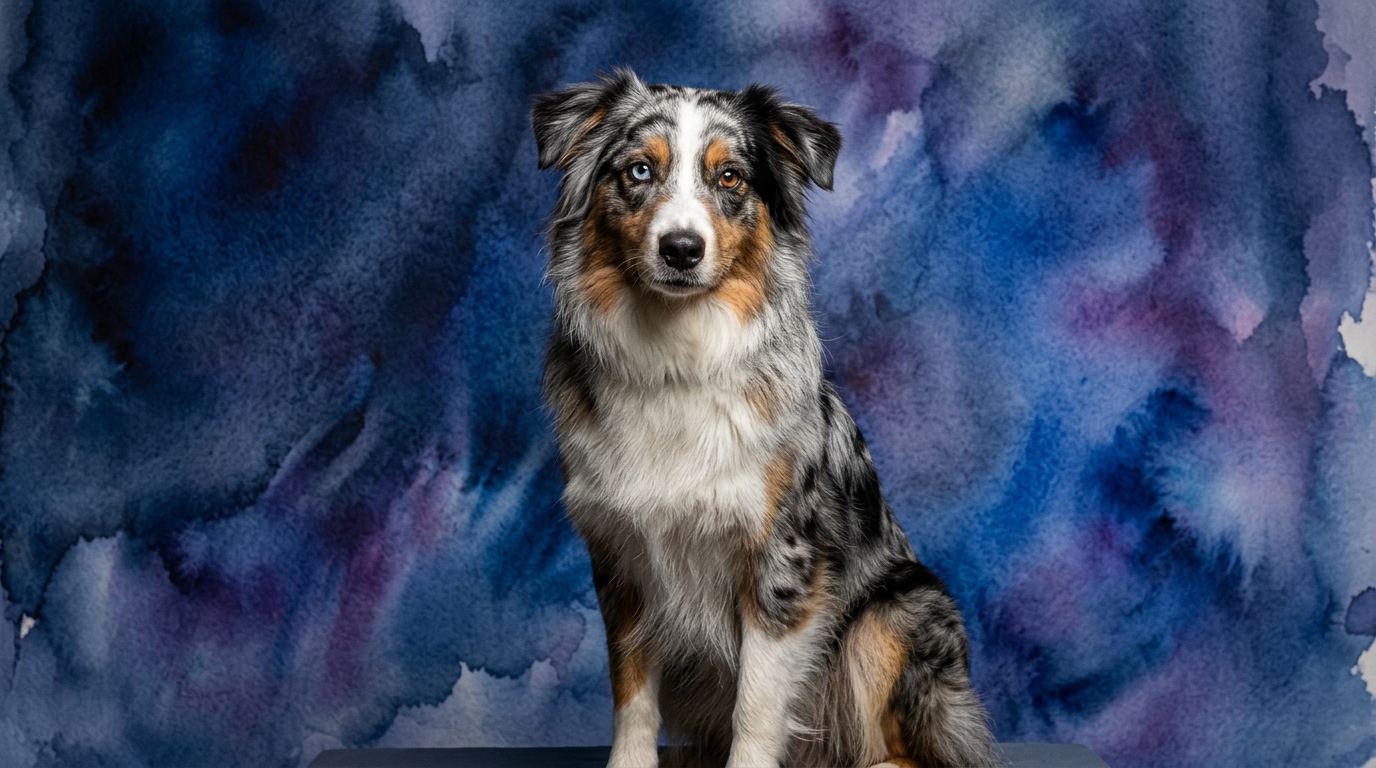

Side-by-Side IQ Profile: Australian Shepherd vs. Dachshund
The Cosmic Pet Pet IQ Lab employs a multi-dimensional approach to assess canine intelligence, moving beyond simple obedience scores to evaluate how breeds think, learn, and interact with their world. For the Australian Shepherd, its profile paints a picture of exceptional cognitive prowess across the board: a stellar 5/5 in Problem Solving, indicating an advanced capacity for navigating novel situations and devising solutions; a 5/5 in Training Speed, reflecting its rapid acquisition of new commands and behaviors; a 4/5 in Social Intelligence, showcasing its responsiveness to human cues and social dynamics; a perfect 5/5 in Instinctive Drive, underscoring its powerful herding instincts and focus; and a 5/5 in Memory, demonstrating its ability to retain vast amounts of information and routines over time.
In contrast, the Dachshund presents a different, yet equally specialized, cognitive makeup. While not Coren-ranked, its IQ profile reveals a distinct set of strengths: a solid 4/5 in Problem Solving, suggesting resourcefulness often applied to independent tasks; a 2/5 in Training Speed, which points to a more deliberate or independent learning pace; a 3/5 in Social Intelligence, indicating a capacity for bonding but perhaps less inclination for constant human-directed engagement; a commanding 5/5 in Instinctive Drive, deeply rooted in its badger-hunting heritage; and a 3/5 in Memory, implying it retains crucial information but may not be as expansive in its recall as the Australian Shepherd.
Where the Australian Shepherd Excels Cognitively
The Australian Shepherd's cognitive profile demonstrates a clear advantage in areas demanding complex, multi-faceted mental engagement. Its 5/5 rating in Problem Solving signifies an innate ability to process information, assess scenarios, and strategize outcomes, skills honed by generations of managing livestock. This isn't merely about following commands, but about understanding the intent behind them and adapting to changing variables, like moving a flock through varied terrain. Their exceptional 5/5 Training Speed means they absorb new concepts and associate actions with consequences with remarkable efficiency, making them incredibly receptive to structured learning environments.
Furthermore, the Australian Shepherd's 5/5 Memory allows them to build an extensive repertoire of commands, tricks, and routines, recalling them even after long periods. This superior retention, combined with a 4/5 Social Intelligence, means they are not only quick to learn but also deeply attuned to their human companions, often anticipating needs or reacting to subtle shifts in tone or body language. Their pronounced Instinctive Drive (5/5) translates into intense focus and a strong work ethic, channeling their mental energy into tasks with remarkable persistence, whether it's herding, agility, or advanced obedience.
Where the Dachshund Shows Its Own Cognitive Strengths
While the Dachshund's overall IQ scores may appear lower in some categories compared to the Australian Shepherd, its cognitive profile shines brightly in areas critical to its original purpose. The Dachshund’s 5/5 Instinctive Drive is a profound cognitive strength, manifesting as an unparalleled tenacity and focus when tracking scents or pursuing quarry. This isn't just a physical drive; it's a mental one, requiring sustained concentration, decision-making based on olfactory information, and an unwavering commitment to a goal, often independently of human direction. This deep-seated drive is a testament to a specialized kind of problem-solving.
The Dachshund's 4/5 rating in Problem Solving, though slightly lower than the Aussie, is often applied with a distinct independent flair. They are resourceful in figuring out how to get what they want, whether it's digging under a fence or outsmarting a food puzzle, often leveraging their physical attributes and persistence. Their 3/5 Social Intelligence, while not as overtly people-pleasing as some breeds, reflects a capacity for deep, loyal bonds with their chosen family, demonstrating a specific form of emotional and social understanding. Their memory (3/5) is sufficient for recalling important routines and people, ensuring they navigate their home environment and maintain relationships effectively, even if their recall isn't as broad as a working breed's.
Which is Easier to Train and Why?
When considering ease of training, the Australian Shepherd generally presents a more straightforward experience for most owners. Their 5/5 Training Speed means they grasp new commands and concepts quickly, often requiring fewer repetitions to solidify a behavior. This rapid learning is synergized with their 5/5 Problem Solving, enabling them to generalize learned behaviors to new situations and solve novel training challenges. Furthermore, their 4/5 Social Intelligence makes them eager to engage with and please their human trainers, often resulting in a highly cooperative and responsive training partner. They are motivated by interaction and the challenge of learning.
The Dachshund, with its 2/5 Training Speed, often requires a different approach. Their strong 5/5 Instinctive Drive, while a cognitive asset in hunting, can manifest as a persistent focus on independent pursuits like scent-tracking or digging, making them less inclined to readily interrupt these activities for human-directed tasks. Their Problem Solving (4/5) is often applied to achieving their own goals, which may not align with the trainer's objectives, leading to a perception of stubbornness. Successful Dachshund training relies on patience, consistency, high-value rewards, and making training feel like a fun game rather than a command, often appealing to their independent, resourceful nature rather than demanding strict obedience.
Which Suits Active Owners vs. Relaxed Owners?
The Australian Shepherd is unequivocally suited for active owners who can provide consistent mental and physical engagement. Their high Problem Solving (5/5), Training Speed (5/5), and Instinctive Drive (5/5) mean they thrive when given a 'job' to do, whether it's advanced obedience, agility, herding, or complex puzzle toys. Owners who enjoy teaching new tricks, participating in dog sports, or engaging in long, stimulating outdoor activities will find the Australian Shepherd an eager and capable partner. A relaxed owner who cannot meet these cognitive and physical demands may find an Australian Shepherd becoming bored, potentially leading to undesirable behaviors as they seek their own mental outlets.
The Dachshund, while possessing a formidable 5/5 Instinctive Drive that necessitates regular walks and opportunities for scent work, generally suits owners with a more relaxed approach to structured activity. Their 2/5 Training Speed and independent Problem Solving (4/5) mean they don't require the same intensity of complex, continuous learning as an Australian Shepherd. They enjoy exploring, digging, and chasing, often at their own pace, and appreciate comfortable indoor relaxation after their adventures. Owners who enjoy shorter, frequent walks, engaging in scent-based games, and appreciate an independent, loyal companion without demanding rigorous obedience will find a Dachshund a fulfilling match.
The Verdict: When to Choose Each Breed
The Verdict
Choose an Australian Shepherd if you are an active, experienced owner ready to invest significant time in consistent training, advanced mental challenges, and structured activities to engage their exceptional problem-solving and work ethic.
Choose a Dachshund if you appreciate an independent, tenacious companion, are prepared for patient and creative training, and enjoy engaging their strong natural instincts through scent games and exploration, rather than demanding high-level obedience.
🧠 Find Your Pet's IQ Score
Our Pet IQ Lab assessment covers 25+ tests across 5 cognitive dimensions — personalized to your breed.
Take the Full IQ Test →Frequently Asked Questions
Are Australian Shepherds suitable for first-time dog owners?
Australian Shepherds can be challenging for first-time owners due to their high cognitive demands and intense energy. They require consistent training, extensive mental stimulation, and a clear understanding of their herding instincts, which might be overwhelming without prior experience.
Do Dachshunds need a lot of exercise despite their small size?
Yes, Dachshunds do need regular exercise to satisfy their strong instinctive drive and maintain a healthy weight. While they don't need marathon runs, daily walks and opportunities for scent exploration are crucial to their physical and mental well-being.
Which breed is better at learning complex tricks?
Based on their 5/5 Problem Solving and 5/5 Training Speed, Australian Shepherds are generally much better at learning complex tricks and multi-step commands. Their eagerness to please and superior memory make them exceptional students for intricate tasks.