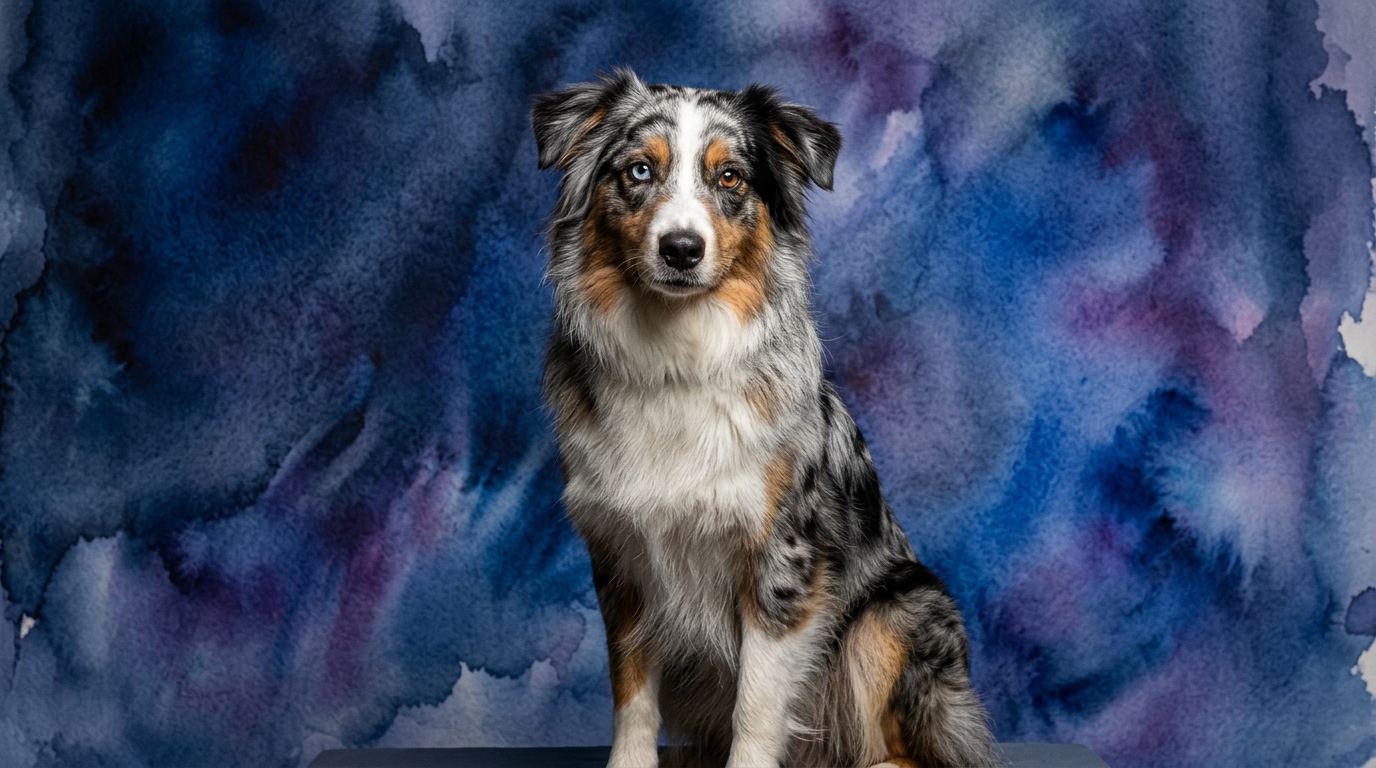
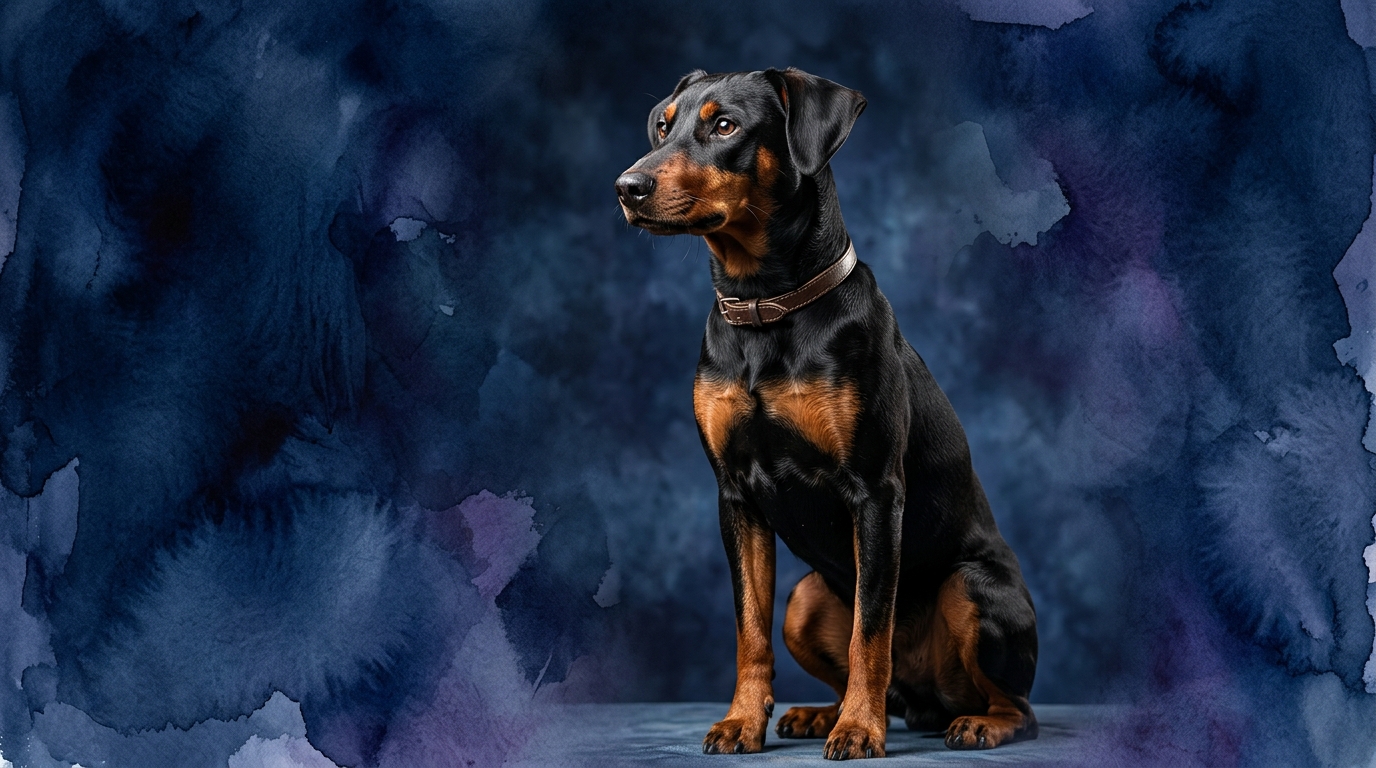
Side-by-Side Cognitive Profiles: Australian Shepherd vs. German Pinscher
At The Cosmic Pet Pet IQ Lab, we analyze canine intelligence across five crucial dimensions, providing a nuanced understanding of each breed's mental makeup. The Australian Shepherd, a breed rooted in herding, presents a profile of exceptional cognitive prowess across the board, while the German Pinscher, a working breed, demonstrates a more moderate, yet robust, set of mental faculties.
The Australian Shepherd's scores are consistently high: a perfect 5/5 in Problem Solving, indicating a remarkable capacity to navigate complex situations, strategize, and overcome obstacles. Their Training Speed also hits 5/5, suggesting an eagerness and quickness to absorb new commands and routines. Social Intelligence, at 4/5, highlights their astute ability to read and respond to human cues, though perhaps with a slight independent streak. Instructive Drive is a potent 5/5, reflecting their powerful innate urges to herd, manage, and control their environment. Finally, Memory stands at an impressive 5/5, allowing them to retain complex information and sequences over time.
In contrast, the German Pinscher exhibits a balanced, yet generally lower, set of scores across these cognitive metrics. Their Problem Solving is rated 3/5, indicating a competent but less inventive approach to challenges. Training Speed also sits at 3/5, suggesting they are trainable but require more consistent effort and repetition to master new skills. Social Intelligence, at 3/5, points to a functional understanding of social dynamics without the nuanced sensitivity seen in higher-scoring breeds. Instructive Drive is 3/5, meaning they possess natural working instincts but typically with less intensity than a herding breed. Their Memory is also 3/5, implying a solid ability to recall information, though perhaps not with the same depth or longevity as the Australian Shepherd.
These scores paint a clear picture: the Australian Shepherd is a breed whose cognitive architecture is geared towards high-level processing, rapid learning, and intense engagement with its environment and human companions. The German Pinscher, while certainly capable, operates with a more pragmatic, less overtly demanding cognitive style, relying on consistency and clear direction rather than innate strategic brilliance.
Where the Australian Shepherd Cognitively Excels
The Australian Shepherd's exceptional cognitive scores translate into distinct advantages in several areas. Their 5/5 Problem Solving means they don't just follow instructions; they actively think through challenges, often devising creative solutions to reach a desired outcome, whether it's opening a child-proof gate or figuring out how to retrieve a toy stuck under furniture. This makes them adept at complex tasks and enrichment puzzles.
A 5/5 in Training Speed isn't merely about obedience; it reflects a profound eagerness to learn and an ability to quickly associate commands with actions, making them highly responsive to new cues and multi-step routines. This rapid acquisition of knowledge means they can progress through advanced training, such as agility, competitive obedience, or even service work, at an accelerated pace. Coupled with a 5/5 Memory, Australian Shepherds can retain vast repertoires of commands and recall intricate sequences, making them incredibly reliable partners in dynamic situations.
Their 5/5 Instinctive Drive, while requiring careful management, means they possess a powerful internal motivation to work and contribute. This drive, combined with their problem-solving and memory, makes them exceptional at tasks that require persistence, focus, and strategic application of their natural herding abilities, even in modern contexts like scent work or search and rescue. A 4/5 in Social Intelligence ensures they are perceptive companions, often anticipating their owner's moods or intentions, which deepens the bond and facilitates cooperative efforts.
Where the German Pinscher's Cognitive Profile Offers Unique Advantages
While the German Pinscher's raw scores might suggest a less complex cognitive profile overall, their specific arrangement of traits can be a distinct advantage for certain owners. For instance, their 3/5 score in Instinctive Drive, compared to the Australian Shepherd's 5/5, means they generally exhibit less intense, persistent urges to herd, chase, or control their environment. This 'lower' drive can translate into a 'win' for owners seeking a companion less inclined to manage their surroundings or family members with a watchful, proactive intensity, leading to a more relaxed household dynamic.
Their 3/5 in Problem Solving might also mean they are less prone to creatively devising ways to outsmart household rules or access forbidden areas, offering a more straightforward, less demanding mental presence in a home setting. This isn't a lack of intelligence, but rather a different cognitive approach that values directness over intricate manipulation, which can be a relief for owners who prefer a less 'scheming' companion.
Furthermore, a 3/5 in Social Intelligence, while indicating less nuanced understanding of complex human emotional states, can also mean they are less prone to anxieties stemming from subtle social cues. This can contribute to a more robust, less sensitive disposition in varied social environments, a 'win' for owners who value resilience and an uncomplicated temperament over hyper-awareness to every slight change in human emotion. Their moderate 3/5 Memory and Training Speed signify they are still very capable learners, but their learning process tends to be more deliberate and less prone to impulsive experimentation, making them predictable and consistent once a behavior is established.
Training Dynamics: Which is Easier and Why?
When it comes to ease of training, the data from The Cosmic Pet Pet IQ Lab strongly favors the Australian Shepherd. Their 5/5 Training Speed means they typically grasp new commands, tricks, or even complex agility sequences with astonishing rapidity, often requiring significantly fewer repetitions to cement a behavior. This rapid learning is fueled by their high Problem Solving (5/5), which enables them to actively try to understand the 'why' and 'how' of a task, making them highly engaged and self-motivated learners.
An Australian Shepherd's 5/5 Memory also plays a critical role, allowing them to recall intricate sequences of commands and previously learned behaviors with remarkable precision, even after long periods of inactivity. This combination of quick learning, deep understanding, and excellent recall makes them incredibly rewarding to train for advanced tasks and ensures behaviors are deeply ingrained.
Conversely, the German Pinscher, with a 3/5 in both Training Speed and Problem Solving, will likely require more patience and consistency. While trainable, their learning pace is typically more deliberate, meaning commands need to be reinforced more frequently and over a longer period before becoming second nature. Their problem-solving at 3/5 suggests they might be less inclined to proactively experiment with solutions or generalize learned behaviors to new situations without explicit guidance. This isn't a deficiency, but rather a different cognitive pathway to mastery that is typically less direct and self-driven than that of an Australian Shepherd.
Behaviorally, the Australian Shepherd's high Instinctive Drive (5/5) means they thrive on having a 'job' and direction, making them highly receptive to training as an outlet for their energy. The German Pinscher's moderate drive (3/5) means they can also be motivated by tasks, but their engagement might be less intense or prolonged, requiring the trainer to be more creative in maintaining focus and enthusiasm over time.
Matching Cognitive Profiles to Owner Lifestyles
The distinct cognitive profiles of the Australian Shepherd and German Pinscher directly influence which breed is a better fit for active versus relaxed owners. An Australian Shepherd, with its 5/5 Problem Solving, 5/5 Training Speed, and 5/5 Instinctive Drive, is unequivocally suited for highly active owners who are prepared to provide extensive mental and physical stimulation. This breed thrives on having a purpose, whether it's herding, agility, flyball, or complex obedience work. They need owners who can channel their high cognitive energy and strong drives into productive activities, otherwise, their problem-solving skills might be applied to less desirable pursuits, like inventing mischief.
Owners who enjoy daily long runs, hiking, dog sports, or who are keen on continuous training and learning will find an Australian Shepherd an unparalleled partner. Their 4/5 Social Intelligence also means they are deeply connected to their human families, desiring active participation in household life and thriving on cooperative ventures. They are not content to be mere couch potatoes; their minds and bodies demand engagement.
The German Pinscher, with its 3/5 scores across the board, presents a more moderate demand on an owner's time and energy, making them potentially suitable for active owners who seek a less intense cognitive challenge, or even more relaxed owners who are still committed to daily activity. While they still require regular exercise to maintain physical health and mental well-being, their lower instinctive drive and problem-solving scores mean they are less likely to become destructive or anxious if they miss a day of intense mental work.
Owners who enjoy regular walks, occasional hikes, and consistent but not necessarily advanced training sessions will find a German Pinscher a rewarding companion. Their cognitive profile suggests they are less prone to creating their own complex 'jobs' around the house, offering a more straightforward and less demanding mental presence. They are robust and energetic but generally less obsessive in their need for constant intellectual stimulation, fitting well into a lifestyle that balances activity with periods of calm.
The Verdict
Choose an Australian Shepherd if you are an experienced, highly active owner who thrives on engaging a dog in complex training, advanced sports, and consistent mental challenges, appreciating a deeply perceptive and driven companion.
Opt for a German Pinscher if you desire an energetic, alert companion who is trainable and enjoys activity, but without the intense cognitive demands or herding drives, fitting a lifestyle that balances engagement with less pressure for constant, high-level mental work.
🧠 Find Your Pet's IQ Score
Our Pet IQ Lab assessment covers 25+ tests across 5 cognitive dimensions — personalized to your breed.
Take the Full IQ Test →Frequently Asked Questions
Do Australian Shepherds get bored easily?
Yes, Australian Shepherds, with their 5/5 problem-solving and instinctive drive, are prone to boredom if not adequately stimulated. Their minds are constantly seeking engagement, so a lack of purposeful activity can lead to them inventing their own entertainment, which might not always align with household rules.
Are German Pinschers difficult to train for a first-time owner?
German Pinschers, with a 3/5 training speed, require consistency and clear methods, but they are generally trainable. While they may not pick up commands as quickly as an Australian Shepherd, a patient first-time owner committed to positive reinforcement and regular practice can certainly succeed with a German Pinscher.
Which breed is better with children, based on social intelligence?
The Australian Shepherd's 4/5 social intelligence suggests a more nuanced understanding of family dynamics, often making them perceptive and gentle with children under supervision. The German Pinscher's 3/5, while still functional, indicates they may be less inherently sensitive to subtle cues, requiring more careful introduction and monitoring in households with very young children to ensure positive interactions.