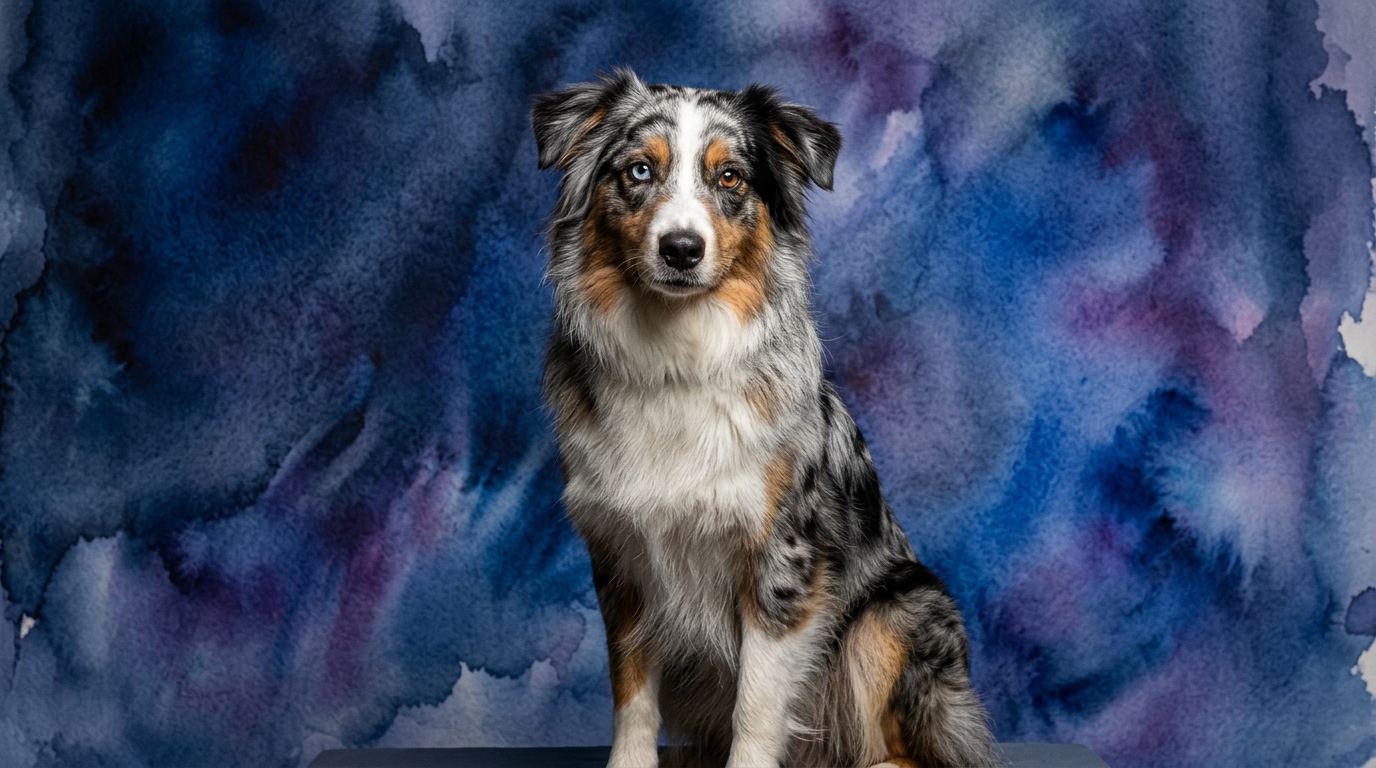
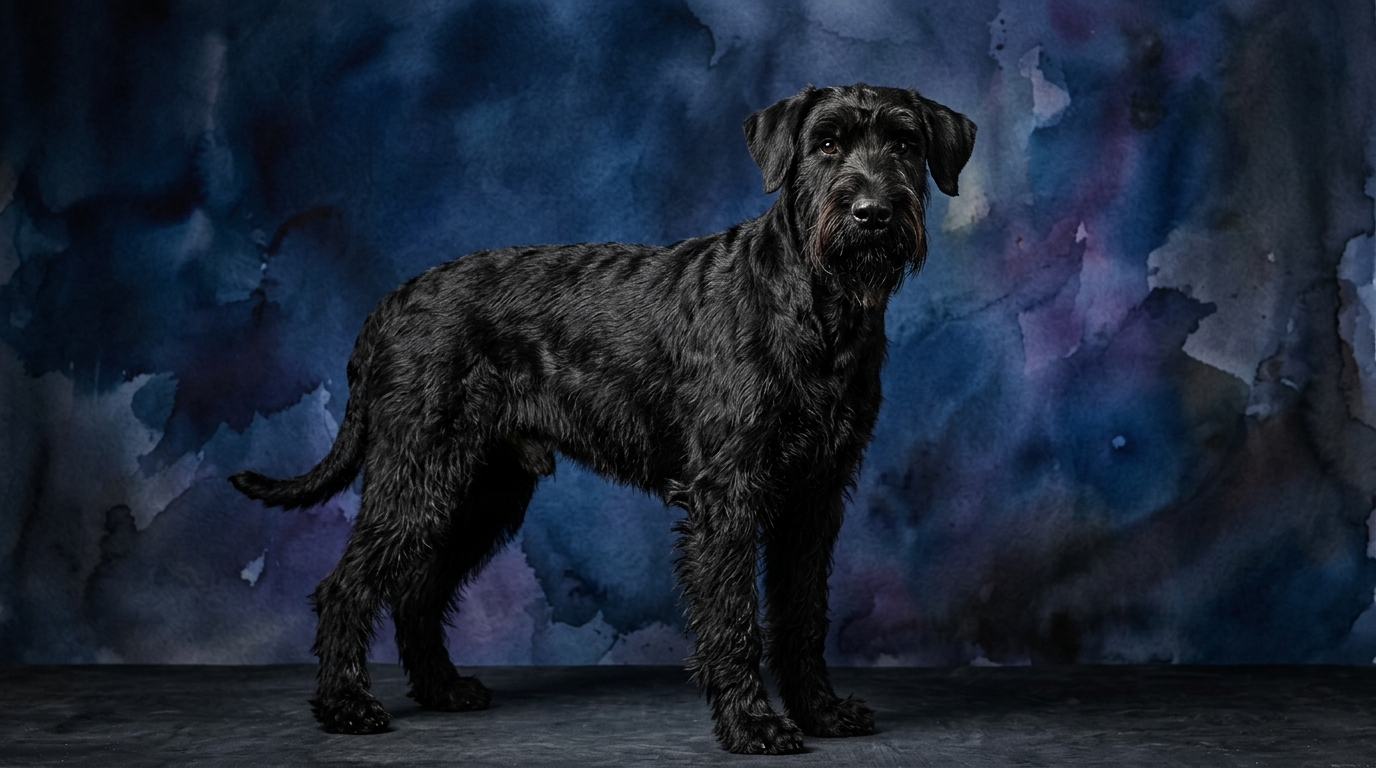
Side-by-Side IQ Profile: Australian Shepherd vs. Giant Schnauzer
At the Cosmic Pet Pet IQ Lab, we evaluate canine intelligence across five critical dimensions: Problem Solving, Training Speed, Social Intelligence, Instinctive Drive, and Memory. The Australian Shepherd, originating from the herding group, consistently demonstrates a top-tier cognitive profile across most metrics, while the Giant Schnauzer, a robust member of the working group, exhibits a solid, dependable intellect with its own distinct emphasis.
For the Australian Shepherd, Problem Solving scores a perfect 5/5. This reflects their innate ability to independently assess situations and devise solutions, a crucial trait for managing livestock. Their Training Speed also hits 5/5, indicating an exceptional capacity to grasp new commands and routines with minimal repetition, eager to engage with their handler's instructions. Social Intelligence stands at a strong 4/5; Aussies are generally perceptive of human emotions and social cues, though they can be reserved with strangers, prioritizing their inner circle. Their Instinctive Drive is a commanding 5/5, fueled by a powerful herding heritage that translates into an intense desire to work, organize, and control. Finally, their Memory is also a flawless 5/5, allowing them to retain complex sequences of commands, locations, and past experiences with remarkable accuracy.
The Giant Schnauzer presents a slightly different cognitive blueprint. Their Problem Solving capability is rated 4/5, signifying a capable and thoughtful approach to challenges, though perhaps not with the instantaneous, improvisational flair of the Aussie. Training Speed is also a respectable 4/5; they learn readily and can master complex tasks, but may require a more consistent and firm hand, sometimes showing a streak of independence. Social Intelligence scores 3/5, suggesting they are observant but often more aloof or discerning, typically forming deep bonds with their family while maintaining a watchful distance from outsiders. Their Instinctive Drive is 3/5, reflecting a strong guardian and protective instinct inherent to their working background, but without the ceaseless need for 'a job' that defines the herding breeds. Memory for the Giant Schnauzer is a solid 4/5, enabling them to recall commands and routines reliably, forming a dependable foundation for their training and daily life.
Where the Australian Shepherd Wins Cognitively
The Australian Shepherd's cognitive strengths are particularly pronounced in scenarios demanding rapid learning, adaptive problem-solving, and a relentless work ethic. Their 5/5 scores in Problem Solving and Training Speed mean they not only learn new tasks with astonishing speed but can also adapt those learned behaviors to novel situations without extensive re-training. This manifests in their ability to quickly understand complex multi-step commands or to figure out how to open a gate or retrieve a specific item, often with minimal guidance. Their superior Memory (5/5) means once a lesson is learned or a routine established, it's deeply ingrained, contributing to their impressive consistency in performance over time. The Australian Shepherd's formidable Instinctive Drive (5/5) also gives them an edge in sustained engagement, making them tireless partners in demanding activities like agility, competitive obedience, or real-world herding tasks, where their focus and motivation rarely waver.
Where the Giant Schnauzer Wins Cognitively
While the Australian Shepherd excels in agility and rapid adaptation, the Giant Schnauzer's cognitive profile emphasizes a different set of strengths, particularly valuable for specific roles. Their 4/5 in Problem Solving indicates a thoughtful, methodical approach; they may take a moment longer to process, but their solutions are often robust and well-considered, making them excellent for tasks requiring discernment and steadiness. The Giant Schnauzer's Coren ranking of #28 for working and obedience intelligence, while not as high as some, places them firmly within the top tier of all breeds, demonstrating a solid capacity for understanding and executing commands consistently. Their 3/5 Social Intelligence, while lower than the Aussie's, often translates into a more discerning and protective nature; they are less likely to be swayed by strangers, focusing their loyalty and attention intently on their immediate family. This trait, combined with their 3/5 Instinctive Drive, which leans towards guarding and protection rather than herding, makes them particularly adept at roles requiring vigilance, steadfastness, and a strong, unwavering presence, such as personal protection or property guardianship, where their focused memory (4/5) ensures reliable recall of critical boundaries and commands.
Which is Easier to Train and Why
When considering ease of training, the Australian Shepherd generally holds an advantage due to its 5/5 Training Speed and 5/5 Instinctive Drive. Aussies are naturally eager to please and possess an almost insatiable desire for mental engagement, which makes them highly receptive to new cues and complex sequences. They thrive on positive reinforcement and will often offer behaviors proactively, trying to figure out what you want. Their herding heritage means they are wired to respond to handler direction and exhibit precise control over their movements, translating into impressive obedience and performance in dog sports. They often learn a new command in just a few repetitions and retain it for life.
The Giant Schnauzer, with a 4/5 Training Speed, is by no means difficult to train, but their approach differs. They are capable learners, but their working dog independence means they can sometimes question the 'why' behind a command or require more consistent motivation. While an Aussie might learn a new trick in one session, a Giant Schnauzer might need several sessions to truly solidify it, demanding a handler with patience and a firm, fair, and consistent approach. Their lower Instinctive Drive (3/5) means they might not possess the same inherent 'go-go-go' enthusiasm for endless training sessions, requiring a more structured and goal-oriented approach to maintain their focus. Successfully training a Giant Schnauzer often involves establishing clear leadership and making training feel like a meaningful partnership rather than just a series of commands.
Which Suits Active Owners vs. Relaxed Owners
The cognitive profiles of these two breeds clearly delineate their suitability for different owner lifestyles. The Australian Shepherd, with its perfect 5/5 scores in Problem Solving, Training Speed, Instinctive Drive, and Memory, is an ideal companion for highly active owners who can provide constant mental stimulation and physical exertion. They excel in dog sports like agility, flyball, or advanced obedience, and thrive on having a 'job' to do, whether it's herding, hiking, or complex puzzle toys. An owner who enjoys daily long runs, intricate training sessions, and weekend adventures will find the Aussie an unparalleled partner. For owners who cannot commit to this level of engagement, an Aussie can quickly become bored, potentially leading to undesirable behaviors as they invent their own 'jobs.'
The Giant Schnauzer, while a working breed requiring substantial exercise, presents a slightly different fit. Their 4/5 Problem Solving and Memory, combined with a 3/5 Instinctive Drive, suggest they need structured activity and consistent training, but perhaps not the same frenetic pace or constant mental redirection as an Aussie. They are robust dogs that enjoy vigorous walks, jogging, or structured play, and benefit from advanced obedience or protection sports that engage their thoughtful nature and protective instincts. They are better suited for active owners who appreciate a strong, loyal companion and are prepared for consistent, disciplined training, but who might not be seeking a dog that needs to be 'on' 24/7. A 'relaxed owner' in this context would still be someone committed to daily exercise and mental challenges, just perhaps with a slightly less intense, more predictable routine than an Aussie demands.
The Verdict
Choose the Australian Shepherd if you are an experienced, highly active individual or family seeking a relentless, lightning-fast learner for dog sports, complex tasks, or a true working partner.
Opt for the Giant Schnauzer if you desire a steadfast, discerning guardian who learns reliably with consistent guidance, thrives on structured activity, and forms a deep, loyal bond with their family.
🧠 Find Your Pet's IQ Score
Our Pet IQ Lab assessment covers 25+ tests across 5 cognitive dimensions — personalized to your breed.
Take the Full IQ Test →Frequently Asked Questions
Are Australian Shepherds good family dogs?
Yes, Australian Shepherds can be excellent family dogs, especially for active families willing to meet their high exercise and mental stimulation needs. Their 4/5 social intelligence means they bond strongly with their family, though they can be reserved with strangers and benefit from early socialization to ensure they are comfortable in various situations.
Do Giant Schnauzers require a lot of grooming?
Giant Schnauzers do require regular grooming to maintain their distinctive coat. This typically involves weekly brushing to prevent mats, and professional stripping or clipping every 6-8 weeks, which is essential for their skin health and appearance. Their facial hair also needs regular cleaning.
Which breed is better for first-time dog owners?
Neither breed is typically recommended for truly novice dog owners due to their strong working drives and need for consistent training and socialization. However, if an experienced first-time owner is committed to intensive training and providing ample mental and physical stimulation, the Australian Shepherd's eagerness to please might make it slightly more forgiving, while the Giant Schnauzer's independence requires a more assertive and consistent handler.