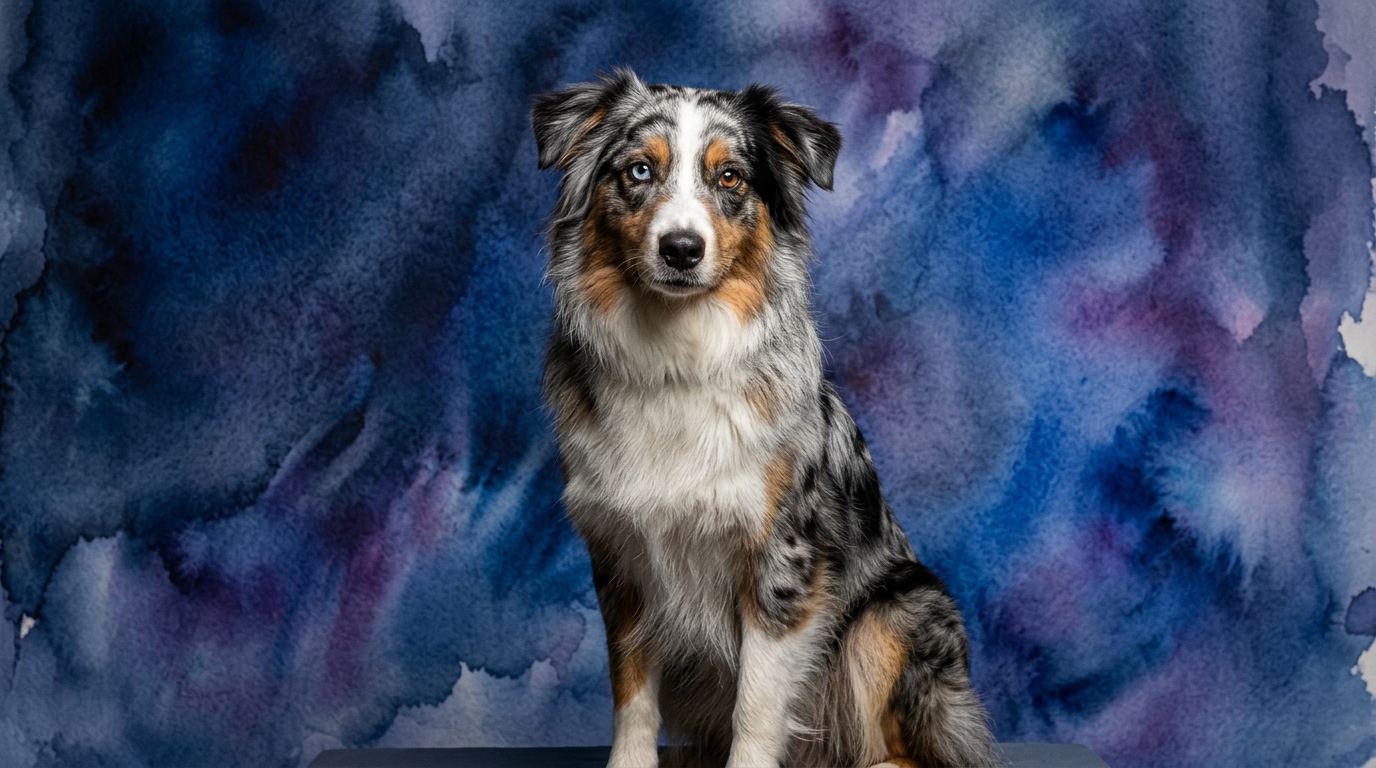
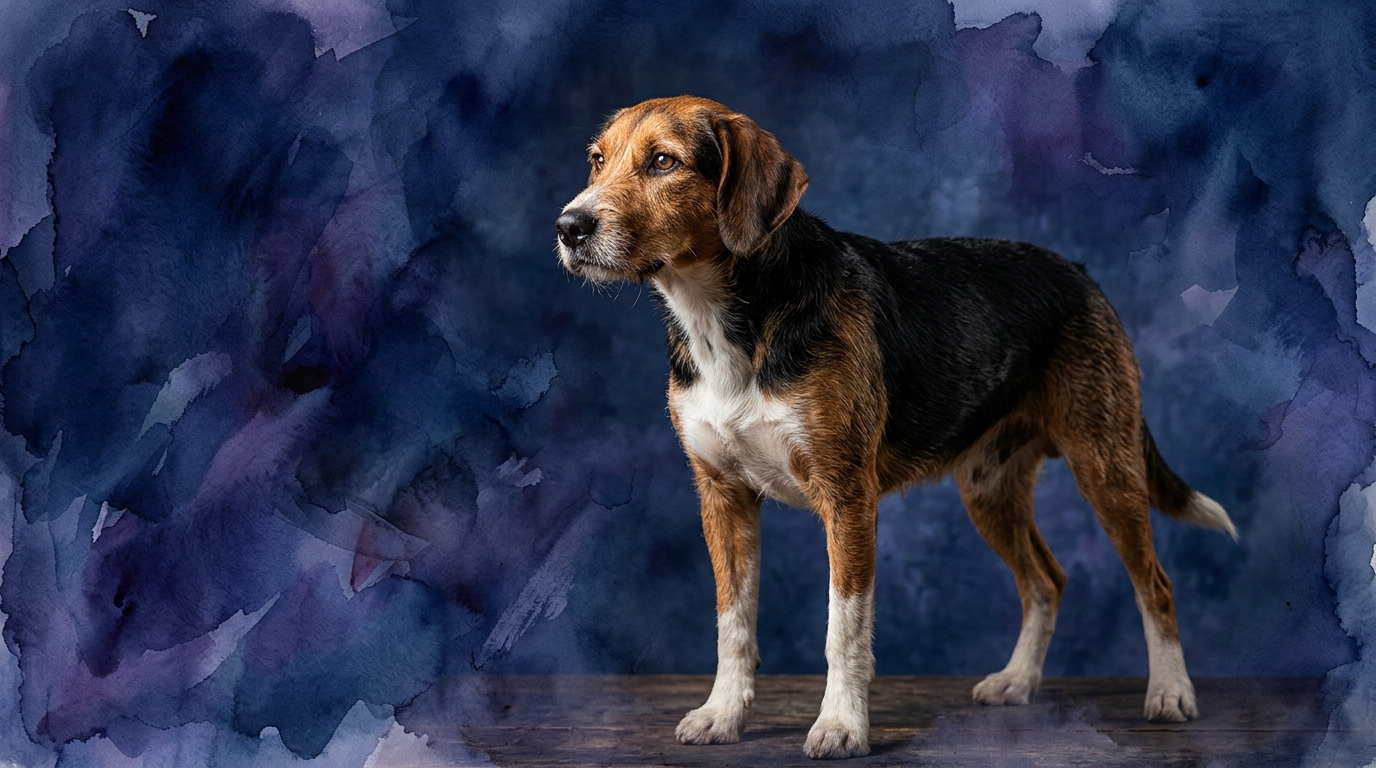
Side-by-Side IQ Profile
The Australian Shepherd, a breed forged in the demanding world of livestock herding, presents a cognitive profile optimized for complex, collaborative work. Their scores reflect a capacity for quick learning and adaptive problem-solving, crucial traits for managing unpredictable flocks.
With a perfect 5/5 in Problem Solving, these dogs excel at navigating novel situations and devising strategies to achieve goals. Their Training Speed also reaches 5/5, indicating an exceptional ability to grasp and retain new commands with minimal repetition, eager to engage with their human counterparts. Social Intelligence rates at 4/5, showing strong attunement to human cues and a desire for connection, though they can be discerning with strangers. An Instinctive Drive of 5/5 underscores their profound need for purpose and activity, while a Memory score of 5/5 ensures they retain vast amounts of learned information and experiences.
In contrast, the Harrier, a classic scent hound, showcases a cognitive architecture primarily geared towards independent pursuit and olfactory exploration. Their intelligence is specialized for the intricate world of scents, a different kind of problem-solving entirely.
Harriers receive a 3/5 in Problem Solving, meaning they are adept at straightforward challenges, especially those involving scent, but may not gravitate towards abstract puzzles without tangible rewards. Their Training Speed is 3/5, indicating a moderate learning pace that benefits from consistent, patient reinforcement, as their attention can be easily diverted by environmental stimuli. Social Intelligence sits at 3/5; they are generally amiable but their focus is often outward, driven by their nose, rather than intensely on human interaction. An Instinctive Drive of 3/5 reflects their strong, autonomous urge to track and explore. Finally, their Memory is 3/5, reliable for established routines and scent trails but perhaps less so for a wide array of abstract commands.
Where Australian Shepherd Wins Cognitively
When evaluating cognitive flexibility and the capacity for abstract reasoning, the Australian Shepherd distinctly outshines the Harrier. Their 5/5 Problem Solving score means they readily analyze new scenarios, form hypotheses, and execute multi-step solutions, whether it's navigating an agility course or figuring out a complex puzzle toy. This adaptability stems from their historical need to anticipate and react to livestock movements, requiring quick thinking and strategic planning on the fly.
Furthermore, the Australian Shepherd's superior Training Speed (5/5) combined with their exceptional Memory (5/5) allows them to acquire and retain a vast repertoire of commands and behaviors with remarkable efficiency. They are not merely learning; they are actively seeking to understand and participate, displaying a proactive engagement that makes them highly receptive to advanced obedience and specialized tasks. Their 4/5 Social Intelligence also enables a finer calibration to human intentions and subtle cues, fostering a highly collaborative learning environment where they anticipate and respond to their handler's desires.
Where Harrier Wins Cognitively
While the Australian Shepherd excels in handler-centric tasks, the Harrier's cognitive strengths lie in a profoundly different domain: their olfactory processing and sustained, independent pursuit. Their entire nervous system is arguably optimized for scent detection and analysis, a specialized form of intelligence that far surpasses most breeds, including the Aussie. A Harrier’s ability to differentiate, follow, and remember specific scent trails, even hours old, is a cognitive marvel, demanding incredible focus and a unique form of problem-solving.
This specialized instinctive drive (3/5, but profoundly focused) grants them unparalleled persistence in following a scent. Once locked onto a trail, a Harrier demonstrates a singular, unwavering determination, often oblivious to external distractions that would break an Australian Shepherd’s concentration. This independence, while sometimes challenging in training, is a cognitive advantage in tasks requiring self-directed, sustained effort towards an environmental goal rather than a human-directed one. They are masters of their olfactory world, showcasing a distinct and formidable form of canine cognition.
Which Is Easier to Train and Why
Based on their respective IQ profiles, the Australian Shepherd is unequivocally the easier breed to train for a wide range of tasks. Their 5/5 Training Speed means they absorb new information with impressive rapidity, often requiring only a few repetitions to solidify a command. This is complemented by their 5/5 Memory, ensuring that once learned, commands and routines are reliably retained over time. Their 4/5 Social Intelligence further enhances trainability, as they are inherently attuned to their handler's body language and vocal cues, eager to please and work cooperatively. An Aussie's 5/5 Instinctive Drive translates into a strong desire for a "job," making them highly motivated participants in structured training sessions.
In contrast, the Harrier presents a more significant training challenge. Their 3/5 Training Speed means new concepts take longer to sink in, demanding greater patience and consistency from the trainer. Moreover, their 3/5 Memory means skills may need more frequent refreshing. The biggest hurdle, however, is their 3/5 Instinctive Drive, which is primarily directed towards independent scent work. A Harrier's nose can easily override a handler's command; a fascinating smell is often far more compelling than a human voice. This means training requires immense creativity to compete with their natural predilections, often employing high-value rewards and engaging, scent-based games to maintain focus and motivation, rather than relying solely on their desire to please.
Which Suits Active Owners vs Relaxed Owners
For genuinely active owners seeking a dynamic, engaged companion, the Australian Shepherd is an ideal match. Their 5/5 Problem Solving and 5/5 Instinctive Drive mean they thrive on continuous mental and physical challenges. An Aussie requires more than just daily walks; they need complex tasks, dog sports like agility or herding, advanced obedience, or extensive interactive play to prevent boredom and potential destructive behaviors. Owners must be prepared to invest significant time daily in structured activities that engage both their body and their sharp mind.
Harriers also require active owners, but their activity needs are different in nature. While their 3/5 Instinctive Drive for tracking translates into a need for substantial physical exercise, it's often centered around exploring scents rather than performing intricate tasks. They need long, vigorous walks or runs, ideally in secure, varied environments where they can indulge their powerful nose. A relaxed owner, unprepared for the Harrier's stamina and independent spirit, would find themselves overwhelmed. However, unlike the Aussie, a Harrier’s mental stimulation needs are less about abstract problem-solving and more about the sensory richness of their environment. They are not content to be couch potatoes, but their "work" is often self-directed exploration rather than handler-driven tasks.
The Verdict
Choose an Australian Shepherd when you seek a highly engaged, collaborative canine partner eager to learn complex tasks, participate in dog sports, and thrive on consistent mental and physical challenges.
Choose a Harrier when you appreciate a robust, independent companion with an extraordinary nose, enjoy long walks where they can explore scents, and are patient with their hound-specific motivations.
🧠 Find Your Pet's IQ Score
Our Pet IQ Lab assessment covers 25+ tests across 5 cognitive dimensions — personalized to your breed.
Take the Full IQ Test →Frequently Asked Questions
Do Australian Shepherds need more mental exercise than Harriers?
Yes, Australian Shepherds, with their 5/5 problem-solving and 5/5 memory, require significant mental stimulation through puzzles, training, and complex tasks to satisfy their cognitive needs. Harriers, while needing exploration, don't typically demand the same level of abstract mental engagement.
Can a Harrier learn complex obedience commands?
While Harriers can learn obedience, their 3/5 training speed and 3/5 social intelligence mean it will take more repetition and patience compared to an Australian Shepherd. Their strong instinctive drive for scent work can also make them less focused on traditional obedience cues when a compelling scent is present.
How does "instinctive drive" differ between these breeds?
For the Australian Shepherd (5/5), instinctive drive manifests as a strong desire to herd, work with a handler, and engage in directed tasks. For the Harrier (3/5), it's primarily a powerful urge to hunt by scent, explore, and follow trails independently, often overriding other commands.