
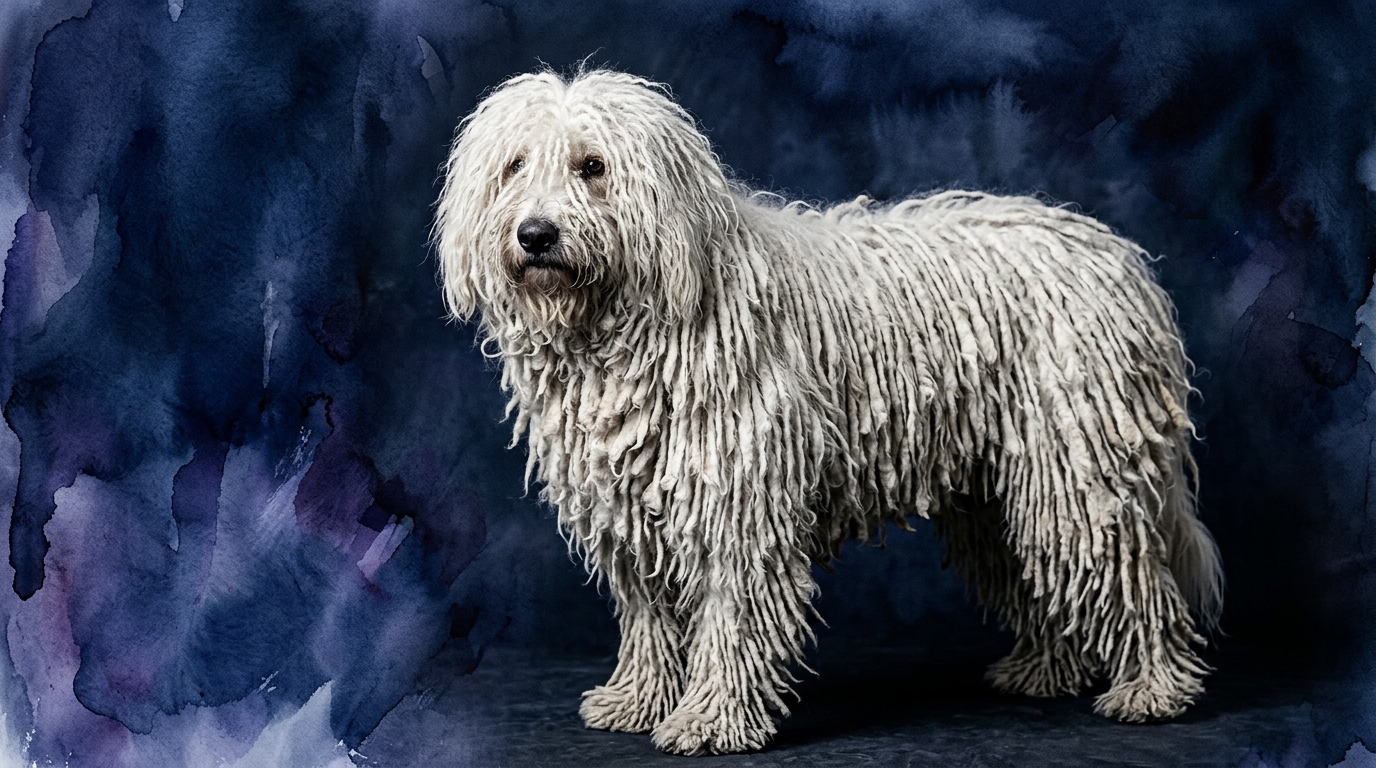
Side-by-Side Cognitive Profiles: Aussie vs. Komondor
To truly understand the cognitive landscape of these two distinct breeds, The Cosmic Pet Pet IQ Lab employs a five-dimensional framework, allowing us to pinpoint their unique strengths and specialized forms of intelligence. This comprehensive look moves beyond superficial observations to reveal the operational intelligence embedded within each breed's genetic makeup.
**Problem Solving:** The Australian Shepherd, with a perfect 5/5 score, demonstrates exceptional cognitive flexibility. These dogs are remarkably adept at navigating novel situations, devising strategies to overcome obstacles, and even manipulating their environment to achieve a goal, often with minimal prior instruction. Their minds are constantly processing and adapting to new challenges. In contrast, the Komondor's 3/5 in problem solving reflects a different kind of cognitive strength; while they may not be quick to master complex obedience sequences or intricate puzzles, their intelligence shines in practical, real-world scenarios pertinent to their guarding heritage, assessing threats and strategizing defense without constant human direction.
**Training Speed:** The Australian Shepherd earns a 5/5, indicating an extraordinary capacity for rapid learning. These dogs absorb new commands, routines, and complex tasks with remarkable speed, often eager to please and quick to form associations between actions and outcomes. Their responsiveness makes them a joy to train for various disciplines. The Komondor's 3/5 in training speed suggests a more deliberate learning pace. This breed requires consistent, patient instruction and often appears to ponder commands before complying, a trait often misinterpreted as stubbornness but is more accurately an expression of their independent decision-making nature.
**Social Intelligence:** With a 4/5, the Australian Shepherd exhibits a keen attunement to human signals and emotions. They form strong, cooperative bonds and are highly responsive to their handler's cues, making them excellent partners in tasks requiring close collaboration. This sensitivity allows them to integrate seamlessly into family dynamics. The Komondor's 3/5 in social intelligence highlights a different social blueprint; while deeply loyal to its immediate family, this breed is inherently independent and less reliant on human interaction for guidance. They are often reserved with strangers, preferring to observe and make their own assessments rather than seeking constant human affirmation or direction.
**Instinctive Drive:** The Australian Shepherd's 5/5 score reflects a powerful, innate drive to herd, control, and work collaboratively. This profound instinctive motivation fuels their desire to have a job, whether it's managing livestock, excelling in dog sports, or engaging in mentally stimulating activities that satisfy their inherent purpose. The Komondor's 3/5 in instinctive drive points to a robust, independent guarding instinct. Their primary motivation is to protect their territory and charges, acting on their own initiative rather than a 'drive to please' in the traditional sense. This drive is about vigilance and defense, a self-sufficient dedication to their role.
**Memory:** A perfect 5/5 for the Australian Shepherd signifies an exceptional capacity to retain learned information, complex sequences of behaviors, and past experiences over long periods. This superior memory aids in rapid skill acquisition and the development of intricate routines. The Komondor's 3/5 in memory suggests a selective retention. While they may not recall a vast repertoire of abstract commands, their memory is exceptionally tuned to information crucial for their guarding duties, such as territorial boundaries, the identity of safe individuals versus potential threats, and past events related to their charges, forming a robust mental map of their domain.
Where the Australian Shepherd Excels Cognitively
The Australian Shepherd's cognitive prowess is evident in its remarkable adaptability and cooperative spirit. Their combination of a 5/5 in problem-solving and training speed means they can rapidly grasp new concepts and apply them in varied situations, making them standout candidates for complex obedience, agility, and herding trials. They possess an innate curiosity and a desire to engage with their human counterparts, channeling their high instinctive drive into productive, collaborative work. This breed's strong memory ensures lessons learned are retained, building a vast behavioral repertoire that allows for sophisticated communication and task execution, truly making them a partner in action.
Where the Komondor Finds Its Cognitive Strengths
While the Komondor's cognitive profile might not align with traditional measures of biddability, its strengths lie in areas directly related to its ancient purpose. This breed excels in autonomous decision-making and steadfast vigilance, qualities that are crucial for a livestock guardian. Their 3/5 scores across the board do not signify a lack of intelligence, but rather a specialized form of cognition optimized for self-sufficiency. A Komondor's cognitive strength is its ability to independently assess and manage threats, discerning subtle changes in its environment, and making critical judgments about potential dangers without needing constant human instruction. Their focus on territory and charges, coupled with a memory tuned to identifying safe versus unsafe elements, underpins their unwavering, independent protective role.
Training Dynamics: A Tale of Two Breeds
Training an Australian Shepherd is generally a rewarding and swift process, owing to their 5/5 training speed and strong social intelligence. They are eager to learn and respond enthusiastically to positive reinforcement, often picking up new commands after only a few repetitions. Their high instinctive drive means they thrive on having a job, making them highly motivated to engage in training sessions that tap into their innate desire to work and cooperate. This breed actively seeks guidance and enjoys the mental stimulation that training provides, forming a close working bond with their handler.
The Komondor presents a different training journey. Their 3/5 training speed and independent nature mean that patience, consistency, and an understanding of their guardian temperament are paramount. They are not typically driven by a desire to please in the same way as an Australian Shepherd; instead, they operate on their own judgment. Training must be framed as a partnership, appealing to their practical intelligence and independence rather than demanding unquestioning obedience. Commands may take longer to solidify, and proofing behaviors in various environments will require significant dedication. Their instinct is to make their own decisions, which can be perceived as stubbornness if not understood as a fundamental aspect of their cognitive makeup.
Matching Breeds to Lifestyles: Active vs. Independent Owners
The Australian Shepherd is ideally suited for active, engaged owners who can provide consistent mental and physical stimulation. Their exceptional instinctive drive and problem-solving abilities mean they need a 'job' to feel fulfilled, whether it's through dog sports like agility, obedience, flyball, or actual herding work. Owners must be prepared for daily exercise, training sessions, and interactive play that challenge both their bodies and minds. This breed thrives on being an integral, active participant in family life and can become restless or destructive if their cognitive and physical needs are not met.
The Komondor, in contrast, suits owners who appreciate an independent, vigilant guardian and understand the nuances of a self-reliant breed. While they don't require the same intensity of structured exercise as an Australian Shepherd, they need a secure, spacious environment to patrol and a dedicated owner who can manage their protective instincts and early socialization. These dogs are not typically suited for constant, high-energy interaction or competitive dog sports; rather, they thrive on responsibility and observation. Owners must be prepared for a dog that makes its own decisions and provides steadfast, often quiet, protection, requiring a commitment to understanding and respecting its unique cognitive and behavioral blueprint.
The Verdict: Choosing Your Canine Companion
The Verdict
Choose an Australian Shepherd if you seek a highly engaged, cooperative partner for sports, work, or an active family life, one who thrives on learning and shared activity.
Opt for a Komondor if you desire a steadfast, independent guardian for your property or family, appreciating a dog whose intelligence is geared towards autonomous protection and vigilance.
🧠 Find Your Pet's IQ Score
Our Pet IQ Lab assessment covers 25+ tests across 5 cognitive dimensions — personalized to your breed.
Take the Full IQ Test →Frequently Asked Questions
Are Australian Shepherds good family dogs?
Yes, Australian Shepherds can be excellent family dogs, especially for active families. Their social intelligence allows them to form strong bonds, but they require consistent mental and physical engagement to prevent boredom and potential destructive behaviors. Proper socialization and training from a young age are crucial for their integration into a busy household.
Do Komondors need a lot of exercise?
Komondors do not require the intense, high-impact exercise of many working breeds. Their exercise needs are moderate, often satisfied by patrolling a securely fenced yard or property. However, regular walks and opportunities for independent exploration are beneficial for their physical and mental well-being, complementing their natural guarding instincts.
How do their guarding instincts differ?
The Australian Shepherd's guarding instinct is primarily focused on herding and controlling movement, often expressed through 'eye' and barking to manage livestock or family members. The Komondor's instinct is a more direct, independent protection of its territory and charges, involving vigilance, assessment of threats, and direct intervention when necessary, often without human command. One is about management, the other about defense.