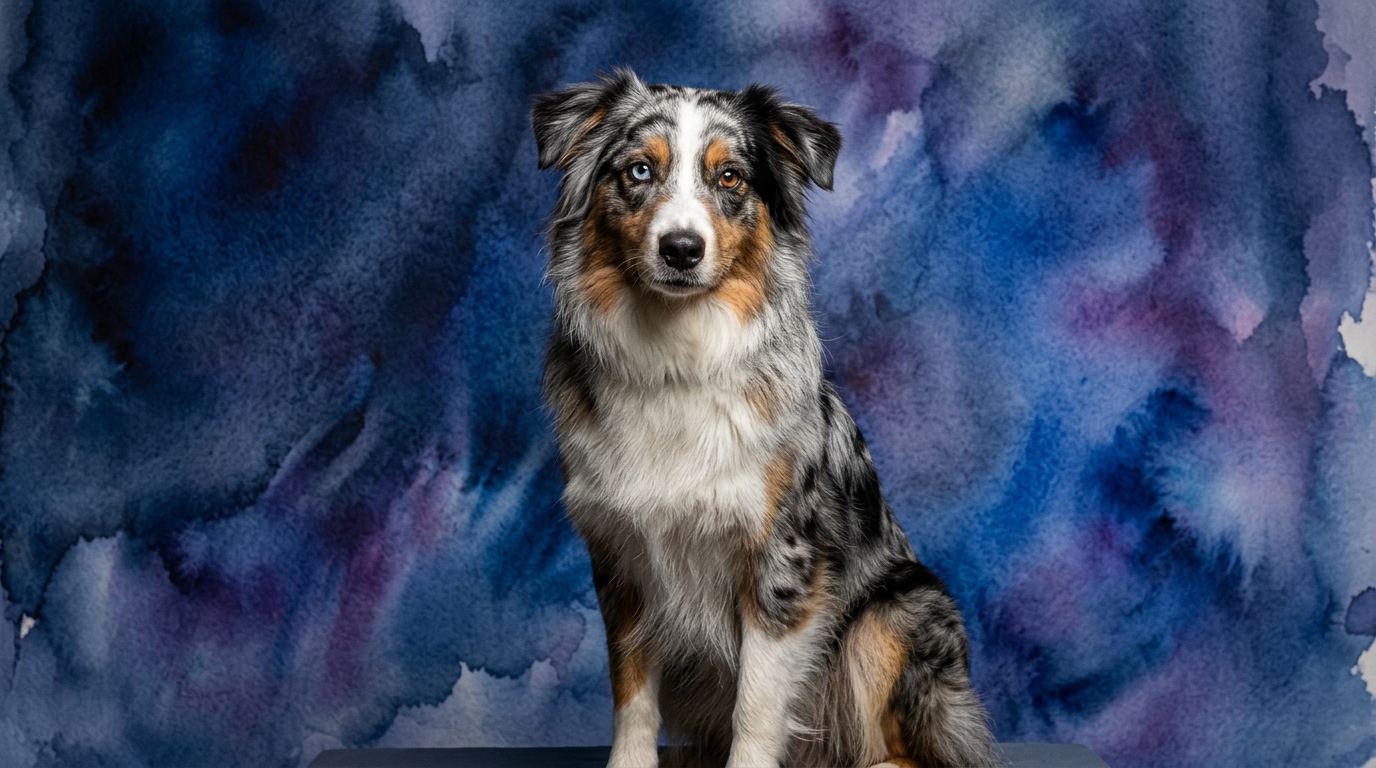

Side-by-Side IQ Profile: Australian Shepherd vs. Pointer
The Cosmic Pet Pet IQ Lab provides a unique framework for evaluating canine cognitive abilities across five key dimensions. Here’s how the Australian Shepherd and Pointer stack up:
**Australian Shepherd (Herding)**
Problem Solving (5/5): This breed excels at complex tasks, figuring out novel challenges, and adapting strategies rather than just following rote commands. They often understand the *why* behind an action and can independently devise solutions to obstacles.
Training Speed (5/5): Australian Shepherds grasp new commands and routines with remarkable speed, often requiring very few repetitions before a behavior is solidified. Their eagerness to learn and focused attention make them exceptionally quick studies.
Social Intelligence (4/5): They read human cues effectively, understand social hierarchies within a household, and can adjust their behavior based on subtle social context. These dogs are perceptive companions, often anticipating their owner's moods or intentions.
Instinctive Drive (5/5): Possessing a powerful herding instinct, their drive translates into a strong work ethic and an innate desire to manage and organize their environment, whether it involves livestock or family members. This drive fuels their proactive engagement.
Memory (5/5): Australian Shepherds retain learned information and experiences over extended periods, remembering commands, complex sequences, routes, and even past interactions with precision and longevity.
**Pointer (Sporting)**
Problem Solving (3/5): Pointers approach new situations with a more straightforward methodology, often relying on learned sequences rather than inventing novel solutions. They are competent in navigating familiar challenges but less inclined towards intricate cognitive puzzles.
Training Speed (3/5): This breed learns at a steady pace, requiring consistent repetition and clear, positive reinforcement to master new commands. While capable of acquiring a wide range of behaviors, they may take longer to solidify new skills compared to breeds with higher scores.
Social Intelligence (3/5): Pointers understand basic social dynamics and form strong, affectionate bonds with their family. They are generally amiable but may not exhibit the same nuanced interpretation of human emotions or subtle cues as the Australian Shepherd.
Instinctive Drive (3/5): Driven primarily by their hunting and pointing instincts, they exhibit a focused pursuit of scent and game. This drive is highly specific to their sporting purpose and less about general management or organization compared to a herding breed.
Memory (3/5): Pointers maintain a functional memory for commands and established routines, allowing them to perform reliably in familiar situations. However, they may not recall intricate details or past events with the same depth or longevity as a breed scoring higher in this dimension.
Where the Australian Shepherd Wins Cognitively
The Australian Shepherd's cognitive profile showcases a breed built for intricate mental work. Their 5/5 score in Problem Solving means they are not merely reactive but proactive thinkers, capable of independent reasoning. For instance, an Aussie might figure out how to manipulate a latch to open a gate or strategically move toys to 'herd' them into a designated spot, demonstrating an understanding of cause and effect beyond simple conditioning. This capacity for independent thought makes them exceptional at navigating novel situations and adapting their strategies on the fly.
Their perfect 5/5 in Training Speed and Memory means new commands stick quickly and endure. This rapid acquisition and retention are invaluable for advanced obedience, agility, and complex task learning. They learn not just *what* to do, but often the *context* and *purpose*, allowing for greater flexibility and generalization of skills across different environments. An Aussie taught to retrieve a specific item will remember that command and apply it even if the item is in an unusual location.
Furthermore, their 5/5 Instinctive Drive, rooted in herding, translates into an innate desire to organize and manage their surroundings. This isn't just about chasing; it's about anticipating needs, taking initiative, and maintaining order, which can be channeled into constructive activities like managing family members or keeping track of household items. Their 4/5 Social Intelligence, a point higher than the Pointer, further enhances their ability to work closely with humans, picking up on subtle non-verbal cues and adjusting their responses accordingly, fostering a deeply communicative partnership.
Where the Pointer Wins Cognitively
While the Pointer's overall scores might appear lower, their cognitive strengths are highly specialized and effective within their intended purpose. Their 3/5 Instinctive Drive, though numerically lower, represents a singular focus and dedication to scent work and pointing that is a cognitive triumph in its own right. A Pointer’s ability to lock onto a specific scent, track it methodically, and then hold an unwavering 'point' for extended periods demonstrates a highly refined and dedicated form of cognitive processing. This isn't broad problem-solving, but an intense, specialized intelligence for a specific task.
This singular focus also means Pointers can exhibit remarkable patience and sustained attention during field work, a different kind of cognitive stamina than the Australian Shepherd's versatile problem-solving. They are less prone to being distracted by extraneous stimuli when on a scent, showcasing a profound ability to filter and concentrate. Their more straightforward approach to problem-solving (3/5) can also be a distinct advantage for owners. It means Pointers are generally less prone to creating their own 'jobs' or elaborate schemes to entertain themselves when bored. They are typically more content with direct, purposeful activities and less inclined to engage in complex, self-directed mischief that might stem from an Aussie's overactive mind. This can translate to a companion whose cognitive demands are simpler to meet, requiring less constant mental stimulation to prevent boredom-induced behaviors.
Which is Easier to Train and Why?
The Australian Shepherd generally presents as the easier breed to train, primarily due to their superior scores in Problem Solving (5/5), Training Speed (5/5), and Memory (5/5). Their rapid comprehension means they pick up new behaviors with minimal repetitions, and their strong retention ensures these skills endure. They learn not just the action, but often the *context* and *purpose*, allowing for greater flexibility and generalization of commands across different environments. Their high instinctive drive, when properly channeled, makes them eager and enthusiastic partners in structured activities, always looking for a job to do. This combination leads to a dog that actively participates in the learning process, often anticipating the next command or challenge.
The Pointer, with its 3/5 scores in training speed and memory, requires a more consistent, patient, and often more repetitive approach. While capable of learning a wide range of commands, they may take longer to solidify new behaviors and might not generalize them as readily across different settings. Their motivation is often most effectively tapped when training is integrated with activities that engage their powerful scenting and pointing instincts. For example, using 'find it' games or scent trails can be highly reinforcing. They respond exceptionally well to clear, positive reinforcement and a structured routine, but an owner must be prepared for a steadier, less rapid progression compared to the Australian Shepherd.
Which Suits Active Owners vs. Relaxed Owners?
For the truly active owner seeking a constant intellectual and physical partner, the Australian Shepherd is an unparalleled match. Their high scores across all cognitive dimensions, particularly problem-solving and instinctive drive, mean they thrive on constant mental engagement and extensive physical activity. Owners who enjoy dog sports like agility, flyball, advanced obedience, herding, or even complex interactive games will find an eager, capable, and endlessly enthusiastic partner in the Australian Shepherd. They require an owner who can consistently provide outlets for their sharp minds and abundant energy, otherwise, they may find their own (potentially destructive) ways to stay occupied.
The Pointer, while still requiring regular exercise, offers a different dynamic for owners. Their cognitive profile suggests a slightly less demanding need for constant mental puzzles and broad problem-solving. Their focused instinctive drive means they are often content with activities that specifically engage their hunting instincts, such as long walks with ample opportunities for sniffing, exploring varied terrains, and perhaps retrieving. While they need significant physical exertion, their mental stimulation needs are more channeled and less about complex, continuous problem-solving. This makes them suitable for active owners who appreciate a dedicated companion for outdoor pursuits, but perhaps not one who constantly seeks to outwit them in a game of wits at home. They can be more content with periods of calm provided their core exercise and scenting needs are consistently met.
The Verdict
Opt for an Australian Shepherd if you seek a highly engaged, intellectually driven companion eager for complex challenges and extensive training, thriving on a partnership that demands both mental and physical prowess.
Choose a Pointer if you appreciate a dedicated, focused companion whose primary cognitive joy lies in scent work and exploration, and you're prepared to channel their specific hunting instincts with consistent, patient guidance.
🧠 Find Your Pet's IQ Score
Our Pet IQ Lab assessment covers 25+ tests across 5 cognitive dimensions — personalized to your breed.
Take the Full IQ Test →Frequently Asked Questions
Are Australian Shepherds good for first-time dog owners?
Their advanced cognitive abilities and high energy necessitate a committed owner who understands the need for extensive training and mental stimulation. While rewarding, their demands can be overwhelming for those unprepared for a highly engaged and proactive companion.
Do Pointers need a lot of exercise?
Yes, Pointers are sporting dogs requiring significant daily physical activity, including opportunities for running and exploring with their nose. While their mental stimulation needs are specific rather than broad, their physical endurance is substantial.
Can Australian Shepherds and Pointers live together?
With proper introductions and management, these two breeds can coexist, benefiting from mutual companionship. Their distinct play styles and energy levels would need careful supervision to ensure both are comfortable and their individual needs are met.