Side-by-Side IQ Profile: Australian Shepherd vs. Soft Coated Wheaten Terrier
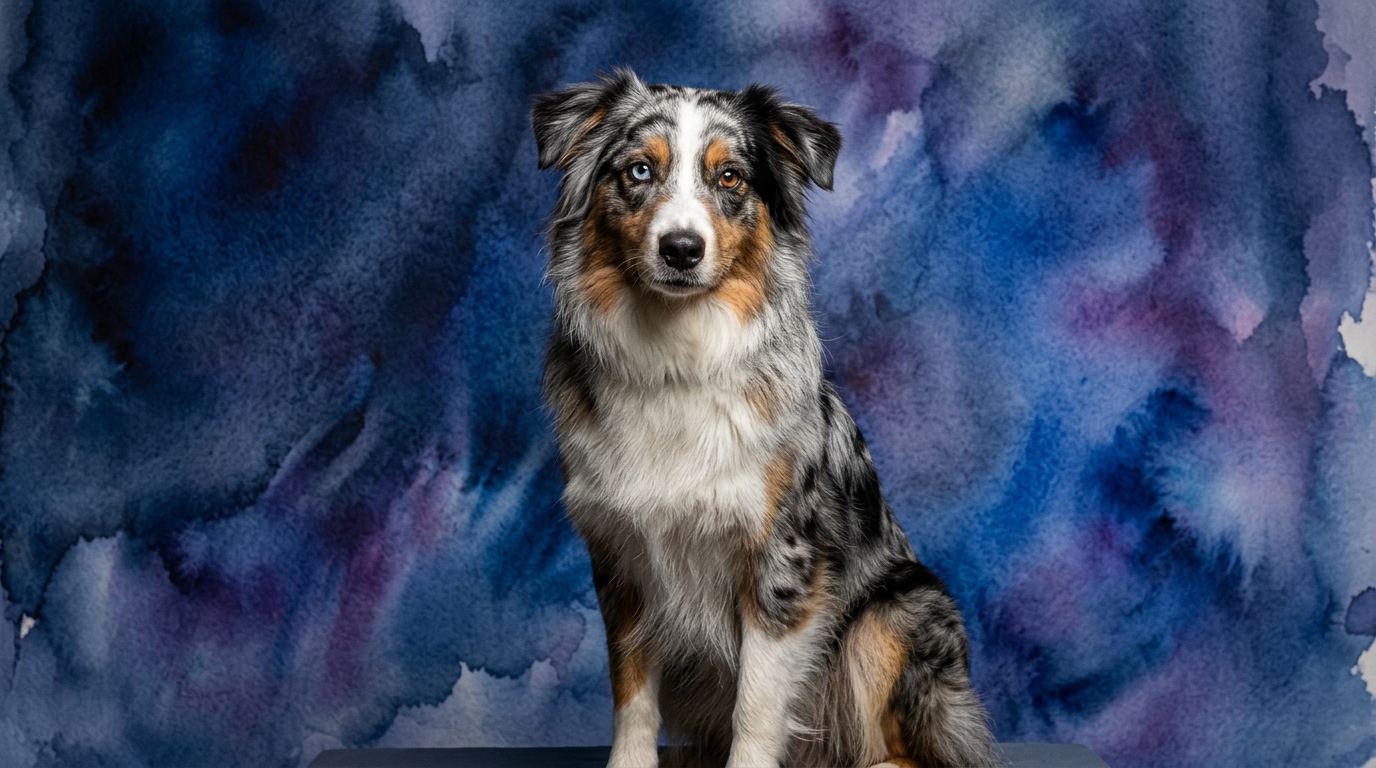
At The Cosmic Pet Pet IQ Lab, we evaluate canine cognition across five key dimensions. For the Australian Shepherd, a herding breed, their scores reflect a heritage of complex problem-solving and collaboration. Their Problem Solving is rated 5/5, Training Speed 5/5, Social Intelligence 4/5, Instinctive Drive 5/5, and Memory 5/5. This profile speaks to a canine built for intricate tasks and responsive partnership.
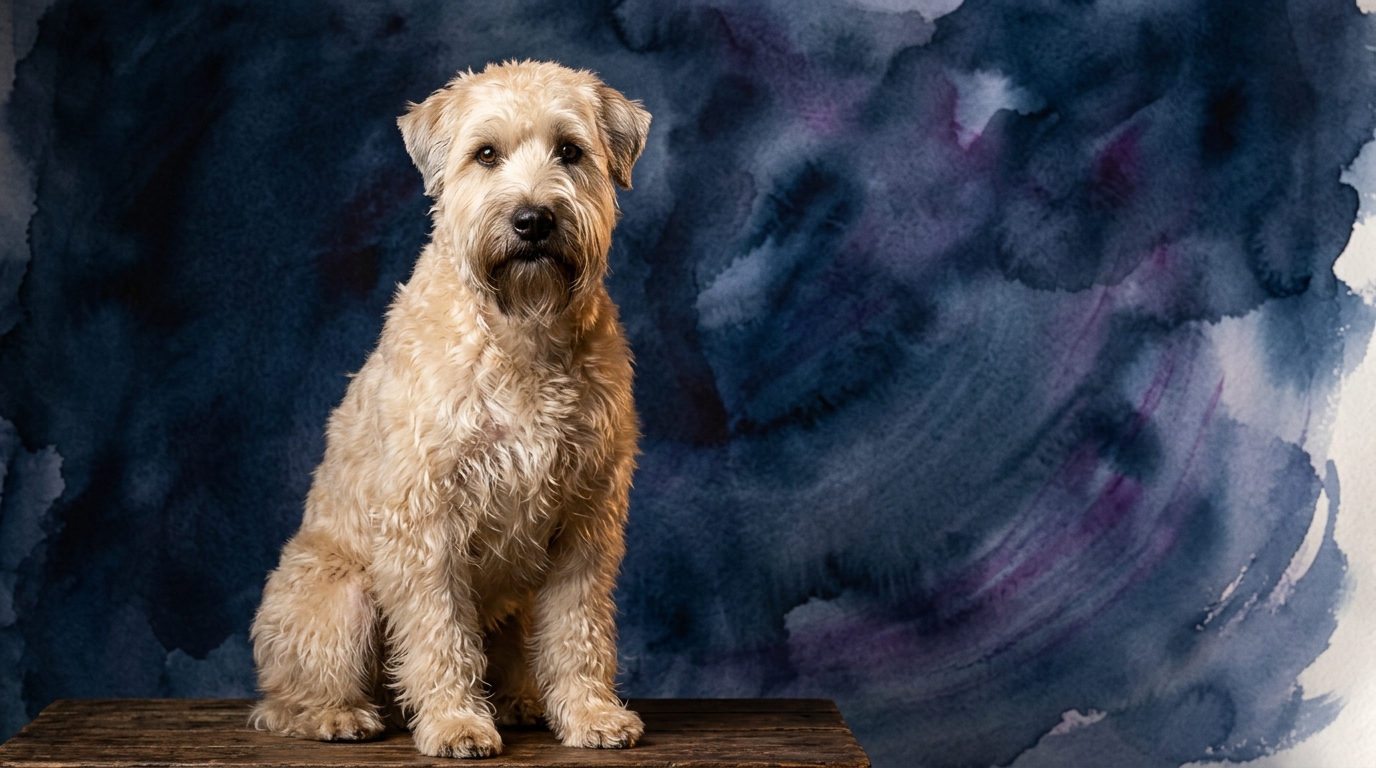
In contrast, the Soft Coated Wheaten Terrier, a member of the terrier group, exhibits a more moderate and independent cognitive style. Their Problem Solving scores 3/5, Training Speed 3/5, Social Intelligence 3/5, Instinctive Drive 3/5, and Memory 3/5. These scores highlight a dog capable of learning and engagement, but with a different emphasis on self-directed action.
Let's break down each dimension for both breeds specifically:
**Australian Shepherd:** **Problem Solving (5/5):** This breed excels at navigating complex situations, often devising independent solutions to obstacles or challenges. Their minds are wired for analysis and strategy, a direct inheritance from their demanding herding roles. **Training Speed (5/5):** Australian Shepherds absorb new commands and routines with remarkable swiftness. Their eagerness to engage and inherent desire to collaborate translates into rapid skill acquisition, making them highly responsive to instruction. **Social Intelligence (4/5):** Deeply attuned to their family's emotions and intentions, their social awareness primarily focuses on their immediate human and animal charges. They understand cues within their established social circle, though may be reserved with strangers. **Instinctive Drive (5/5):** Their herding instinct is profound, manifesting as a powerful urge to gather, manage, and control. This intense drive requires consistent redirection and appropriate outlets, extending beyond livestock to family or objects. **Memory (5/5):** Australian Shepherds possess an outstanding capacity for recall, remembering commands, routines, and past experiences with enduring clarity. This significantly contributes to their training prowess and ability to perform complex tasks flawlessly.
**Soft Coated Wheaten Terrier:** **Problem Solving (3/5):** Wheatens approach problems with moderate ingenuity. They learn to overcome challenges through trial and error or observation, offering practical, direct solutions without necessarily engaging in complex strategic thinking. **Training Speed (3/5):** Wheatens learn at a steady, moderate pace. They master commands and tricks, but their independent terrier spirit often requires more repetition and patience compared to breeds bred for intense cooperation. Consistency is vital. **Social Intelligence (3/5):** Wheatens are generally friendly and enjoy interaction, focusing on amiable engagement rather than intricate emotional processing. They are affable companions who respond well to clear, positive communication and enjoy being part of the family. **Instinctive Drive (3/5):** As terriers, Wheatens possess a moderate prey drive and an instinct for chasing and exploring. This drive is present but typically less intense and less focused on 'control' than a herding breed's, manifesting as curiosity and a love for investigation. **Memory (3/5):** Wheatens have a good, functional memory for commands and routines. They remember their training and experiences, though perhaps not with the same encyclopedic detail or long-term recall for complex sequences as breeds with higher scores.
Where the Australian Shepherd Wins Cognitively
The Australian Shepherd's cognitive profile reveals a canine built for profound engagement and proactive thought. Their 5/5 in Problem Solving means they don't just react; they actively assess situations and devise solutions, whether it's figuring out how to bypass an obstacle or outmaneuvering livestock. This demonstrates adaptive intelligence, applying learned concepts to novel scenarios. Coupled with a 5/5 in Training Speed, these dogs are remarkably receptive to instruction, often grasping new concepts in just a few repetitions. This rapid learning extends beyond rote memorization to a deep understanding of cause and effect, enabling them to generalize commands and perform intricate sequences. Their 5/5 in Memory further solidifies this, ensuring that learned lessons endure, allowing them to build an extensive repertoire of skills. Finally, their 5/5 Instinctive Drive, while demanding management, represents a powerful internal motivation that, when channeled, fuels their desire to work and excel, making them exceptionally goal-oriented companions.
Where the Soft Coated Wheaten Terrier Wins Cognitively
While the Soft Coated Wheaten Terrier's IQ scores are generally more moderate, their cognitive strengths reside in a different, equally valuable domain: balanced adaptability and a charming independence. Their 3/5 in Problem Solving, for example, means they navigate their world with practical intelligence without constantly seeking complex challenges. This can translate into a more relaxed household dynamic, where a dog isn't perpetually inventing new 'puzzles' that might, at times, frustrate an owner. A 3/5 in Training Speed indicates they are certainly trainable, albeit at a steadier pace. This can be a 'win' for owners who prefer a less intense, more gradual training journey, fostering patience and bond-building through consistent effort. Their 3/5 Social Intelligence highlights their amiable nature; they are friendly and communicative in a straightforward manner, often greeting people with their characteristic 'Wheaten Greetin'' without the nuanced, sometimes intense, social observation of a herding breed. The 3/5 Instinctive Drive means their terrier tendencies—chasing, digging, exploring—are present but often more manageable than those of breeds with higher, more focused drives, making them adventurous without being overwhelmingly driven to 'work' in a structured sense. This balanced profile means the Wheaten often excels as a delightful, engaging companion, offering a 'win' for owners seeking a good-natured spirit and a less demanding cognitive workload.
Training Ease: Australian Shepherd vs. Soft Coated Wheaten Terrier
Based on our Pet IQ Lab data, the Australian Shepherd is demonstrably easier to train due to its exceptionally high scores across key cognitive dimensions. With a 5/5 in Training Speed, they absorb new commands and concepts at an astonishing rate, often requiring minimal repetitions for mastery. This rapid acquisition is further bolstered by their 5/5 in Memory, ensuring lessons are retained long-term. Their 5/5 Instinctive Drive, while powerful, is inherently geared towards working collaboratively and following direction, making them highly motivated to please and excel in structured tasks. This contrasts with the Soft Coated Wheaten Terrier's 3/5 in Training Speed and Memory, indicating a moderate learning pace and a need for consistent reinforcement. Wheatens, with their terrier independence and moderate instinctive drive, are certainly capable learners, but often require more patience, creativity, and positive reinforcement to overcome their inherent 'what's in it for me?' attitude. Their training success hinges on making the process engaging and rewarding, rather than solely on intrinsic compliance.
Matching Lifestyles: Active Owners vs. Relaxed Owners
The choice between these two breeds largely hinges on an owner's lifestyle and energy levels. The Australian Shepherd, with its 5/5 Instinctive Drive, 5/5 Problem Solving, and substantial energy reserves, is an ideal match for highly active owners. These are individuals who embrace daily long runs, hiking, and dog sports like agility, flyball, or disc dog, and who are prepared to engage their dog in mentally stimulating activities consistently. An Aussie thrives on having a 'job' and will become bored and potentially destructive if its significant cognitive and physical needs are not met. In contrast, the Soft Coated Wheaten Terrier, with its moderate 3/5 scores across most dimensions and a more balanced instinctive drive, is better suited for owners who are active but perhaps not intensely so. They enjoy daily walks, play sessions, and family outings, but don't typically demand the same rigorous, structured 'work' as an Aussie. A Wheaten adapts well to a family environment offering regular, but not extreme, physical and mental engagement, making them a good fit for those seeking an affectionate companion for a comfortable, active family life, rather than a canine athlete.
The Verdict
Choose Australian Shepherd if you are an experienced, highly active owner eager to engage in advanced training, dog sports, or have a 'working' companion who thrives on complex mental and physical challenges.
Choose Soft Coated Wheaten Terrier if you seek an amiable, moderately active companion who enjoys family life, is trainable with patience, and offers a charming, less intensely driven presence in your home.
🧠 Find Your Pet's IQ Score
Our Pet IQ Lab assessment covers 25+ tests across 5 cognitive dimensions — personalized to your breed.
Take the Full IQ Test →Frequently Asked Questions
Are Australian Shepherds good family dogs?
Yes, Australian Shepherds can be excellent family dogs, especially with active families who understand their need for mental and physical stimulation. They are loyal and protective but require early socialization to manage their herding instincts around children and other pets.
Do Soft Coated Wheaten Terriers shed a lot?
Soft Coated Wheaten Terriers are known for their soft, silky single coat which sheds minimally, making them a popular choice for individuals with allergies. However, their coat requires regular grooming, including daily brushing, to prevent matting and keep it healthy.
What are the biggest training challenges for a Wheaten Terrier?
The biggest training challenges for a Wheaten Terrier often stem from their independent terrier nature and moderate instinctive drive. They can be stubborn or easily distracted, requiring consistent positive reinforcement, short engaging sessions, and patience to maintain focus and motivation.