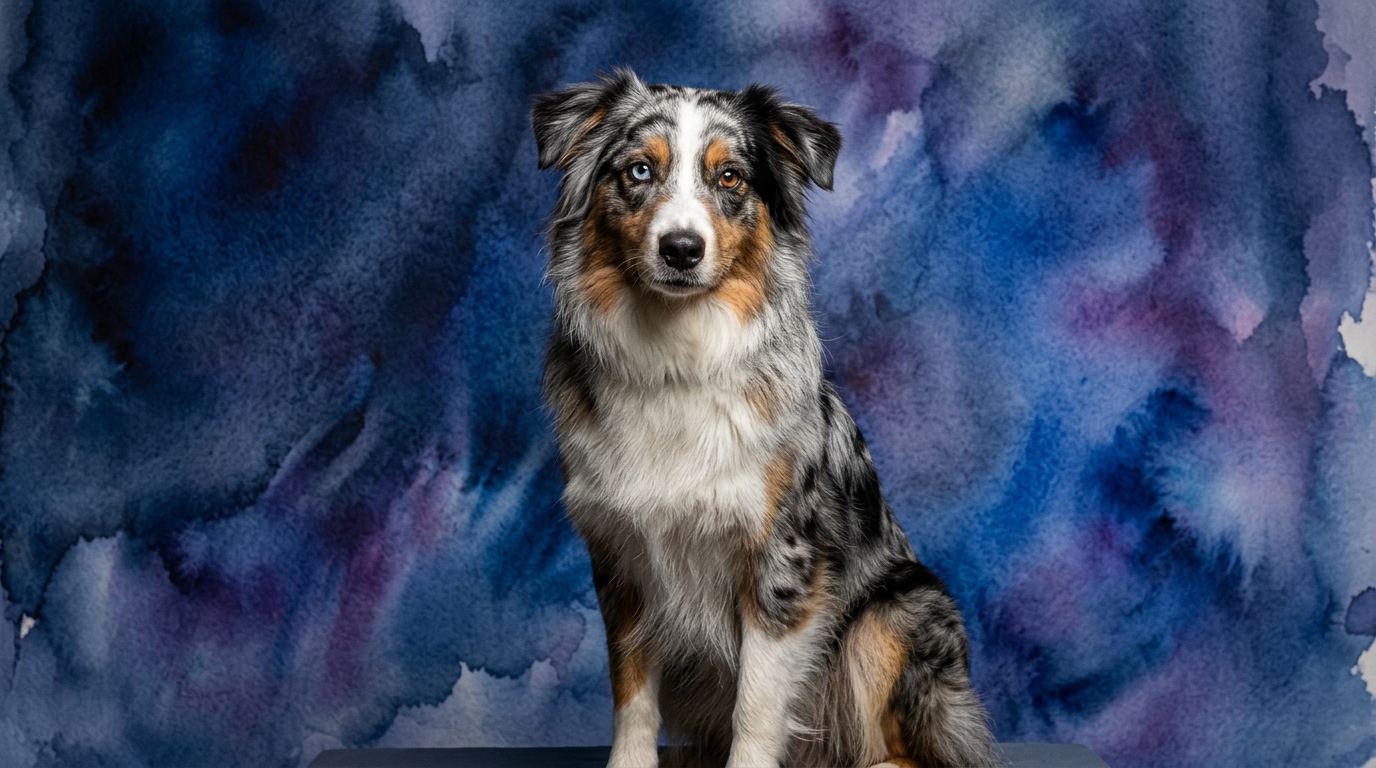

Side-by-Side Cognitive Profile: The Cosmic Pet Pet IQ Lab Assessment
The Australian Shepherd's cognitive blueprint, as assessed by The Cosmic Pet Pet IQ Lab, paints a picture of exceptional acumen across multiple domains. Their Problem Solving capability rates a perfect 5/5, indicating an innate talent for navigating complex situations, devising innovative solutions, and thinking independently when faced with novel challenges. This is complemented by a Training Speed of 5/5, signifying their rapid assimilation of new commands and concepts, often requiring minimal repetitions to master a task. Social Intelligence, at 4/5, shows a strong capacity to interpret human cues, adapt to social dynamics, and form profound working partnerships. An Instinctive Drive of 5/5 highlights their powerful, inherent urge to work, herd, or engage in purposeful activities, a fundamental aspect of their cognitive motivation. Finally, their Memory, also 5/5, underscores their ability to retain vast amounts of information, from intricate command sequences to environmental details, over extended periods.
In contrast, the Sussex Spaniel presents a more balanced, yet equally purposeful, cognitive profile. Their Problem Solving ability registers at 3/5, suggesting they can learn to overcome obstacles and understand cause-and-effect, though they may approach new puzzles with a more methodical, rather than exploratory, mindset. Their Training Speed, also 3/5, indicates a steady learning curve; they are receptive to instruction but typically require more consistent repetition and patience to solidify new behaviors. Social Intelligence at 3/5 reflects a solid capacity for companionship, forming close bonds with their family and understanding established household routines. Their Instinctive Drive, rated 3/5, points to a moderate, focused drive for their sporting purpose – flushing game – without the intense, pervasive energy often seen in herding breeds. Memory, scoring 3/5, shows they are capable of retaining commands and experiences, but perhaps with less granular detail or across as broad a spectrum as their herding counterparts.
Where the Australian Shepherd Excels Cognitively
The Australian Shepherd's cognitive strengths are particularly pronounced in areas demanding mental agility and independent thought. Their perfect 5/5 Problem Solving score means they aren't just following instructions; they are actively processing their environment, strategizing, and often anticipating next steps. This manifests in behaviors like figuring out how to unlatch a gate, navigating complex agility courses with minimal handler input, or even orchestrating a 'herding' maneuver with family members. Coupled with their 5/5 Training Speed, Aussies acquire new skills with startling rapidity, often generalizing concepts rather than just memorizing specific commands. They can learn an extensive vocabulary and apply it in varied contexts, making them exceptionally versatile in performance events or intricate task work. Their 5/5 Instinctive Drive fuels this cognitive engine, providing a powerful internal motivation to engage in purposeful activity. This isn't just boundless energy; it's a deep-seated desire to work and contribute, channeling their mental horsepower into focused endeavors. An Aussie’s mind is constantly seeking engagement, and their exceptional 5/5 Memory allows them to build upon past experiences and learned information, accumulating a vast mental library of commands, routines, and solutions that they can recall and deploy efficiently.
Where the Sussex Spaniel Offers Distinct Cognitive Advantages
While the Australian Shepherd excels in high-intensity cognitive challenges, the Sussex Spaniel's distinct cognitive profile offers a different set of advantages, particularly for certain lifestyles. Their 3/5 Instinctive Drive, in comparison to the Aussie's 5/5, translates to a less incessant demand for high-octane mental and physical output. This means a Sussex is less prone to developing neurotic or destructive behaviors born from under-stimulation if their daily schedule doesn't involve complex tasks or extensive working sessions. Their drive is purposeful for flushing, but it doesn't dominate their entire existence, allowing for a calmer, more settled household presence. The Sussex Spaniel's 3/5 Social Intelligence, while not as nuanced for competitive obedience as an Aussie's, is perfectly calibrated for deep, unwavering family companionship. They are adept at reading the general mood of their household and thrive on consistent human interaction, offering a steady, affectionate presence without requiring constant, intricate mental engagement or demanding advanced social problem-solving from their owners. Their cognitive makeup is one that values routine and stable relationships, making them less reactive to minor changes in environment or social dynamics. This cognitive steadiness, reflected in their consistent 3/5 ratings across the board, means they are not constantly seeking novel intellectual challenges, but rather find contentment in predictable patterns and familiar interactions. This makes them cognitively well-suited to a home environment that values tranquility and steadfast devotion over high-octane mental gymnastics.
Training Dynamics: Which Breed Learns More Readily?
Evaluating ease of training requires understanding both breeds' cognitive predispositions. The Australian Shepherd, with its 5/5 Training Speed and Problem Solving, is often perceived as 'easier' to train for complex tasks. They grasp new concepts with remarkable speed, often needing only a handful of repetitions to understand a new command or a multi-step sequence. Their innate drive to work and please their handler provides a strong internal motivator, making them eager participants in training sessions. This breed thrives on mental challenges, and their rapid learning curve means they can progress through advanced obedience, agility, or herding trials at an accelerated pace. However, their intelligence can also be a double-edged sword; an under-stimulated Aussie might use their problem-solving skills to find mischief or develop unwanted behaviors if their mental needs aren't met. In contrast, the Sussex Spaniel, with its 3/5 Training Speed, requires a more patient and consistent approach. They are not slow learners, but rather steady learners, needing more repetitions to solidify new behaviors. Their moderate instinctive drive means they might not always offer the same eager enthusiasm for every training session as an Aussie, but they are generally biddable and cooperative when motivated by positive reinforcement and clear, consistent commands. The 'why' lies in their cognitive processing: the Aussie's brain is wired for rapid pattern recognition and independent strategy, while the Sussex processes information more deliberately, valuing clarity and repetition to build understanding. For basic obedience, both can achieve proficiency, but for advanced, nuanced work, the Aussie's cognitive architecture provides a clear advantage in speed and complexity.
Matching Breed Cognition to Owner Lifestyle
The choice between these two breeds hinges significantly on an owner's lifestyle and their capacity to meet specific cognitive and physical needs. The Australian Shepherd is unequivocally suited for active owners who relish daily engagement in mentally stimulating and physically demanding activities. Their 5/5 Instinctive Drive means they possess a deep-seated need for purpose, whether it's herding livestock, excelling in dog sports like agility or frisbee, or embarking on long, challenging hikes. An Aussie's mind is always 'on,' and owners must be prepared to provide consistent mental enrichment to prevent boredom and potential behavioral issues. They thrive when given a 'job' to do, and their high problem-solving capacity means they can tackle sophisticated tasks. Conversely, the Sussex Spaniel is an excellent match for more relaxed owners who appreciate a steadfast companion without the relentless demand for high-octane activity. Their moderate 3/5 Instinctive Drive and overall balanced cognitive profile mean they are content with regular, but not extreme, exercise, such as daily walks, scent games in the yard, and engaging family playtime. While they certainly enjoy activity, their mental and physical batteries recharge more quickly, and they are less prone to becoming destructive or anxious if a day's activity is slightly less intense. They thrive on routine and stable companionship, making them ideal for individuals or families seeking a warm, devoted presence that complements a calmer lifestyle.
The Verdict
Choose the Australian Shepherd for owners dedicated to extensive training, dog sports, or a working partnership, who can provide daily mental and physical challenges to satisfy a mind that thrives on problem-solving and engagement.
Choose the Sussex Spaniel for individuals or families seeking a steadfast, warm companion who appreciates consistent routines, moderate activity, and a calm presence, and who are prepared to offer patient, positive training.
🧠 Find Your Pet's IQ Score
Our Pet IQ Lab assessment covers 25+ tests across 5 cognitive dimensions — personalized to your breed.
Take the Full IQ Test →Frequently Asked Questions
Does the Australian Shepherd's high instinctive drive make them difficult to manage for new dog owners?
The Australian Shepherd's 5/5 instinctive drive can be challenging for inexperienced owners if not properly channeled. Their need for a 'job' requires consistent mental and physical engagement; without it, their problem-solving skills might lead to unwanted behaviors. Dedicated training and activity are crucial for their well-being.
Can a Sussex Spaniel participate in dog sports despite its moderate IQ scores?
Yes, a Sussex Spaniel can certainly participate in dog sports, especially those that align with their natural scenting and flushing abilities like scent work or field trials. While their 3/5 training speed means they may learn at a steadier pace than some breeds, their biddable nature and moderate drive make them capable and enjoyable participants with consistent, positive reinforcement.
How do the social intelligence differences impact interaction with strangers or other pets for each breed?
The Australian Shepherd's 4/5 social intelligence allows them to keenly read social cues, but their herding instincts can sometimes lead to 'managing' other pets or children if not properly socialized. The Sussex Spaniel's 3/5 social intelligence suggests they are generally amenable and sociable within their established family unit, typically interacting well with familiar individuals and pets, though they may be more reserved with strangers.